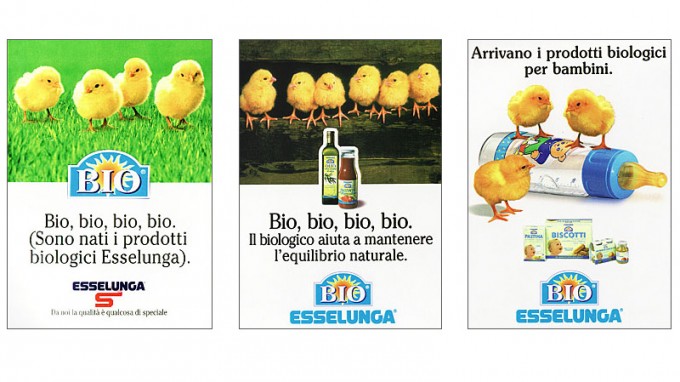
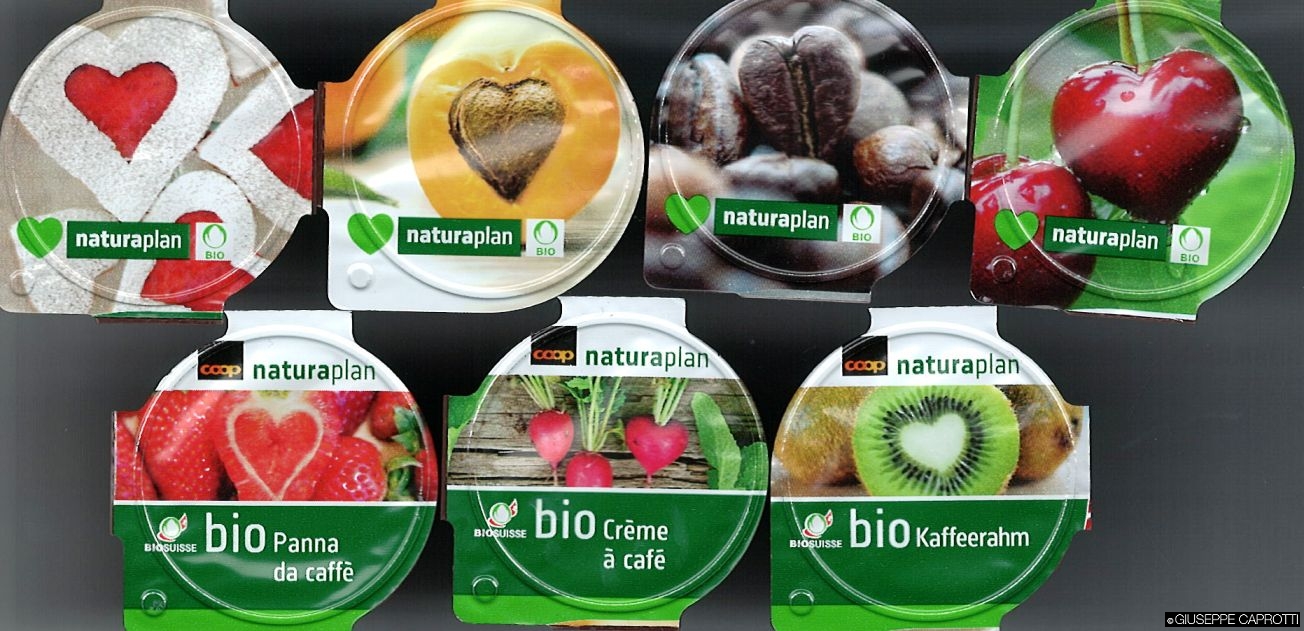
By Giuseppe Caprotti and Gaetano Puglisi – 18 June 2009, updated on 14 December 2023. Above: advertisement by Armando Testa Introduction to the talk ‘The Organic Adventure’delivered at the University of Bologna by Dr Gaetano Puglisi. During my 18 years at Esselunga, I worked on countless projects, but the one I am most fond of is undoubtedly that relating to organic and natural products in general. Unlike other projects, such as non-food, e-commerce or the central purchasing organisation, this one had a soul, a social purpose, as well as a business one. It was also a project with a long history: I remember a conversation – in the kitchen at home – with my father in 1987. I was keen on the idea – partly because we were already selling some fruit and vegetables grown using integrated pest management (*) – and I’d made it my own. He wasn’t so keen. You can read about the reasons behind the creation of the Esselunga organic range here: Is organic food really healthier than conventional food? (*) I remember the strawberries. Dr Puglisi quite rightly describes it as an adventure. I still clearly remember how, during a business lunch, Paolo Barilla warned me about the ‘dangers’ of organic produce and I – breaking out in a cold sweat – could do nothing but worry, without saying a word, given that we were about to launch our own range in a big way…” Barilla will launch the Barilla organic range in 2016. Below: Giuseppe with Paolo Barilla in the 1990s. The organic range had multiple objectives, including that of getting ahead of and effectively countering Coop. Whilst we were launching Esselunga’s organic products, Coop was still debating the pricing of its own organic brand range. Dr Puglisi was commercial director at Esselunga, where he spent 10 years of his career. He was commercial director at one of the companies in the Conad group, commercial director at Pam, and is now managing director at Euronics. Giuseppe Caprotti To call it an adventure is no exaggeration: over a period of almost 20 years (the first organic foods appeared in the early 1990s), the sector has experienced many ups and downs; periods of great success have alternated with others of widespread despondency, to the point of becoming either a fad or a pariah to be shunned. Even the business community and ‘scientists’ have often been divided on the subject: from those who went so far as to theorise, during a corporate convention organised by a retail chain, about the dangers of organic food whilst extolling the virtues of genetically modified foods (organic produce is free from such modifications), to those, such as Professor Umberto Veronesi, who warn us of the risk of ingesting all manner of pesticides. Dear Caprotti,… may I congratulate you on the launch of your organic products? The name ‘Naturama’ is spot on too! Umberto Veronesi To avoid taking a firm stance, it is best to look at history, see how the organic movement came about, how it has progressed, and what prospects it can realistically offer to those who consume it and those who sell it. Only time and individual choices will tell what was right and what was wrong. Right from the start, it is best to set aside nonsense such as the idea that eating organic is always good for you: if I eat 1 kg of organic butter a day, I’ll have ‘organic’ cholesterol and will presumably die of an ‘organic’ heart attack; likewise, it is madness to imagine any benefit from tinned tuna in organic oil when the tuna itself may well be of very poor quality. By setting aside such distractions, we can focus on its origins and gain a better understanding of what it entails. The organic movement took its first steps in the early 1990s, mainly in small specialist shops or at farm holiday establishments, which were also making their first appearance during those years. There was little awareness of the concept; almost no one understood the meaning of ‘organic’, let alone what distinguished it from conventional products. The term itself is misleading: English-speaking countries use the term ‘organic’, which is more direct and explicit; ‘biologico’ conjures up images of something hospital-like or chemical, partly due to its similarity to ‘biologia’ (biology) or even to detergents (these were the years when the Bio Presto detergent was all the rage). Without comprehensive information, the concept is not easy to grasp. It is clear from the outset that there is a need for a ‘showcase’ – a place where the general public can find these products and where their characteristics can be explained; and it is equally clear that industry cannot be the trailblazer, both because branded manufacturers are careful not to promote products that conflict with their core business, and because (whether branded or not) industry can only focus on a limited number of product categories. In defence of the industry’s delay or indifference, it must be said that the production process for organic produce is incompatible with that of conventional produce. Dedicated facilities are required (to prevent contamination) and, in the case of agriculture, clearly demarcated areas that do not border on others and which have not been used for conventional farming for years. In this context, Coop – partly out of conviction, partly because it manages to maintain direct contact with its customers/members – recognises that there is scope for growth and includes some organic products – bearing the suppliers’ own brands – in its product ranges. However, perhaps because it did not fully believe in the concept (did it want to ‘appease’ opinion leaders reluctantly??) or because it did not fully grasp the concept, it made a series of operational errors which, with the benefit of hindsight and in light of the success of others who would follow, led to the operation’s rapid collapse. These errors can be summarised as follows: The products are often unattractive to look at; fresh produce is poorly presented and packaged goods feature equally off-putting ‘Bulgarian-style’ packaging. Above all, however, the taste is a disappointment, and a poor-quality product simply isn’t eaten. Food is not medicine; it must nourish and satisfy, and the first organic products failed to do so. We even see organic jams made from second-rate fruit appearing on the shelves; they may well be organic, but if the fruit isn’t good, the result can only be a poor-quality jam (or juice). There is no information in-store, and the packaging provides no clarity whatsoever on the products’ characteristics. The retailer fears that talking too much and too positively about organic products will lead consumers to wonder what conventional products actually contain. But that’s the way it is: in the fear of doing too much, nothing gets done. It was to be expected that organic products would cost more than conventional ones, but the lack of a clear pricing strategy and a benchmark was less predictable. It could, therefore, happen that a product cost more than double the price of a conventional one, but it could also be that there was no difference at all; no logic, no explanation as to why there were such large discrepancies. This was the biggest mistake, so much so that Esselunga will avoid making the same mistake. Essentially, in supermarkets, a shelf unit (or an area in larger stores) was set up with all the organic products grouped together. Result: a ‘ghetto’ effect. This approach negated the advantage of being able to display and offer the product to the general public. Burdened by such conceptual and methodological ‘dead weight’, the organic sector struggled for years; SANA, a trade fair for natural and organic products, was tentatively launched in Bologna, but was attended mainly by post-hippie generation, intellectuals, a few academics and the politician of the moment. There was a lack of genuine industry professionals and ‘ordinary’ consumers. Few thought to hop on a plane, fly to the States and witness the spectacular launch of Whole Foods Market, the American chain specialising in organic and natural products. But, without having to go far, one could have looked to the experience of the Swiss Coop which, in the 1990s , launched its own Naturaplan range ( see labels below; Coop’s plan involved more than 1,500 products). And so, amidst this ‘slumber’, something happens. It happens in Italy with an approach that, in some ways, turns the market on its head and surprises everyone (the industry, retailers, consumers and opinion leaders) because of the way it unfolds. Here, to understand what is happening, how and why, we need to look at the specific case and recount a story that sounds like a fairy tale but is, in fact, a true story. One evening in February 1999, the then commercial director of Esselunga (*), together with his purchasing director, the quality assurance director Claudio Arnoldi and the senior buyer for the food sector Alberto Bianchi, were driving back to Milan from a business trip to central Italy. As was often the case, as well as talking about football, music and various hobbies, they ended up discussing work and the recent past (with GMOs looming large) and how the customers, with whom they were in constant contact, were continually expressing concerns about what they were eating. It is a period of economic recovery; discount stores are on the decline and ordinary people are beginning to worry about their wellbeing and health. The sales director puts forward the idea: let’s create a complete range of organic products under our own brand, covering as many product categories as possible and offering the guarantee and credibility of a retail chain that makes quality one of its key assets. In short, he says: let’s put our reputation on the line, let’s do it, let’s do it properly and let’s communicate it in our own way. The purchasing director’s initial reaction is one of reluctance: like his predecessor, he too fears that people will start questioning the nature of conventional products once they discover that it is possible to eat without pesticides. (*) At the time, Giuseppe Caprotti held this role, whilst Gaetano Puglisi was purchasing director But Claudio Arnoldi is also worried: he fears that any hiccup along the way might compromise the company’s credibility. The four of them discuss the matter at length, getting worked up; someone proposes solutions, whilst another starts thinking about how to resolve the countless problems that will arise, but the spirit is right. They have an idea in hand and will throw themselves into it with healthy determination. Fortunately, the journey is a long one, the road is clear, and the setting (intimate and free from distractions) allows them to remain focused. And so it comes to pass that the two directors (purchasing and quality) eventually agree, but on two basic conditions, two ‘conditio sine qua non’. The purchasing manager insists that organic products must, first and foremost, taste better than others (and/or contain better ingredients) and only then be organic; the quality assurance manager requests – and secures – that all batches of products put on sale undergo a preliminary test to verify the absence of pesticides. Thus the idea was born, and regarding the objection as to how to distinguish organic products from other branded products in terms of positioning, the sales director (literally) devises a classification system that leaves everyone astonished at how concise, clear and, at the same time, rich in meaning it is – a foundation upon which to build this pure strategy.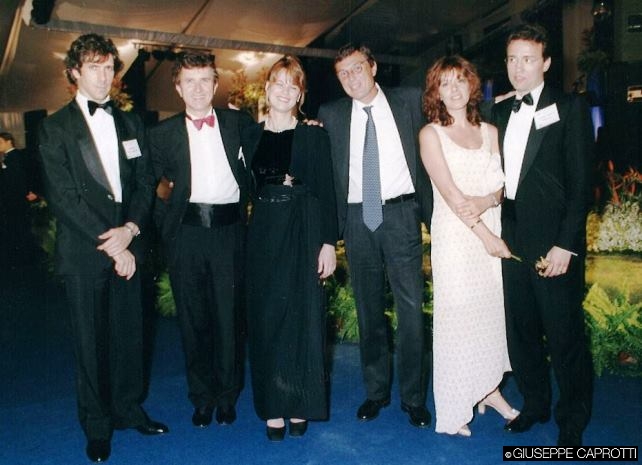

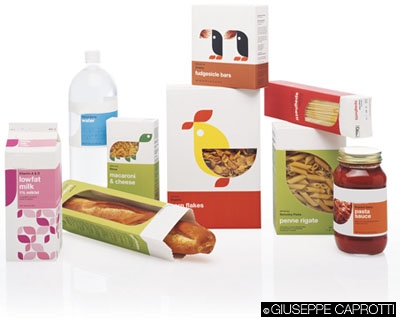
BRAND
CHARACTERISTIC
POSITIONING
EXPECTATIONS
Esselunga Bio
Organic-branded product
The best
Better than private label and own-brand products
Esselunga
Own-brand product
The better
Best among other private labels
Fidel
Low-price range
The good
A good product for everyone