“The e-commerce project took shape in 1999. I worked on it myself, with the help of Paolo De Gennis. My father gave his approval. I sent him a report in which I highlighted, first and foremost, the advantages of the internet, which could help us resolve certain strategic issues. On the one hand, city-centre supermarkets are increasingly turning into small ‘superettes’ – as shops with very limited floor space are called – where it is not possible to replicate the range of products that customers are used to finding in superstores or even hypermarkets. The other problem is reducing overcrowding in shops or queues at the tills. Bernardo has never heard of the internet.
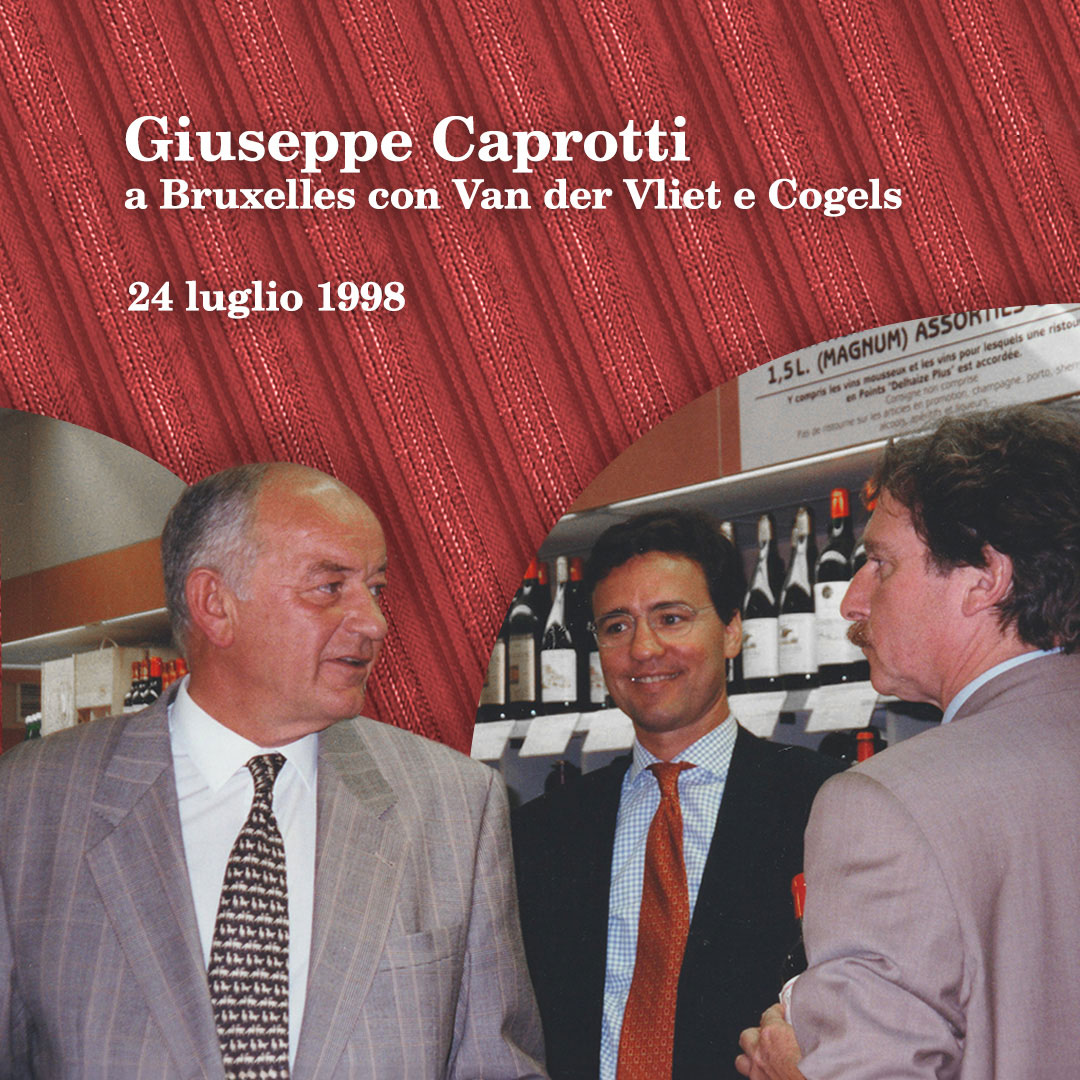
I tell him that we saw a system at Delhaize in Belgium which allows customers to do their shopping either online or by fax and have it delivered to their homes. Even back then, Delhaize’s example was already producing extraordinary figures: the Caddy Home website for online shopping, in 1998, was working very well, accounting for 1 per cent of the chain’s turnover, was already making a profit, and an estimated 35 to 50 per cent of purchases were made by senior citizens.
To put just how advanced this was into context, it is worth remembering that Google’s domain was registered in 1997 and the company was founded in that very same year, 1998. Amazon had started out as an online bookshop a few years earlier, in 1995. When Delhaize was delivering groceries to its customers’ homes, Jeff Bezos’s giant hadn’t even begun to expand its sales to items other than books.
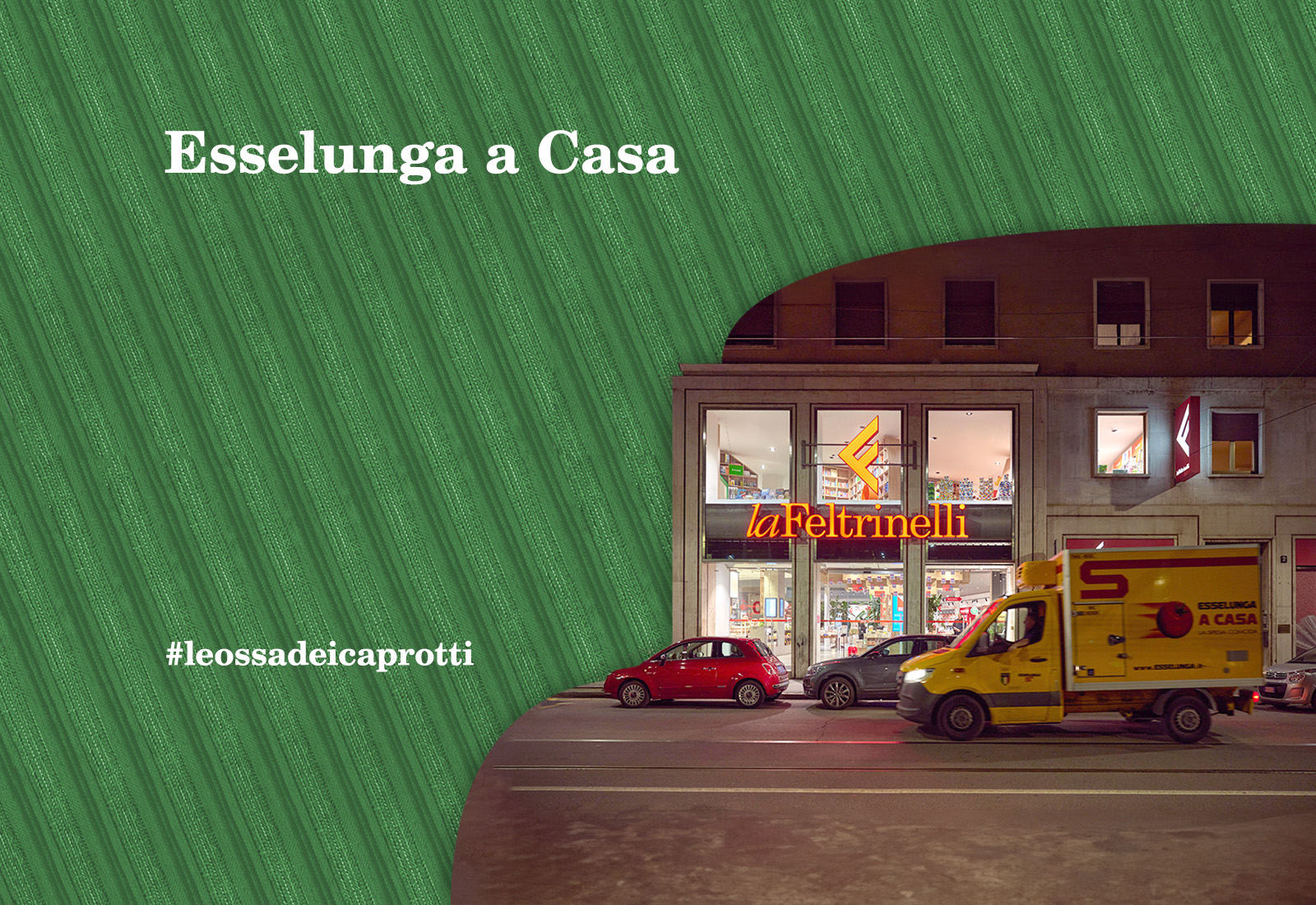
For the ‘Esselunga a casa’ project, we formed two mixed working groups and, just as we had done with the superstores and the loyalty card, we looked to the United States for inspiration. De Gennis would manage the e-commerce division until I took up my post as chief executive. I am very pleased with this new role we have found for him, so much so that I propose to my father that he be formally appointed head of the online division. I believe, in fact, that (…) he could bring to the team working on the development of “Esselunga a casa” the knowledge of logistics and operations that have always been one of his – and our – key strengths. Together with him, we visited various American operators and, upon returning from our tour, we launched the e-commerce operation in Monza in March 2001. We used the warehouse of a supermarket in Via San Fruttuoso, part of which we had specially adapted as a ‘dark store’, with staff picking orders from the shelves – located within the warehouse itself – to be sent to online customers.
Within a few months, we expanded into Brianza, reaching Milan in July. A few more weeks passed and we opened in Prato, again using the back of a supermarket on Via Valentini as our operational base. (…).
‘Esselunga a casa’ achieved a turnover of 40 million euros. The majority of this – 31 million – came from orders placed directly on the website by customers, whilst the remainder consisted of shopping done in-store and delivered to customers’ homes. In the summer of 2002, we struck an agreement with Milan City Council to deliver groceries free of charge to pensioners – a huge success. The boom in “Esselunga a casa” was so strong that a chain from Genoa copied our website, using the same supplier who had designed ours. (…).
When I was dismissed from Esselunga in 2004, work on developing the e-commerce platform was, of course, still ongoing. No one can deny, however, that we were on the right track and that the inevitable mistakes of a start-up could have been corrected through joint discussion. Since then, in fact, it has been Amazon above all that has seized the opportunities offered by digital commerce in Italy, eventually devouring the market for traditional retail chains. Esselunga, which at the time, for example, was selling 20,000 book titles online, missed out on those opportunities.
Our father will never like e-commerce, with all its technology. In 2012, during one of our court battles, he accused me of having ‘ruined’ the company by setting it up. Absurd: Esselunga’s online division had in fact been making a profit since at least 2008, and in that very year, 2012, its operating profit had reached 8 per cent of turnover.
Bernardo’s is merely an ideological aversion – to anything new in general, and to what his son has done in particular. He cannot accept that I have looked further ahead than he has. In 2014, he went so far as to open a new 10,000-square-metre warehouse in Florence dedicated exclusively to online operations, but he was careful not to publicise it, so as not to have to admit he’d been wrong.
It’s a real shame, because today Amazon is Italy’s largest ‘non-food’ retailer, and when Jeff Bezos’s company launched its online grocery service here too, Esselunga didn’t even have a smartphone app. But there’s more: it wasn’t just Esselunga that missed the boat, but all its other competitors too, who followed the advice handed out left, right and centre by Bernardo Caprotti – a man who scoffed at digital technology and then found himself with a giant like Amazon on his doorstep, calling the shots. (…)”. (pp. 193–197).
Follow Le Ossa dei Caprotti
on Instagram
on Facebook
on YouTube
on LinkedIn
on X
Below: Giuseppe Caprotti at Delhaize in Brussels, between commercial director Paul Van der Vliet and CEO Renaud Cogels during the Sedd era, the European purchasing centre.