


Published on 12 October, updated on 17 October 2026
Chemical companies succeed in watering down EU pesticide regulations.
According to documents seen by the Financial Times, the EU is seeking to relax pesticide regulations after chemical companies and agricultural groups successfully lobbied Brussels, arguing that the regulatory burden was excessive…
Under current rules, active substances already approved for use in pesticides must be re-evaluated every 15 years. The Commission has proposed scrapping these periodic checks as part of the so-called omnibus law on food and feed safety, which aims to reduce “unnecessary costs and administrative burdens for agri-food producers”.
The minutes of the meetings reveal that the proposed amendment was introduced after the German chemicals group Bayer and the agricultural lobby Copa Cogeca (*) had called for ‘unlimited’ approval of pesticides…

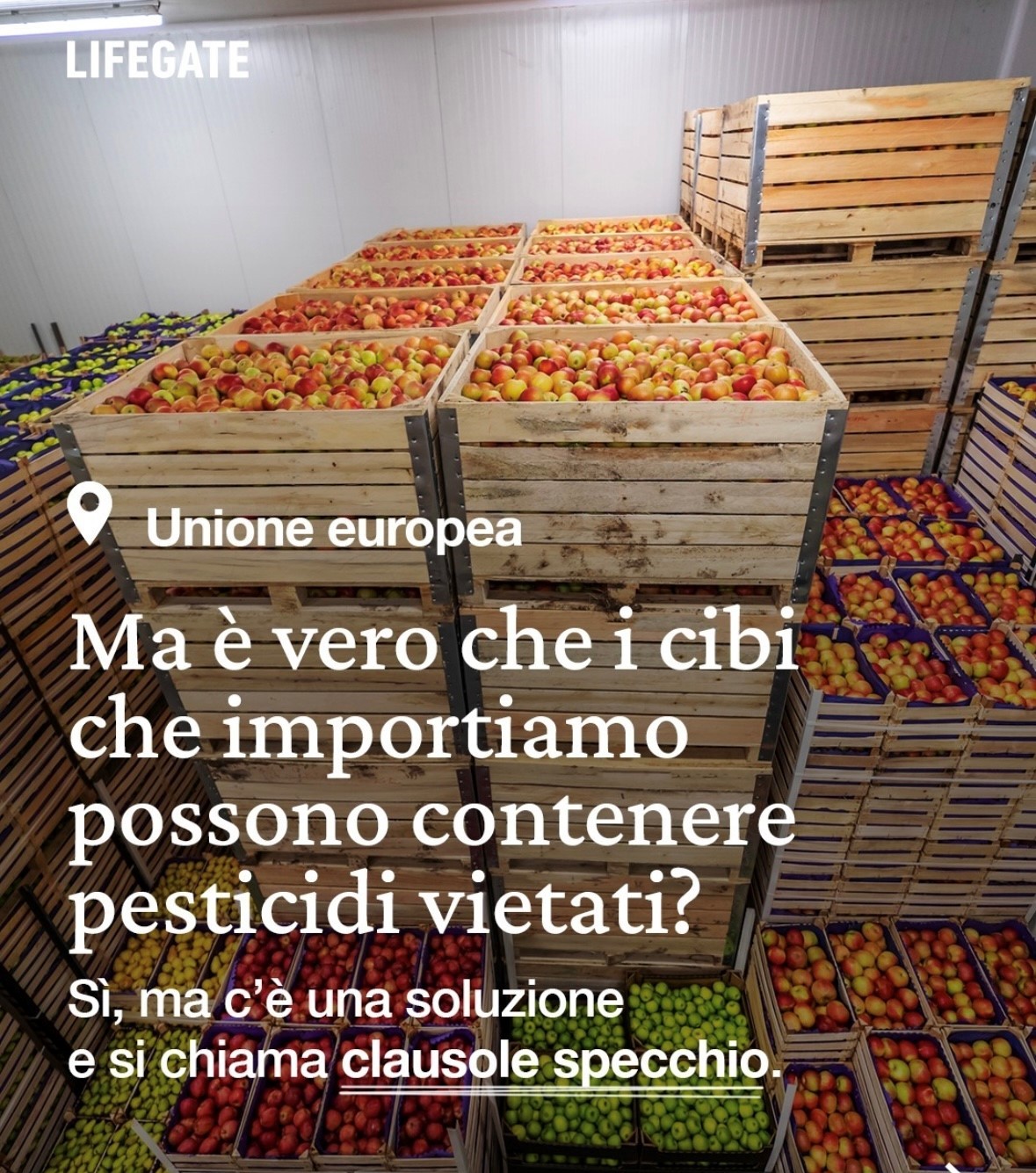
It now seems that the circle has finally been closed, despite protests from many stakeholders. This is rather absurd when you consider that pesticides would be deregulated in Europe whilst , through mirror clauses, imports of contaminated food from third countries would be blocked.
Read this articleon mirror clauses and the principle of reciprocity.
(*) This is evident from the minutes of internal meetings of Europe’s most powerful agricultural organisation: Copa-Cogeca – which claims to represent 22 million farmers and agricultural cooperatives (its Italian members include Coldiretti, Confagricoltura, CIA and the Alliance of Agri-Food Cooperatives) – and enjoys privileged access to EU institutions.
Copa-Cogeca’s lobbying efforts have previously defended foie gras, fur, the use of pesticides (including glyphosate and neonicotinoids) and the culling of wildlife (e.g. wolves).
It has done everything in its power to prevent measures that would raise standards to tackle emissions from livestock farms – by exempting cattle farmers – and the phasing out of the use of cages for hens and other animals.
The same approach was used to defend public funding for the promotion of red and processed meat.
When the Commission considered excluding these products from programmes in line with the European Cancer Plan , Copa-Cogeca engaged with certain Commissioners, wine and alcohol organisations, and national associations.
The restrictions were first watered down and then dropped altogether. The comment in the internal documents is succinct: “The lobbying has paid off”…
According to the EU lobbyists’ register, Bayer AG spent between 7 and 8 million euros in 2023 on lobbying activities at the EU (Source).


