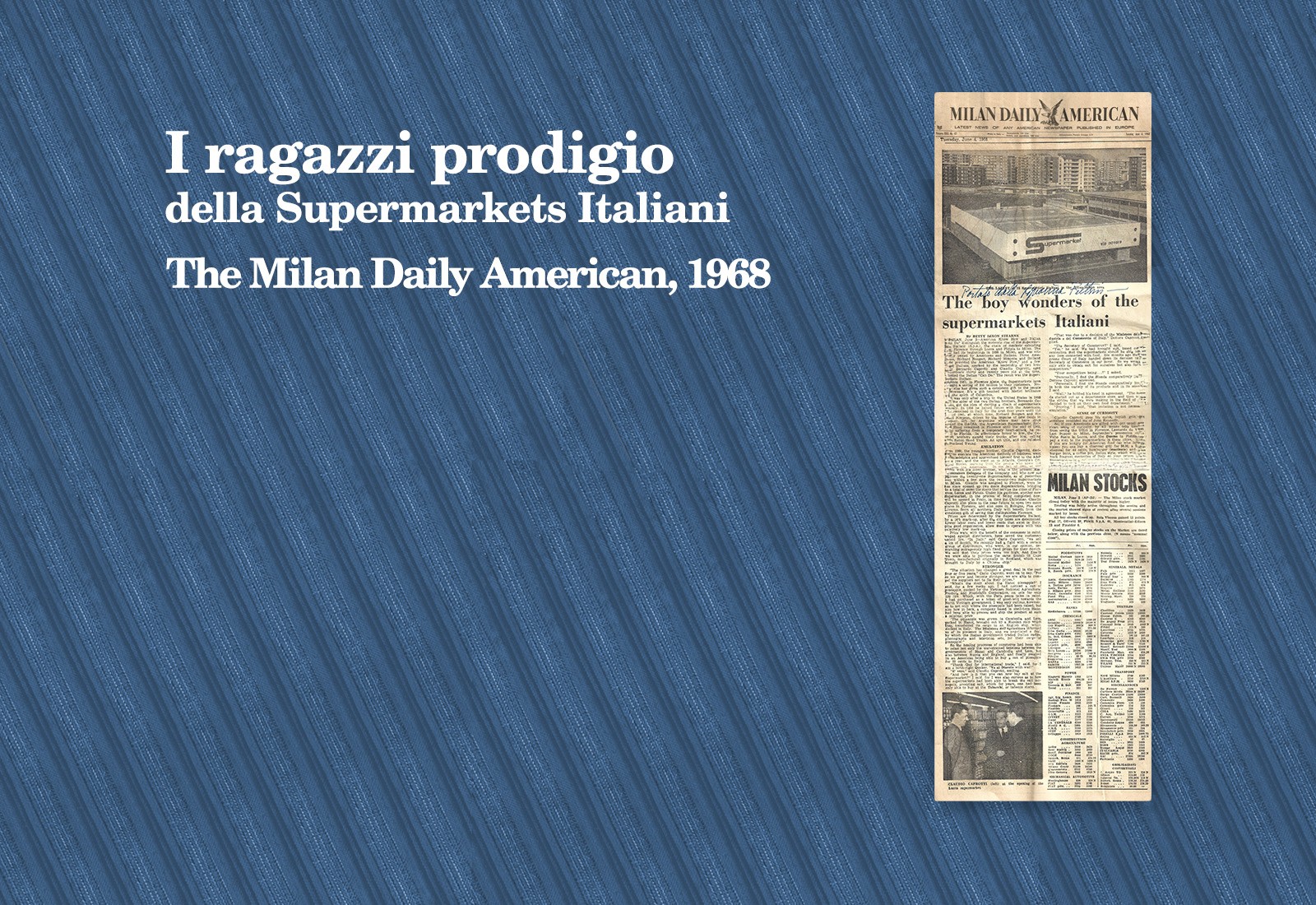
TRADUZIONE DELL’ARTICOLO IN INGLESE CHE TROVATE IN FONDO
Il pezzo è molto interessante per tre motivi : 1) la storia del percorso lavorativo di Claudio Caprotti, 2) l’esempio del mercato parallelo del whisky , 3) la vendita del sale 4) il giudizio sul reparto alimentari de La Standa.
I ragazzi prodigio della Supermarkets Italiani (Esselunga), da The Daily American 1968
Di Betty Dixon Stearns, Milan Daily American, 4 giugno, 1968
Il Know How americano e il “Can Do” italiano distinguono la fulminea ascesa della Supermarkets Italiani (SpA), la catena di mercati che si estende da Firenze attraverso Lucca e Pistoia fino a Milano. L’azienda ha avuto inizio nel 1958 a Milano ed era originariamente di proprietà di americani e italiani. Tre americani, Richard Bogaart, Richard Simpson e Rolland Hood, fornirono il “Know How” americano, mentre alcuni giovani italiani, spinti dalla guida di due fratelli, Bernardo Caprotti e Claudio Caprotti, all’epoca rispettivamente trentenni e ventenni, fornirono il “Can Do” italiano. Il risultato fù la Supermarkets Italiani.
Dal 1961, solo a Firenze, i Supermercati hanno portato ai loro clienti un risparmio di 10 milioni di dollari. Nessun altro ha fatto un dono così consistente ai fiorentini. È un dono toccato dalla brillantezza medicea e dallo spirito di Colombo.
Fu solo dopo un viaggio negli Stati Uniti nel 1955 che il maggiore dei due fratelli italiani, Bernardo Caprotti, ebbe l’idea di avviare una catena di supermercati in Italia. Nel 1958 unì le forze con gli americani, che rimasero in Italia per i successivi quattro anni fino alla fine del 1961, quando Richard Bogaart e Richard Simpson, spinti dall’impulso di nuovi campi da conquistare, partirono per l’Argentina dove da allora hanno fondato la DACSA, i Supermercati Argentini. Rolland Hood rimase a Firenze fino alla fine del 1962, quando, a causa di un temporaneo infarto, si ritirò in Florida. In suo affettuoso onore, i fratelli Caprotti chiamarono i loro camion con il suo nome, Robin Hood Trucks. Un titolo azzeccato, apprezzato da Rolland Young.
EMULAZIONE
Nel 1960, il fratello minore, Claudio Caprotti, decidendo di emulare i metodi di business americani, andò a Filadelfia e fece prima apprendistato presso l’A & P per un anno, e poi andò ai Colonial Stores di Atlanta, Georgia, imparando dalle persone che conoscevano il business: gli americani. Nel 1961, all’età di ventitré anni, torna a Milano e unisce le forze con il fratello maggiore, attuale Amministratore Delegato dell’azienda e che da ieri supervisiona i ventuno Supermercati – e nel giro di pochi giorni i ventidue – Supermercati di Milano. Claudio è stato assegnato a Firenze, dove da allora ha aperto altri due Supermercati, portando a un totale di sette i negozi che servono le città di Firenze, Lucca e Pistoia. Sotto la sua guida, un altro nuovo supermercato, attualmente in fase di completamento, verrà inaugurato a Prato, in tempo per Natale. Claudio Caprotti prevede inoltre nel prossimo futuro di aprire altri due negozi a Firenze, e anche a Bologna, Pisa e Livorno. Presto tutto il nord Italia beneficerà del dono costante del risparmio che contraddistingue Firenze.
Le guerre dei prezzi, rivolte ai consumatori e ai distributori, hanno fatto risparmiare ai clienti una cifra incalcolabile. “In Italia”, disse Carlo [Claudio] Caprotti, “vendiamo molto Scotch [whisky]. Di recente abbiamo avuto uno scontro con un certo gruppo di distributori che, a nostro avviso, chiedevano prezzi fissi scandalosamente alti per i loro Scotch. Abbiamo detto che i loro prezzi erano troppo elevati. E alla fine siamo riusciti ad acquistare a Città del Capo lo stesso Scotch, prodotto originariamente in Scozia, che è stato portato in Italia da una nave cinese”.
PIÙ FORTE
“La situazione è cambiata molto negli ultimi quattro o cinque anni”, ha proseguito Claudio Caprotti. “Perché man mano che cresciamo e diventiamo più forti, siamo in grado di costringere i fornitori a non fissare i loro prezzi”.
“Qual è la storia dell’ananas di Hanoi?”, dissi, perché qualche settimana fa avevo notato una lattina di ananas, confezionata dalla Vietnam National Agricultural Produce and Foodstuff Corporation, in vendita a sole 130 lire. Che, pensando ai colloqui di pace di Parigi, avevo acquistato come segno di buona volontà nei confronti del governo del Vietnam del Nord. Ero molto curiosa, tuttavia, non solo di sapere dove fosse stata coltivata l’ananas, ma anche come diavolo un’azienda con sede ad Hanoi, divisa in due come valve di una conchiglia, fosse riuscita a lavorare e spedire il prodotto a un prezzo così basso.
“L’ananas veniva coltivato in Cambogia e Laos, confezionato ad Hanoi, portato fuori da una nave russa che poi trasferiva il suo carico su una nave inglese, attraccata in Italia. Il Ministero dell’Agricoltura ci ha informato della sua presenza in Italia e abbiamo negoziato un accordo in base al quale il governo italiano ha scambiato radio, fonografi e televisori italiani con il loro carico di ananas!”.
Quindi il processo di guarigione del commercio era stato in grado di allentare non solo le tensioni sorte a causa della guerra tra i governi di Hanoi, Cambogia e Laos, ma anche tra Russia e Inghilterra e alla fine aveva portato un americano a poter acquistare una lattina di ananas per 23 centesimi in Italia!
“Grazie a Dio per il commercio internazionale”, dissi, perché sono un quacchero per diritto di nascita. “Va al Diavolo con la guerra!”
«È vero», disse Claudio Caprotti sorridendo.
“E com’è possibile ora acquistare sale al supermercato?” Ho detto perché ero anche curiosa di sapere come i supermercati fossero riusciti a rompere il monopolio del sale, fornendo sale che per anni si poteva acquistare solo nei Tabacchi, ovvero nelle tabaccherie.
“Ciò è dovuto ad una decisione del Ministero dell’Industria e del Commercio italiano”, ha risposto il dottor Caprotti.
“Il Segretario al Commercio?” Ho detto.
“Sì”, disse. “Avevamo intentato causa sostenendo che i supermercati avrebbero dovuto poter vendere qualsiasi prodotto alimentare. Sei mesi fa la Corte Suprema italiana ha emesso la sua decisione a nostro favore nei confronti del Segretario al Commercio. Quindi non siamo riusciti a procurarci il sale solo per noi stessi, ma anche per i nostri concorrenti.”
“I vostri concorrenti sono…?” Ho chiesto.
“Personalmente trovo la Standa relativamente limitata”, rispose il dottor Caprotti.
“Personalmente trovo che la Standa sia relativamente limitata sia nella varietà dei suoi prodotti che nel suo servizio”, ho affermato.
“Bene”, mosse la testa in segno di assenso. “La Standa ha iniziato come grande magazzino e poi, vedendo i progressi che stavamo facendo nel campo alimentare, ha deciso di aprire un proprio reparto alimentare”.
“A dimostrazione”, dissi, “che l’imitazione non è necessariamente emulazione”.
SENSO DI CURIOSITÀ
Claudio Caprotti fece il suo rapido sorriso da ragazzo, che in qualche modo mi ricordò John Kennedy.
Quindi, se voi Americani siete dotati del nostro solito senso di curiosità, prendetevi assolutamente una pausa dal vedere gli Uffizi a Firenze, l’Ultima Cena di Leonardo da Vinci a Milano, la processione del Volto Santo di settembre a Lucca e il Duomo a Pistoia, e fate una visita ai supermercati di quelle città. Lì, se avete fame di cibo americano (e chi non lo è, a volte) potete acquistare una griglia a carbone per $6.50, un sacchetto di panini per hamburger, una caffettiera in stile italiano, che riporterà alla mente ricordi profumati dell’Italia al vostro ritorno negli Stati Uniti e sarà un vero argomento di conversazione, un sacchetto da 300 grammi di caffè (più di mezza libbra) per 51 centesimi, un po’ di salsa barbecue, gelato e anguria e accomodatevi per un vero picnic americano. Stile fai da te!
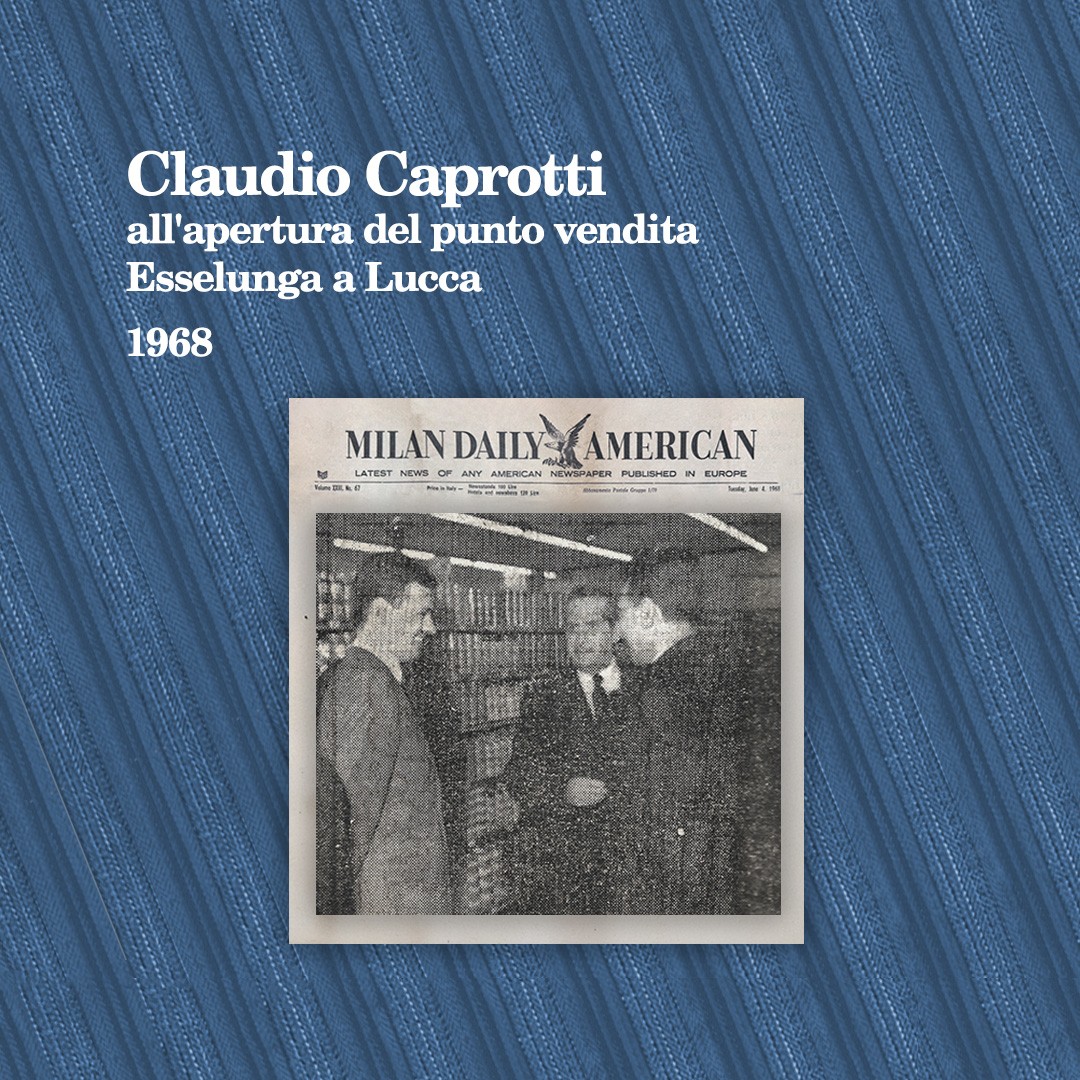
The boy wonders of the supermarkets Italiani
By BETTY DIXON STEARNS, Milan Daily American, June 4, 1968
American Know How and Italian “Can Do” distinguish the meteoric rise of the Supermarkets Italiani (S.p.A.), the chain of markets extending from Florence through Lucca and Pistoia to Milan. The firm had its beginnings in 1958 in Milan, and was originally owned by Americans and Italians. Three Americans, Richard Bogaart, Richard Simpson and Rolland Hood provided the American “Know How”, and a few young Italians, sparked by the leadership of two brothers, Bernardo Caprotti and Claudio Caprotti, aged respectively thirty and twenty years old at the time, supplied the Italian “Can Do”. The result was the Supermarkets Italiani.
Since 1961, in Florence alone, the Supermarkets have brought a saving of $10 million to their customers. Nobody else has given such a consistent gift to the people of Florence. It’s a gift touched with Medici brilliance and the spirit of Columbus.
It was only after a trip to the United States in 1955 that the older of the two Italian brothers, Bernardo Caprotti, got the idea of starting a chain of supermarkets in Italy. In 1958 he joined forces with the Americans, who remained in Italy for the next four years until the end of 1961, at which time, Richard Bogaart and Richard Simpson, Driven by the impulse of of new fields to conquer, left for Argentina where they have since started the DACSA, the Argentinian Supermarkets. Rolland Hood remained in Florence until the end of 1962, when suffering from a temporary heart-attack, he retired to Florida. In affectionate honor to him, the Caprotti brothers named their trucks after him, calling them Robin Hood Trucks. An apt title, and one relished by Rolland Young.
EMULATION
In 1960, the younger brother, Claudio Caprotti, deciding to emulate the American methods of business, went to Philadelphia and apprenticed itself first to the A&P for a year, and the went on to Atlanta Georgia’s Colonial Stores, learning from the people who knew the business the Americans. In the sall of 1961, at the age of twenty-three, he returned to Milan and joined forces with his older brother, who is the present Amministratore Delegato of the company and who now supervives the twenty-one Supermarkets, as of yesterday, and within a few days the twenty-two Supermarkets in Milan. Claudio was assigned to Florence, were he has since opened up two more Supermarkets, bringing to a total of seven the stores that service the cities of Florence, Lucca and Pistoia. Under his guidance, another new Supermarket, in the process of being completed now, will be opened in Prato., in time for Christmas. Claudio Caprotti also plans in the near future to open two more stores in Florence, and also ones in Bologna, Pisa and Livorno. Soon all northern Italy will benefit from the consistent gift of saving that distinguishes Florence.
Prices wars, with the benefit of the consumer in mind, waged against distributors, have saved the customers untold lire. “In Italy”, said Carlo Caprotti, “we sell a lot of Scotch. We recentlyhad a fight with a certain group of distributors. who were, in our opinion, demanding outrageously high fixed prices for their Scotch. We said that their proces were too high. And finally we were able to purchase the same Scotch in Cape Town, manufactured originally in Scotland, which was brought to Italy by a Chinese ship”.
STRONGER
“The situation has changed a great deal in the past four or five years”, Carlo Caprotti went on to say. “For as we grow and become stronger, we are able to compel the suppliers not to fix their prices”.
“What’s the story about the Hanoi pineapple?”, I said, for a few weeks ago, I had noticed a can of pineapple, packed by the Vietnam National Agricultural Produce and Foodstuff Corporation, on sale for only 130 lire. Which, with the Paris peace talks in mind, I had purchased as a token of good-will towards the North Vietnam government. I was very curious, however, as to not only where the pineapple had been raised, but also how in heck, a company based in shell-torn Hanoi had been able to process and ship the product at such a minimal price.
“The pineapple was grown in Cambodia and Laos, packed in Hanoi, brought out by a Russian ship which then transferred its cargo to an English ship, which docked in Italy. The Ministero dell’Agricoltura informed us of its presence in Italy, and we negotiated a deal, by which the Italian government traded Italian radios, phonographs and television sets, for their cargo of pineapple!”
So the healing process of commerce had been able to relax not only the war-strained tensions beetween the governments of Hanoi and Cambodia and Laos, bit also between Russia and England and finally resulted in an American being able to buy a can of pineapple for 23 cents in Italy!”
“Thank God for international trade”, I said, for I am a birth-right Quaker. “Va al Diavolo with war!”
“E’ vero“, said Claudio Caprotti, smiling.
“And how is that you can now buy salt at the Supermarket?”, I said for I was also curious as to how the supermarkets had been able to break the salt monopoly, providing salt, which for years one had been only able to buy at the Tabacchi, or tabacco stores.
“That was due to a decision of the Ministero dell’Industria e del Commercio of Italy”, Dottore Caprotti replied.
“The Secretary of Commerce?” I said.
“Yes” he said. “We had brought suit, based on the contention that the supermarkets should be able to sell any item connected with food. Six months ago the Supreme Court of Italy handed down its decision to the Secretary of Commerce in our favor. So we were not only able to obtain salt for ourselves but also for our competitors.”
“Your competitors being…?” I asked.
“Personally, I find the Standa comparatively limited”, Dottore Caprotti answered.
“Personally, I find the Standa comparatively limited in both the variety of its products and its service”, I said.
“Well” he bobbed his head in agreement. “The Standa started out as a department store, and then seeing the strides that we were making in the field of food, decided to tack on their own food department”.
“Proving”, I said, “that imitation is not necessarily emulation”.
SENSE OF CURIOSITY
Claudio Caprotti gave his quick boysh grin, that somehow reminded me of John Kennedy.
So, if you Americans are gifted with our usual sense of curiosity, by all means take time off from seeing the Uffizi in Florence, Leonardo da Vinci’s Last Supper in Milan, September’s procession of the Volto Santo in Lucca, and the Duomo in Pistoia, and pay a visit to the Supermarkets in those cities. There, if you are hungry for American food (as who isn’t, at times) you can buy a charcoal grill for $6.50, a bag of charcoal for 48 cents, hamburger (macinata) and hamburger buns, a coffee pot, Italian style, which will bring back fragrant memories of Italy on your return to the States and to be a real conversation piece, a 300 gram bag of coffee over a half pound for 51 cents, some barbecue sauce, ice-cream and watermelon, and settle down for a real American picnic. Do-it-yourself style!