My grandfather Guido Venosta, born in 1911, graduated in economics in Cambridge at St. John’s College, where he was a student of John Maynard Keynes, and in law in Pavia.
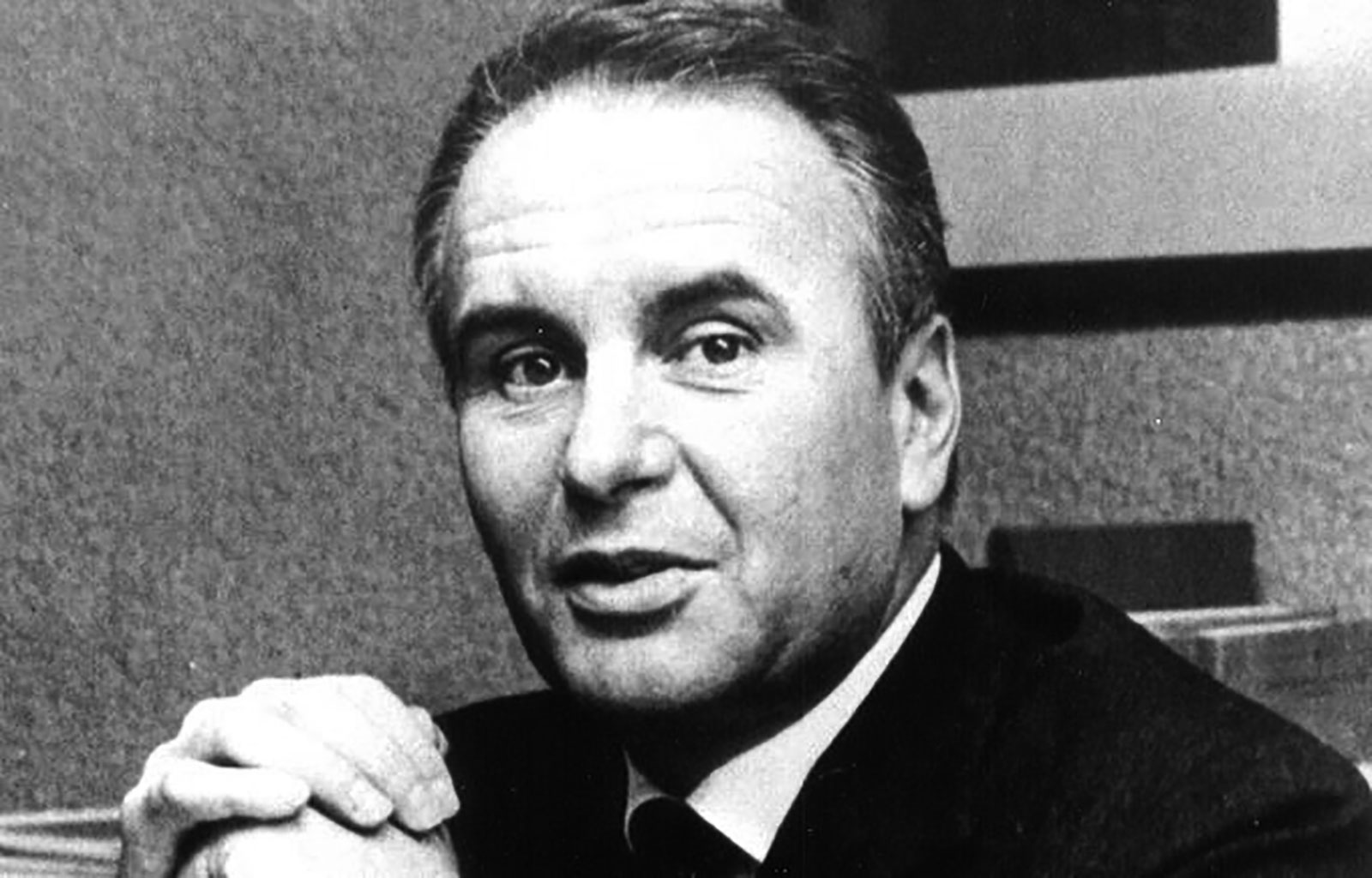
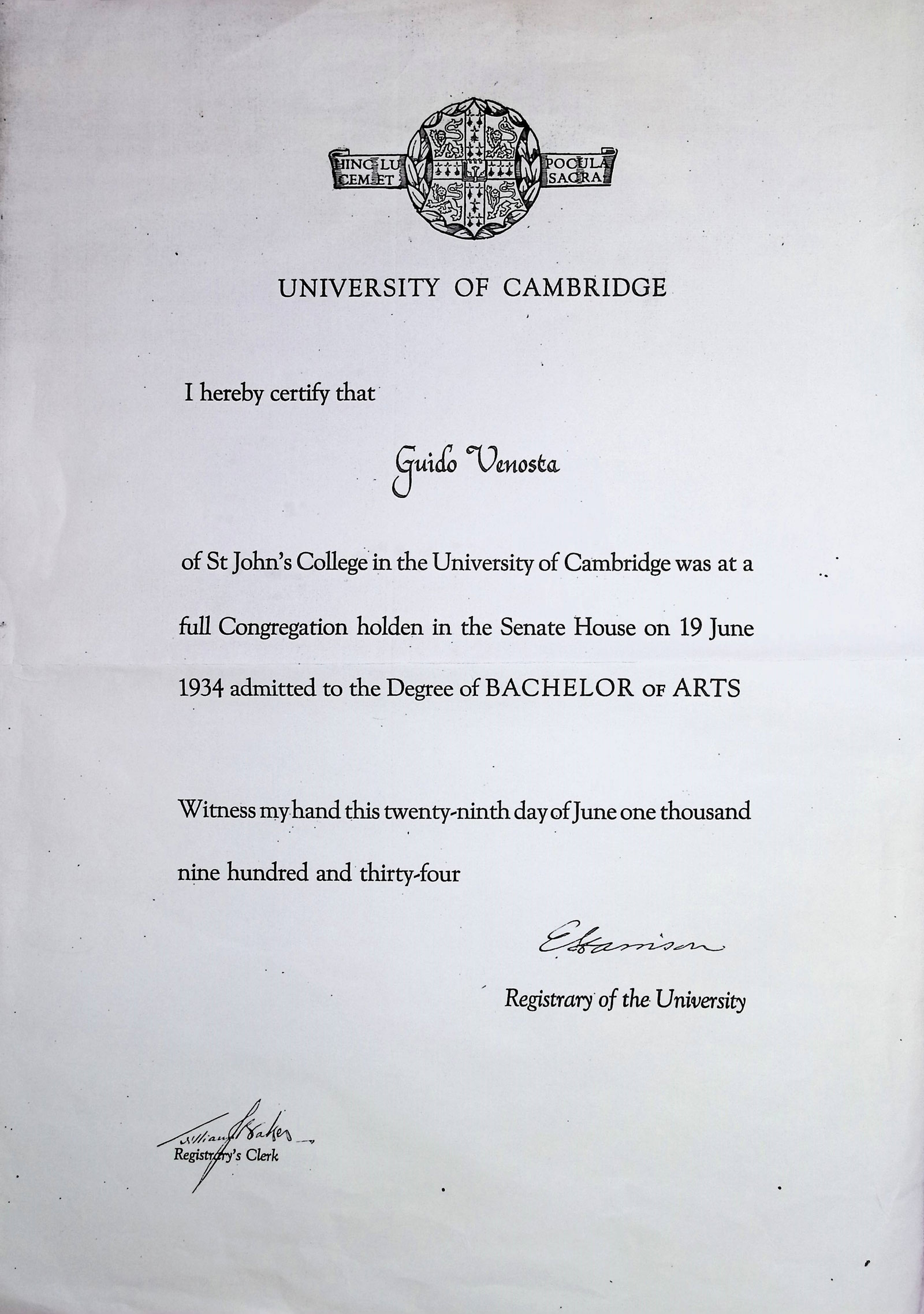
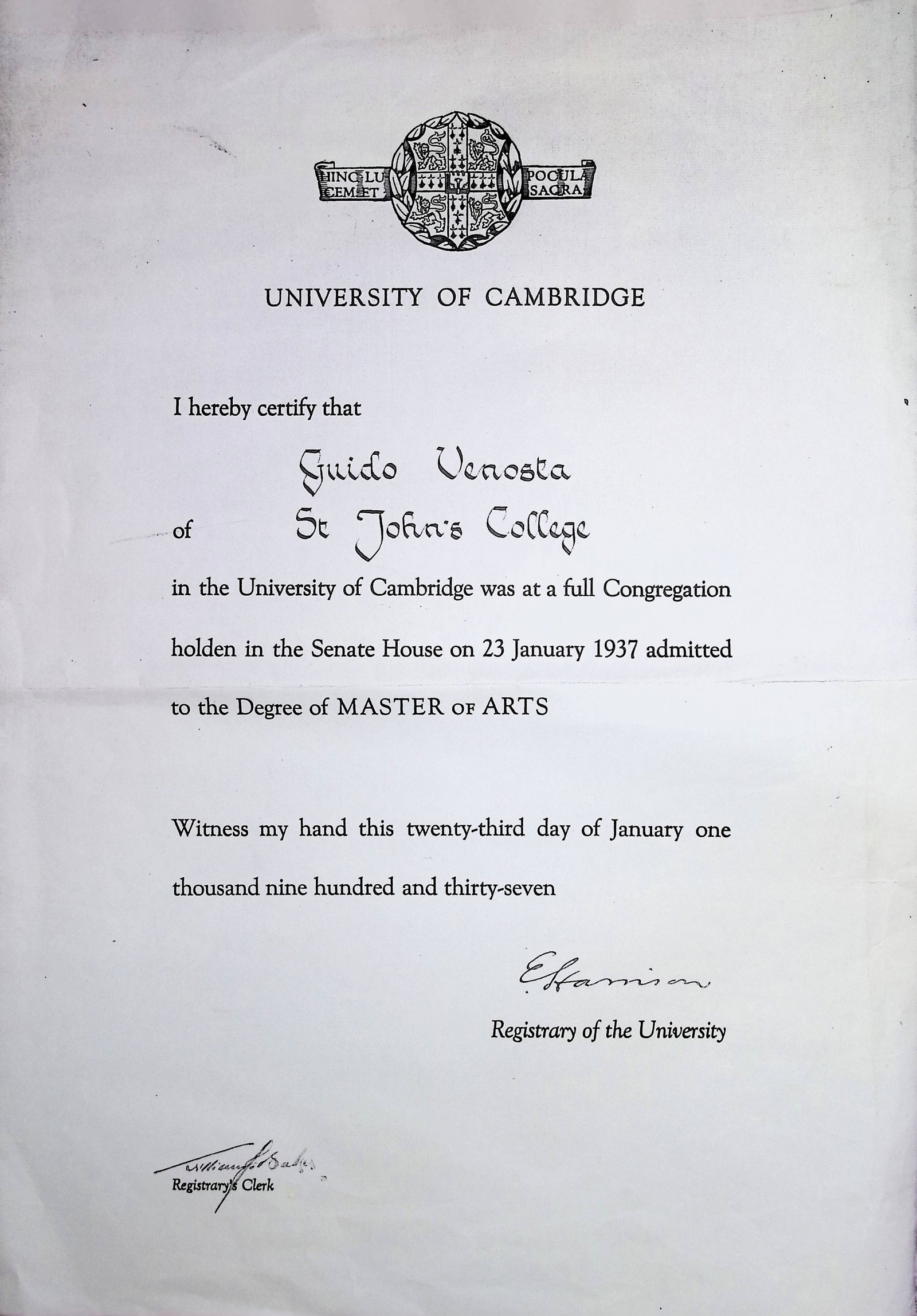
He was the most introverted of the three Venosta brothers. During the war he had been a cavalry captain. He worked at Pirelli – where his father Giuseppe, a ‘famous Pirelli engineer’, was Central Manager and Director – for his entire working life, from 1939 to 1977, holding high-profile positions both in Italy and in Britain, where he was placed for seven years, from 1956 to 1963, at the head of Pirelli Ltd, the British arm of the business based in London [1].
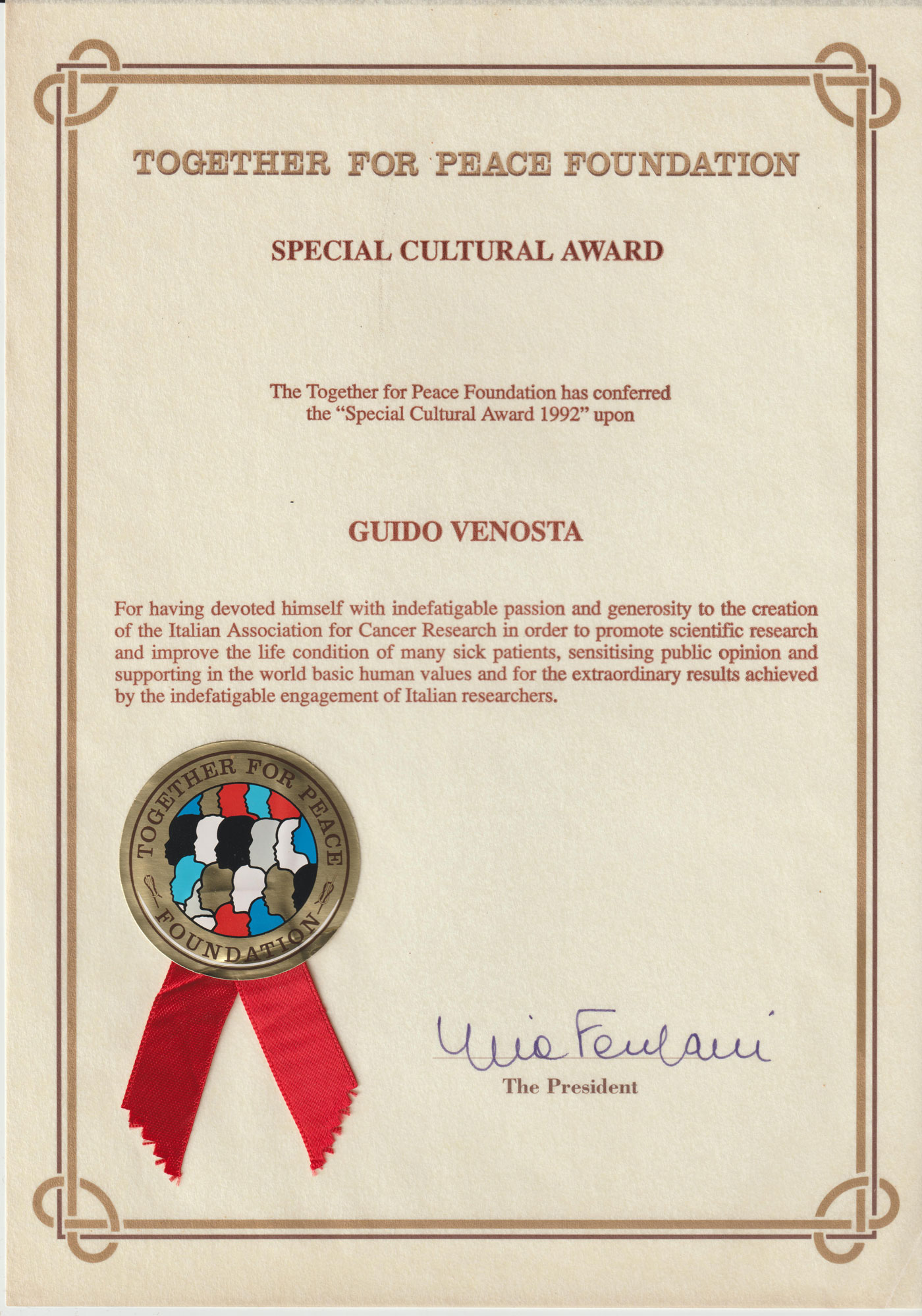
He then began working for the association full-time with great dedication and enthusiasm – his mother Argia, like his father Guido, had also died of cancer – sharing a small office with two other people and developingAIRC, which, under his leadership, became Italy’s largest private funding body in the fight against cancer.
Initiatives that have made the history of fundraising for the non-profit world, such as the ‘Health Oranges’ and the ‘Research Azaleas’, sold in town squares on Mother’s Day, were born thanks to the work done by his grandfather in the association, of which he was first vice-president and then president, from 1976 to 1996.
He was also responsible for the birth and setting up of the AIRC regional committees, one of the strong points of what had by then become a foundation and which, first under his visionary leadership and then continuing his work always adapting to the reality of the historical period, collected hundreds of millions of euros to fight a terrible disease.
Parallel to AIRC, in 1982 his grandfather created the Fondazione italiana per la ricerca sul cancro (FIRC), the AIRC’s ‘safe’, a patrimonial entity to guarantee, beyond the financial flow from membership fees, the future of oncological research.
As FIRC president, he promoted and implemented, among others, three major initiatives:
- The establishment of the FIRC Research Units (the first initiative of its kind in Italy), scientific nuclei working on specific advanced oncological topics, set up and financed directly by the Foundation at the country’s major research facilities;
- The institution of the biennial ‘Guido Venosta’ Prize, reserved for researchers who have particularly distinguished themselves in the field of research aimed at developing new therapeutic approaches to neoplasms, a strong signal to draw the public’s attention to the pragmatic results of research and awarded by the President of the Republic during a solemn ceremony at the Quirinale; it also consists of a 50,000 euro scholarship .
- The donation, in 1996, of two billion lire over ten years to the University of Milan for the establishment of a chair in medical oncology, the first historic private contribution to the Italian university for the creation of integrated teaching at the highest academic level [2].
Returning to the association, the figures speak for themselves: during his presidency, the AIRC reached 1,700,000 members (the highest number in Italy among non-profit organisations), disbursed 285 billion lire for research and over 2,500 scholarships worth over 25 billion lire. FIRC had assets of around 100 billion lire.
In 2021, AIRC and FIRC merged, and the figures from the last balance sheet for the AIRC Foundation are truly flattering: 17 regional committees, 20,000 volunteers, 4,500,000 members, assets of 137 million euros. And in the era of immediate and global dissemination and communication, it has taken particular care over its presence on every possible channel: more than 13,000,000 visitors to its website, more than 1,100,000 newsletter subscribers and followers on the main social networks, an important presence on the traditional press, television and radio channels, but also the use of cutting-edge technologies such as podcasts or webinars on YouTube that have led, here too, to thousands of views, interviews, mentions.. [3].
Milan rewarded him with the ‘Ambrogino d’Oro‘, the inscription among the well-deserving of the city and the nation in the Famedio del Monumentale, and in 2003, the dedication of a street, a side street of Viale Sarca: the plaque recalls his role as a ‘pioneer of non-profit‘.
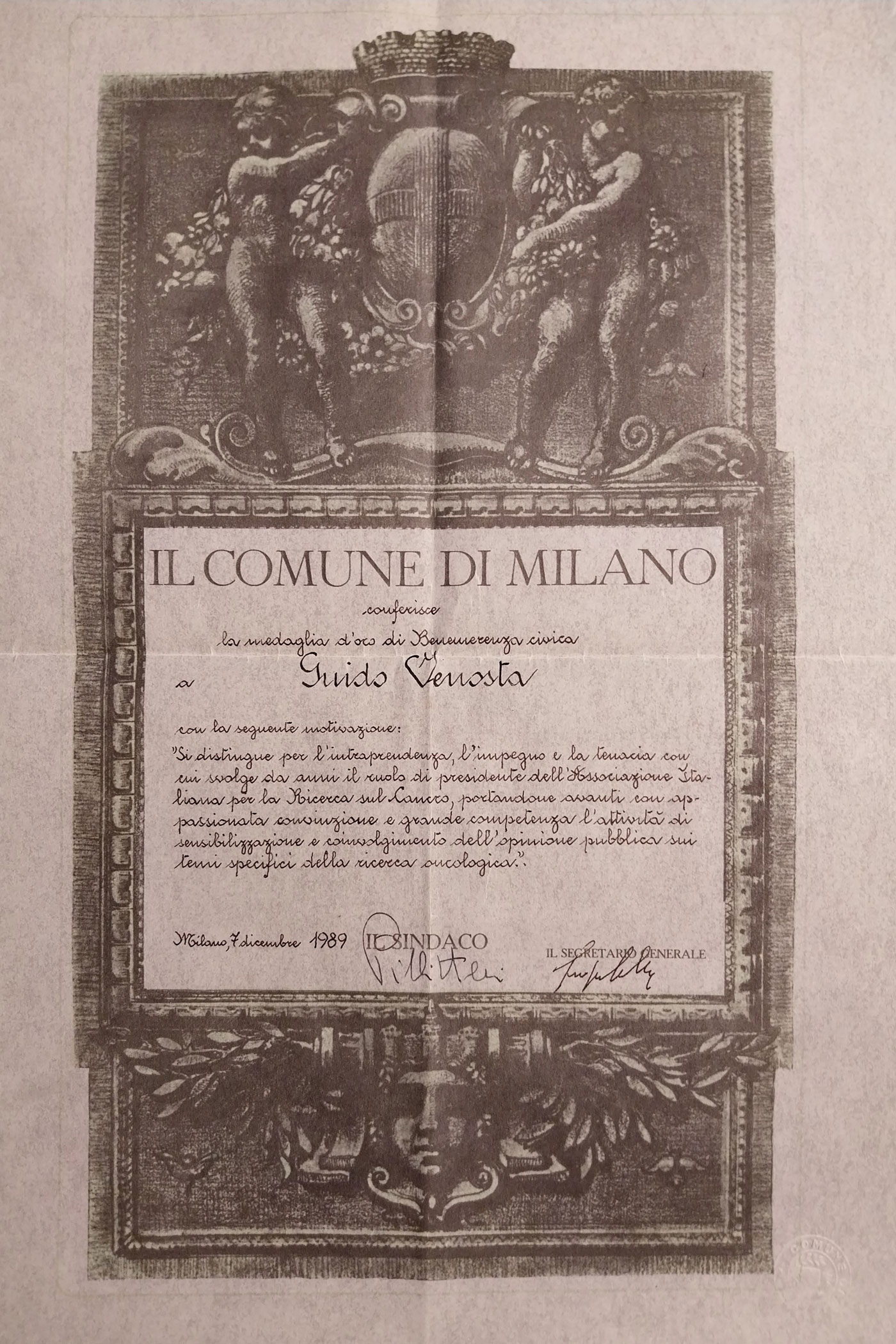
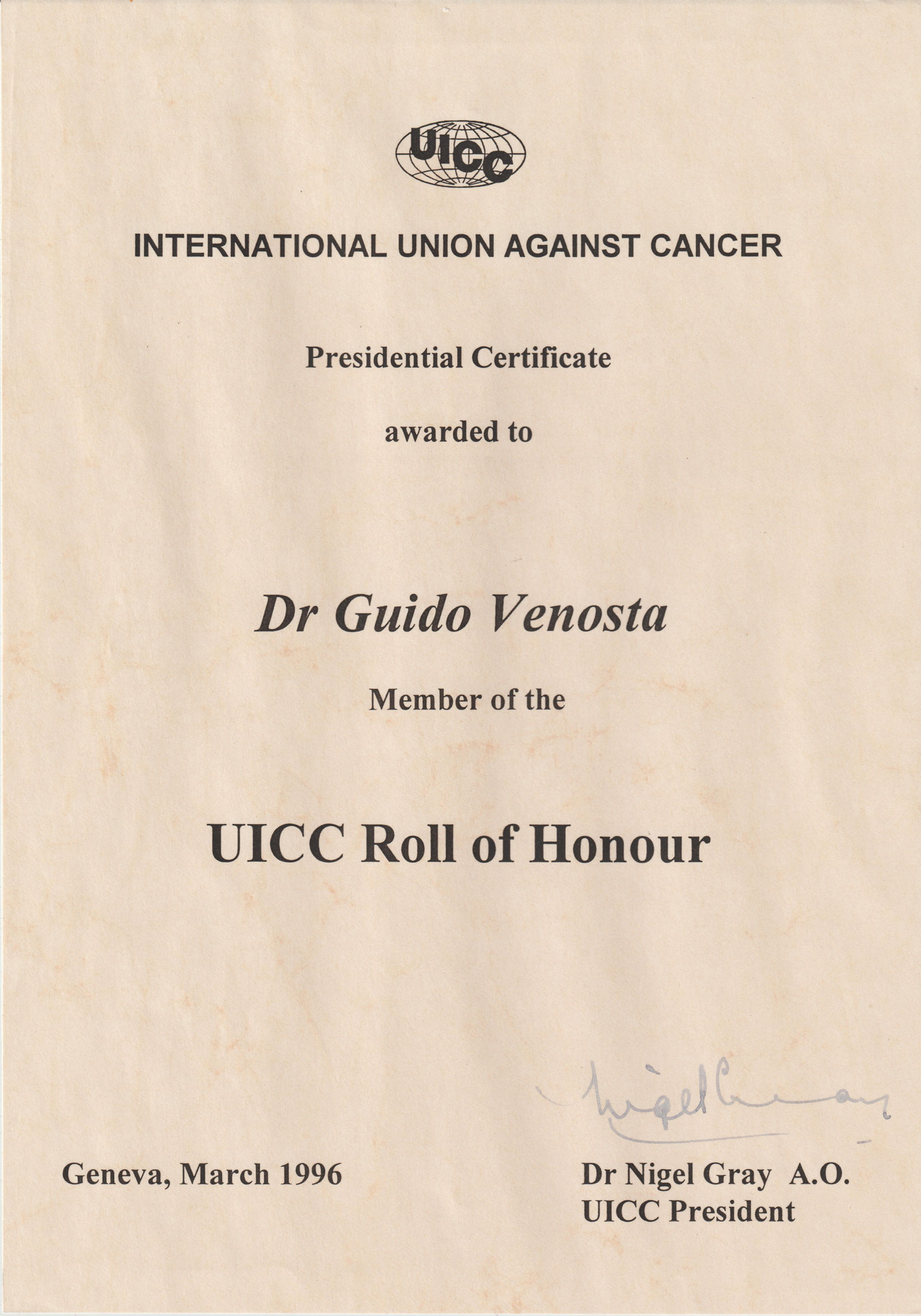
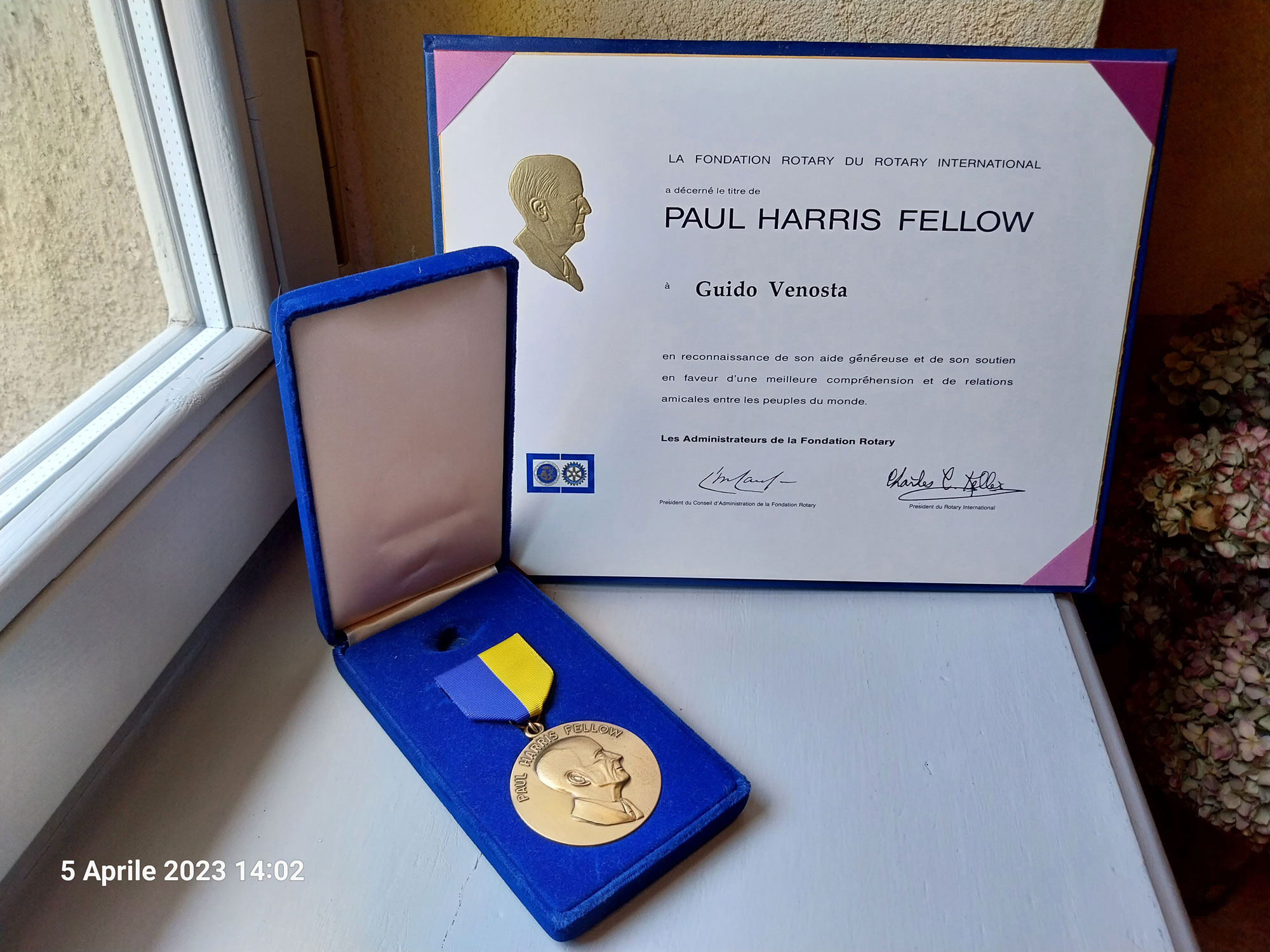
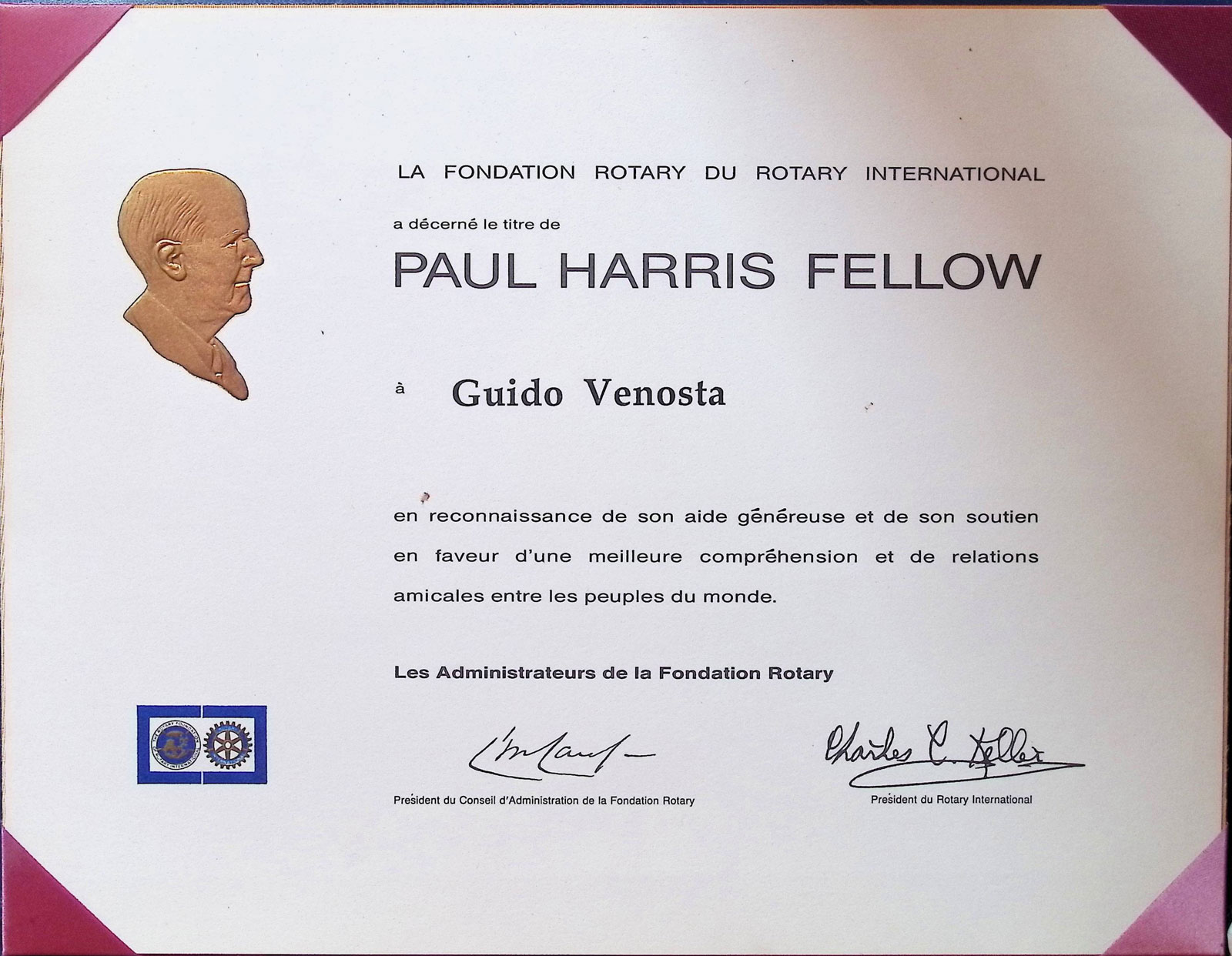
Guido Venosta also received other important prizes and awards, including:
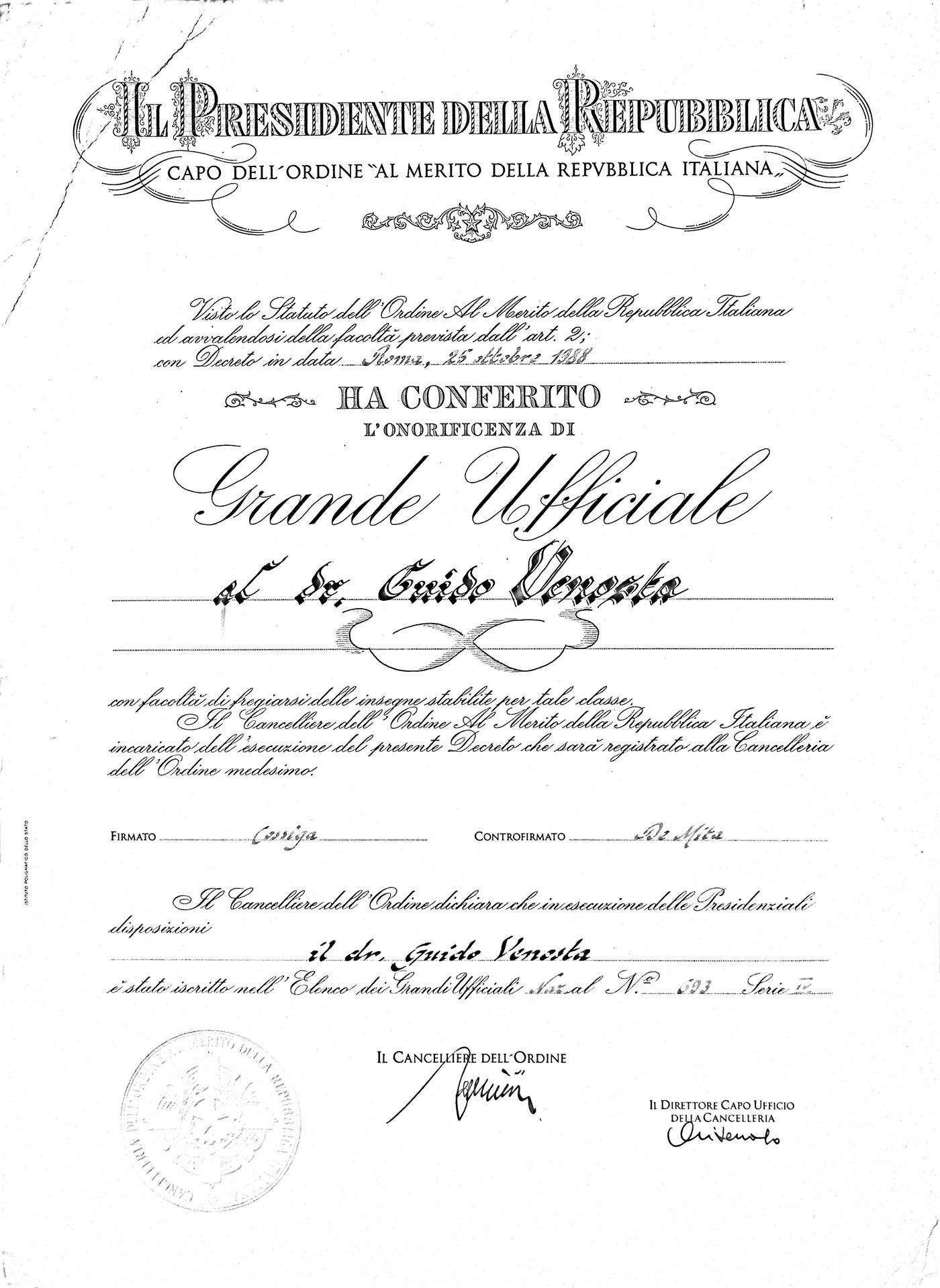
- The appointment as Grand Officer of the Italian Republic, 1988;
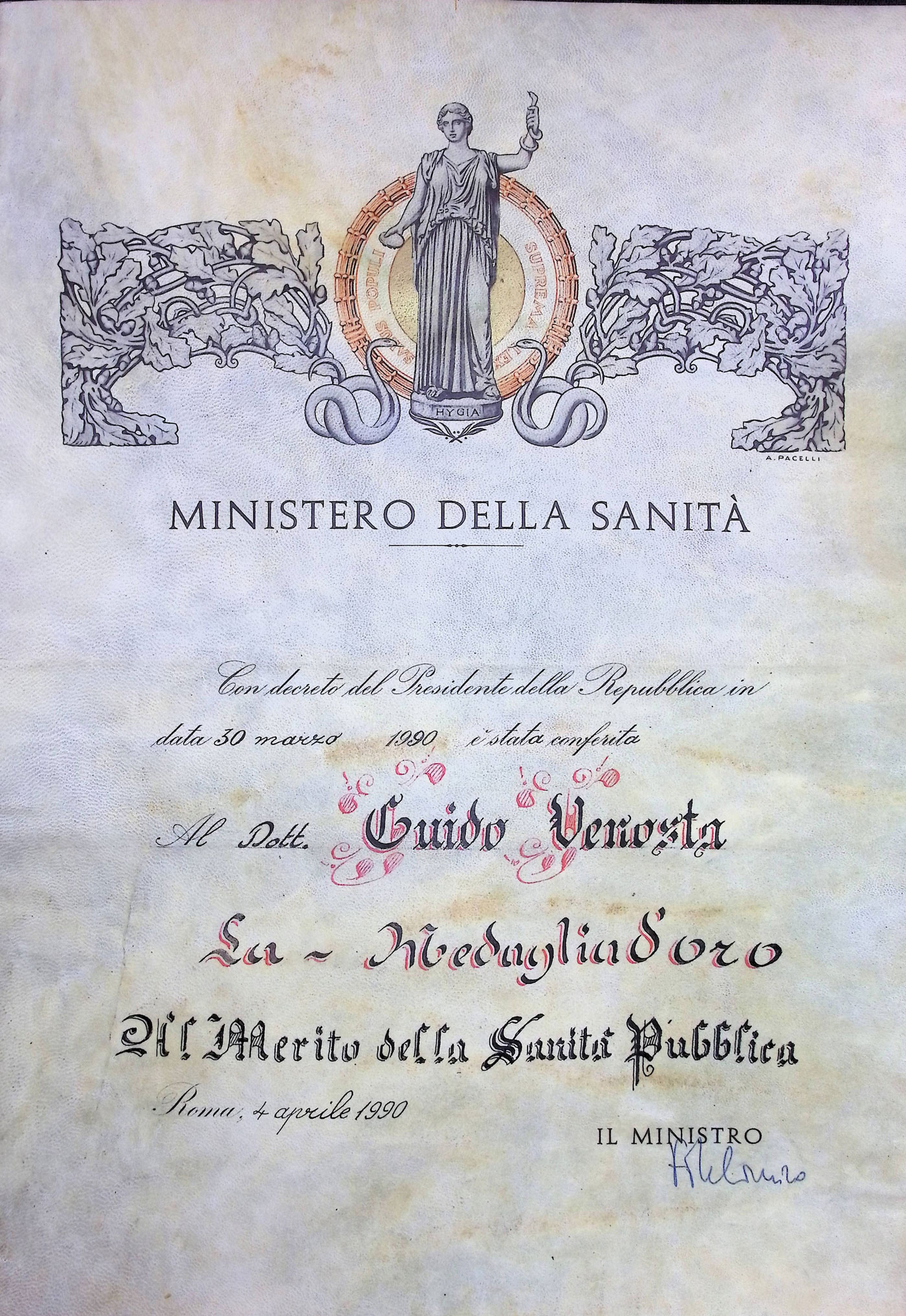
- The Gold Medal of the Ministry of Health for civil merits, 1990;
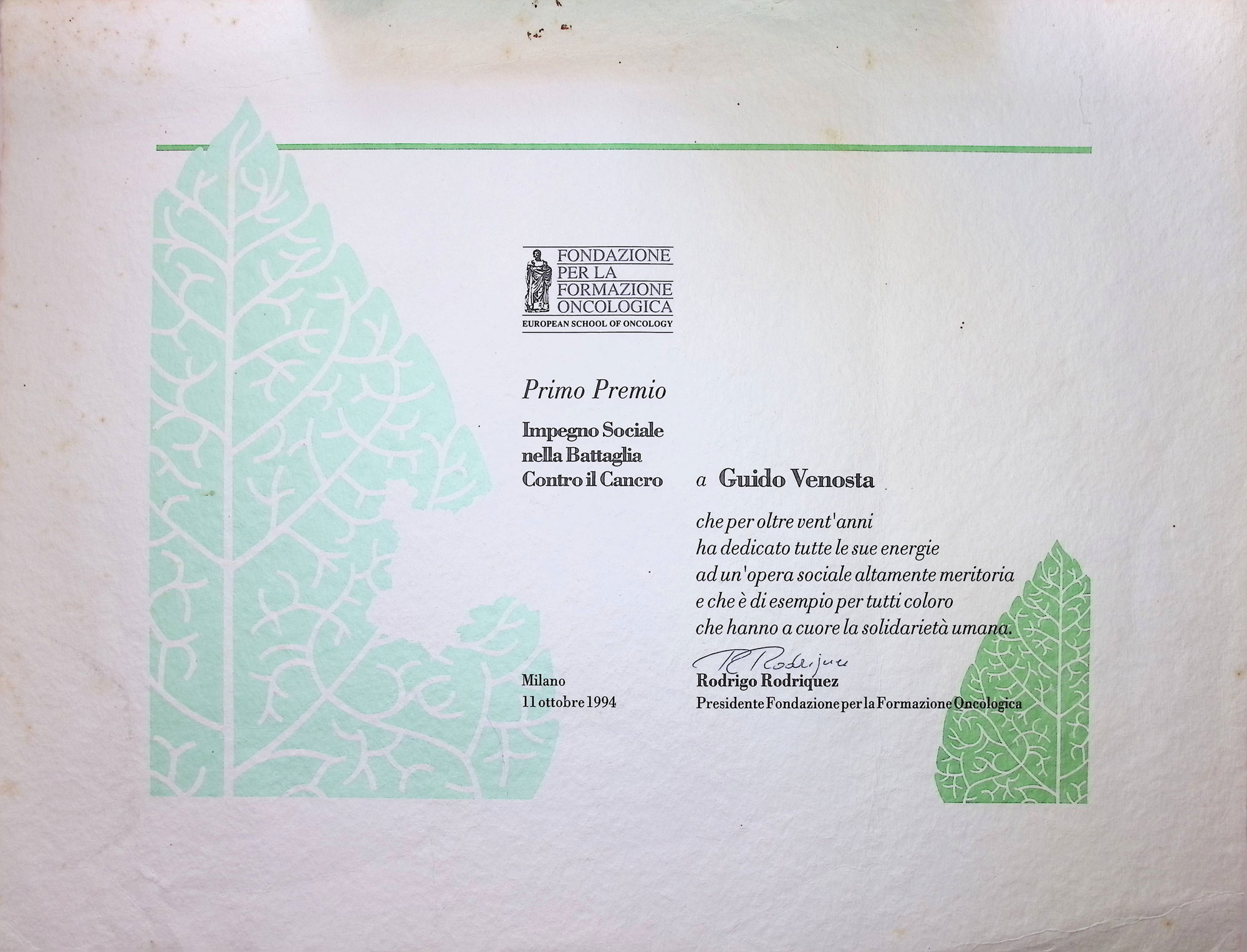
- The Fecs – Pezcoller Recognition Award for contribution to oncology, 1994.
After leaving the executive positions ofAIRC in 1994 and FIRC in 1996, Guido Venosta was Honorary President of both organisations until his death in Milan in 1998. He was also for many years a member of the Board of Directors of the Istituto Nazionale dei Tumori and a member of the Council of the European Institute of Oncology.
His commitment was not limited to the AIRC. Of liberal ideas by family tradition, he joined the PLI (Italian Liberal Party), and as a candidate in the municipal elections he was a member – as a councillor in Milan – of the council of three mayors, Pietro Bucalossi (1964 – 1970), Aldo Aniasi (1970 – 1980) and Carlo Tognoli (1980 – 1986).
During that time, he represented the city in the Board of Directors of the Piccolo Teatro di Milano, then headed by Paolo Grassi, Nina Vinchi and Giorgio Strehler.
[1] V. Pirelli Archive, consulted thanks to Marco Tronchetti Provera
[2] P.P. PRETI, Con il contributo FIRC l’Oncologia salt in cattedra, in “Fondamentale. Notiziario AIRC” June 1996.
[3] V Bilancio sociale AIRC 2021 (bilanciosociale.airc.it), p. 44.
Other sources: Giuseppe Caprotti archive and AIRC archive.
Under : other certificates received by my grandfather, Guido Venosta