Cancer Array
(
[296] => Array
(
[0] => Beppo Caprotti
[1] => (1837-1895)
[2] => Giuseppe, detto “Beppo”, il mio trisnonno, è il primogenito di Bernardo, fondatore della ditta “Bernardo Caprotti di Giuseppe” che sarà il nucleo della prima manifattura tessile veramente industriale. Prima con il fratello minore Carlo, poi da solo, intraprende un progetto di meccanizzazione e ampliamento che porta la Caprotti a essere una delle più moderne aziende tessili in Italia.
[3] => Giuseppe, known as “Beppo,” my great-great-grandfather, was the eldest son of Bernardo, founder of the company “Bernardo Caprotti di Giuseppe,” which became the cornerstone of the first truly industrial textile manufacturing enterprise. Working first alongside his younger brother Carlo and later on his own, he launched an ambitious program of mechanization and expansion that transformed Caprotti into one of the most modern textile companies in Italy.
)
[300] => Array
(
[0] => Carlo Caprotti
[1] => (1845-1926)
[2] => Carlo, figlio di Bernardo, fondatore della ditta “Bernardo Caprotti di Giuseppe”, contribuì fin da giovane allo sviluppo dell’azienda, viaggiando all’estero per studiare e acquistare macchinari. Sposò una donna zurighese e, dopo la separazione dal fratello Giuseppe “Beppo”, si trasferì a Bergamo, dove divenne un industriale cotoniero di successo.
[3] => Carlo, the son of Bernardo — founder of the company Bernardo Caprotti di Giuseppe — contributed from a young age to the growth of the business, traveling abroad to study and purchase machinery. He married a woman from Zurich and, after parting ways with his brother Giuseppe “Beppo,” moved to Bergamo, where he became a successful cotton industrialist.
)
[294] => Array
(
[0] => Giuseppe Caprotti, esploratore
[1] => (1862-1919)
[2] => Si avventura in terre lontane, diventando una figura importante nelle relazioni e nel commercio in Arabia. Vivrà 34 anni nello Yemen come il solo occidentale residente, trattando, fra gli altri, il prezioso caffè arabica. Dopo la prima guerra mondiale torna in Italia, dove muore.
[3] => He set out for distant lands, establishing himself as a prominent figure in commerce and diplomacy in Arabia. For 34 years he lived in Yemen, the only resident Westerner at the time, trading in valuable goods such as the prized Arabica coffee. After the First World War, he returned to Italy, where his life came to an end.
)
[281] => Array
(
[0] => Nardo Caprotti
[1] => (1868-1928)
[2] => Figlio di Giuseppe e di Giuseppina Polti, succede al padre nella guida della Manifattura Caprotti. Sindaco di Albiate (1896-1907). Sposa la cugina Bettina Caprotti e ha tre figli: Carolina, Silvia e Peppino. Sempre interessato ai temi sociali, fonda con altri la società di Mutuo Soccorso fra Esercenti Operai e Contadini di Albiate, Triuggio, Sovico e Limitrofi nel 1905, e la Mutua Cooperativa Consumo a Ponte Albiate nel 1920, che ancora oggi gestisce quattro supermercati ad insegna Coop.
[3] => The son of Beppo, he succeeded his father at the helm of Manifattura Caprotti and served as Mayor of Albiate from 1896 to 1907. He married his cousin Bettina Caprotti, with whom he had three children — Carolina, Silvia, and Peppino. Deeply committed to social progress, in 1905 he co-founded the Mutual Aid Society for Workers, Artisans, and Farmers of Albiate, Triuggio, Sovico, and neighboring towns, and in 1920 established the Mutual Consumer Cooperative of Ponte Albiate, which still operates today under the Coop brand, managing four supermarkets.
)
[277] => Array
(
[0] => Peppino Caprotti
[1] => (1898-1952)
[2] => Figlio di Bernardo e di Bettina Caprotti, succede al padre alla guida della Manifattura Caprotti, senza gli utili della quale l’avventura dell’Esselunga non sarebbe stata possibile. Sposa Marianne Maire, dalla quale ha i figli Bernardo, Guido e Claudio.
[3] => Son of Bernardo and Bettina Caprotti, he succeeded his father in leading the Manifattura Caprotti—profits from which later made the Esselunga venture possible. He married Marianne Maire, with whom he had three sons: Bernardo, Guido, and Claudio.
)
[282] => Array
(
[0] => Marianne Maire Caprotti
[1] => (1906-1983)
[2] => Figlia di Georges Maire e di Fernande Kampmann, nata in Francia, conosce Peppino Caprotti in soggiorno studio nella sua città e lo segue ad Albiate. Avranno tre figli, Bernardo, Guido e Claudio. Grazie a un cugino americano, Alfred M. Ellinger, figlio di sua zia Lucie Kampmann, riesce a far beneficiare la Manifattura Caprotti dei fondi del Piano Marshall, che rilanceranno le fortune dell’azienda nel dopoguerra.
[3] => Daughter of Georges Maire and Fernande Kampmann, she was born in France, where she met Peppino Caprotti during his study stay in her hometown, later following him to Albiate. The couple had three children — Bernardo, Guido, and Claudio. Thanks to her American cousin, Alfred M. Ellinger, son of her aunt Lucie Kampmann, she helped the Manifattura Caprotti secure Marshall Plan funding, which revitalized the company’s fortunes in the postwar years.
)
[283] => Array
(
[0] => Guido Caprotti
[1] => (1929-2012)
[2] => Cofondatore di GS e di Esselunga. È stato amministratore delegato della Manifattura Caprotti. Sposa Lu Austoni, da cui avrà due figlie, Benedetta ed Elisabetta.
[3] => Co-founder of GS and Esselunga, he also served as CEO of the Manifattura Caprotti. He married Lu Austoni, with whom he had two daughters, Benedetta and Elisabetta.
)
[284] => Array
(
[0] => Claudio Caprotti
[1] => (1938-2026)
[2] => Figlio di Peppino e di Marianne Maire. Azionista di Esselunga e gestore della filiale fiorentina, ha imparato il mestiere in America presso A&P di Filadelfia e i Colonial Stores di Atlanta. Sposa Paola Albera, da cui avrà Fabrizio ed Andrea.
[3] => Son of Peppino and Marianne Maire, he was a shareholder of Esselunga and manager of the Florence branch. He learned the trade in the United States at A&P in Philadelphia and at Colonial Stores in Atlanta. He married Paola Albera, with whom he had two sons, Fabrizio and Andrea.
)
[285] => Array
(
[0] => Bernardo Caprotti detto Bernardino
[1] => (1925-2016)
[2] => Figlio di Peppino e di Marianne Maire. Grazie al fratello Guido, diventa socio della Supermarkets Italiani che apre il primo supermercato italiano. Sposa in prime nozze Giorgina Venosta, da cui ha Giuseppe e Violetta, e in seconde Giuliana Albera, dalla quale ha Marina Sylvia.
[3] => Son of Peppino and Marianne Maire, thanks to his brother Guido he became a partner in Supermarkets Italiani, which opened the first supermarket in Italy. He first married Giorgina Venosta, with whom he had two children, Giuseppe and Violetta, and later Giuliana Albera, with whom he had Marina Sylvia.
)
[286] => Array
(
[0] => Nelson Rockefeller
[1] => (1908-1979)
[2] => Magnate e politico statunitense, fonda la IBEC, società con la quale arriva in Italia, e con dei soci locali - tra i quali Marco Brunelli, Bernardo e Guido Caprotti -, apre nel 1957 a Milano il primo supermercato italiano, la futura Esselunga.
[3] => An American tycoon and politician, he founded IBEC, the company through which he entered Italy. Together with local partners — including Marco Brunelli and Bernardo and Guido Caprotti — he opened in Milan, in 1957, the first Italian supermarket, which would later become Esselunga.
)
[287] => Array
(
[0] => James H. Angleton
[1] => (1889-1973)
[2] => Agente del controspionaggio statunitense nell’OSS, antenato della CIA, prima e durante la Seconda guerra mondiale, è l’uomo cui il magnate americano Nelson Rockefeller affida la missione di sondare il terreno per capire se si possa portare in Italia attraverso la società IBEC il benessere economico e sociale di stampo americano con i supermercati.
[3] => An agent of the U.S. Counterintelligence Service within the OSS — the forerunner of the CIA — before and during the Second World War, he was the man entrusted by American tycoon Nelson Rockefeller with a key mission: to assess whether it would be possible to bring to Italy, through the IBEC corporation, the model of American-style economic and social prosperity embodied by the supermarket.
)
[295] => Array
(
[0] => Gianni Albertini
[1] => (1902-1978)
[2] => Ingegnere di formazione, alpinista, esploratore, trasvolatore. Nel 1929 organizza una coraggiosa missione per ritrovare i dispersi della sfortunata spedizione del dirigibile "Italia" di Umberto Nobile, precipitato al Polo Nord l'anno precedente.
[3] => An engineer by training, as well as an alpinist, explorer, and pioneer of flight, in 1929 he led a bold expedition to rescue the missing crew of Umberto Nobile’s ill-fated airship Italia, which had crashed near the North Pole the previous year.
)
[288] => Array
(
[0] => Marco Brunelli
[1] => (1927-)
[2] => È stato il primo Presidente di Esselunga. Grazie al suo contatto con J. H. Angleton, che agisce per conto di N. Rockefeller, trova soci interessati ad aprire supermercati in Italia. Coinvolge Guido e Bernardo Caprotti e nel 1957 apre a Milano il primo supermercato del Paese.
[3] => He was the first President of Esselunga. Through his connection with J. H. Angleton, who acted on behalf of Nelson Rockefeller, he brought together partners interested in opening supermarkets in Italy. He involved Guido and Bernardo Caprotti, and in 1957 opened the country’s first supermarket in Milan.
)
[278] => Array
(
[0] => Giorgina Venosta
[1] => (1940-2021)
[2] => Esperta d'arte, consulente e imprenditrice. Figlia di Guido Venosta e di Luisa Quintavalle, moglie in prime nozze di Bernardo Caprotti, in seconde di Aldo Bassetti. Dal primo matrimonio ha avuto Giuseppe e Violetta.
[3] => An art expert, consultant, and entrepreneur, she was the daughter of Guido Venosta and Luisa Quintavalle. She was first married to Bernardo Caprotti and later to Aldo Bassetti. From her first marriage she had two children, Giuseppe and Violetta.
)
[289] => Array
(
[0] => Aldo Bassetti
[1] => (1926-2022)
[2] => Proveniente da una delle grandi famiglie del tessile lombardo, fu imprenditore illuminato e coraggioso, impegnato su moltissimi fronti, tra cui l’editoria (fu tra i maggiori sostenitori de “L’Espresso” e uno dei fondatori de “La Repubblica”) e la distribuzione di Coca Cola. E infine la birra, già uno dei business di famiglia, che lui ha sviluppato egregiamente. È stato il secondo marito di Giorgina Venosta, già moglie di Bernardo Caprotti.
[3] => Coming from one of Lombardy’s great textile families, he was an enlightened and courageous entrepreneur, active across many fields — from publishing, as one of the key backers of L’Espresso and a co-founder of La Repubblica, to the distribution of Coca-Cola in Italy. He later expanded the family’s long-standing brewing business with remarkable success. He was the second husband of Giorgina Venosta, formerly married to Bernardo Caprotti.
)
[290] => Array
(
[0] => Umberto Quintavalle
[1] => (1887-1959)
[2] => Ingegnere e grande sportivo di montagna, è per oltre un trentennio, insieme al fratello Bruno Antonio, alla guida della fabbrica Magneti Marelli. Sposa Adele Portaluppi e ha tre figli, Ferruccio e le gemelle Ida, moglie dell’esploratore Gianni Albertini, e Luisa, madre di Giorgina Venosta.
[3] => An engineer and passionate mountain sportsman, he led the Magneti Marelli company for over three decades together with his brother Bruno Antonio. He married Adele Portaluppi and had three children: Ferruccio, and the twin daughters Ida — who married the explorer Gianni Albertini — and Luisa, mother of Giorgina Venosta.
)
[291] => Array
(
[0] => Luisa Quintavalle
[1] => (1920-2009)
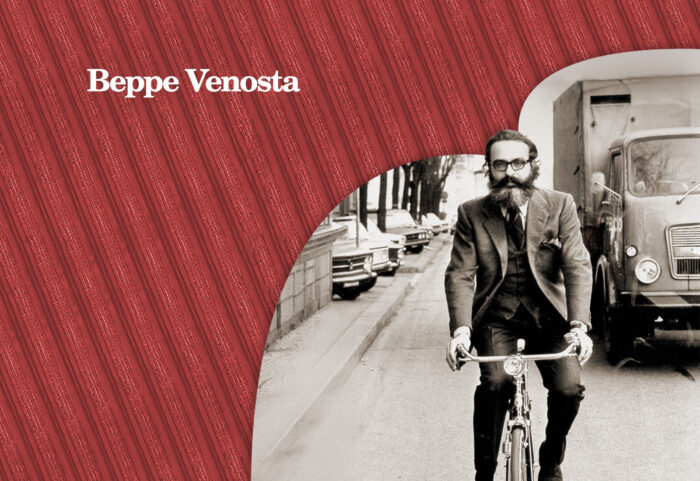
[2] => Figlia di Umberto, vicepresidente della Magneti Marelli, donna colta e protagonista della moda milanese, sposa in prime nozze Guido Venosta, da cui ha i figli Giorgina e Giuseppe (Beppe), in seconde Niccolò Theodoli, da cui ha la figlia Diana.
[3] => Daughter of Umberto and Adele Portaluppi, a cultured woman and a leading figure in Milan’s fashion scene, she first married Guido Venosta, with whom she had two children, Giorgina and Giuseppe (Beppe), and later Niccolò Theodoli, with whom she had a daughter, Diana.
)
[276] => Array
(
[0] => Guido Venosta
[1] => (1911-1998)
[2] => Figlio di Giuseppe, Direttore generale della Pirelli, entra anche lui nella fabbrica milanese dove trascorre l’intera carriera lavorativa. Con visione imprenditoriale unica all’epoca, porta la sua esperienza di manager nell’AIRC-Associazione nazionale per la ricerca sul cancro. Sposa in prime nozze Luisa Quintavalle, da cui ha Giorgina e Beppe, e in seconde Carla Fossati Bellani.
[3] => Son of Giuseppe, general manager of Pirelli, he too joined the Milan-based company, where he spent his entire professional career. With an entrepreneurial vision well ahead of his time, he brought his managerial experience to AIRC - the Italian Association for Cancer Research, helping to shape its early development. He married Luisa Quintavalle as his first wife, with whom he had two children, Giorgina and Beppe, and later married Carla Fossati Bellani.
)
[279] => Array
(
[0] => Carla Fossati Bellani Venosta
[1] => (1924-2019)
[2] => Architetto e designer di fama internazionale, sposa Guido Venosta. Dopo la morte del marito istituisce la “Fondazione Europea Guido Venosta. L’uomo contro il cancro”, ora “Fondazione Guido Venosta”.
[3] => An internationally renowned architect and designer, she married Guido Venosta. After her husband’s death, she established the “European Foundation Guido Venosta. Man Against Cancer”, now known simply as the “Fondazione Guido Venosta”.
)
[280] => Array
(
[0] => Giuseppe Caprotti
[1] => (1960-)
[2] => Imprenditore, autore storico e Presidente della Fondazione Guido Venosta, Giuseppe Caprotti ha ricoperto incarichi dirigenziali in Esselunga fino al ruolo di Amministratore Delegato. Nell’aprile 2020, nel pieno della pandemia da Covid-19, ha assunto la guida della Fondazione intitolata al nonno materno Guido Venosta.
[3] => An entrepreneur, historian, and President of the Guido Venosta Foundation, Giuseppe Caprotti held executive positions at Esselunga, ultimately serving as Chief Executive Officer. In April 2020, at the height of the Covid-19 pandemic, he took on the leadership of the Foundation named after his maternal grandfather, Guido Venosta.
)
[292] => Array
(
[0] => Violetta Caprotti
[1] => (1962-)
[2] => Figlia di Bernardo e di Giorgina Venosta. Entra in Esselunga, dove si occupa di Acquisti e Marketing. Uscita dall’azienda, oggi si occupa della Fondazione che porta il suo nome.
[3] => Daughter of Bernardo and Giorgina Venosta, she joined Esselunga, where she worked in Purchasing and Marketing. After leaving the company, she turned her attention to philanthropy and today devotes herself to the Foundation that carries her name.
)
)
..