

[/vc_row]
I am text block. Click edit button to change this text. Lorem ipsum dolor sit amet, consectetur adipiscing elit. Ut elit tellus, luctus nec ullamcorper mattis, pulvinar dapibus leo.
I am text block. Click edit button to change this text. Lorem ipsum dolor sit amet, consectetur adipiscing elit. Ut elit tellus, luctus nec ullamcorper mattis, pulvinar dapibus leo.
I am text block. Click edit button to change this text. Lorem ipsum dolor sit amet, consectetur adipiscing elit. Ut elit tellus, luctus nec ullamcorper mattis, pulvinar dapibus leo.
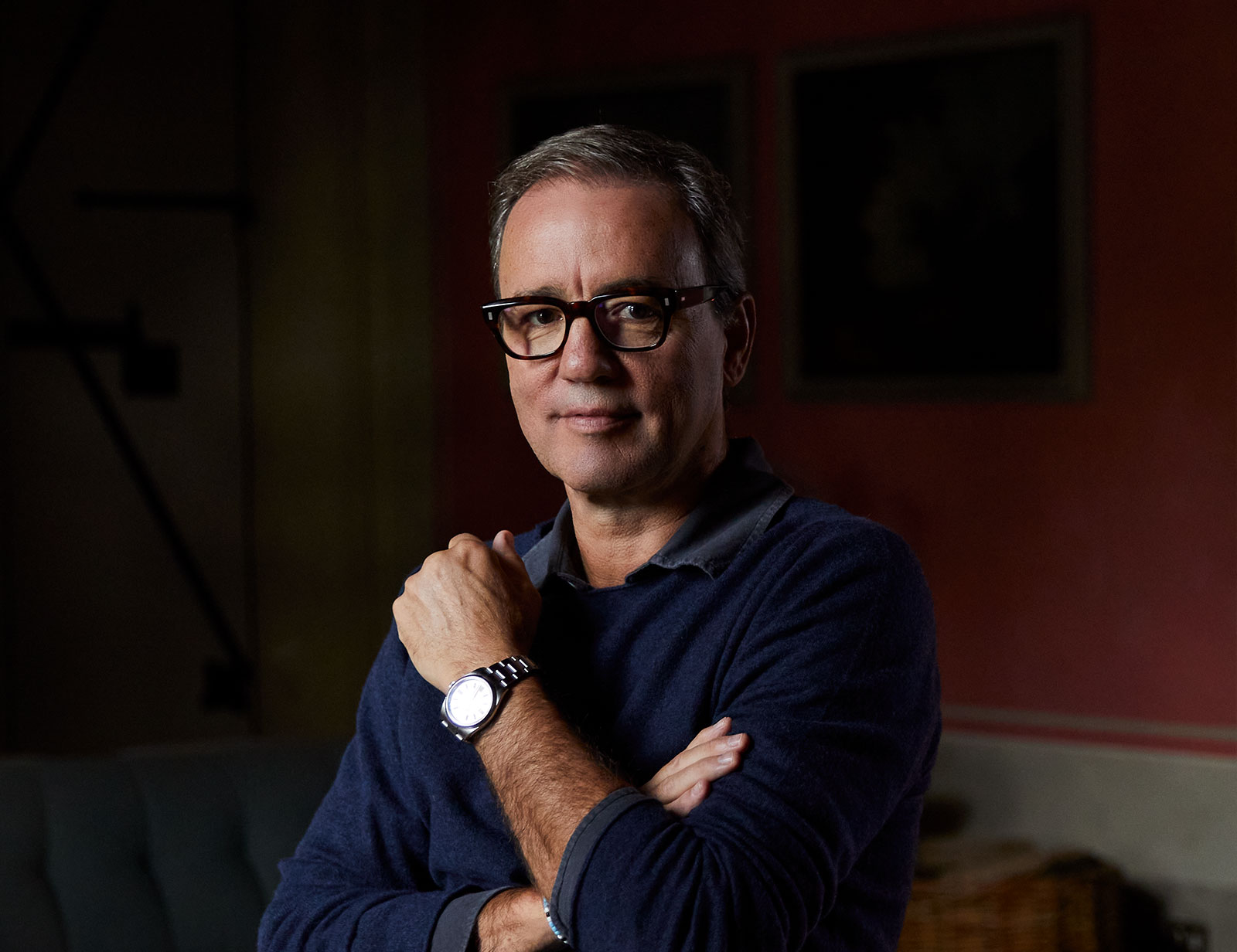
Giuseppe Caprotti
Giuseppe Caprotti (Milan, 15 December 1960), entrepreneur – an expert in food and distribution – is also a historical author and president of the Guido Venosta Foundation.
He has a background in history.
The son of Giorgina Venosta and Bernardo Caprotti, co-founder, with Nelson Rockefeller, Guido Caprotti, Marco Brunelli and other Italian shareholders, of Esselunga, he has been an entrepreneur, manager and consultant in the large-scale retail sector.
Biography and Education
He attended middle school and his first high school at the Istituto Leone XIII in Milan, a private parochial school, then finished his high school education at the Le Rosey boarding school in Switzerland, obtaining the French baccalauréat at the Grenoble academy.
After finishing school and before starting university, Giuseppe Caprotti spent two months in Sao Paulo, Brazil, to attend an internship as a worker at the Brazilian branch of the French multinational Carrefour.
He then worked for a period at Christie’s, helping his mother, Giorgina Venosta, in the office and in the management of some auctions.
In 1986, he graduated in Contemporary History at the Sorbonne in Paris and his thesis was translated and published by Franco Angeli Editore.
The subject of the thesis is: ‘Alto Adige o Südtirol? The South Tyrolean or South Tyrolean question from 1945 to 1948 and its developments: a study of French diplomatic archives’ at the French Foreign Ministry, Quai d’Orsay.
In the same year, he began working in the family business.
Career
THE YEARS AT ESSELUNGA
In 1986 Giuseppe Caprotti started working at Esselunga S.p.A., working in various offices (Technical/Construction, Purchasing, Development), and then continued his career at Dominick’s, in Chicago, an American retail chain, working one year as a factory worker and one year in the Purchasing and Marketing offices.
From this experience, in 1989, he imported to Italy a new format that at the time was totally non-existent in the European distribution scene: the superstore, American-style, which with “non-food” and “one step shopping”, allows customers to do all their shopping under one roof. Esselunga thus entered the world of superstores.
The introduction of non-food in Esselunga, directly from the American model, allows the company to maintain one central management structure for various types of product, avoiding large cost increases.
In 1993, after creating the non-food sector learned in the States as a buyer, Giuseppe Caprotti is appointed Manager and Non-Food Purchasing Director for Esselunga S.p.A, also creating the spaces in the first Superstores, with integration between food and non-food.
In 1994, he created Esselunga’s Marketing and Communication Office of which he became the first Director, maintaining the management of non-food and creating, among other things:
- Quality advertising (with the Armando Testa Agency)
- Fidaty loyalty card
- Rewards catalogue
- Call centre
- Industrial product accounting and category management
- Press office
From 1996 to 2000 he was appointed Commercial Director (from 1998 to 2000 he was also Esselunga Vice President with full powers) with direct management of Purchasing and Marketing.
From 2000 to 2002 he was Chief Operating Officer of Esselunga, managing: Purchasing, Marketing, Sales (point of sale personnel), Quality Control, Logistics, IT, Production:
- The completion of the superstore departments: Wine Shop, Bar, Perfumery, Audio Video Photo, Children’s Space.
- The possibility of buying fruit and vegetables in bulk
- Pre-cut cheeses and cold cuts (self-service)
- Relaunch of the Naturama brand
- Launch of Esselunga Bio products
- Launch of Esselunga Ecolabel and Esselunga Fairtrade products
- Launch of E-commerce (Esselunga at home)
In 2001, he founded the Centrale di Acquisto ESD Italia and became its President and later its Managing Director until 2005. In 2003, ESD Italia became the third largest purchasing centre in Italy, behind Coop – Conad and Intermedia – Auchan – Rinascente.
From 2002 to 2004, he was Managing Director of Esselunga, creating, among other things:
- Sales restructuring, with involvement of all employees, see Values and Principles
- Appraisal bonuses for all operating departments
- Institutional website
- Social balance sheet
- Dossier on state aid given to Coop
After losing the powers of CEO Giuseppe :
- In 2004 he makes a bid to buy Esselunga – based on an evaluation by Price Waterhouse and Coopers.
- In 2005 he blocks the purchase of Esselunga by Walmart (USA).
CONSULTING ACTIVITIES
Giuseppe Caprotti, after 19 years with Esselunga S.p.A., dedicated himself to the consulting branch by entering into contracts with a number of companies:
- In 2005 he became a consultant with Bain and co., a strategic consulting company based in Milan.
- Between 2006 and 2007 he was a consultant for the Messaggerie Italiane S.p.A. group, an Italian holding company operating in the publishing and distribution of books and magazines.
- In 2009 and 2010, he was a consultant for Aspiag, the North East branch of the Despar group.
OTHER ACTIVITIES
From 2009 to 2016, he worked in the horeca and artisanal food trade as an employee of the company SDS, which also operated a restaurant in Milan.
Giuseppe Caprotti, before writing on this site, collaborated with Mark-up.
In 2020, he became president of the Guido Venosta Foundation.
Today he is also, vice-president of the Società Storica Lombarda.
A director of Messaggerie Italiane from 2021 to 2024, he was also a director of Primafrost (Lombardini group), national director of the National Association for Cancer Research (Airc, today FIRC) and director of the Amici della Triennale.
Scopri di più
