The years of protest and armed gangs intersect seamlessly with what was later called (from the title of a film that was a box-office fiasco), the ‘black Milan’, a mean and cruel city, often violent to the point of murder, an enormous negative side that contrasts with the equally enormous positive side of economic growth and widespread prosperity. Giorgio Scerbanenco would make a painful and merciless portrait of it in his books that would totally change post-war Italian detective stories.
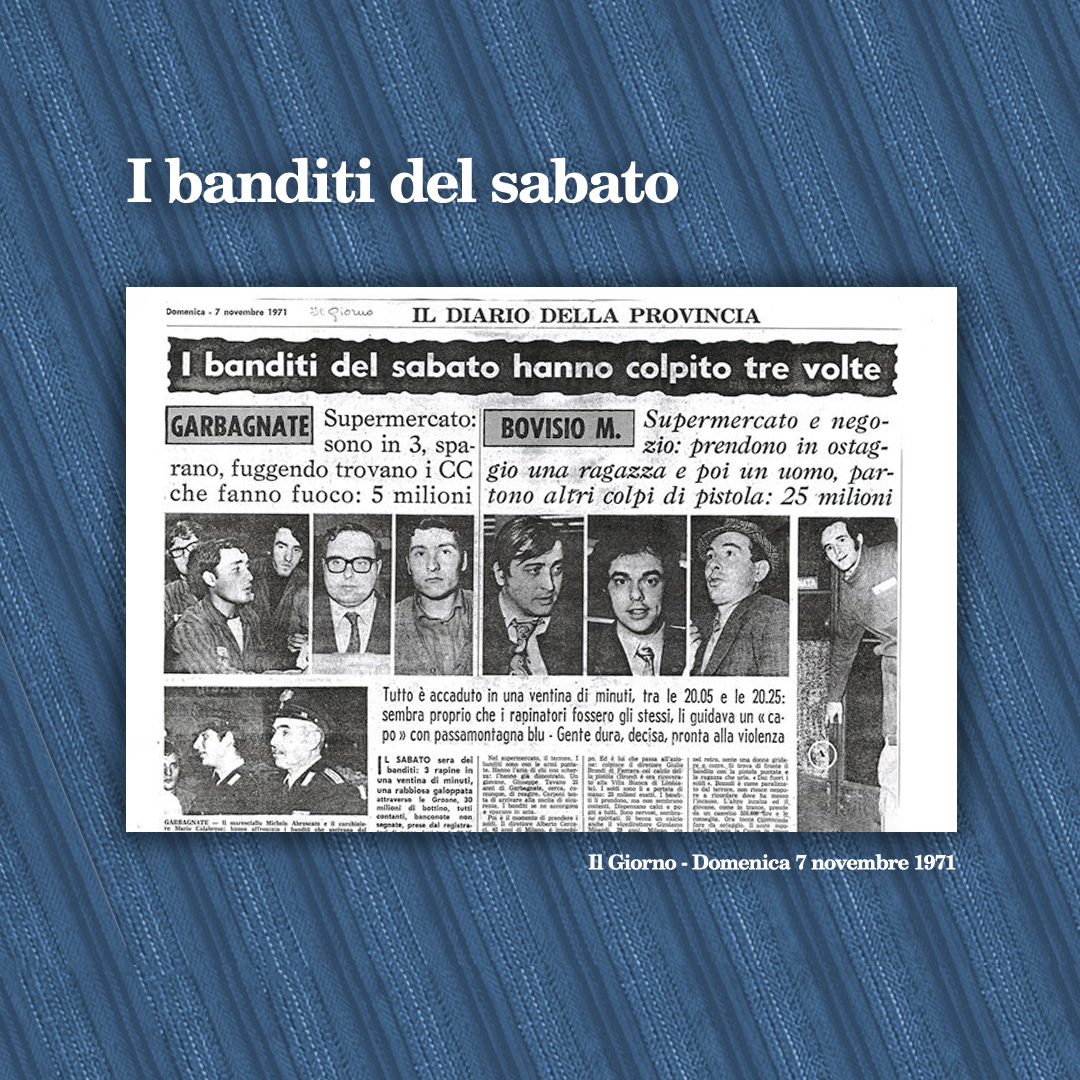
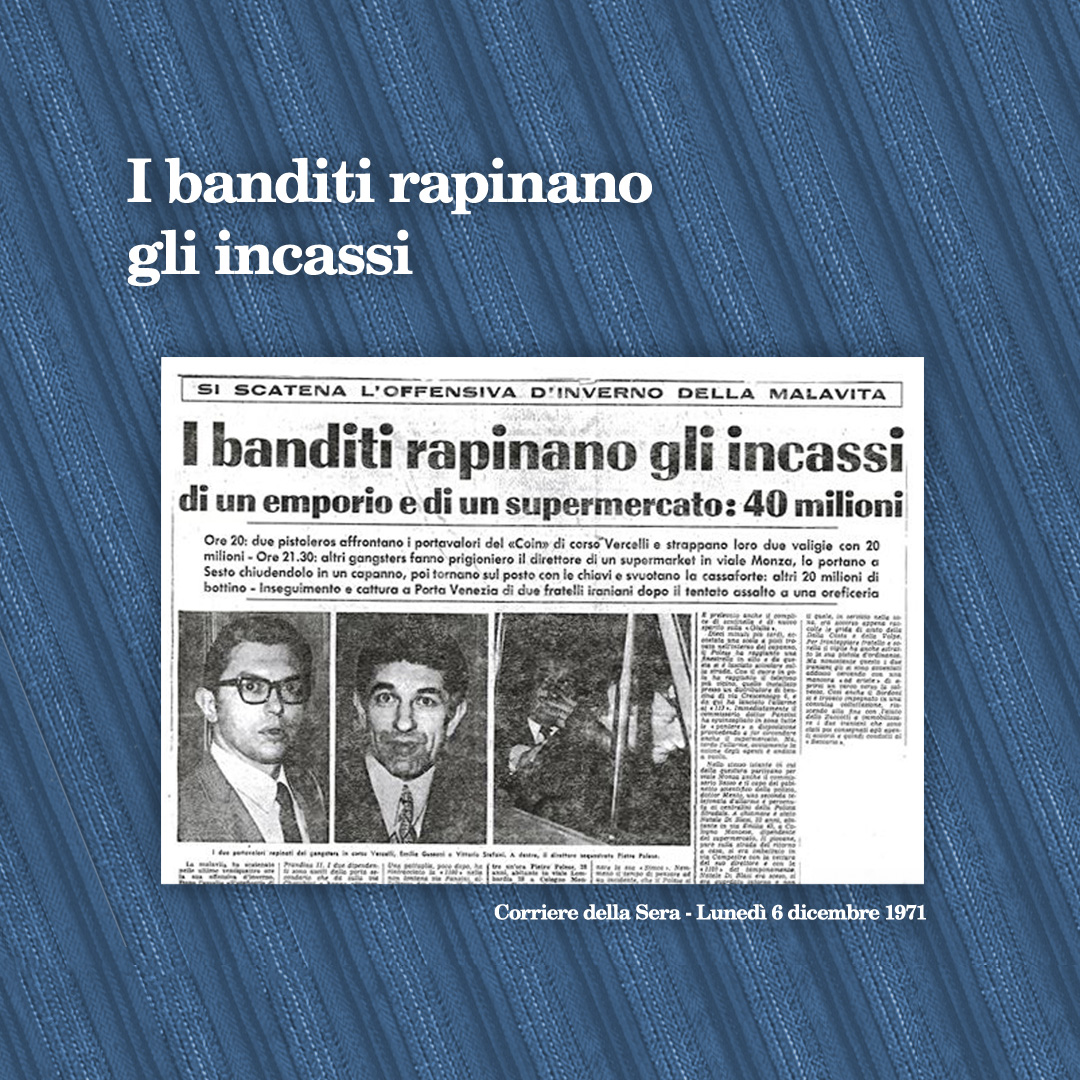
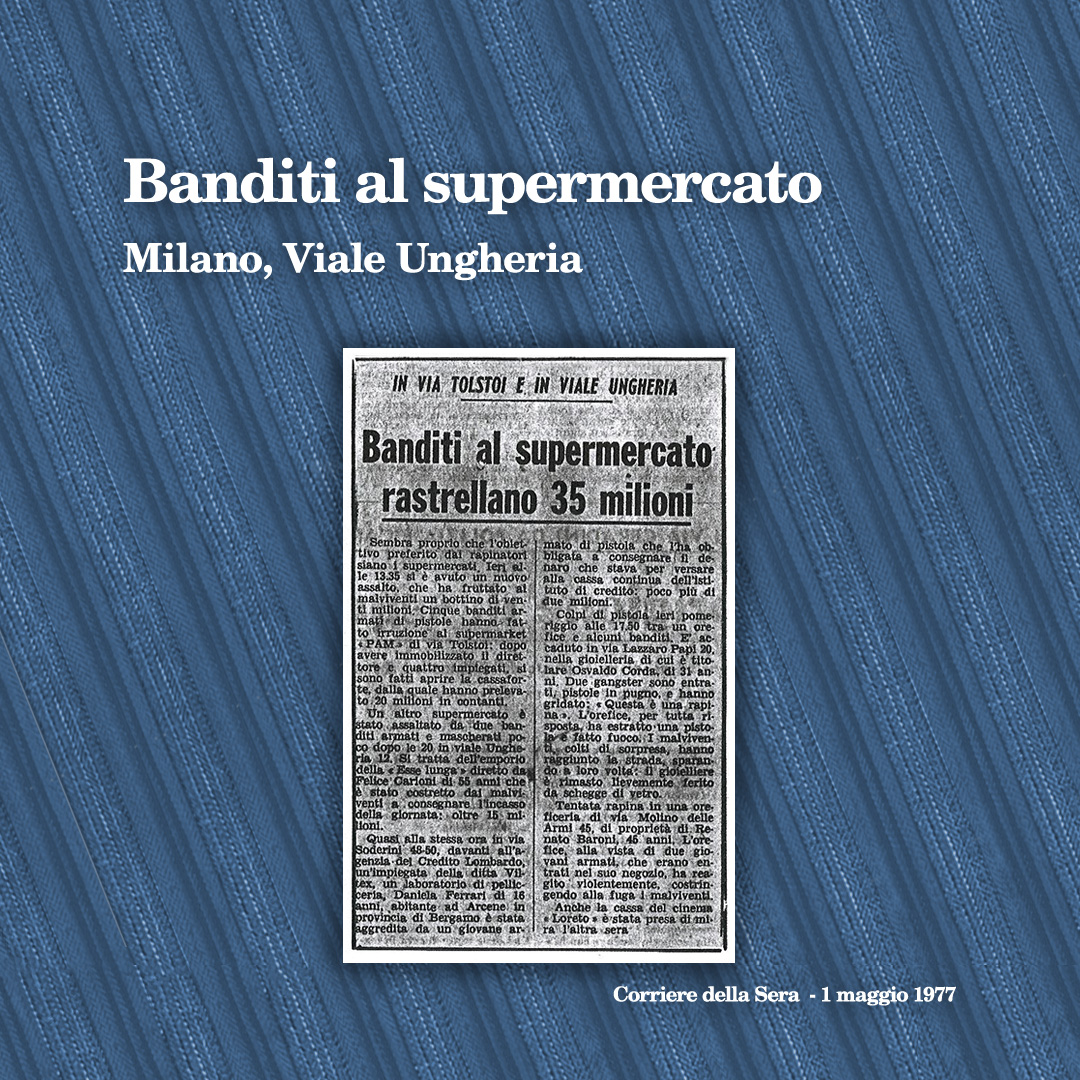
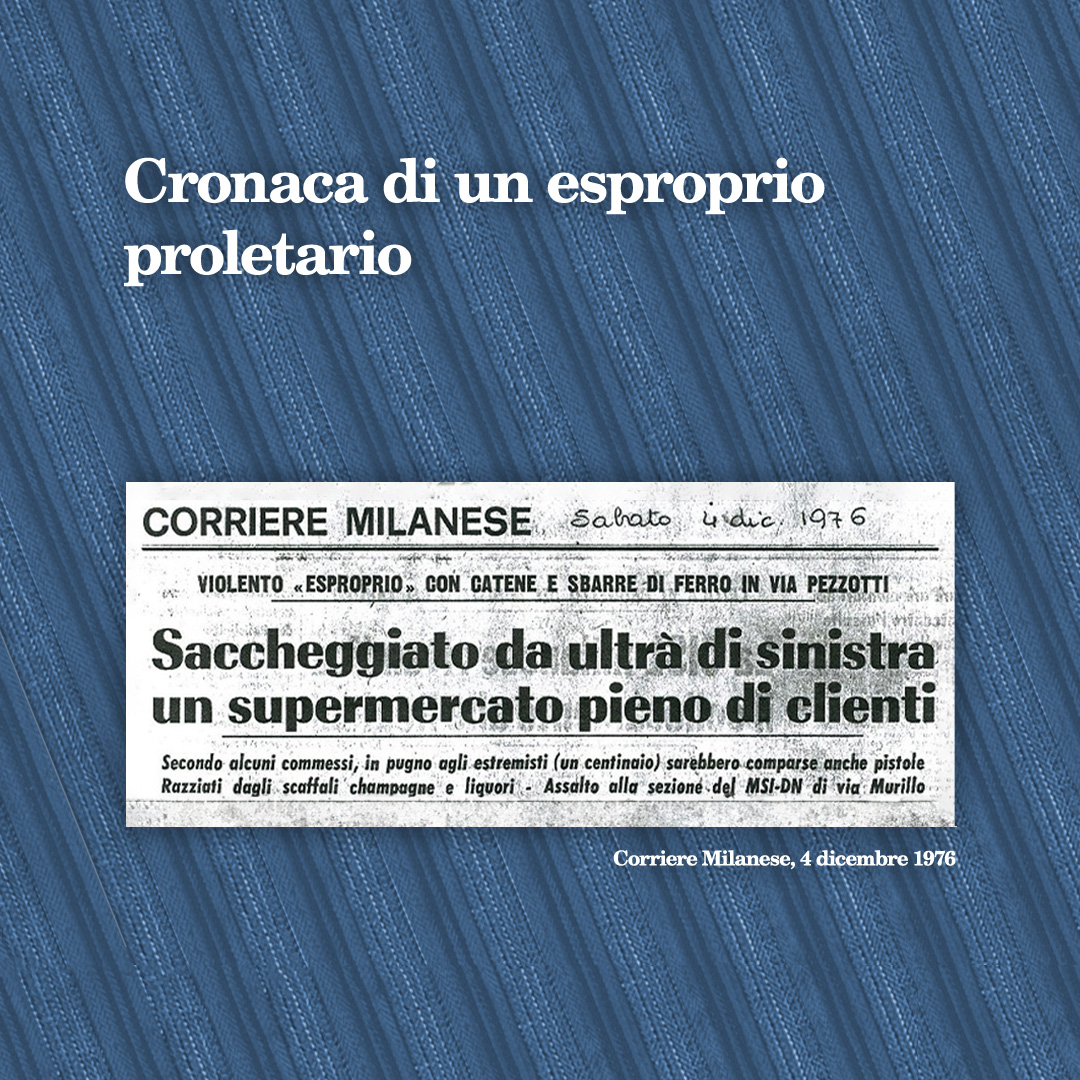
In this period, supermarkets are among the favourite targets of thefts and robberies because they are easy to access and always full of cash, open-air banks, one might say: the Esselunga now has many shops, not only in Milan, and every evening they call Dad to tell him the day’s takings and the robberies that have taken place, either ‘political’ – in December 1976 a hundred or so armed people (with guns too, it seems) invaded the Milanese supermarket in Via Pezzotti and caused a ruckus, inviting the remaining customers to leave without paying for the goods – or ‘simple’, although sometimes under strong suspicion of ‘self-financing’ by perhaps the most dangerous terrorist group, the Red Brigades. (CAPROTTI, Le Ossa dei Caprotti family, p. 98).
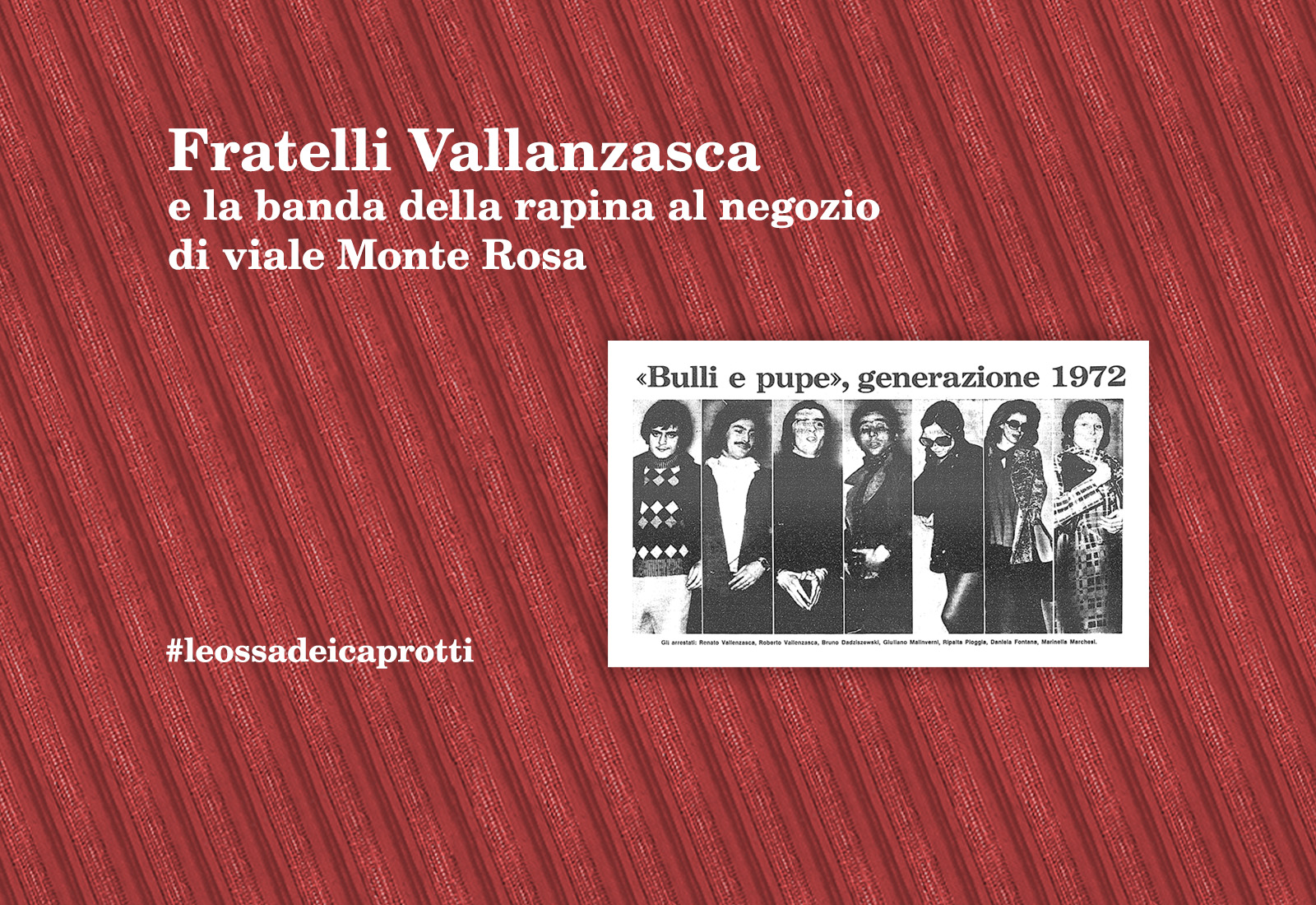
Some of the most violent and spectacular robberies are carried out by the gang of Renato Vallanzasca, a delinquent by conviction and one of the most effective, who from a very young age began to terrorise the city with almost always successful shootings. Nicknamed ‘The handsome René’ because of his handsome appearance, Vallanzasca spent his life in prison, escaping from prison in daring and daring ways, committing heinous murders, being insufficiently proved to be affiliated with Raffaele Cutolo’s mafia (so much so that he was one of the few condemned under the ‘never-ending penalty’ formula), until he sadly ended up, last September 2024, in a protected facility because he suffered from severe cognitive impairment.
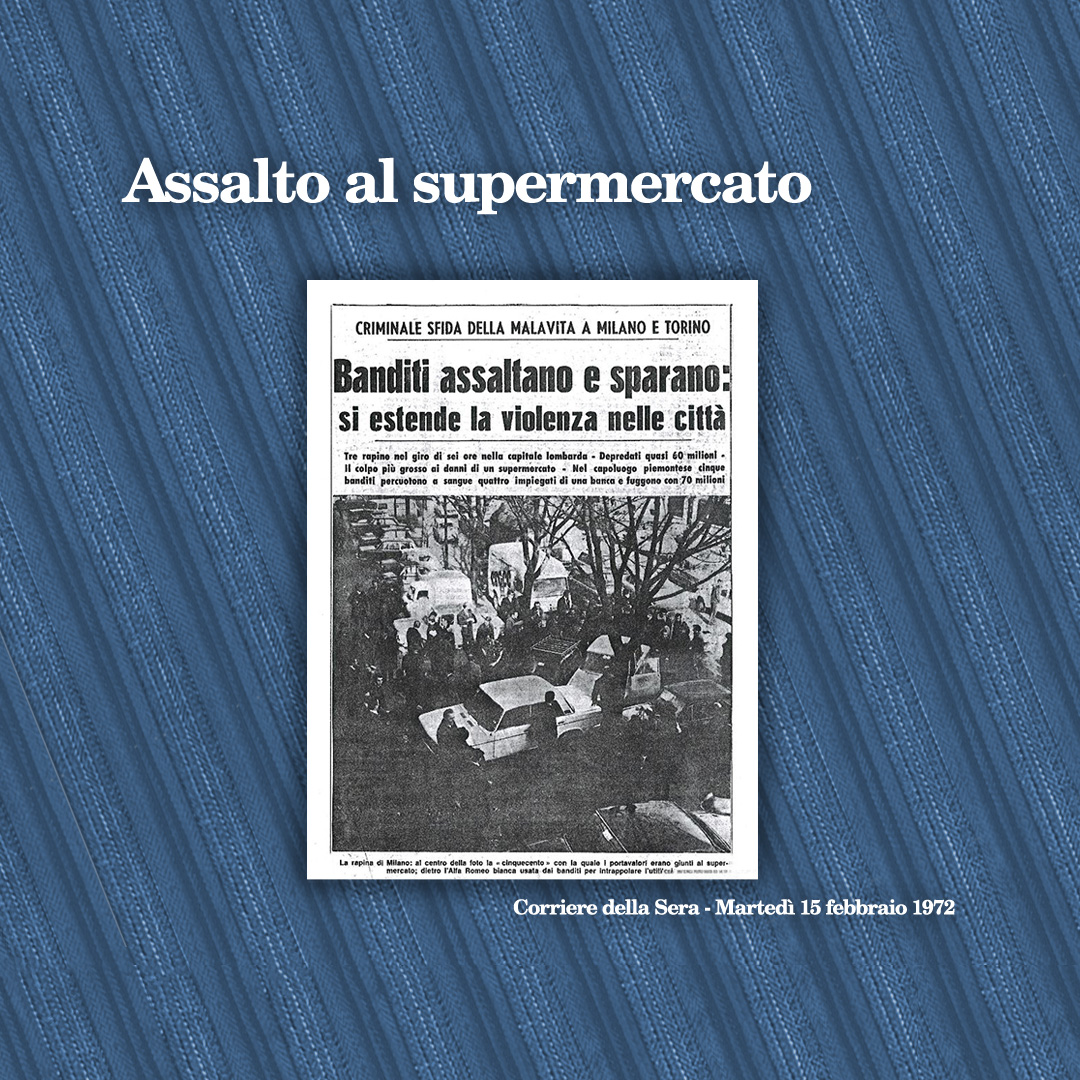
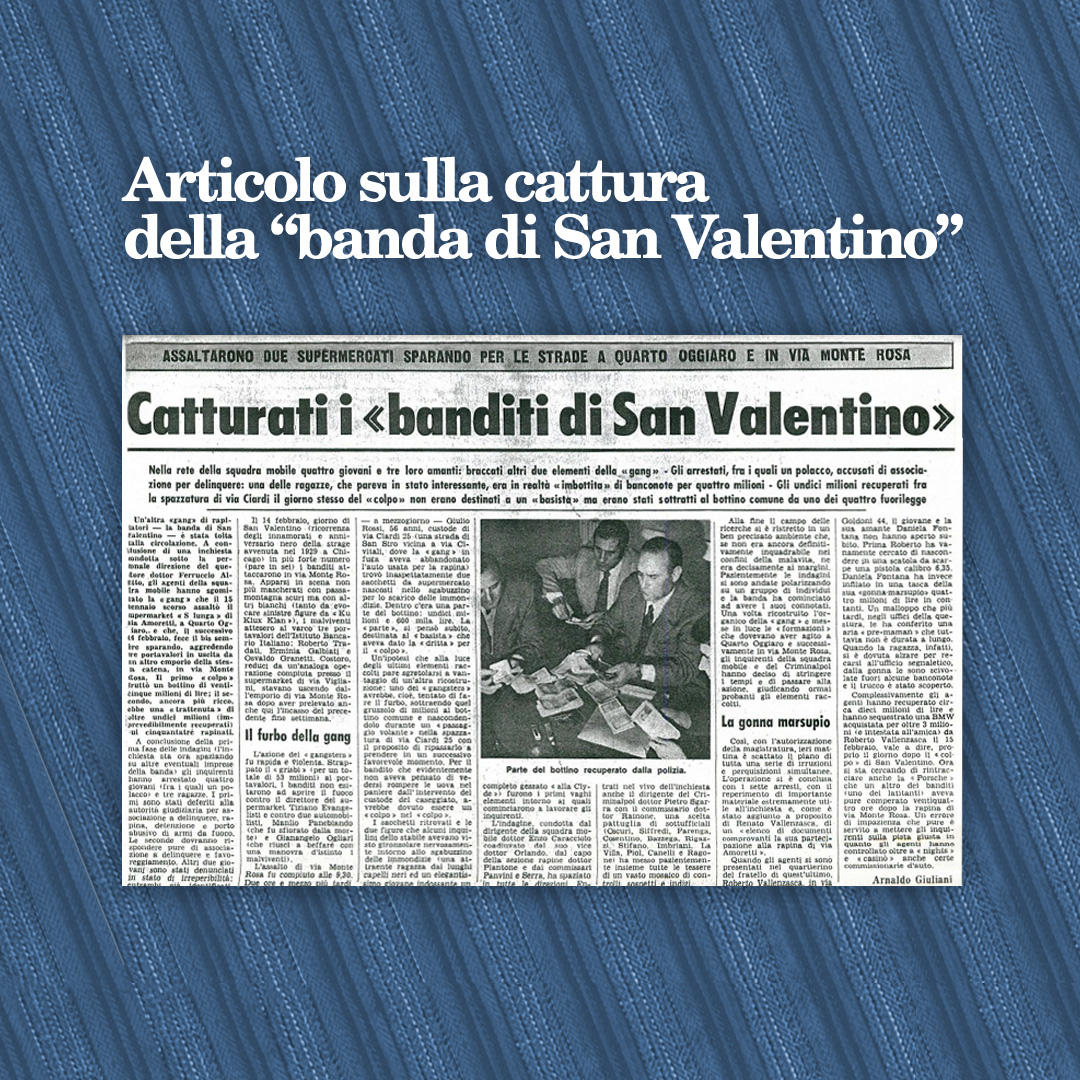
It can be said that, at both the beginning and the end of his career as a gangster, there was Esselunga: one of the first supermarkets he robbed was in fact the one in Quarto Oggiaro, in December 1972, naturally with a shootout, and the last one, in June 2014, was the shop in Viale Umbria, where, on leave from Bollate prison, he was noted for a theft of laundry. In between, the ‘Valentine’s Day robbery’ on 14 February 1972, when he robbed the Esselunga in Viale Monte Rosa and engaged in a gunfight in which ‘it rained bullets’ from all sides, as he wrote in his memoir.
Reading the articles of the time, one discovers even comical moments, such as the part of the loot that one of the ‘girls of the mala’, the companion of Roberto Vallanzasca, Renato’s brother, had stuffed in the pockets of her fanny pack skirt when the police arrived at their house, but at the police station her ‘premaman’ appearance was belied by the fluttering of some banknotes outside her clothes; errors of ‘impatience’, as the ‘Corriere’ reporter wrote on 29 February, i.e. the purchase of a BMW car worth over three million and a Porsche the very day after the robbery; ‘shenanigans’ gone wrong, such as the attempt by a bandit, immediately after the robbery, to hide two supermarket bags full of money in the garbage room of a building in the San Siro area, which were found by the doorman. If you then look at the faces and poses of the seven arrested, four men and three women, you wonder why Renato Vallanzasca was given the nickname ‘handsome’, not to mention the others.
And yet, these very young men – from the 25 years of age of Giuliano Malinverni to the 17 of Renato’s companion, Ripalta Pioggia – had demonstrated a ferocity that was far from comical, certainly not impatient but studied and pondered, carried out with precision and even striking and mistreating some employees of the supermarket in Via Amoretti in Quarto Oggiaro, then shooting at eye level to cover their escape; for the ‘Valentine’s Day’ heist in Via Monte Rosa, carried out at 9.30 a.m., they did not hesitate to open fire on the shop manager, Tiziano Evangelisti (whom I knew personally when I entered Esselunga) and two motorists passing by chance, coming close to tragedy.
For supermarkets – and not only – it was not an easy period, that of the Vallanzasca gang.
Bibliography:
A.GIULIANI, Captured the “Valentine’s Day bandits”, in “Corriere della Sera”, 29 February 1972
G. CAPROTTI, Le Ossa dei Caprotti. Una storia italiana, Milan, 2024