Drafted 11 January, updated 4 May 2025
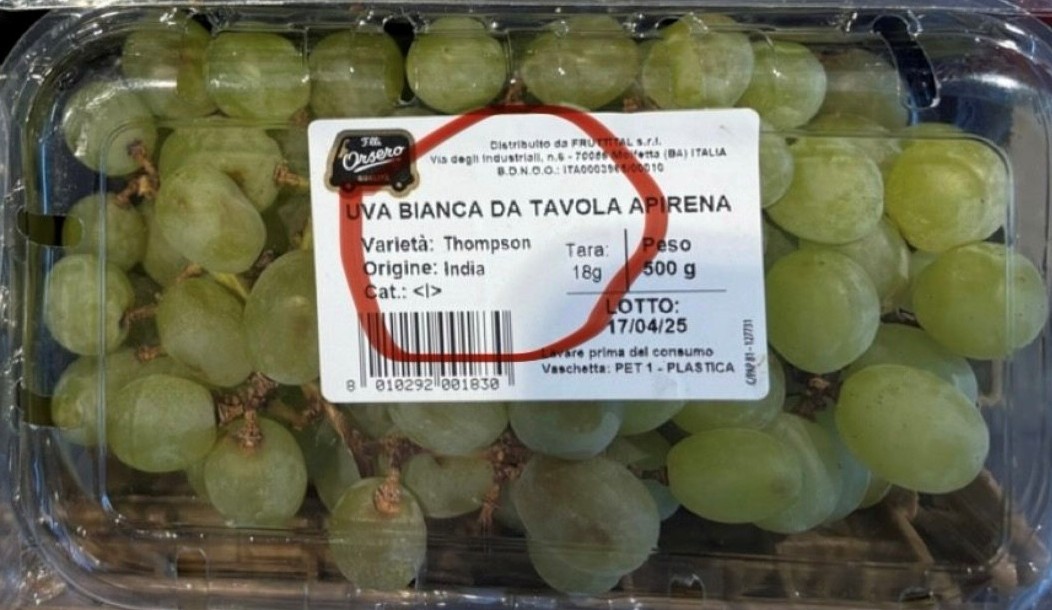
We start from this Slow Food and grape article (‘ Why you should always read labels: the case of Indian grapes’) to talk about pesticides and reciprocity agreements on the standards of imported products:
Slow Food also underlines this:
260.000 EU citizens call on European Commission to prioritise pesticide reduction
The rules of European agriculture
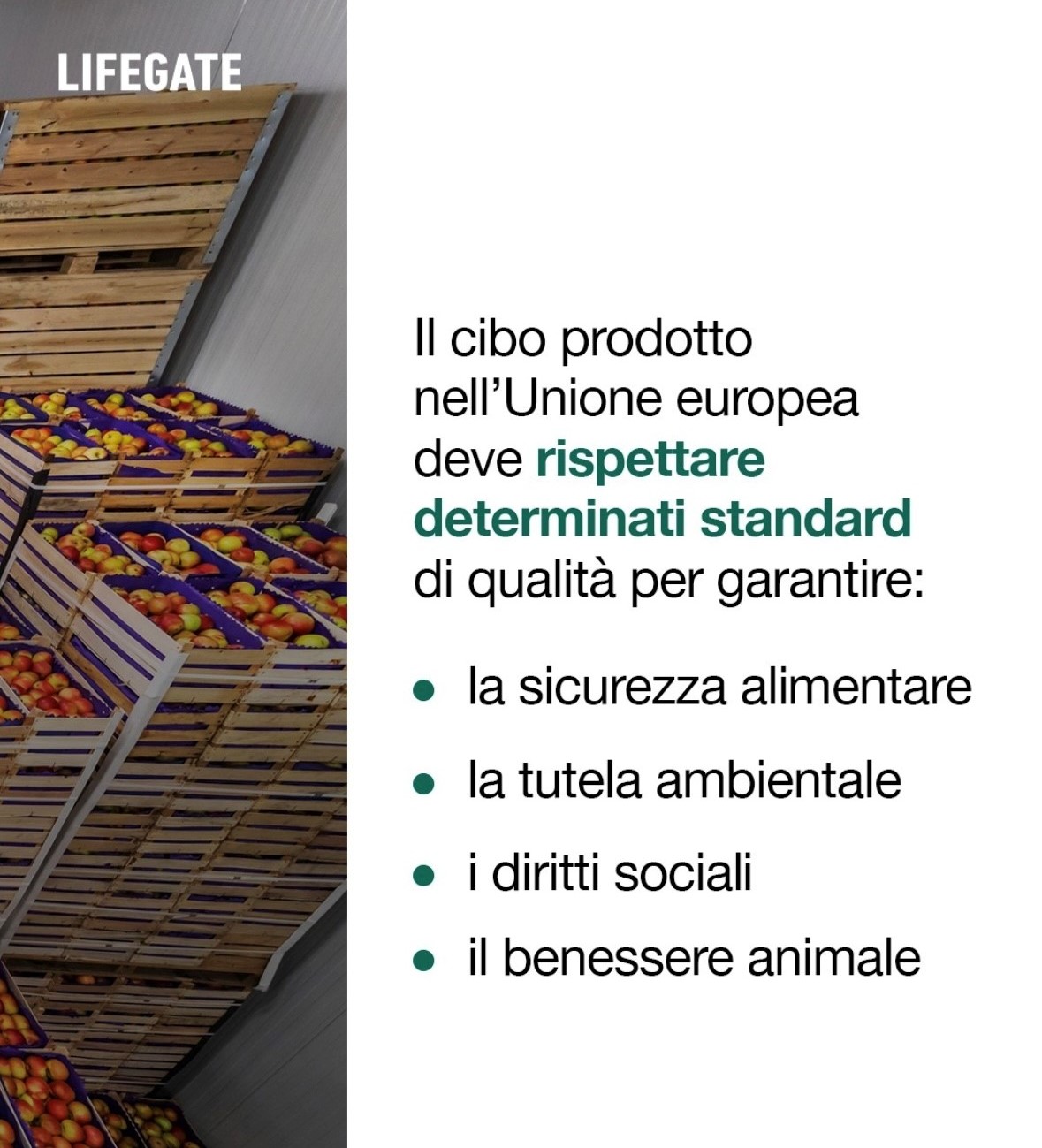
The European Union has laid down a series of rules (bans, maximum limits, regulations) on food production, covering prohibited substances (insecticides, herbicides, hormones…) for environmental reasons or because they are harmful to human health; substances that are permitted but strictly regulated (antibiotics, for example); prohibited procedures (such as using glyphosate, which is a weedkiller, immediately before harvesting grain).
Then there are regulations protecting animal welfare … or concerning deforestation caused by certain productions.
Europeans’ food is also produced outside the EU
However, the EU imports an important part of the food it needs and since those rules only apply within the EU, the question is: how do we import food that has the same requirements, in terms of food and environmental safety, as the food we produce?
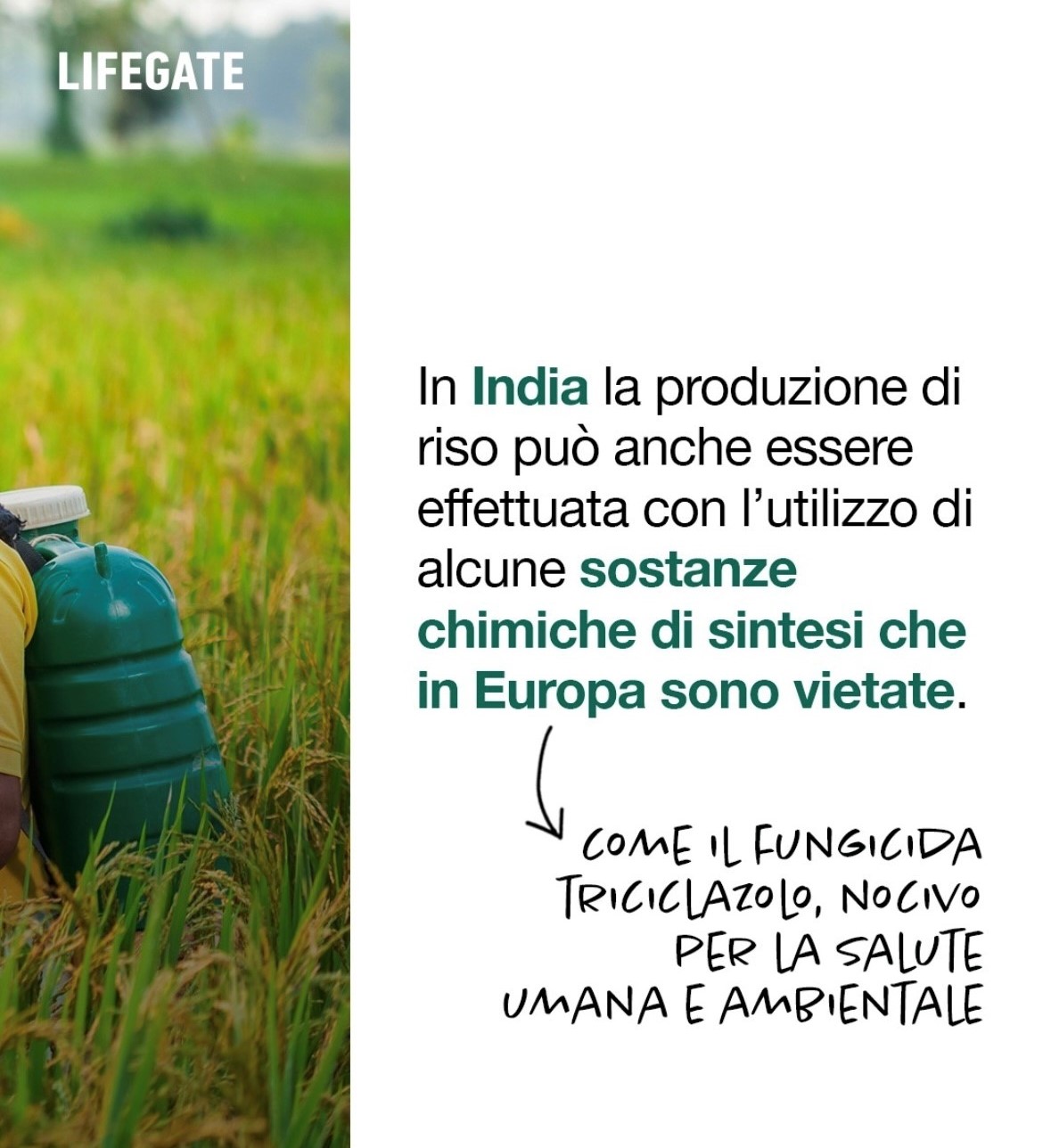
Also because European chemical companies have always sold products banned in the EU to non-EU countries.
It is simple, you might say, if food from non-EU countries does not have the same characteristics as ours, we do not buy it. And yet our farms need soya and we produce very little of it; and in any case our farms are not enough, and in fact we also import a lot of beef. Or: we consume a lot of rice but produce very little of it, because only a few areas in Europe are suited for this crop. In short, we ‘have to’ buy.
The maximum residues of permitted substances
So how do we deal with food produced under less strict rules than ours?
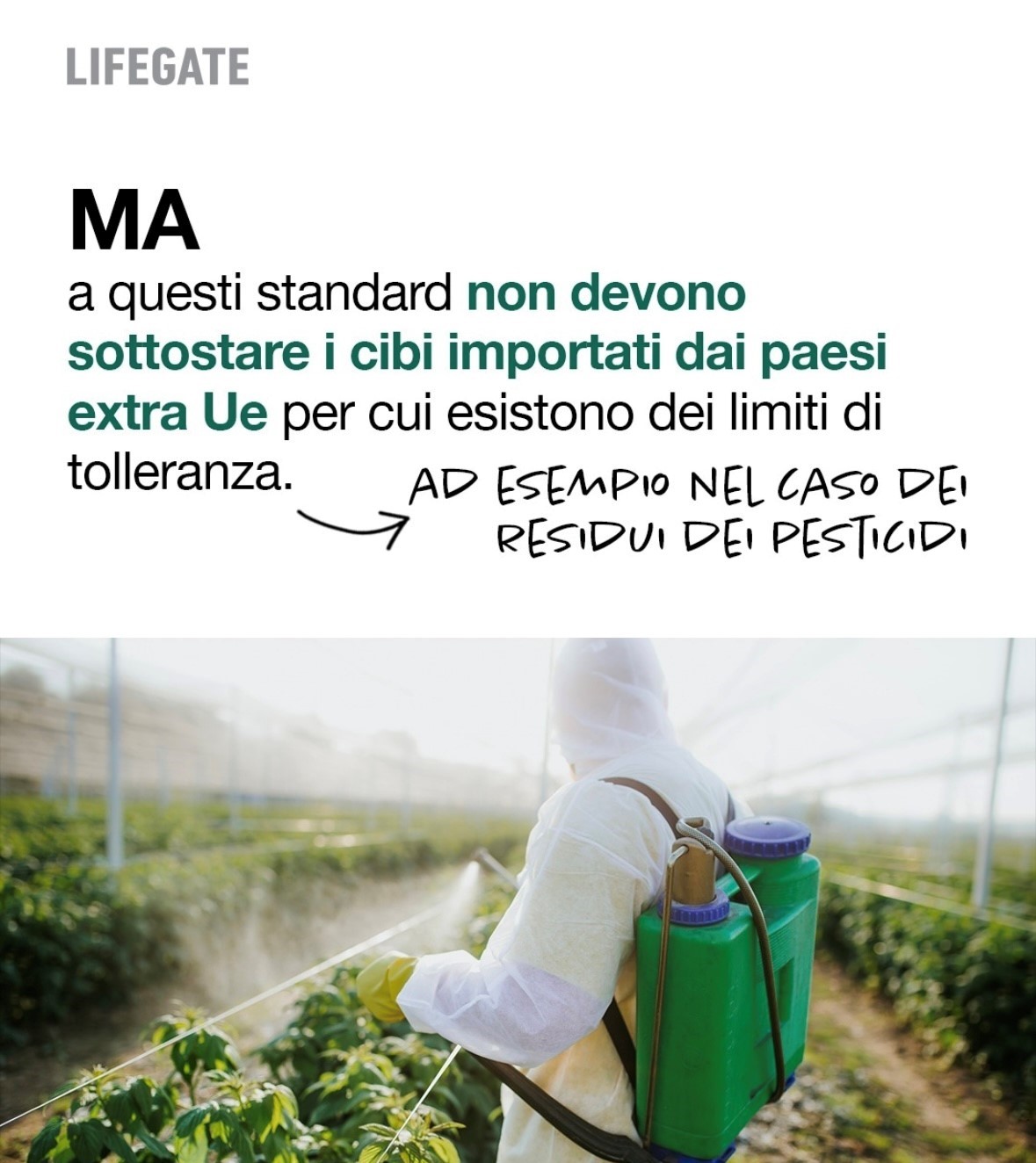
The first step lies in the question of residue limits. For each substance permitted in agriculture, there is, in the EU, a maximum residue limit (MRL) contained in the product.
If international trade contracts had mirror clauses stipulating the same limits for the products we import as well, that would already be a good step forward. Instead, this is not the way things work at the moment: those limits are changed by raising the threshold of permitted residues in the foodstuffs to be imported!
What about banned substances?
What about substances that are not permitted in the EU? Logic would have it that the MRL should coincide with the minimum detectable, i.e. 0.01 part per million. At the request of the manufacturers (of the foodstuffs or banned substances) this limit is raised, even by 200 times. So, here too, mirror clauses must be included in the treaties that set – without derogation! – at 0.01ppm the maximum limit for residues in foodstuffs.
Positive effects of mirror clauses
Slow Food therefore calls on European election candidates to work for the inclusion of mirror clauses in future trade treaties in order to
- protect the health of European citizens
- avoid disadvantageous situations for European producers, who by complying with restrictive regulations have higher costs, but on European markets then find food produced elsewhere at lower costs and of lower quality, which is economically competitive
- motivating third countries to reduce the use of harmful substances and practices both in production for export and, eventually, for the domestic market. Consumers and agricultural workers in third countries have a right to health just like those in Europe, and there is only one environment to defend: planet Earth.
Edited by Cinzia Scaffidi
stampa@slowfood.it
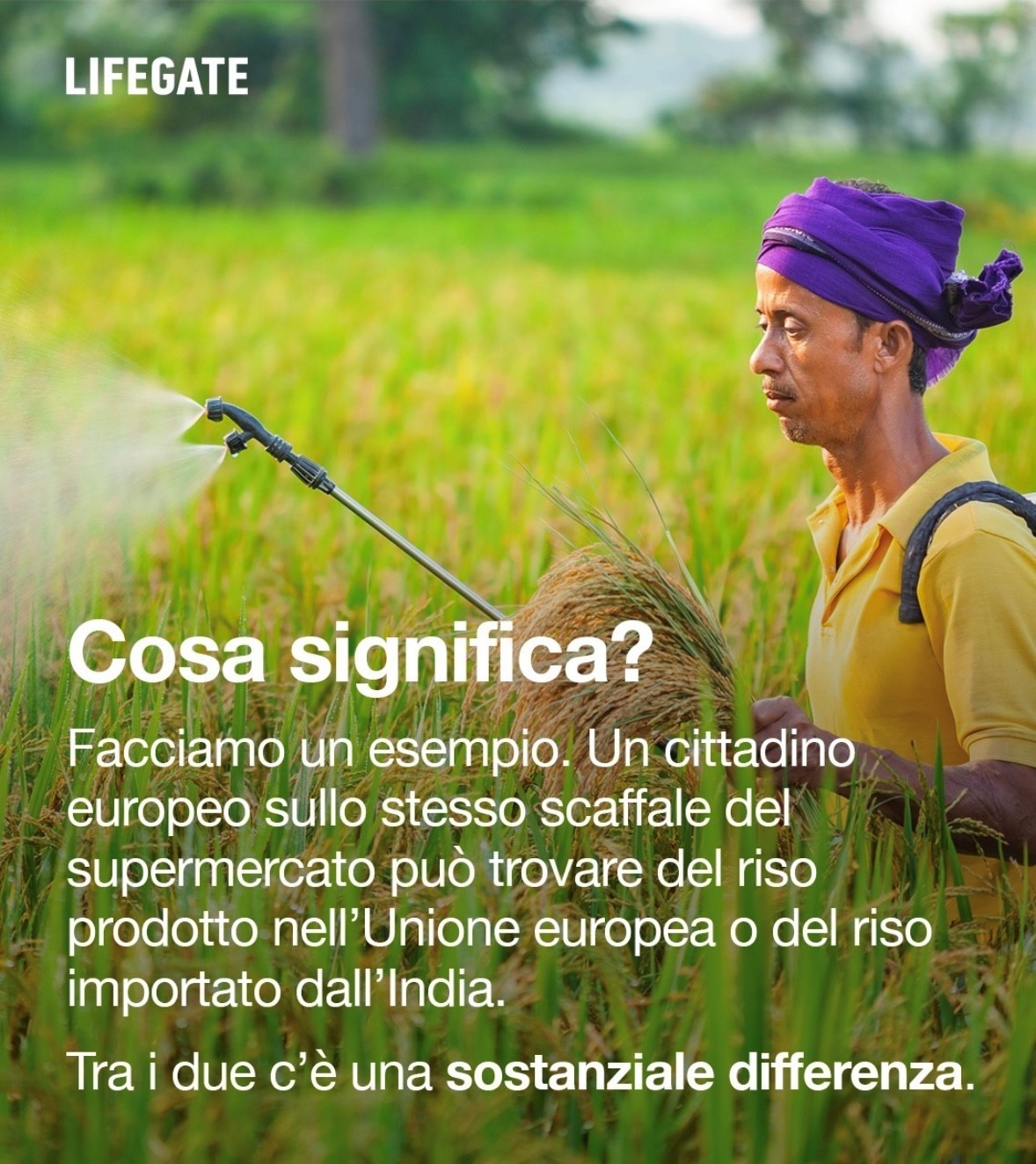
The need for mirror clauses in international trade treaties explained easily
One does not have to be an expert on international trade treaties to understand why Slow Food demands that the European Union impose mirror clauses on third countries from which it imports food. It is enough to reason, as Fritz Schumacher wrote in the subtitle of his 1973 ‘Small is beautiful’, ‘as if people counted for something’. And, we would add, as if the environment, the animals raised, the fertility of the soil also counted.
Trade unions, such as Coldiretti, should not dissipate their forces on meaningless projects such as the no to ‘cultured meat’ or the production of dried pasta and focus on reciprocity of import standards.