In the book ‘Le Ossa dei Caprotti’, family memory emerges as a thread that runs through the generations, without ever running out. It is precisely by following this thread that, alongside the Caprottis’ history, the roots of the Maire, Mallarmé, Kampmann and Koechlin families, linked to my grandmother Marianne Maire Caprotti, a Frenchwoman from Alsace, resurface. These pages preserve her memory.
My grandmother Marianne Maire used to say that “her family, the Maire, are related to Stéphane Mallarmé and wear a ‘chevalière’, the noble ring that some still wear on their little finger (…). He claims that the coat of arms is that of the famous symbolist poet (…)’ (CAPROTTI, ‘The Bones’, p. 78). Uncle Claudio Caprotti, my father Bernardo Caprotti’s last brother, also claims this.
It is a family story that I have always heard. And indeed, my grandmother’s relatives include the Mallarmés, the sons of the lawyer Victor Eugène and Frédérique Wilhelmine Graeff, from Strasbourg: Charles Alfred, born in 1842, Victor Eugène, born the following year, and Anna Lucie, born in 1848, who married Alfred Léon Kampmann and had eleven children, including my great-grandmother Fernande, grandmother Marianne’s mother.
Fernande’s eldest brother, Charles Alfred, had nothing to do with poetry, but nevertheless became a family glory as Vice-Admiral of France.
In 1859, at the age of 17, he joined the navy, then embarked on several ships, travelled the oceans and participated in several campaigns, including that of Mexico (1861-1867). He spent his life on battleships and gunboats, took part in the campaign to conquer Tunisia (1881) and in various naval activities in Indochina during the Tonkin War (1884-1885), participating in the blockade of Formosa (1884).
From the mid-1980s, his career took off. In addition to being a commanding officer on ships, he began to be assigned to land commands as he progressed in rank: in May 1887, he was appointed chief of staff of the maritime prefecture of Lorient, Brittany, and, in February 1888, major-general of the navy in Brest, in Brittany’s Finistère; in April 1890, he was transferred to the same functions in Cherbourg, the great Normandy port on the English Channel. In 1898 came his appointment as rear admiral; until July 1899, he held the position of sub-chief of the general staff and in August received command of the Mediterranean coastguard division. In September 1901 he commanded the Naval High School, was appointed Vice-Admiral in April 1903 and was Maritime Prefect of Brest from October 1903 to March 1905. Full of honours and decorations, he retired from active service in 1907. Perhaps he continued to exercise his talent as a pianist for which he was justly famous, and which ran in the veins of many family members (his great-grandson Pierre Maire, brother of his grandmother Marianne Maire, would also be a renowned pianist, concert pianist and professor of piano at the École normale de Paris Alfred Cortot and in his home town of Épinal).
Charles Alfred died in his eighties in Paris on 26 March 1923, and he was paid full honours: his body was displayed in the Louvre, in the Queen Anne Room, and a funeral with a long procession of dignitaries accompanied him to his burial in Bagneux Cemetery. The family will keep a proud memory of him.
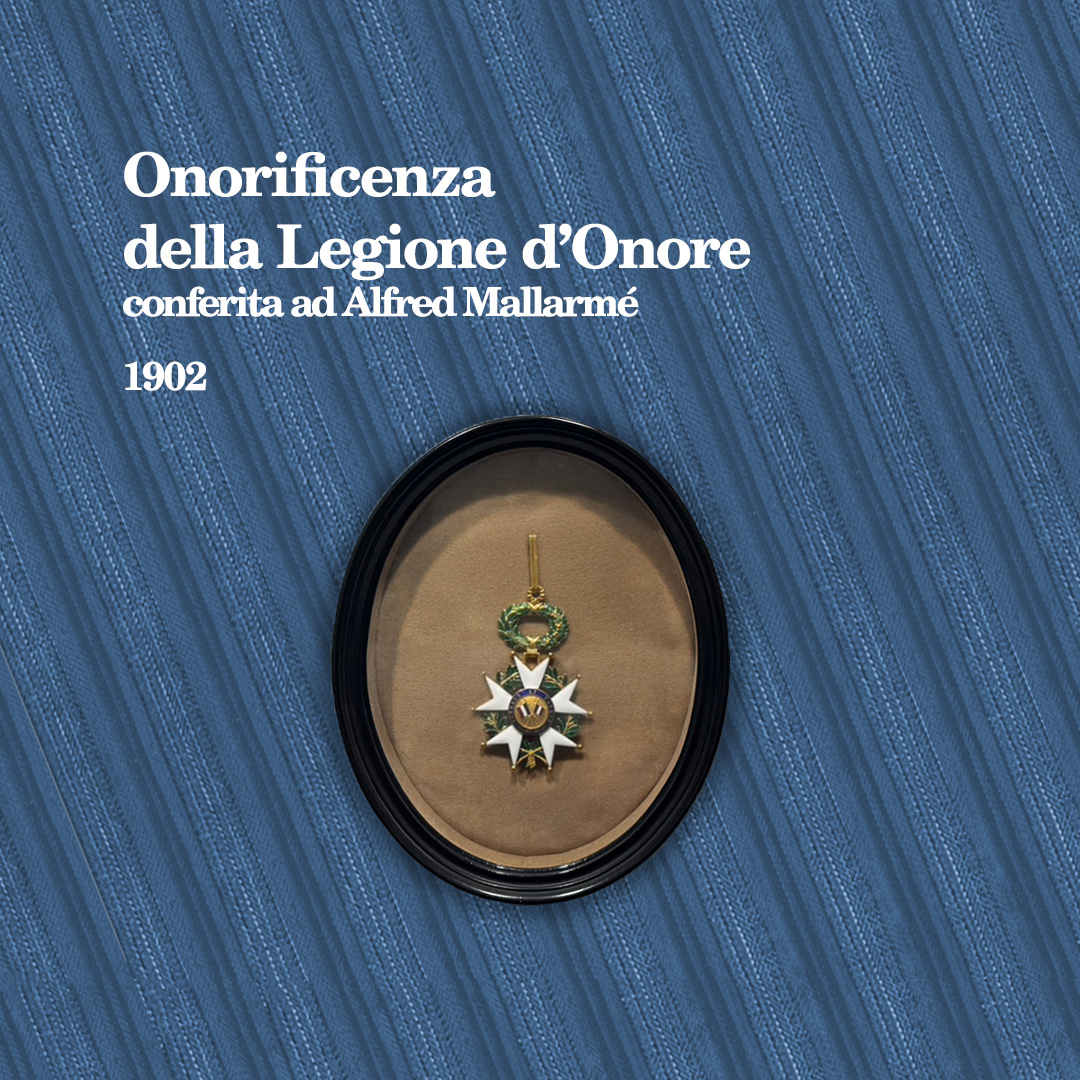
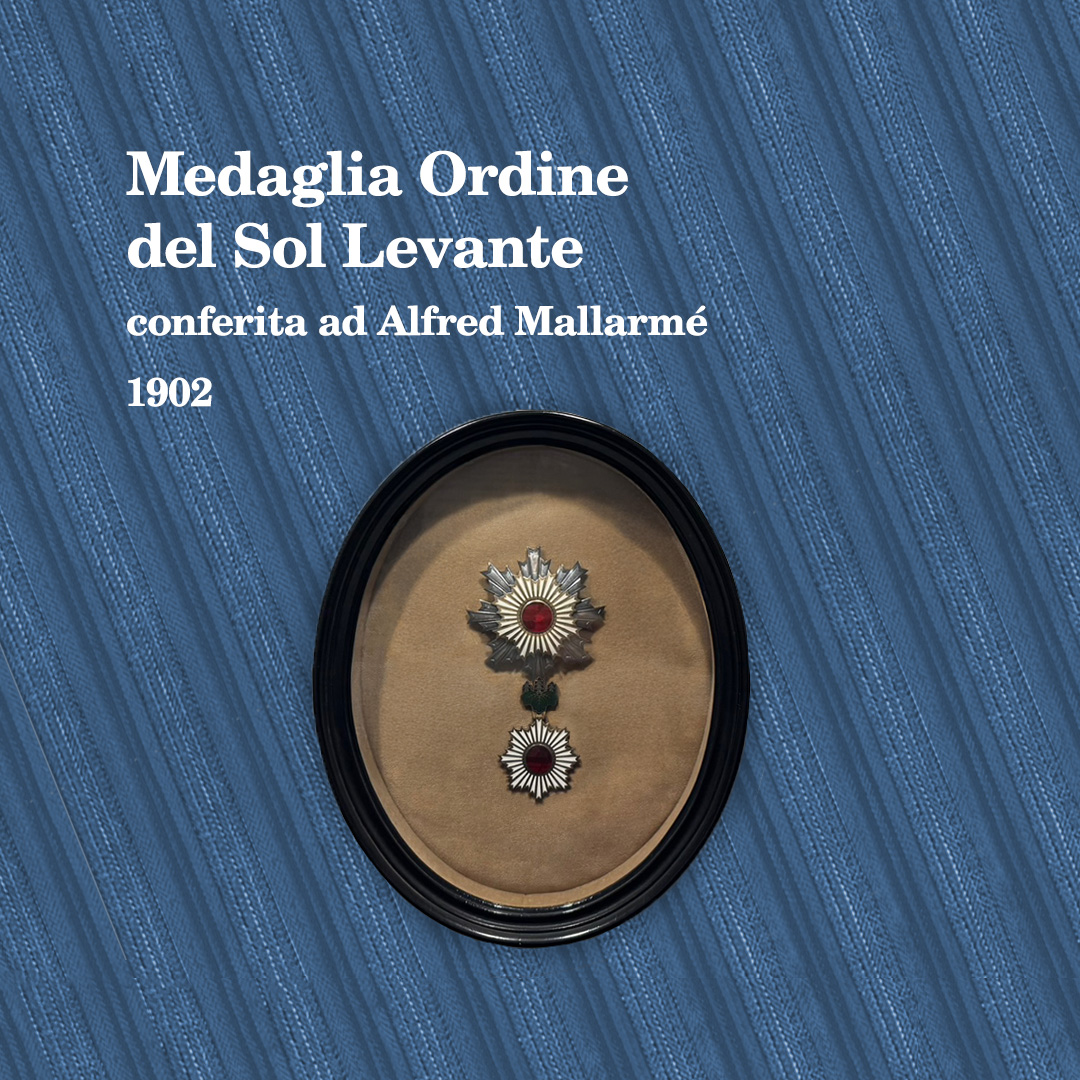
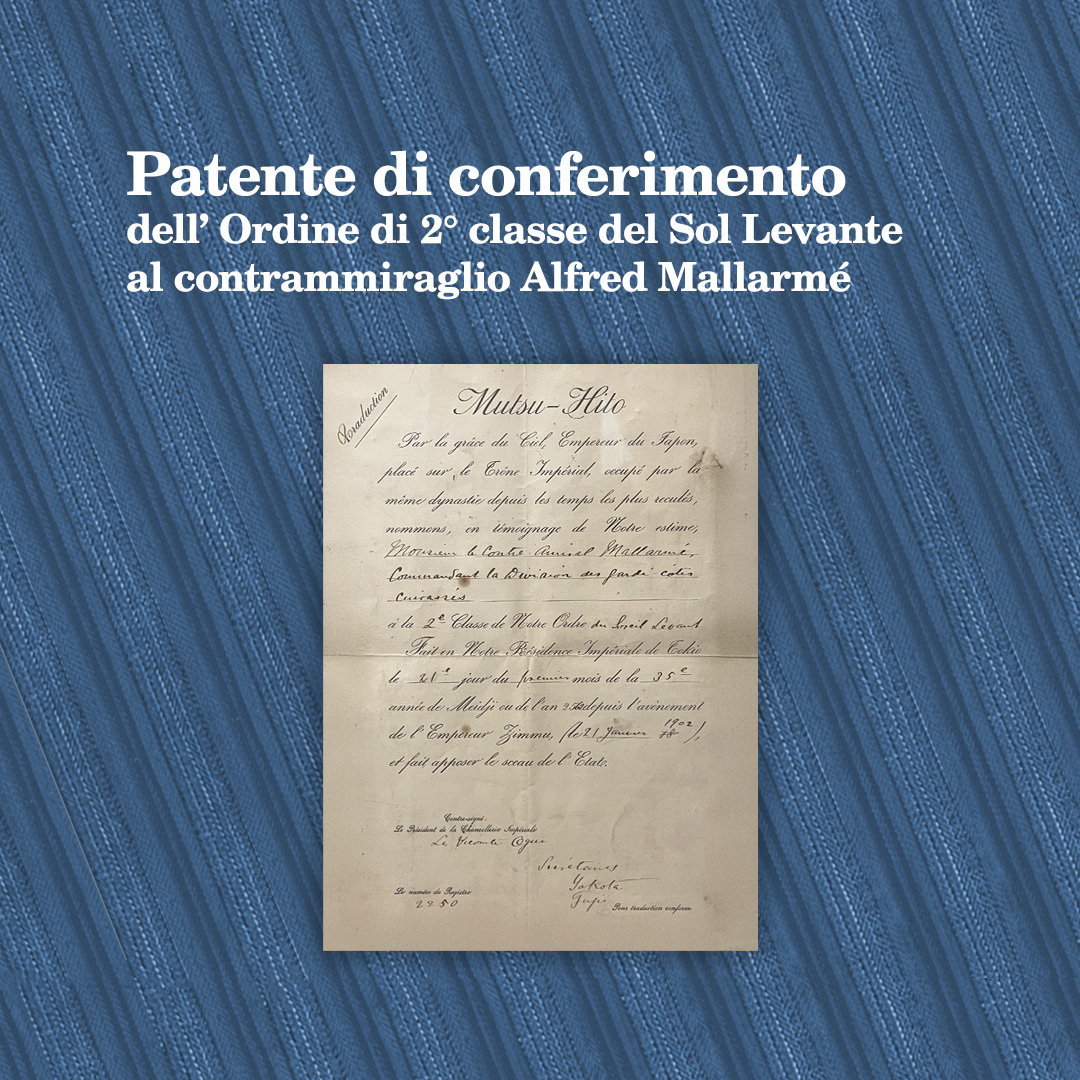
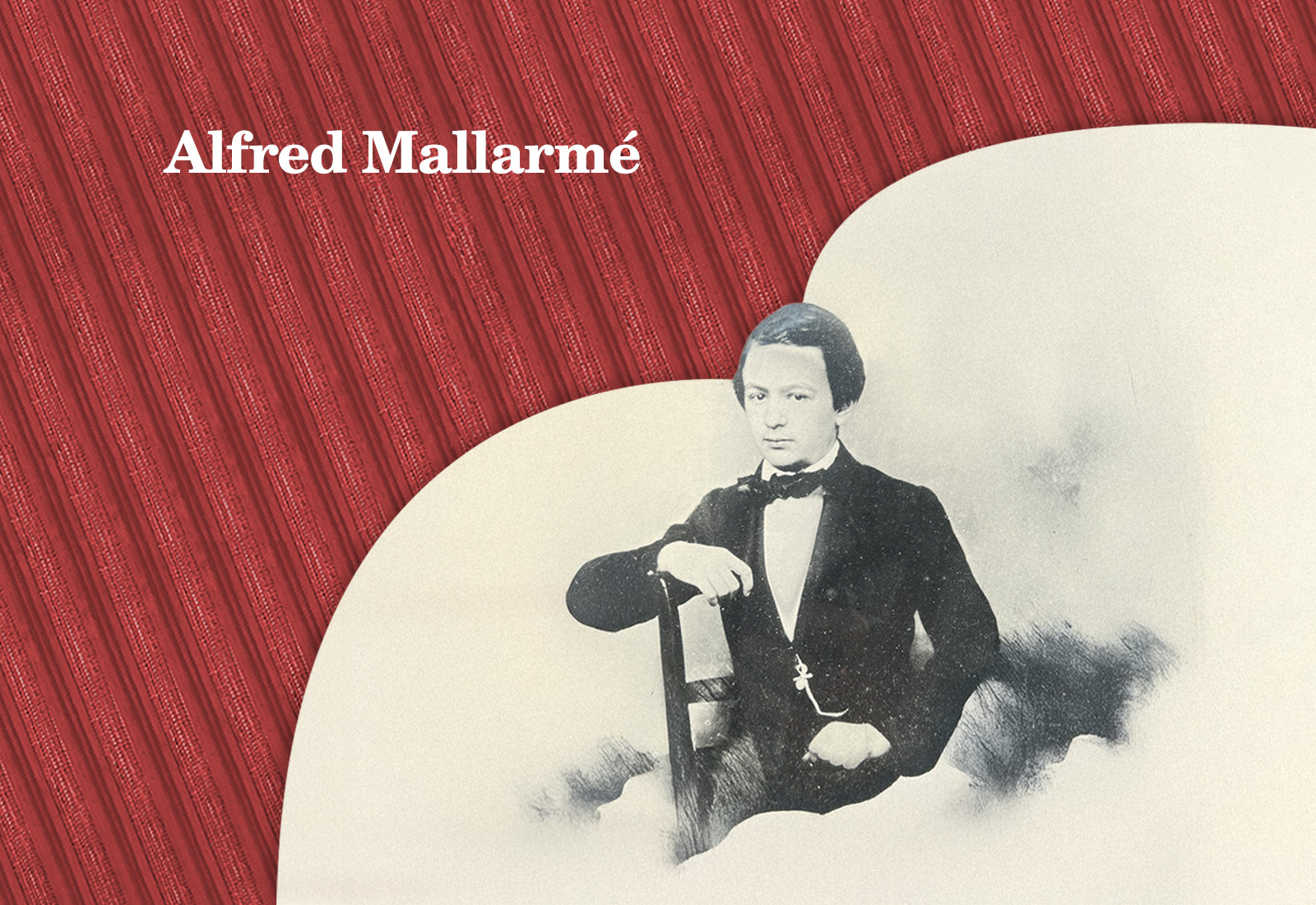
Admiral Mallarmé is therefore a great-uncle of my grandmother’s, which is perhaps why my uncle Claudius’ archive contains memorabilia of the admiral: photos of him as a child and boy, precisely pinned up by his grandmother Marianne, his decorations, such as the Legion of Honour and the Order of the Rising Sun Second Class awarded on 21 January 1902 by the Emperor of Japan, Mutsu-Hito, to Rear Admiral Mallarmé, commander of the Armoured Coastguard Division.
Sources:
Florence, Claudio Caprotti Archives.
Bibliography:
“Charles Alfred MALLARMÉ Le Vice-Amiral”, entry and family tree on the Geneanet site.
“Charles-Alfred Mallarmé”, article dans “Wikipédia, l’encylopédie libre”.
“Parcours de vie dans la Royale – Officiers et anciens élèves – Charles Alfred MALLARMÉ (1842 – 1923)“.
G. CAPROTTI, “Le Ossa dei Caprotti. Una storia italiana’, Milan 2024/3.