Immersing oneself in one’s family history is like opening a book that never ends: it fascinates, transforms, gives awareness. I experienced it while writing Le Ossa dei Caprotti, in 2023, discovering that family memory is never a closed tale, but a thread that continues to intertwine with the present every time one chooses to dig deeper.
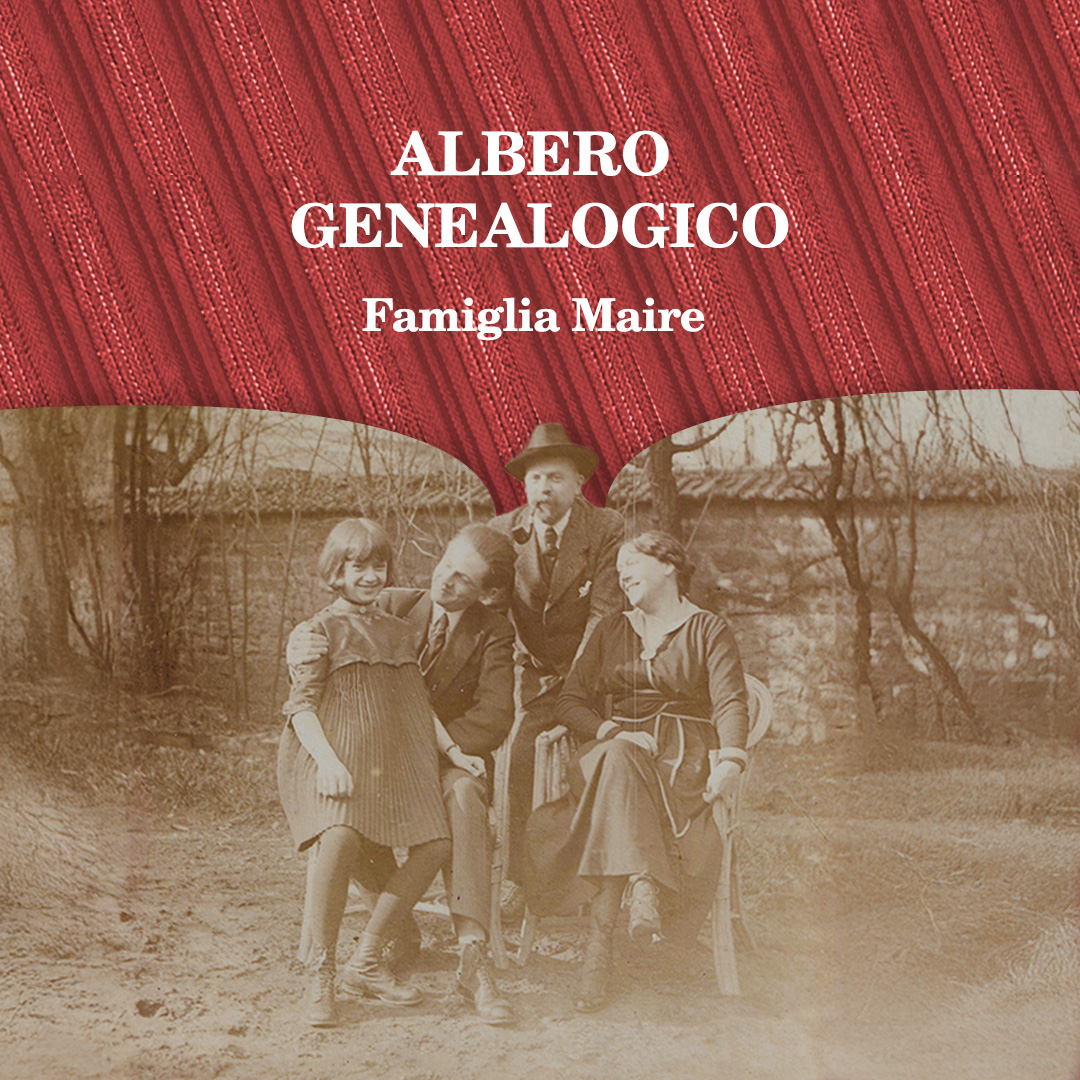
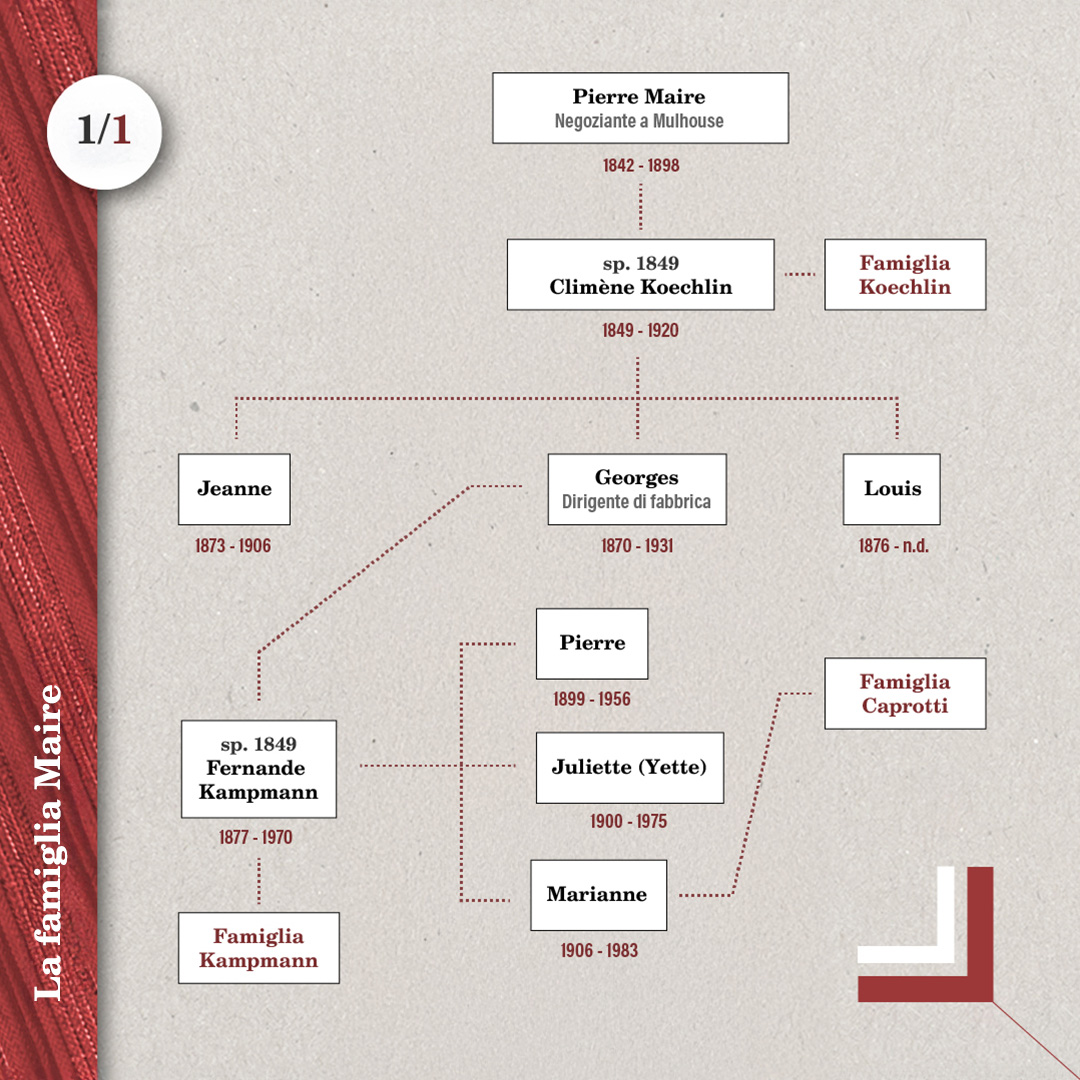
So, following in the footsteps of the ancestors of my maternal grandmother, Marianne Maire Caprotti, a Frenchwoman originally from Alsace, I let myself be guided by the stories of the Maire, the Kampmann and the Kœchlin families. Each branch adds a new nuance to the identity, each name holds a fragment of life that opens up unexpected perspectives. It is a journey that never ceases to surprise me, because in reconstructing the past, one actually learns to read oneself better.
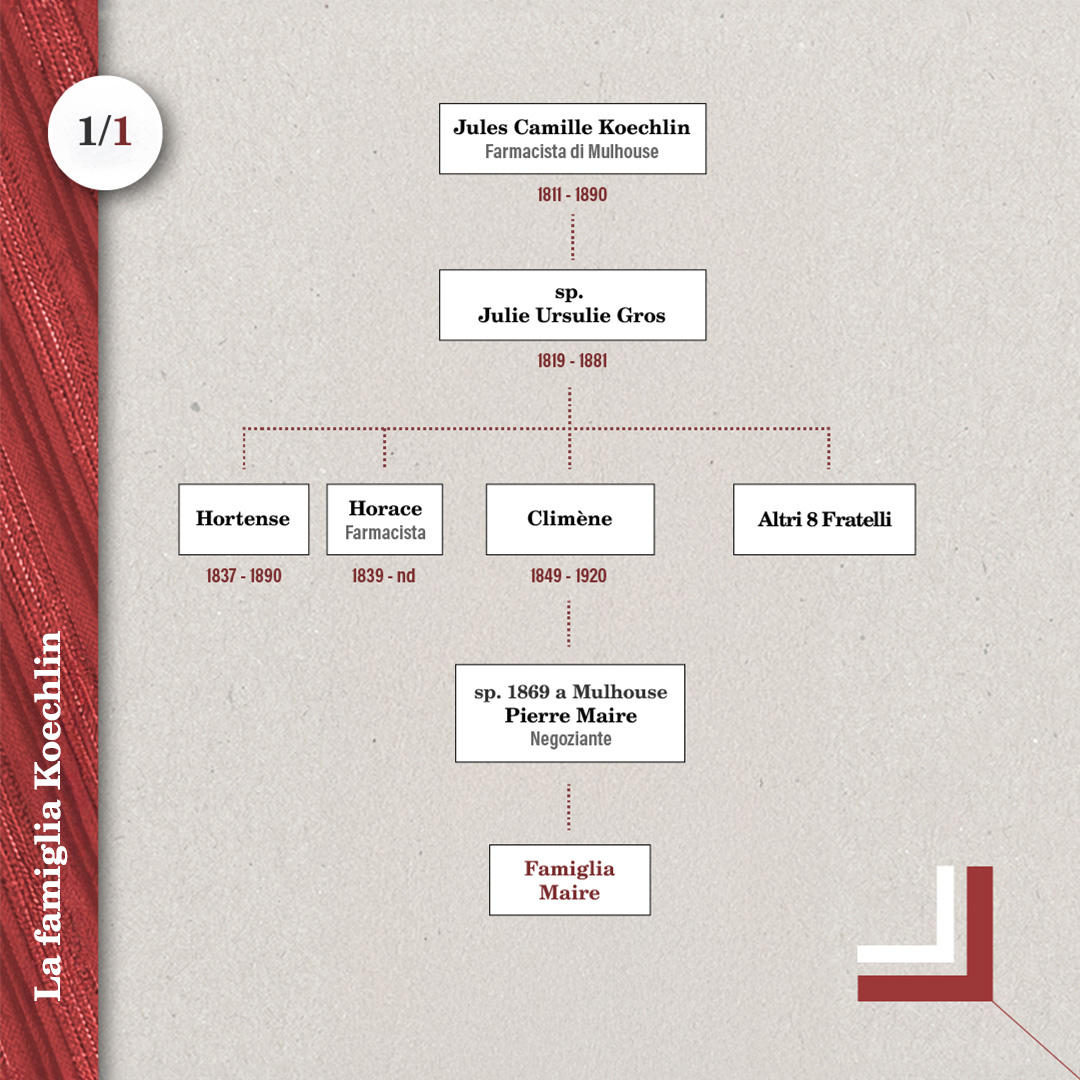
The Koechlin family originated in German-speaking Switzerland; one of its branches settled in the 17th century in Mulhouse, Alsace, where it created a textile industry that would become very famous. Many Koechlin would become well-known, if not famous, contributors in virtually every field of knowledge and industry. The family counts, to date, twenty-four members awarded the Legion d’Honneur, the highest and most important honour of the French State. Among them is Daniel Koechlin-Schouch (1785-1871), who received it for his research in the field of textiles and grandfather of Climène Koechlin (1849-1920), the grandmother of my grandmother Marianne, then my great-great-grandmother.
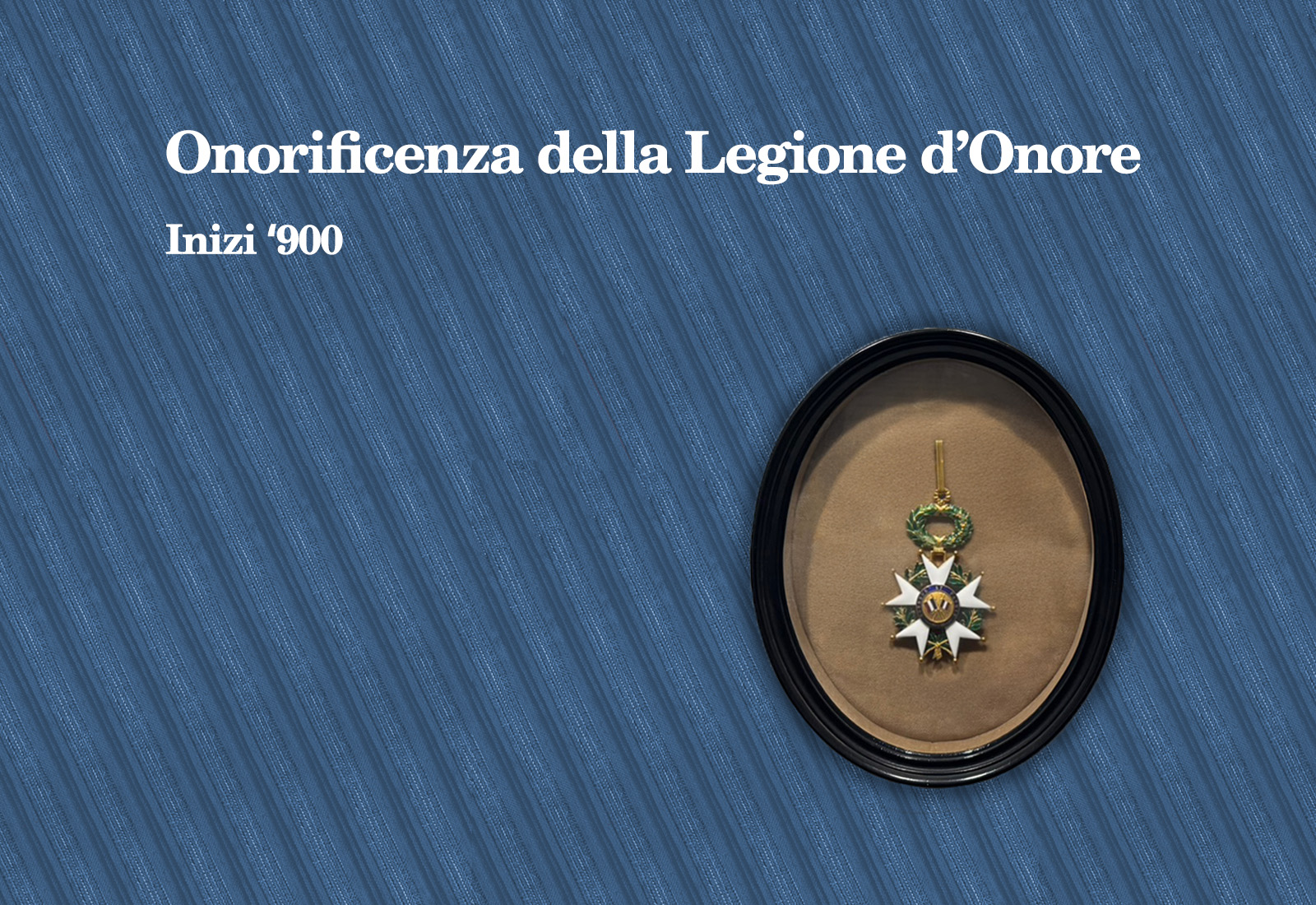
The National Order of the Legion of Honour is France’s highest honour, instituted by Napoleon Bonaparte in 1802, which rewards exceptional merits in all fields of activity, both civil and military, the first honour not to distinguish between nobility, census or religion, relying solely on individual merit. It is conferred on French and foreign citizens who have distinguished themselves for their service to the nation, and is an honour that the French feel and value highly, as can be seen in the words of General François Lecointre, Grand Chancellor of the Legion of Honour: “Those who are decorated are held up as an example and serve as an inspiration to their contemporaries and future generations, as the honour does not merely highlight past merits, it obliges as much as it rewards, prompting each recipient to prove himself worthy of the honour bestowed upon him, further committing himself to France and its citizens. This creates bonds of esteem that sometimes transcend borders, as our national honours also aim to recognise those who render service to our country. In this community of values, honour dictates an ethic of conduct based on self-respect and consideration for others.’.
The Koechlins who have received the high honour include, in addition to the likes of Maurice Koechlin, designer of the Eiffel Tower and the Statue of Liberty, the great-great-grandfather Daniel Koechlin-Schouch (1785-1871), and Horace Koechlin (1839-1898), grandson of Daniel and brother of his great-great-granddaughter Climène.
Bibliography:
Grande Chancellerie de la Légion d’Honneur, speech by General François Lecointre, Grand Chancellor of the Legion of Honour.
“Legion of Honour”, entry in “Wikipedia, the free encyclopaedia”.
“Famille Koechlin”, article in “Wikipédia. L’encyclopédie libre’.
LA TOUR EIFFEL (official website), “Maurice Koechlin, The Engineer Without Whom the Tower Would Not Exist”, Article in “History and Culture”, Thursday 5 May 2022, Modified on 05/05/22.
KOECHLIN, Maurice, Article From “Wikipedia, the free encyclopedia”.
Maurice Koechlin, entry on the Koechlin family website, Koechlin.Net.
Statue of Liberty, Article from “Wikipedia, the free encyclopedia”.
KOECHLIN, Charles, entry in ‘Treccani. Online Encyclopaedia’.