Nelson Rockefeller’s love for art, particularly contemporary art, originated with his mother, Abby Aldrich Rockefeller, who appreciated art in all forms and collected it in the house where Nelson grew up; when he went to study at Dartmouth University, she gave him a grant so that he could cultivate his passion for collecting independently, forming his own taste. As Nelson Rockefeller’s daughter Mary Rockefeller Morgan says, ‘my father grew up looking at beautiful things, and his parents were very aware of his ability to see beautiful things’. But Abby Aldrich Rockefeller also believes deeply in the importance of making art accessible to the public. Recognising the need for an institution that welcomes anything outside the classical canons, she co-founded the Museum of Modern Art (MoMA) in 1929 with Nelson and other co-founders Lillie P. Bliss and Mary Quinn Sullivan, which she and her son long directed. Recalling his mother’s philosophy that art makes one more receptive, attentive and understanding, Rockefeller will always credit her with nurturing his creativity and spirit through art.
Inspired by his mother and driven by his own curiosity and creativity, Rockefeller built up a collection of works from different times and places. He has a particular affinity for the works ofAbstract Expressionism, an art movement born in New York after World War II, as well as for Pablo Picasso and Jackson Pollock. At the same time, he collected folk art from North and Central America, sculptures from Africa and South-East Asia, Japanese prints and porcelain from 18th century Europe. Towards the end of his life, after the American pop art movement reached its peak in the mid-1960s, he commissioned Andy Warhol to create portraits of his wife and himself.
Like his mother, Rockefeller built up his own art collection but also believed in the importance of bringing art to the public. We have already seen his experience at the MoMa; as governor of New York, in 1960 he established the NYSCA-New York State Council for the Arts, the first state government agency to provide grants for the arts, a model for the National Endowment for the Arts, a federal agency offering support and funding to the most promising artistic projects, established by an act of Congress in 1965.
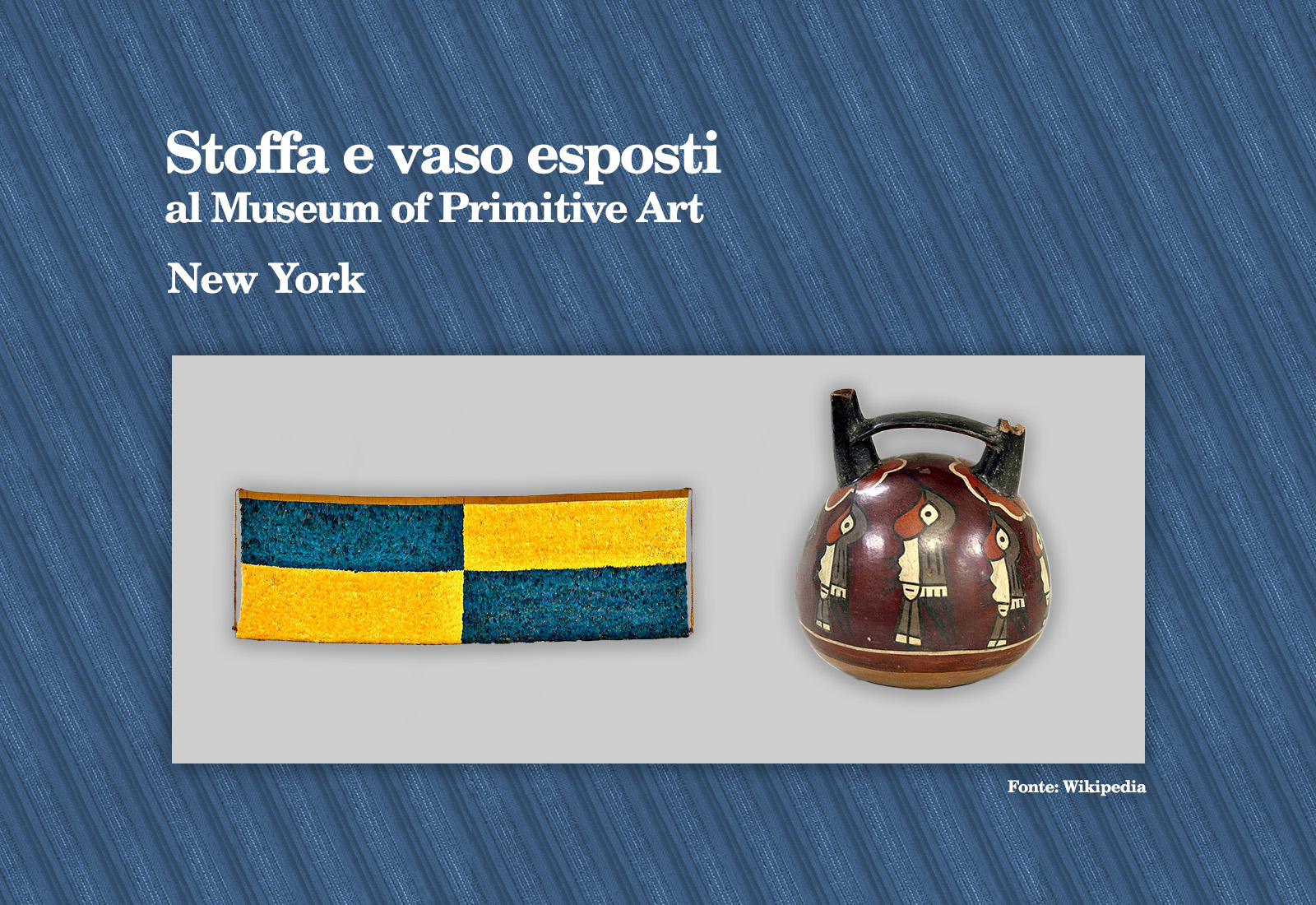
After the tragic death of his fifth son, Michael Clark, during an expedition to New Guinea, Rockefeller founded the Museum of Primitive Art in New York, now recognised as the Michael C. Rockefeller wing of MoMa.
Michael C. Rockefeller: the tragic end of an anthropologist
In March 1961, shortly after graduating from Harvard with a degree in anthropology, 23-year-old Michael embarked on a trip to Dutch Guinea (today the easternmost part of Indonesia) to film a documentary while buying objects for his father’s collection of primitive art. One November morning, the catamaran he is sailing on capsizes, the men on board drift for a day, then Michael decides to swim ashore to seek rescue, and disappears. In 1964 he is declared legally dead. The family maintains and will always maintain the thesis of drowning; but another thesis says that the young man runs into a cannibal tribe that kills him and feeds on him.
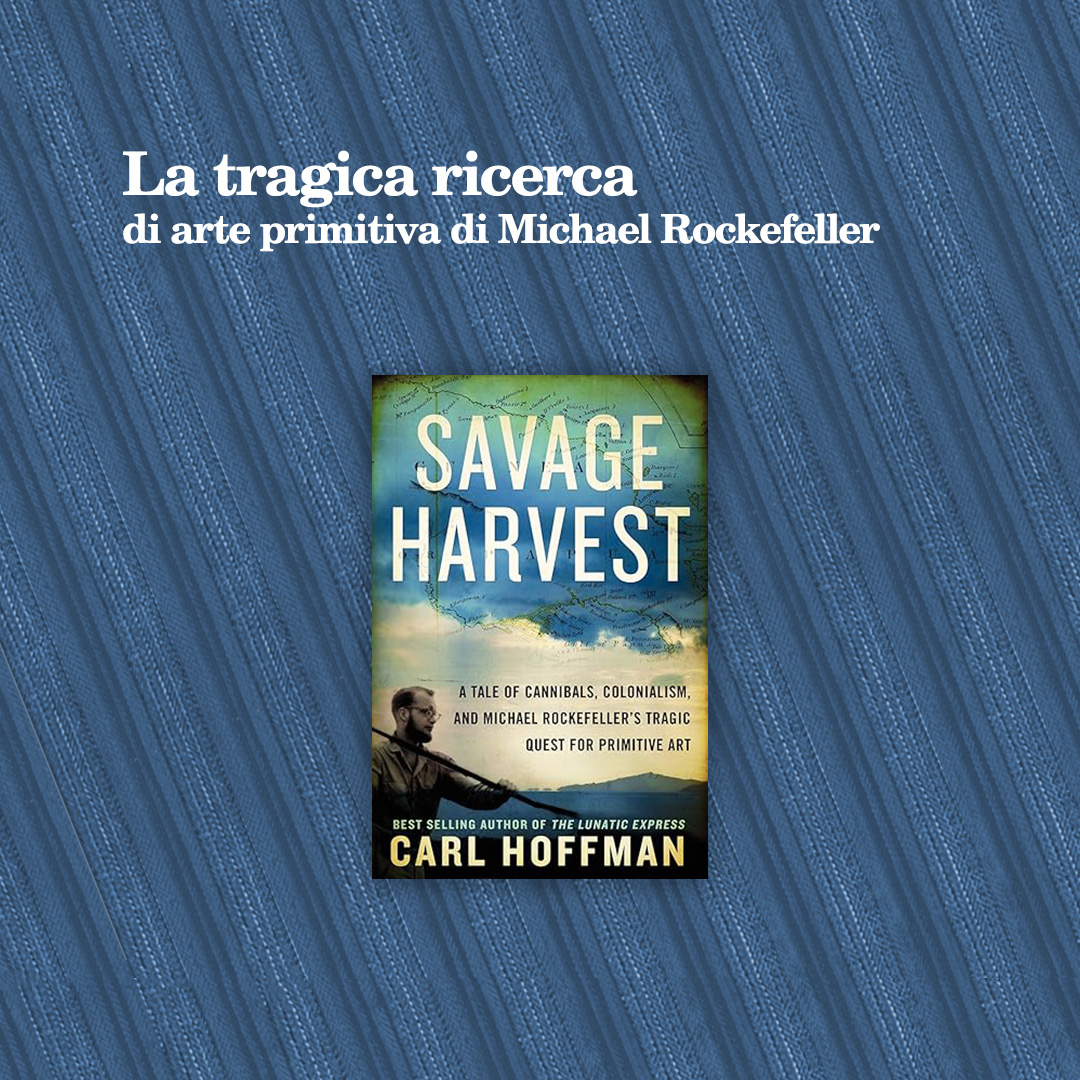
After decades of films, investigations and inferences, journalist Carl Hoffmann wrote a book that came out in the US in 2014, Savage Harvest: A Tale of Cannibals, Colonialism, and Michael Rockefeller’s Tragic Quest for Primitive Art. Hoffman, writes Livia Manera in the ‘Corriere della Sera’ reviewing the book, ‘learned the language of the Asmat [the cannibal tribe that allegedly fed on the wretched researcher, ed. He researched the Dutch archives and sifted through the letters of the missionaries (…)’ (MANERA, The Rockefeller Heir’s Mystery). Apparently, the American journalist’s research seems to confirm the hypothesis of cannibalism, described in the letters of a missionary who speaks of the discovery of Michael’s skull and other remains, which then disappeared. ‘The final revelation of this sad and grim story’, Manera continues, ‘is (…) that of a cover-up by the Dutch authorities. Who, on the one hand, were about to leave New Guinea and had an interest in demonstrating that they had made it more civilised by eradicating cannibalism; and who, on the other, were concerned not to add to the Rockefeller family’s woes’, which today exhibits at MoMa, among other masterpieces of ethnic art, the rare pieces that Michael sent to enrich his father’s already extraordinary collection, since 1954, under the name of ‘The Museum of Indigenous art’, displayed in a building next to the house where Nelson Rockefeller grew up. After the tragedy, Rockefeller changed the name of the collection to ‘Museum of Primitive Art’, and dedicated it to the memory of his son. Closed in 1974, its collections were eventually transferred to MoMa, becoming the Michael C. Rockefeller Wing.
The short, intense film where Mary Rockefeller Morgan, Nelson Rockefeller’s daughter and Michael’s twin sister, talks about the collections was presented in 2014 on the occasion of the exhibition“The Nelson A. Rockefeller Vision: In Pursuit of the Best in the Arts of Africa, Oceania, and the Americas.” (“The Nelson A. Rockefeller Vision: In Pursuit of the Best in the Arts of Africa, Oceania, and the Americas“).
Mary, now over 80, suffered greatly from the loss of her brother; when he disappeared she followed her father on his expedition to search for him, as we know without success. Her lacerating grief was first reflected in the tragic and moving book she wrote about what it means to die not only of a brother, but of a twin. Above all, however, she has always been passionately and stubbornly concerned with her father’s museum where her passion as a child and later as a young scholar was born. According to her, Nelson’s attraction to primitive art may have been rooted in his dyslexia, a learning disorder that affects the ability to read and write, which both she and Michael inherited. “With dyslexia you develop a real visual sense about the placement of objects,” Mary argues, an order that forms in the mind and is not necessarily something we can see ourselves: if Michael’s favourite painting was an extravagant Georges Braque collage, it is one of the family legends the time Nelson, invited to dinner by the Astors, walked into Brooke’s living room and without a word began to change the order of the furniture in a pattern only he could see.
Sam Smith, author of a very recent article on Rockefeller and the Met’s Ethnographic Museum, thinks that Nelson “saw parallels between indigenous art and abstract forms that he always had to explain to the uninitiated”; this was combined with his passion for business and pleasure. Certainly his feelings for Latin America found expression in his collecting, just as they did for Africa in the 1950s, when most Americans were content to ignore the continent.
Just in the latter period, after Mary’s vigorous fundraising efforts and her insistence, supported by the museum’s conservators, the vast south-facing glass curtain wall was reopened after being screened to protect vulnerable objects from the sun.
The new wing, said Mary Morgan, represented and continues to represent the closure of a devastating episode for the Rockefeller family.
“Michael and I were lost,” writes Mary (he literally, she figuratively), but “the thing that has allowed us to accept Michael’s death is that life really does go on in this gift he brought from New Guinea.
Nelson Rockefeller is the man who, at the end of the 1950s, imported the American ‘global’ shop, the supermarket, to Italy through the company he founded, IBEC, whose aim was profit linked to social and political aims, bringing basic welfare to all levels of the population starting starting with basic necessities at affordable prices, which could have demonstrated, in the midst of the Cold War between the United States and the Soviet Union, that Western capitalism was also capable of generating benefits for all in the same way, and even more, than other economies. Among others, the Caprotti brothers, Guido, Bernardo Caprotti and, later, Claudio Caprotti, joined IBEC. With IBEC in 1957, they opened the first shop in Milan in Viale Regina Giovanna, the ‘Supermarket’; and when, in the mid-1960s, the Americans withdrew to take the supermarkets project to other countries around the world , the Caprotti brothers, who remained the sole owners, would make the ‘Supermarket’ the ‘Esselunga’, the oldest and at the same time most modern supermarket in the country. (G. CAPROTTI, The Bones, pp. 47 ff).
Sources:
THEMeT, Nelson A. Rockefeller and His Daughter Mary Morgan on His Collecting
Bibliography:
Dartmouth, The Nelson A. Rockefeller Center for Public Policy and the Social Sciences, C. JAVENS ’23, (…), Outside the Lines: Nelson A. Rockefeller as Politician and Patron of the Arts.
Rockefeller Archive Center, Arts & Culture/Issues in Philanthropy/Photo Essay/Photo Essay: L. VINK, A Mother, a Son, and Modern Art, July 7, 2020.
C. HOFFMAN, Savage Harvest: A Tale of Cannibals, Colonialism, and Michael Rockefeller’s Tragic Quest for Primitive Art, William Morrow & Co., 2014.
L. MANERA, The Rockefeller Heir’s Yellow. Accident or act of cannibalism?, in “Corriere della Sera”, 30 July 2014.
S. ROBERTS, A Young Rockefeller Vanished in 1961. Met’s New Wing Celebrates His Memory, in “New York Times”, 29 May 2025; updated 1 June 2025.
Museum of Primitive Art, entry in WIKIPEDIA, The Free Encyclopedia.