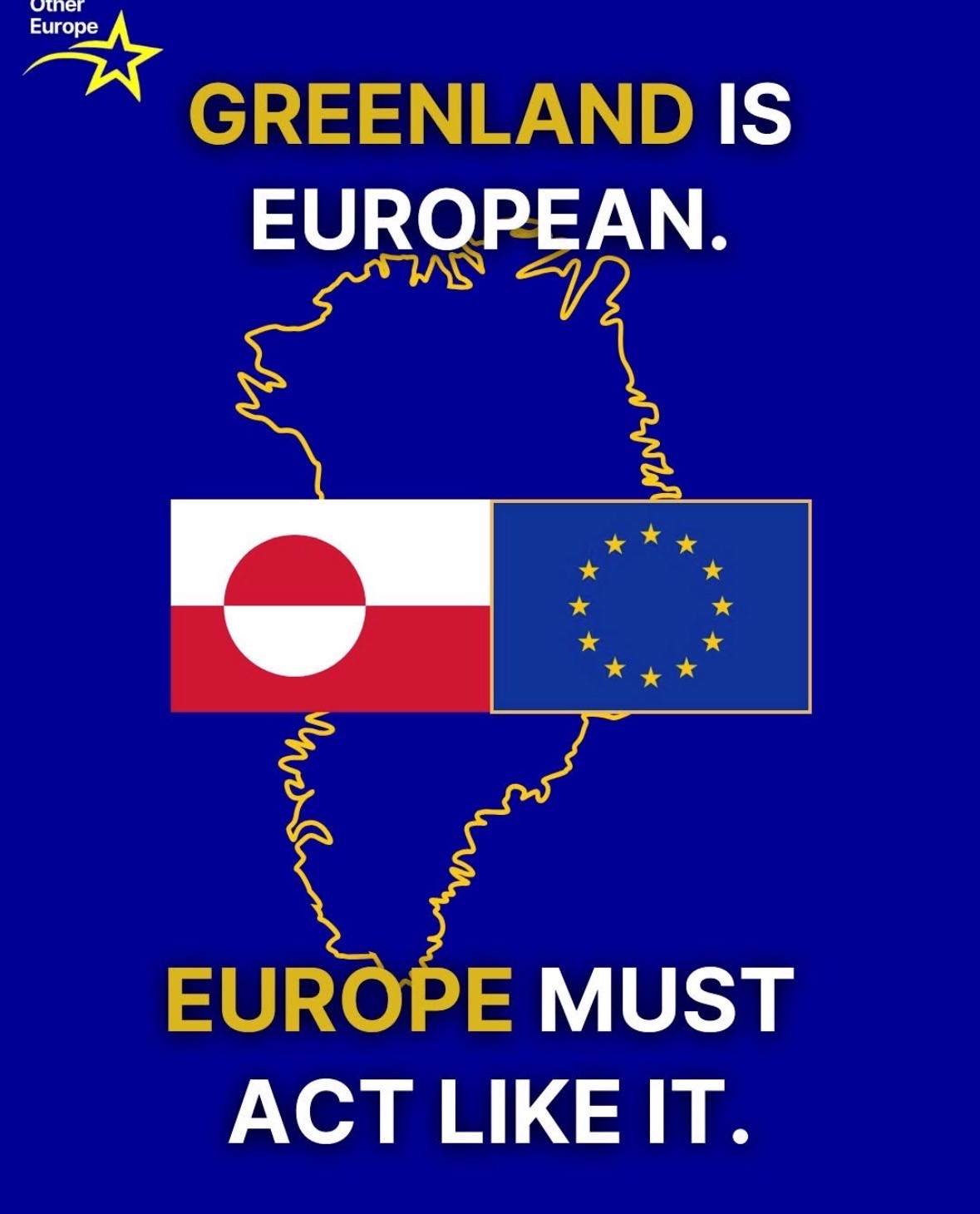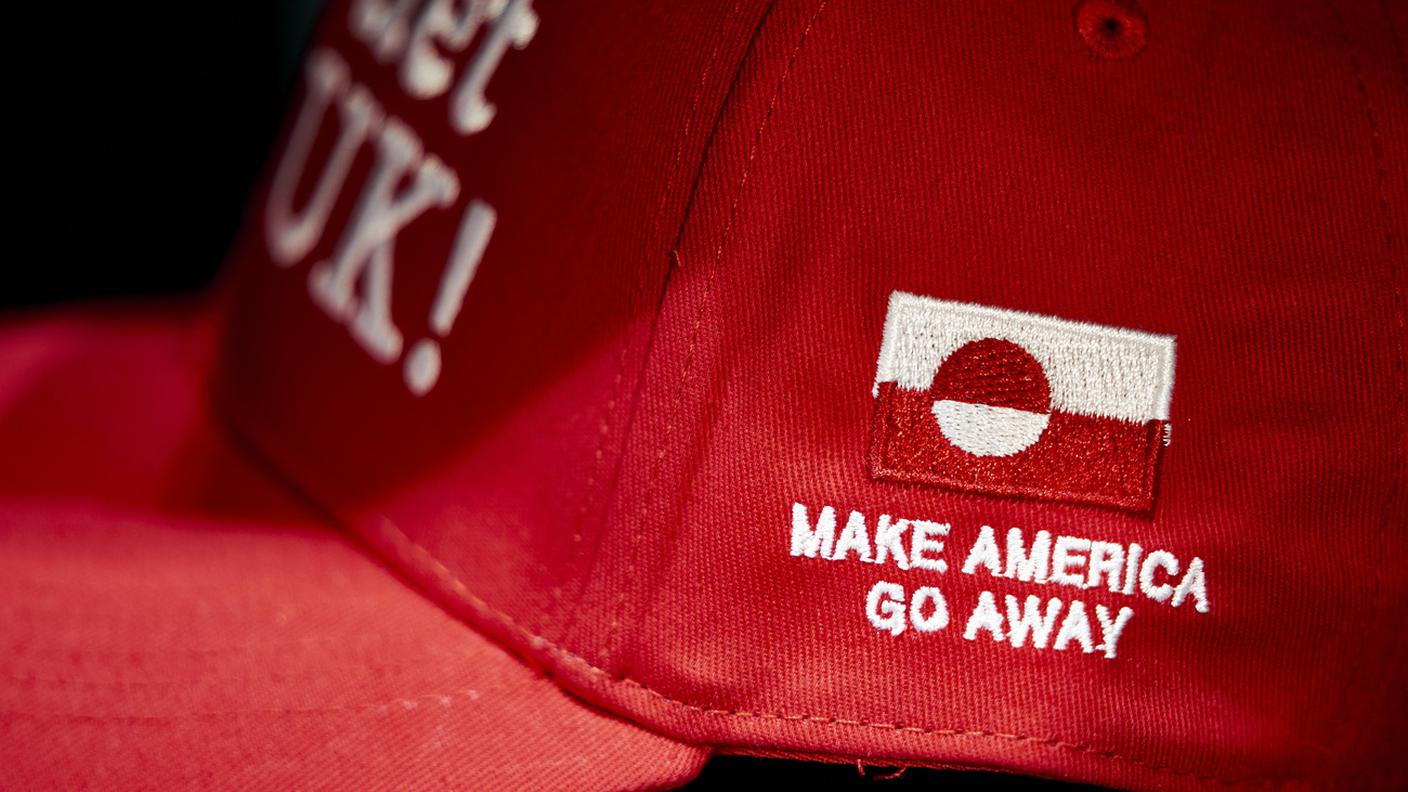
Foreword: before leaving you to read an excerpt from : There is Something Rotten in the American State by David French of the New York Times, I would like to remind you that the 9/11 attacks on the United States prompted NATO to invoke Article 5 for the first time in the organisation’s history.
The article states that an attack on any member must be considered an attack on all. The invocation was confirmed the following 4 October when NATO itself ruled that the attacks were indeed considered for the purposes of the North Atlantic Treaty.
… Denmark answered the call after the 9/11 attacks. It deployed thousands of soldiers to Afghanistan and Iraq, and lost more soldiers per capita in Afghanistan than any other NATO nation apart from the United States.
There is no deeper way to express solidarity with an ally.
“America has no permanent friends or enemies,” Henry Kissinger often states, “only interests”. This statement, supported by the advocates of realpolitik, is only true if the word ‘permanent’ is emphasised. In the long run, allies can certainly become enemies, and enemies can become allies.
Let us consider France and England. They fought each other in a series of wars spanning hundreds of years. But they have been friends and allies for over a century, fighting together especially in the First and Second World Wars. Despite tensions, they stood together as NATO allies, defending Europe and the free world for the duration of the Cold War.
I do not know if they are permanent friends, but they are, to the incalculable benefit of both nations.
The best expression, one that accurately reflects US national interests, is that although a friendship is not permanently guaranteed, our country has a permanent interest in maintaining international friendships and alliances. When we lose partners in alliances (not to mention the alliance itself), we are weaker and more vulnerable, no matter how hard we try to strengthen our independent military and economic strength.
I write about all this because the Trump administration may be on the verge of the most catastrophic national security blunder of my lifetime. It is attempting to force Denmark to cede Greenland, its semi-autonomous territory, to the United States.
We are offering to buy it, but the offer is being made at gunpoint.
On 6 January, for example, White House spokeswoman Karoline Leavitt issued a statement to CNN in which she said: ‘The acquisition of Greenland is a national security priority for the United States’ and ‘The president and his team are discussing a range of options for pursuing this important foreign policy objective, and, of course, the use of the US military is always an option available to the commander-in-chief’.
On 9 January, President Trump stated that if America fails to acquire Greenland ‘the easy way’, then he will resort to the ‘hard way’.
“We’re going to do something in Greenland whether we like it or not,” Trump said, “because if we don’t, Russia or China will take control of Greenland and we will no longer have Russia or China as neighbours.”
On Wednesday, the foreign ministers of Denmark and Greenland met with Vice-President J.D. Vance and Secretary of State Marco Rubio for a “frank” and “constructive” exchange that seems to have resolved nothing. The United States still wants Greenland, and Denmark and Greenland refuse to capitulate.
The countries have agreed to form a working group designed to address American security concerns while preserving Danish sovereignty. At the same time, as reported by our newsroom, the American delegation ‘did not apologise or back down in the face of Trump’s threats’.
Trump, for his part, stated on Wednesday: ‘We need Greenland for national security. If we don’t get in, Russia and China will get in. And Denmark can’t do anything about it. But we can do everything’.
It would be tempting to simply argue morally that we should not intimidate (and perhaps even attack!) Denmark. The Danes are such loyal allies that they long ago granted America unlimited access to Greenland to strengthen its defence.
As the Times explained last week, a 1951 agreement grants the US the ability to ‘construct, install, maintain and operate’ military bases throughout Greenland, ‘house personnel’ and ‘control the landings, takeoffs, anchorages, moorings, movements and operations of ships, aircraft and vessels’.
Denmark resisted Nazi occupation during World War II. It is a founding member of NATO and has lived up to that commitment, as mentioned above, by fighting alongside us in Afghanistan. It even fought in Iraq, a non-NATO military mission. More recently, the Danish Navy deployed a frigate in the Red Sea, where it fought alongside the US Navy against the Houthi rebels.
Intimidating Denmark into taking over Greenland would be tantamount to threatening to steal a friend’s car after he has already lent it to you. The friendly gesture is nice, but isn’t it better if the car is yours? Aren’t you richer if you can add it to your collection?
In Donald Trump’s mercenary calculus, morality has no meaning, unless it is his mor ality, of course, and his morality places no limits on his will to power and his greed.
And so it is necessary to oppose the annexation of Greenland using words that MAGA (Make America Great Again) can understand. Intimidating Denmark will make the US weaker and perhaps even poorer. It is not only wrong to turn against our friends; it is stupid, and this stupidity is spreading far and wide in American foreign policy.
The best description I have ever read of Trump’s flawed approach is by Kori Schake, senior researcher and director of foreign policy and defence studies at the American Enterprise Institute. Writing in Foreign Affairs last June, she noted that ‘since the end of World War II, American power has been based primarily on cooperation, not coercion’.
“The Trump team,” he argued, “ignores history, takes for granted all the benefits that a cooperative approach has produced, and cannot imagine a future in which other countries withdraw from the current US-led international order or build a new one that would be antagonistic to American interests.”
The story is indeed clear. When NATO and the Warsaw Pact clashed during the Cold War, it was a clash between an alliance and an empire.
The alliance was a voluntary union of liberal democracies. There was nothing voluntary about the Soviet empire. Soviet troops in the Warsaw Pact countries existed not only to counter the West, but also to impose Soviet control.
Just ask the Hungarian people in 1956. Or to the people of Czechoslovakia in 1968. Soviet troops crushed the nascent democratic movements in both countries. The Soviet authorities also supported the imposition of martial law in Poland in 1981, a move designed to crush Lech Walesa’s Solidarity.
But that is how it is with empires. They are almost always weaker than they appear because much of their strength is diverted towards domination, towards maintaining control over populations that do not like or even reject their rule.
Although he would never put it in those terms, Trump favours the failed Soviet approach. The Western Hemisphere is his version of the Warsaw Pact. He wants to turn it into a region under American rule, where nations conduct their foreign and even domestic policy under the watchful eye of the Americans, always aware of the extraordinary power of American weapons.
Our historical allies, meanwhile, are treated as real or potential enemies. Denmark is facing blatant American threats, but the administration’s threatening language extends far beyond Denmark.
In an interview with the newspaper UnHerd last year, Vice-President Vance raised the possibility of Great Britain and France becoming enemies of the United States. ‘France and the UK possess nuclear weapons,’ he said. “If they allow themselves to be overwhelmed by extremely destructive moral ideas, then they allow nuclear weapons to fall into the hands of people who can actually cause very, very serious damage to the United States.”
Physician, heal thyself. The US is the most powerful nation in the world with nuclear weapons, and is already ‘overwhelmed by extremely destructive moral ideas’ – and one of those ideas threatens to use that terrifying power to extort money from (or attack) an ally.
Moreover, empires are expensive, more expensive than the US can afford. Last week, Trump proposed a significant increase in military spending to $1.5 trillion per year, an increase of almost $600 billion over 2026. The Committee for a Responsible Federal Budget calculated that Trump’s proposal could add $5.8 trillion to the national debt over the next decade.
Reading the administration’s National Security Strategy – or simply observing the administration’s actions during Trump’s second term – it is easy to see why. It costs huge sums of money to dominate North and South America, to deploy the military to fight what Trump calls the ‘ war from within ‘ and to strengthen defences while turning its back on allies.
As I wrote last week, a study by the RAND Corporation found that the US contributes 39% of the total burden of allied collective defence worldwide. If you separate yourself from allies, you have less military strength available for defence, and you have to accept the increased vulnerability or find the funds to make up the weakness.
On Tuesday, the Prime Minister of Greenland, Jens-Frederik Nielsen, issued a clear and unequivocal statement rejecting the American demand to own his island. “We are now facing a geopolitical crisis,” Nielsen said. “And if we have to choose between the United States and Denmark, here and now, we choose Denmark. We choose NATO. We choose the Kingdom of Denmark. We choose the EU.”
And what was Trump’s response? “I don’t agree with him,” he said, “I don’t know who he is. I don’t know anything about him. But this will be a big problem for him”….
It is often said that force does not create law; it is less clear that law can create force, as Abraham Lincoln once said. The voluntary alliances of liberal democracies have proven to be the strongest military and economic forces in the world. This was true in the First World War. It was true in World War II. And it was true in the Cold War.
If we break these alliances, we become smaller and weaker. If we break them out of pride, power and greed, then we don’t just break an alliance; we break our very character. We diminish ourselves in every way that matters, and no amount of frozen ground of new sovereignty can obscure our national shame…
In many ways, the Trump administration is reversing the injustice of the civil rights era. Back then, it was the states that violated the Constitution, and the federal power offered a solution. Now, the federal government is trampling on the Constitution, and many states are trying to resist.
But they face a decisive disadvantage. According to our constitutional structure of government, the federal sovereign is supreme. This means that the federal power can offer a solution to state injustice. But there is no easy state solution to federal oppression. A president stubborn to oppression, strengthened by his pardon power – and in fact immune from conviction even in the event of impeachment – will be able to get what he wants, at least for a time.
This produces the kind of tension that can destroy a nation. When a government oppresses its citizens and prevents access to justice, it subjects the system to unbearable pressure…
Finally, on Monday, a round table discussion took place between myself and my colleagues M. Gessen and Stephen Stromberg. One question I tried to answer was whether the MAGA base would be displeased with Trump’s aggressive military action abroad. I answered no, not as long as Trump was seen as the winner:
To test this hypothesis, that this will not be an issue at all, late last night I took a look at some of the Twitter feeds of MAGA figures who had been most dismissive of people like me, e.g. Reagan/Bush era conservatives. I found them very dismissive and snide, but against anyone who criticised the operation in Venezuela.
These are not the Epstein files, nor did the Epstein files really create a real rift between Trump and MAGA. They have opened some rifts, some small cracks, but it is not something that really affects the core beliefs of some key members of the coalition. No, no, no. This is something else.
The foreign policy aspect of the MAGA struggle has not been so much a matter of grassroots as it has been a matter of cues or summits, something driven by competing ideological factions within the Republican Party that really don’t have much influence on the populist MAGA movement itself. But I believe that the moment such a situation goes wrong for Trump – when he is not seen as someone who has achieved something extraordinary – this dynamic could change. This military operation seems to have been brilliantly executed, and this has allowed Trump to adopt a victorious position, which I believe his base appreciates more than any particular ideology.
David French is an opinion columnist who writes about law, culture, religion and armed conflict. He is a veteran of Operation Iraqi Freedom and a former constitutional lawyer. His most recent book is Divided We Fall: America’s Secession Threat and How to Restore Our Nation. You can follow him on Threads ( @davidfrenchjag ).