Compiled 25 May 2024, updated 17 January 2026
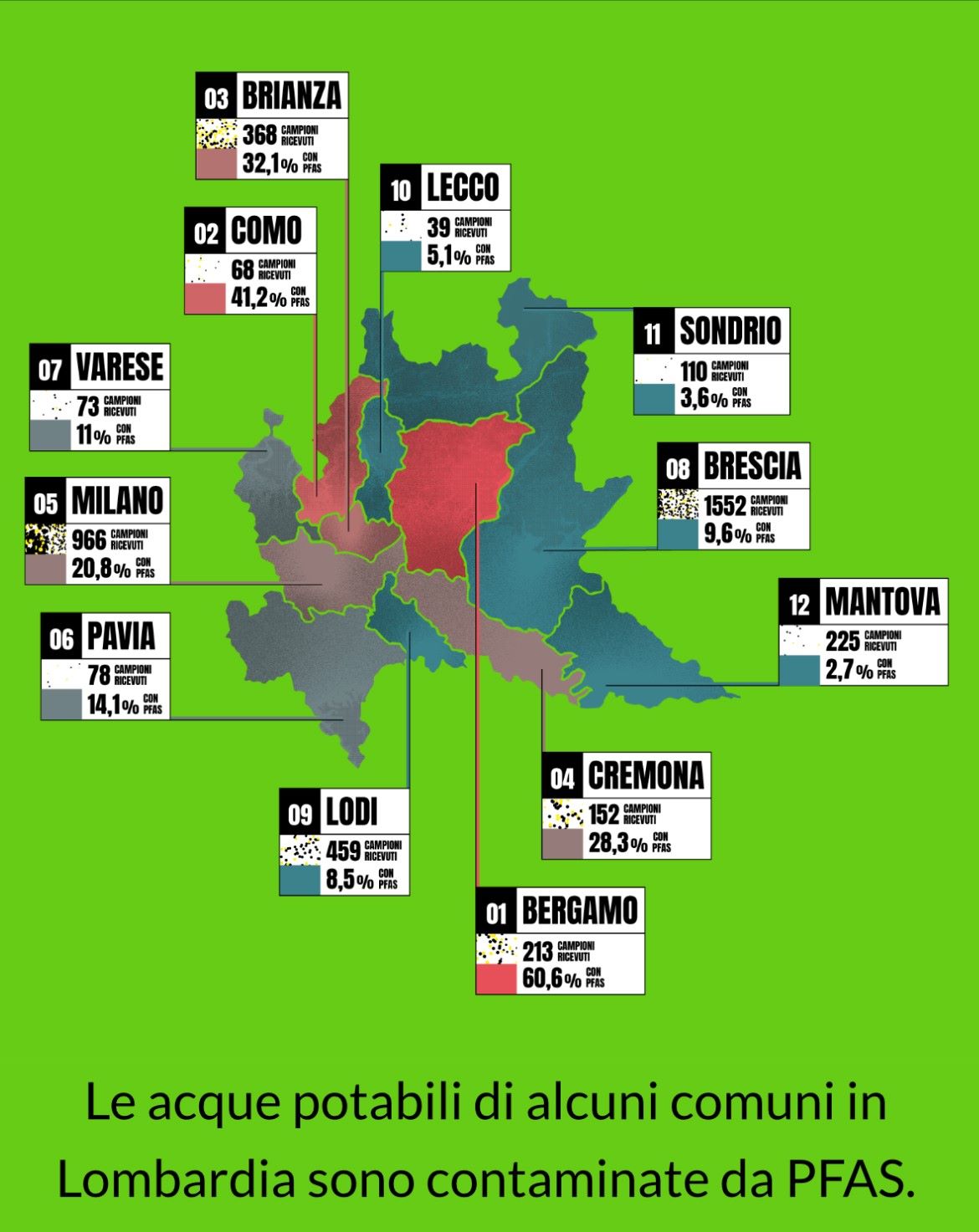
Pfas are everywhere: in groundwater in Lombardy,in toilet paper or in fruit and vegetables.
Of course they are found all over Europe and in France, in Lyon, two companies have been put on trial.
The mainstream media talk about it very little but the problem exists and with this article we want to bring it to your attention because Pfas are carcinogenic.
Pfas in Veneto: there is a causal link between contamination and mortality
Residing in the so-called Red Area, between the provinces of Vicenza, Verona and Padua, in Veneto, between 1980 and 2018 (but probably until today), has meant being involuntarily exposed to a higher risk of death, cardiovascular disease and at least two types of cancer than the national average. In that area (comprising some 30 municipalities and a population of around 150,000), there has been massive PFAS leakage into the waters since the 1980s, with a particularly severe event in 2013. The result was thatall waters, from the most superficial to groundwater, were polluted, to the point that even drinking water was contaminated. And those who lived in the area, drinking water with PFASs every day, and absorbing PFASs in the water in other ways as well, were victims of silent poisoning.
PFAS and the increased risk
As is well known, PFAS, perfluoroalkyl substances, are (about 15,000) practically ubiquitous because they impart water- and oil-repellent properties. In recent years, they have been associated with an increased risk of numerous diseases, from endocrine, cardio- and cerebrovascular diseases to child development. In 2023, the WHO’s International Agency for Research on Cancer in Lyon (IARC) declared certain carcinogens for humans, with less certain, but more than probable effects on kidney and testicular cancers.
The health effects are already visible at low concentrations, and go as far as increased mortality. But when, as in this case, there is contamination at very high levels, the damage is almost certain, and can be significant. This is why researchers at the University of Padua, led by Guido Biggeri, wanted to verify whether, after what happened in the Red Area, the effect was statistically quantifiable, and thus demonstrated, for the first time, the existence of a causal link between PFAS contamination and certain statistical anomalies in health and mortality indices.
The study by the Padua researchers
In order to understand whether or not exposure to PFAS had translated into measurable effects, the researchers used official data from the Tumour Registry of Emilia Romagna and the Statistical Service of the Istituto Superiore di Sanità, and also availed themselves of the collaboration of the Mamme No PFAS group, which has been very active for years in denouncing the problems associated with contaminated water. In particular, they analysed data from the period between 1980 and 2018, during which there were approximately 29,600 deaths among men, and 29,500 among women(here is the study).
Assuming that the contamination started in 1985, and lasted at least 34 years (2018 is the last year for which data is available, although it is likely that the situation has not changed much in the meantime), there were just over 51,600 deaths, as opposed to the 47,700 expected based on what was seen in neighbouring areas not affected by the contamination.
The study demonstrated a causal link between PFAS contamination and certain statistical anomalies in health and mortality indices
In other words, there were at least 3,800 more deaths, or one every three days, attributable to PFAS. In particular, there was an increase in cardiovascular diseases such as heart attacks, and in the cancers most closely associated with PFAS, namely those of the kidneys and testicles. In addition, there was an increase in the risk of occurrence of tumours as age decreased: children were the first victims, while women of child-bearing age, somewhat surprisingly, were more protected, perhaps because they transfer PFASs to the foetus and thus have less of them in their bodies.
The cohort study and the No PFAS Mothers
The No PFAS Moms, also thanks to this work, are back to ask for a cohort study approved by the Region in 2016, but never started. This type of research could provide information that the current Surveillance Plan cannot give, concerning, for example, long-term effects and the identification of individual risk factors, and would serve to define more incisive public health policies than the current ones.
Today, all the aqueducts in the red zone have anti-Pfas filters, which, however, have a sensitivity as low as 5 nanograms per litre, and could therefore let some PFAS escape. Moreover, not all inhabitants are connected to the aqueducts, because those who live in rural areas often use water from their wells. And there is no remediation on the land, whereas it would all need to be decontaminated.
Among other things, the No PFAS Mothers also denounce a higher incidence of pathologies other than those analysed in the study, such as, for example, thyroid disorders, attention deficits in children, premature births and even miscarriages. And they have no doubts about the direction to take: ‘We strongly support,’ they write on their website , ‘the need to ban the production and use of PFAS, as a whole class of substances, globally.
There are also systems you can start with to defend yourself, to check the level of Pfas in your home water.
Read also :
-
- PFAS in the waters of 16 regions. Emergency in Veneto.
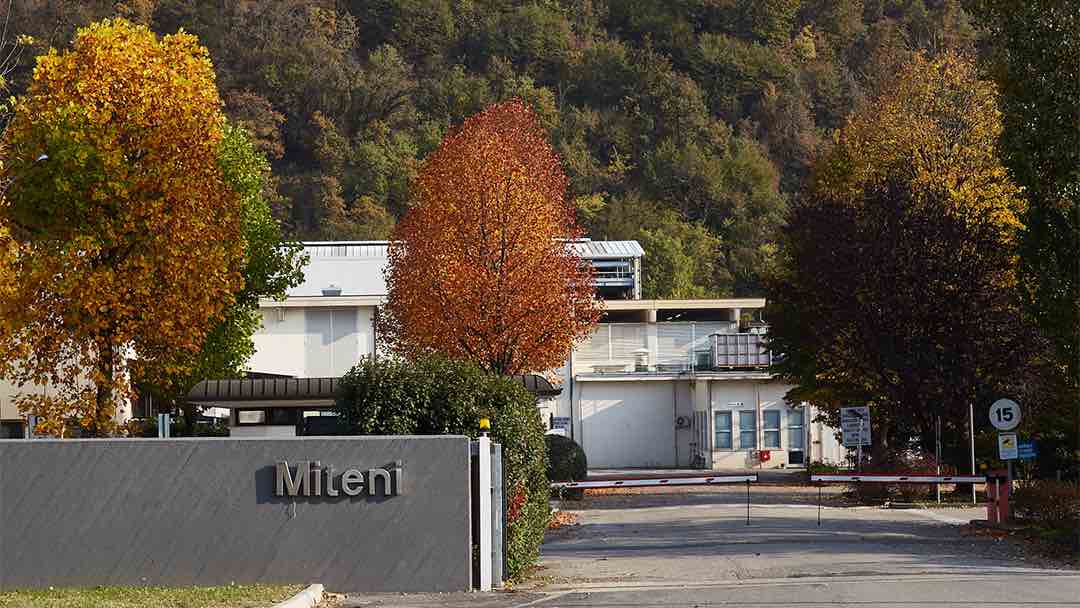
- Twelve years later, the remediation of land polluted by Pfas from Miteni in Trissino, in the province of Vicenza, is still not taking place.
- PFAS: in Lyon, France, in a historic decision , an enquiry has been opened into the role of two companies in water pollution
- bottled water or tap water?
Interesting even if it doesn’t concern water: Pfas in smartwatch and fitness tracker wristbands: the study by the University of Notre Dame (of Chicago) But the most important thing is that a verdict has finally been reached for the facts of the Miteni plant in Trissino (Vicenza) : Pfas pollution in the Vicenza area, rain of sentences for managers. ‘Historic sentence’.
Very interesting motivations: Pfas: 141 years in prison for 11 of the 15 managers of Miteni, held responsible for the largest PFAS contamination in the world.
Veneto has suffered a very heavy situation, because of a company, Miteni, but the level of Pfas in the rest of the country should be investigated and monitored also because, for example, in Milan the level of Pfas seems to be very high.