

Drafted in February, updated in August 2025
N’Djamena on 4 February 2025
Why go to Chad? Many people have asked me that. Some have strongly advised against it, probably because they don’t know the country except from hearsay.
I went there and I can refute all the clichés
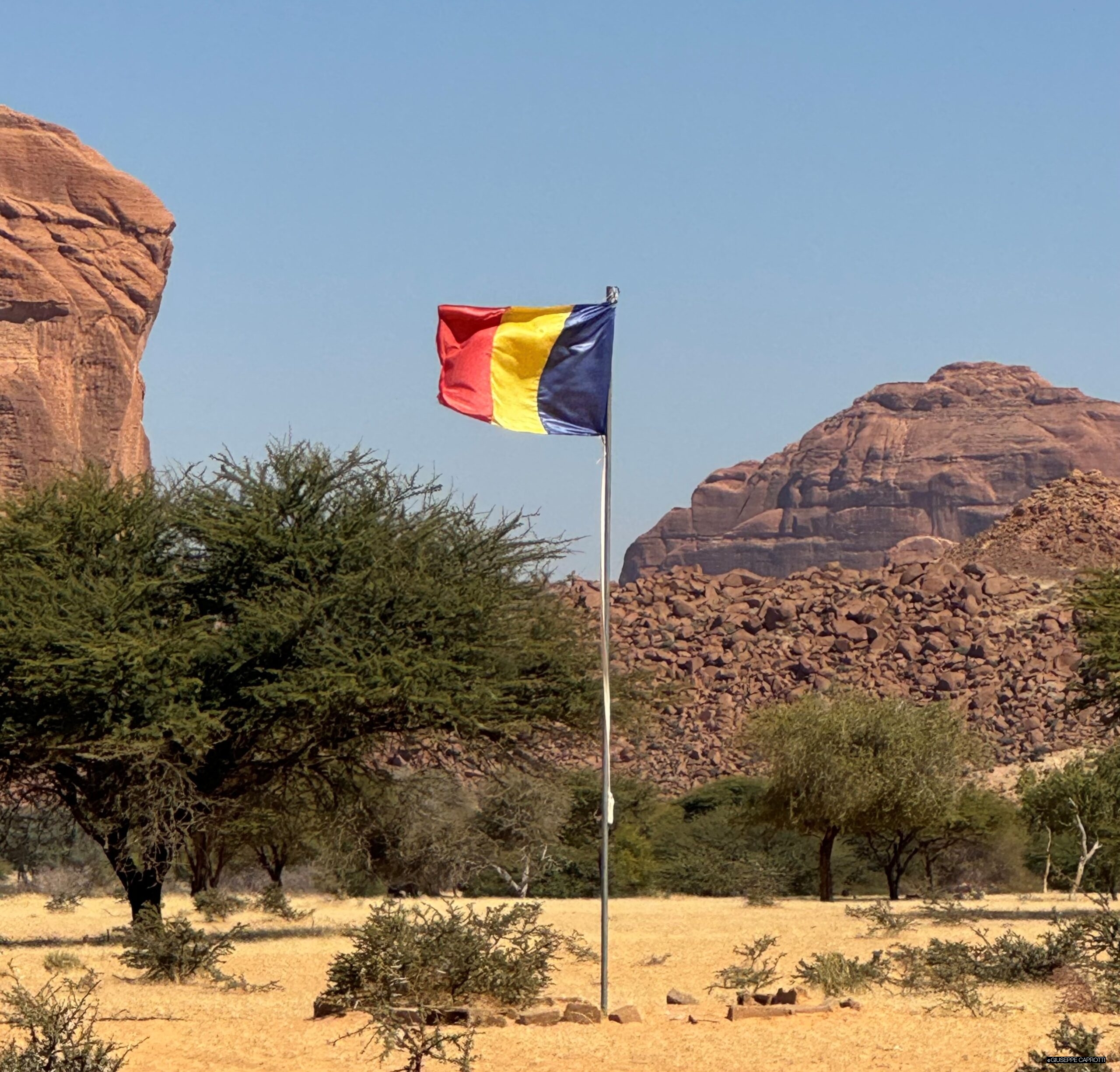
I also went to the capital of Chad, but the heart of my trip was the Ennedi Mountains in the Sahara.
This mountain range is inhabited by the Tubu people, which means‘people of the mountains‘. They are 250,000 nomads who inhabit and control a mountainous region to the east of Chad (Tchad in French), which is about the size of France (Chad has an overall surface area that is double that of France).
The Tubu live in huts without running water, electricity, internet, etc. and are essentially camel herders and pastoralists.
The men take care of the camels because they are needed for the caravans, with which they transport goods – such as salt – which they then sell.
In recent centuries, the only industrial innovations that have been introduced into their subsistence economy are oil lamps and plastic, which is used for water jerrycans. For some – very few, rich people – the jerrycans are used for petrol for their motorbikes or pick-ups (cars).
The Tubu live in a pristine paradise that, with temperatures, which at certain times of the year exceed 45 degrees, can become hell.
It is very difficult for children to go to school and there are no doctors or medicines. Only the strongest survive.
Seeing them smile is rare, they do not like to be photographed and there is no word ‘thank you’ in their language.
In contact with them one rediscovers the difference between what is important, useful and superfluous.
In the harshness of this harsh environment, the important word becomes‘essential‘.
Many things that seemed important when we arrived on our trip have, little by little, lost their meaning (I had 15 kg of luggage with me: not much? By the end of the trip I had not even used everything I had brought!).
I miss the naive pride of the Tubu and the mountains that surround them.
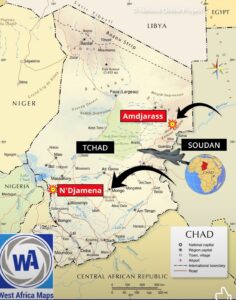
But I don’t know whether the geopolitical situation will allow my return because after Mali in 2022, then Burkina Faso and Niger in 2023, Mahamat Idriss Déby’s Chad unilaterally broke the military cooperation agreements with France in November 2024, deemed ‘obsolete ‘ and ‘outdated’ – precipitating, in January, the departure of a thousand soldiers from the last anchorage point of the anti-jihadist operation ‘Barkhane’, which was halted at the end of November 2022.
To French influence, the country has preferred the Russian orbit: below you see one of the many Ilyushin 76 TDs that transit N’Djamena night and day.

Chad could decide to close as it did with its neighbours Mali and Niger(the latter, for example, has just expelled its Red Cross delegation), although, to be fair, there are religious reasons in these two countries, related to guerrilla warfare fomented by Islamic extremist formations, which are not present in Chad (*).
Chad is strategic because of its location between Niger, which is on the migrant route to Europe, and Sudan, which is a powder keg because of the civil war raging there and the hundreds of thousands of displaced people who have crossed the border and are now also in the country.
In fact, 700,000 people have crossed the border into Chad since the conflict broke out in Sudan.
“There is simply not enough water”…
Then there is the risk of a conflict with Sudan, which was hinted at at the end of March. And the Chadian government cannot afford to have no protectors at its airports as its offensive armamentarium consists of a few Soviet Sukhoi aircraft
Even Marine Le Pen has realised this and in fact has just visited the country to try to make up ground lost to Macron.
(*) Boko Haram is present but only in the Lake Chad area.
However, returning to the Tubu, oblivious to geopolitics and busy surviving on camels and very little tourism – a few hundred people a year – here, below, is a series of images that give some idea of whatEnnedi is all about:
despite all its problems and unknowns, the country, with its people and its nature, remains one of the most fascinating I have ever visited.
P.S.: those who think this trip was ‘madness’ should know that I was in Libya, ten days before Gaddafi fell. Thanks to Tommaso Ravà, Edouard and Hamada.
But also to Benedetta, Nicos, Giulia, Federica and Silvia.


