[vc_column_textPublished 20 January 2024, updated 30 September 2025
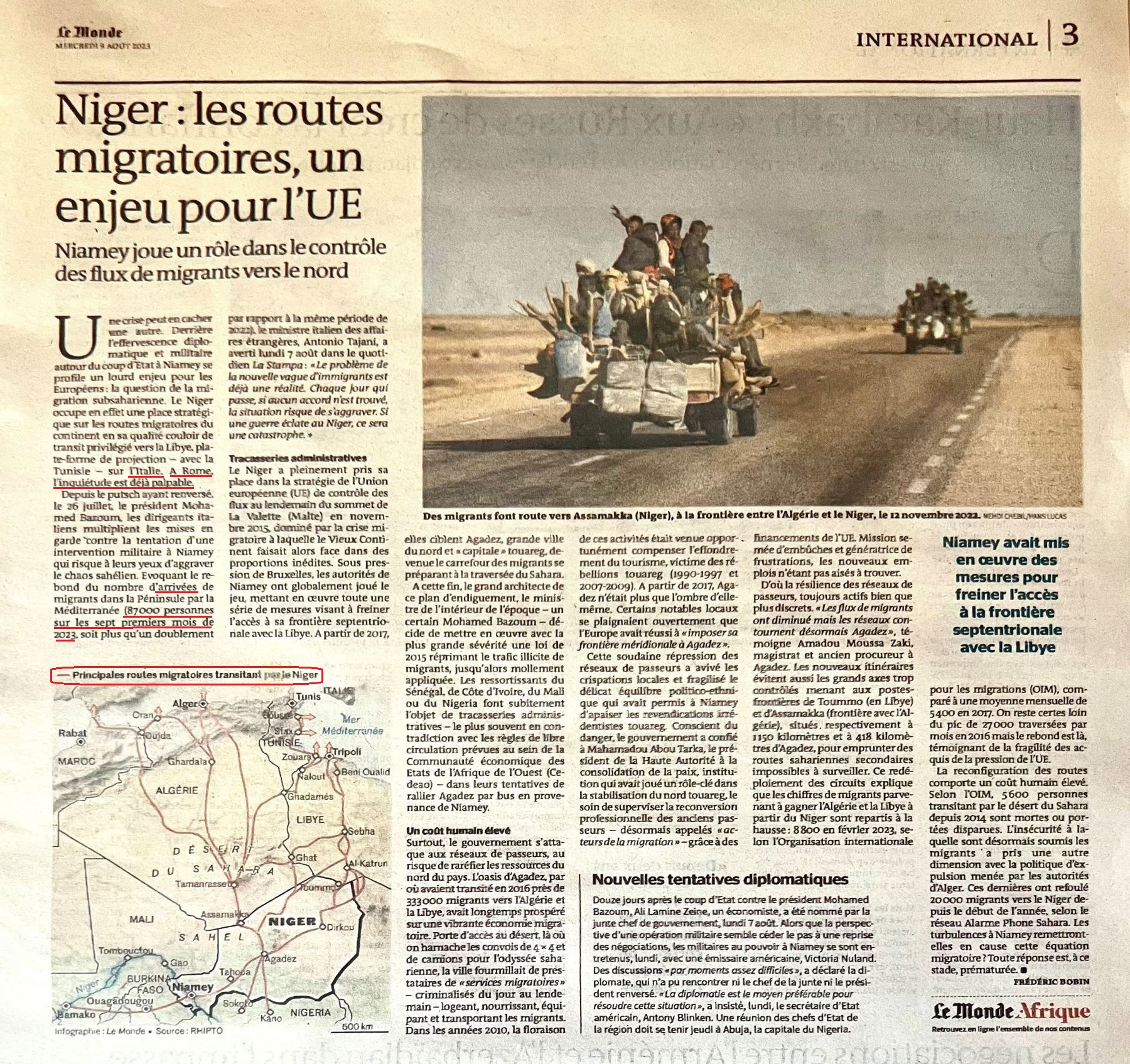
Onthe other hand: in 2023, Europe faced a migratory upswing from the South. The number of migrant and refugee arrivals to the Old Continent by sea increased. The transit through Tunisia and the Canary Islands played an unprecedented role..
According to the United Nations High Commissioner for Refugees, in twelve months 266,940 migrants and refugees landed – 97% by sea – in the southern states of Europe: Spain, Italy, Greece, Malta and Cyprus.
A sign of the erosion of the European Union’s border control ‘externalisation’ mechanisms, which are increasingly negotiated with states on the southern shore of the Mediterranean, this surge marks a 67% increase over the number of arrivals in 2022. We go back to 2016 and 2015, when Europe was facing an unprecedented migratory crisis, to find higher figures (373,652 and 1.03 million respectively). The decline that followed this historic peak has been interrupted and the curves are beginning to rise again
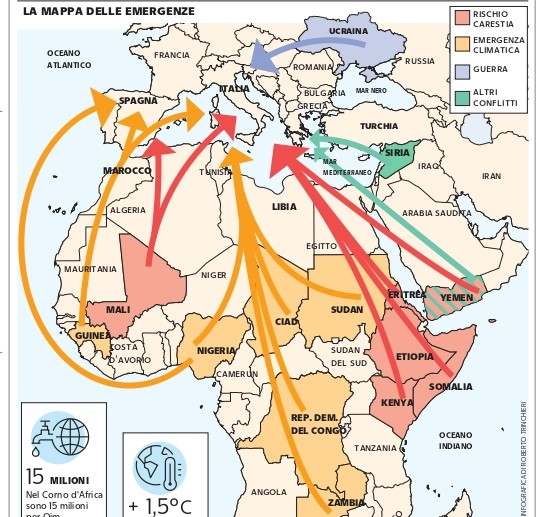
Tunisia and Niger are two crucial hubs on the migration routes to Europe.
The Russians in Niger
Putin takes the Sahel and can control the refugee weapon
Checkmate. The Russian military officially settles in Niger and extends Moscow’s influence throughout the Sahel, completing a geopolitical corridor linking the ports of Cyrenaica to the heart of Africa: the main migration route leading to the Mediterranean is now under Kremlin control.
The final detachment from the European Union that began with last July’s coup, which deposed the democratically elected government and arrested President Mohamed Bazoum, was sanctioned on Tuesday with the signing in Moscow of an agreement between the deputy defence ministers, Yunus- Bek Jevkurov and Alexander Fomin, and Niger Minister Salifu Modi. The three ‘agreed to intensify joint actions to stabilise the situation in the region’. The delegation from Niamey accompanied Prime Minister Ali Mahamane Lamine Zeine, the economist to whom the generals entrusted the image of the executive, to the Russian capital, the first stop on a tour that will continue to Turkey, Iran and Serbia to seek funding and weapons: a reversal of alliances, which opens the door to the rival powers of the West.
The Niger military junta expelled the French contingent, more than three thousand strong, which was supporting the fight against the jihadist insurgency. Then it tore up the agreements with the European Union on military and economic collaboration, and revoked the law that punished the smuggling of migrants. With no more economic aid, lacking supplies and instructors for the army, the generals in Niamey quickly moved closer to Russia, following the moves of the colonels in Mali and Burkina Faso, Marshal Haftar in Benghazi as well as Commander Hemeti who triggered the civil war in Sudan in the spring. A chain of putsch that has displaced the chancelleries, which were incapable of foreseeing and managing crises: the putsch was organised by officers almost always trained and subsidised by the United States, France and the EU. The only response was sanctions and international isolation.
The Russians stepped into the vacuum with nonchalant pragmatism, entrusting the game to Yunus-Bek Jevkurov, who in a few months liquidated the legacy of Evgenij Prigozhin and took over the reins of Moscow’s African risk. The Caucasian general turned deputy minister has extraordinary experience in combat and tribal politics and knows how to move above and below the negotiating tables. Now many expect the arrival of Russian instructors and armaments in Niamey, exacerbating the clashes not only with Islamist formations but also with ethnic groups in the North, who see the agreements signed with the old democratic governments dissolving.
Moscow’s irruption opens a serious problem for Washington and Paris. The Pentagon maintains two strategic bases in Niger for drone reconnaissance and surveillance of fundamentalist terrorists: they are the last ones left on the Continent along with Djibouti. France, on the other hand, obtains a third of the fuel for its nuclear power plants from the country’s uranium mines…
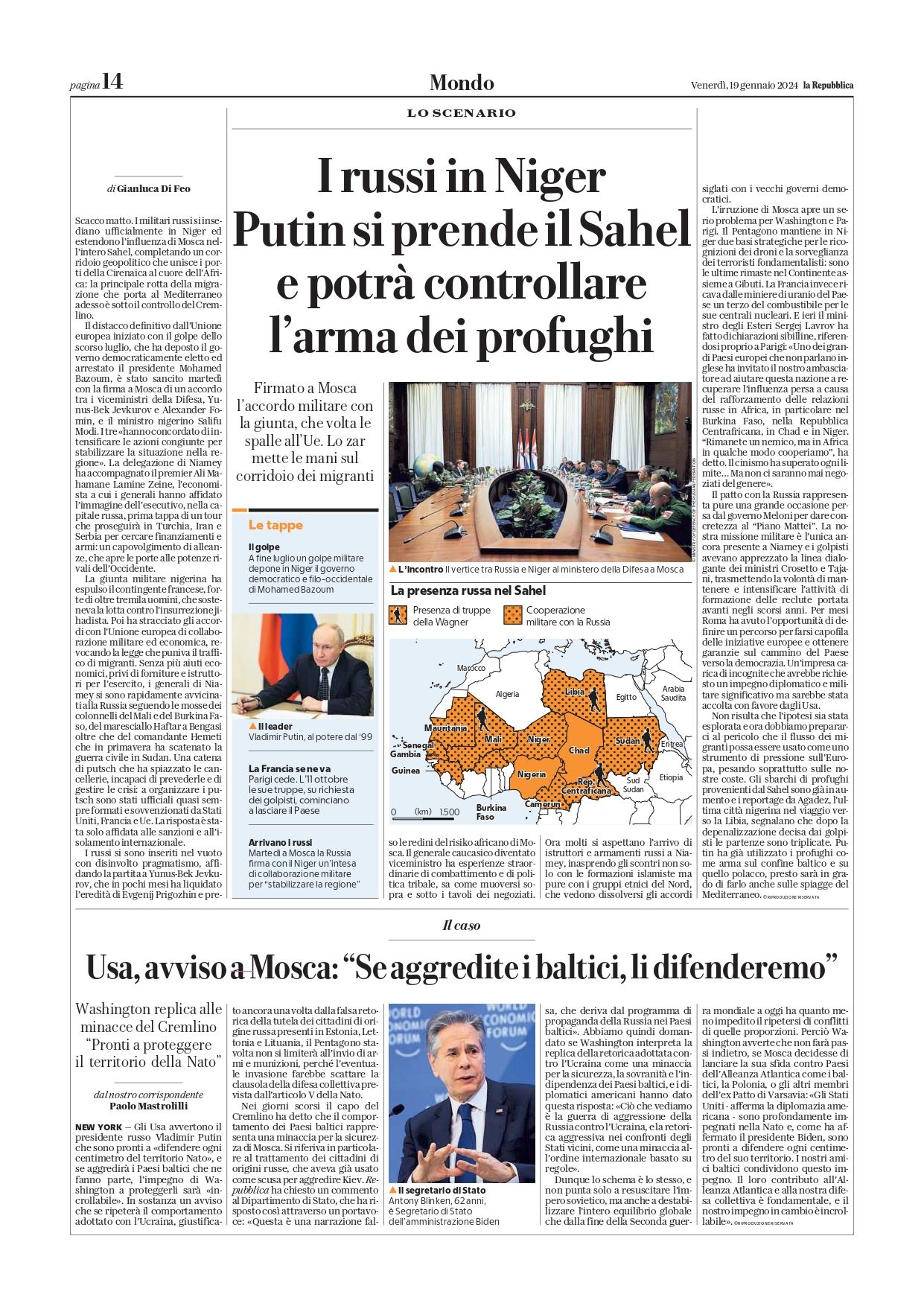
The Repubblica text goes on to talk about the missed opportunities of the Meloni government.
We do not know if this is true but:
- after Russia’s diplomatic offensive, China expressed its interest in strengthening its ties with Tunisia, of which it is already the fourth largest trading partner, after Germany, Italy and France. This move gives more negotiating power to the Tunisian government in its negotiations with European countries, Italy in primis.
- as can be seen below all roads – of African and non-African migrants – seem to lead to Rome.
In the meantime, the situation has worsened as: “Three West African states ruled by military juntas have declared that they are leaving a key regional economic bloc in response to sanctions and pressure to hold democratic elections, in a sign of rising tensions in the region.
Burkina Faso, Mali and Niger have declared in a joint document that they will leave the Economic Community of West African States (ECOWAS or CEDEAO) with immediate effect, marking a significant deterioration in relations between the 15 states that hitherto formed the bloc.
Following the recent coups, Ecowas had already suspended the three nations from the union, which promotes economic integration and freedom of movement. The group imposed sanctions on Niger after its democratically elected president Mohamed Bazoum was removed from office in a coup in July, measures that included closing all air and land borders, freezing state assets and preventing financial transactions with other institutions in the bloc. The sanctions cut Niger off from the two countries from which it imports most of its food and other essential goods – Benin and Nigeria – leading to skyrocketing food prices in one of the world’s poorest countries.
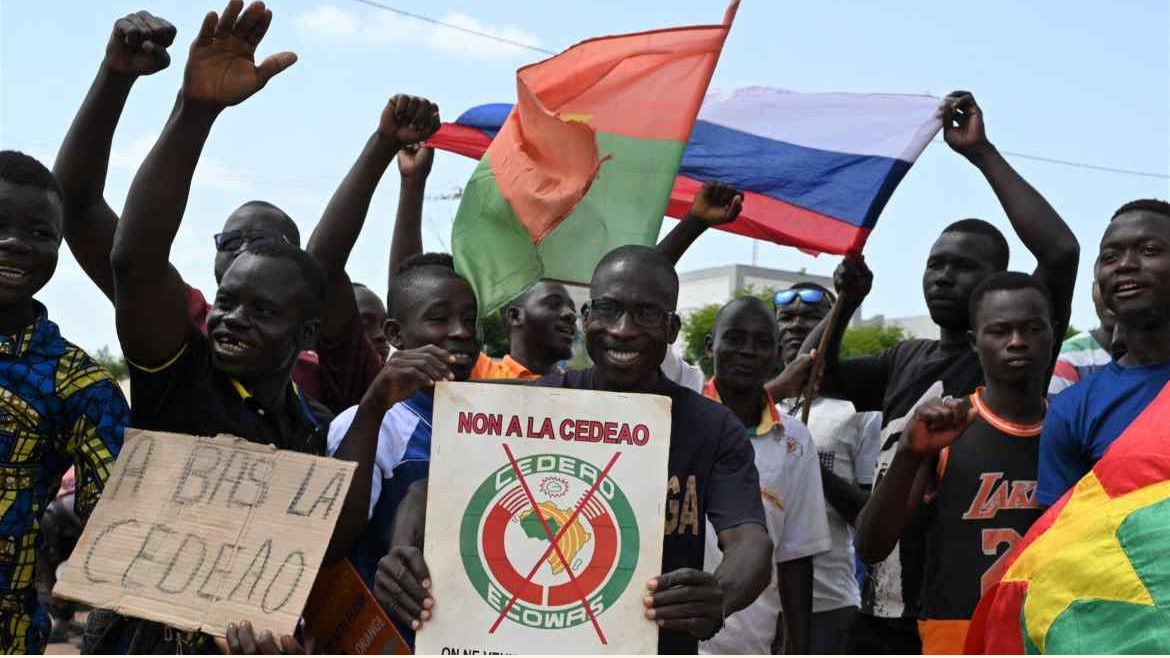
Below a protest against the Ecowas (or Cedeao) in which the Russian flag is seen flying.
Poverty and the international isolation of these states favour Putin’s manoeuvres, not least because the Americans – 1,100 soldiers in Agadez, Niger– will have to leave the country.
But he is not the only one: in fact, in November 2024, Chad breaks its defence agreement with France, a slap in the face to Paris and comes under Russian influence.
But that’s not all, there is also Libya, and to be even more precise Cyrenaica:
Today, Saddam and Khaled are installed at the top of the departments while Belgassem devotes himself to economic and diplomatic relations with an increase in visibility in the last period. There are those who believe that it is precisely the heirs, often at odds with each other, who are pushing for a harder line against the Europeans, also leveraging migratory pressure. Thousands have sailed from Cyrenaica to Crete in recent weeks, putting Prime Minister Kyriakos Mitsotakis in serious difficulty. On 25 June, Mitsotakis deployed the fleet and spoke out with Tripoli: ‘We are not a wild vineyard’. And he intensified dialogue with Dbeibah. The Haftar clan was not intimidated: on Monday and Tuesday 1400 migrants landed in Crete, five hundred this morning.
Athens had always been close to Haftar, considered the counterweight to the Turkish presence in Tripoli. Now, however, the Marshal intends to ratify the Libya-Turkey treaty on the exploitation of submarine oil resources, which ignores Greek and Cypriot claims: a document rejected by the European Council. The issue of the fields also annoys Cairo, which in recent days has asked Washington to intervene to protect its interests. Meanwhile, the Haftars multiply their military relations with Russia and Belarus. Moscow’s aircraft land more and more frequently on Cyrenaica’s airports and unload weapons used to consolidate control over Fezzan, the country’s third-largest region rich in oil fields..
Read also :
Moscow aims at Libya to replace Syria as a springboard to Africa.
Libya on the route of human traffickers
Tunisia and Libya are key in the fight against immigration whose route is under Russian control
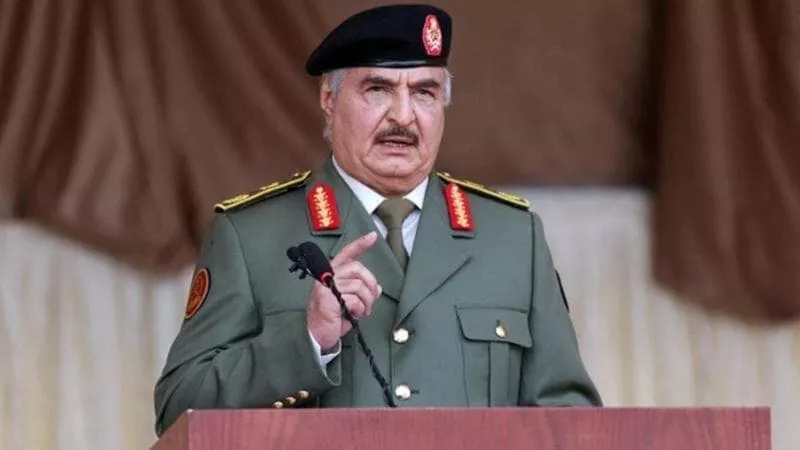
Below: Khalifa Haftar