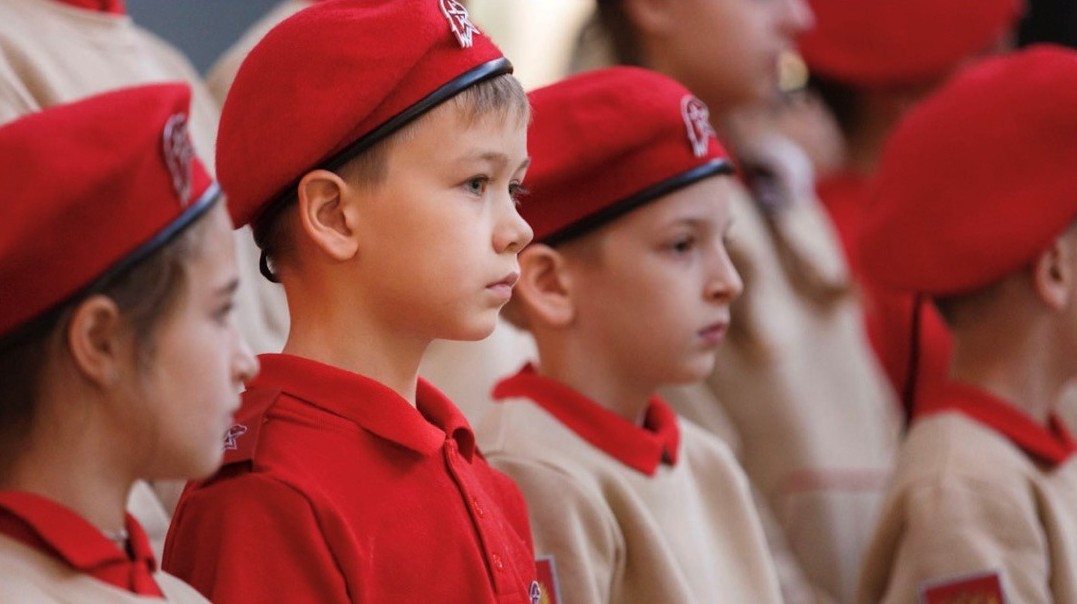
Image taken from a Nexta video, in Voronezh, Russian Federation in April 2025: ‘from cradle to tank, Russian children play in the military parade’.
Written on 12 August 2024, updated on 28 December 2025 with this piece from Le Monde confirming what we have already described: Since the start of the large-scale invasion of Ukraine on 24 February 2022, the Kremlin has promoted ‘cadet’ programmes. From the age of four, young Russians learn to march, obey orders and handle toy weapons.
This takes place at 57 locations in 26 regions of the Russian Federation. At the bottom of the article you will find many pictures that support what is written.
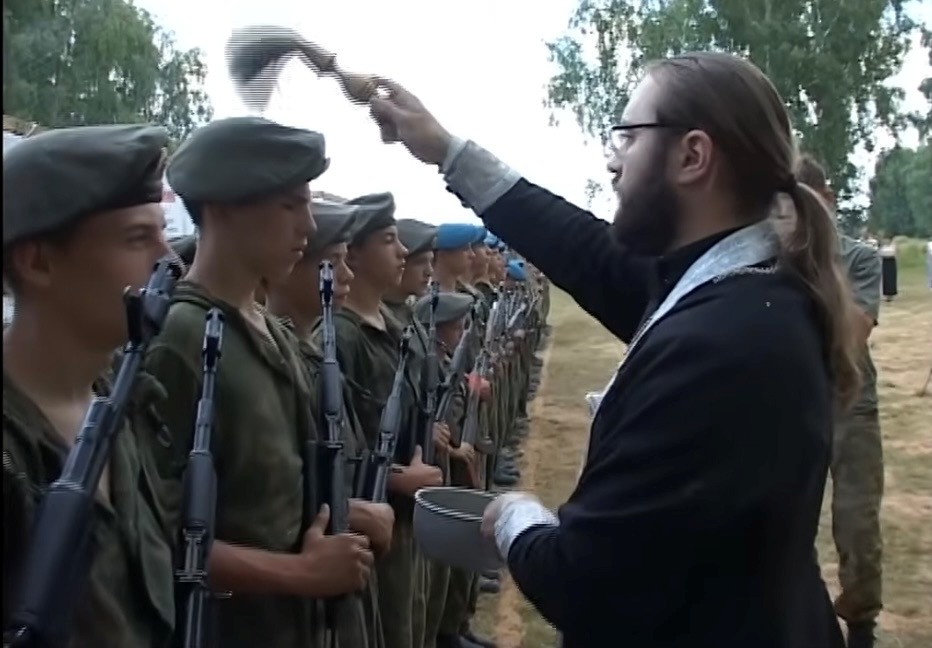
The thing I did not know, and which I learned from this video, is that there are 70 summer camps where 12,000 children and young people train to become soldiers in the summer, instead of going on holiday with their parents. Putin is spending €3 million on this programme – which costs €8 per month for those who can afford it, otherwise it’s free – and which has the support of the Orthodox Church: in the last photo you can see a Pope blessing the boys – soldiers.
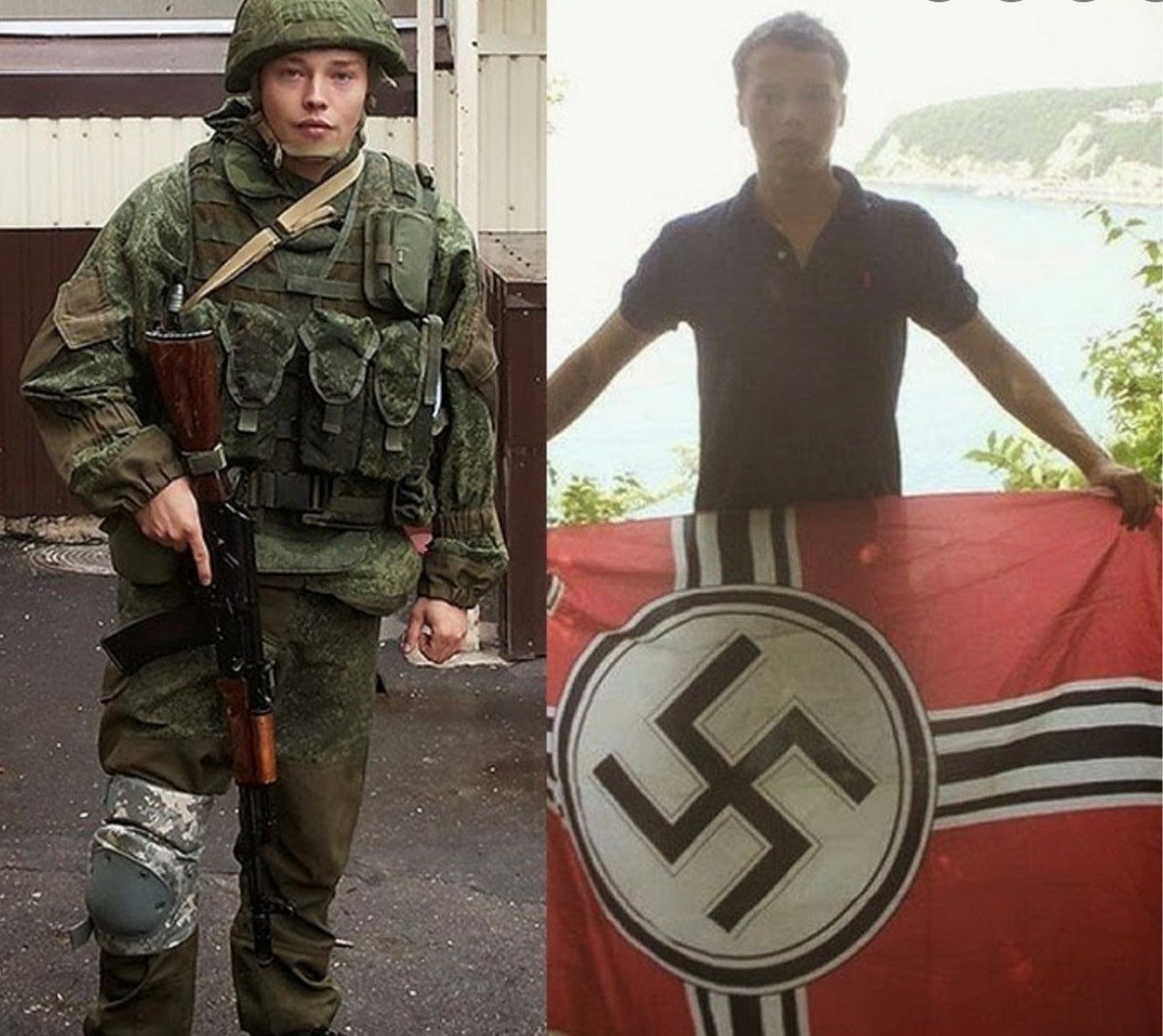
Below: Russian neo-Nazi Alexei Miltchakov. In one of his recent lectures at boarding school No. 538 in St Petersburg he was called ‘an example’ for the boys(Le Monde).
The indoctrination of the Russians begins in the schoolroom
Between weekly propaganda lessons, military training courses in schools and the reduction of hours devoted to social subjects, the Russian regime is creating an increasingly militarised and nationalist society to prepare future generations to support its imperialist policies
Russia has been honing its domestic propaganda machine for years now, but with the 2022 invasion, a new level of indoctrination has been reached that also involves children. In fact, in September of that year, a weekly hour was introduced at school called ‘conversations about important things’, in which traditional values and Russian ideology are extolled as opposed to the West, which is considered decadent in terms of civil rights, feminism and freedom of expression. The introduction of this propaganda hour in schools is part of Moscow’s national security strategy, which aims to compact future citizens as obedient followers of the regime and possibly recruits for the Kremlin’s imperialist wars: yesterday Georgia, today Ukraine, tomorrow who knows.
In 2023, school curricula have been further militarised with a course on how to use a Kalashnikov rifle, how to disassemble and reassemble weapons, but in the early years of high school, fundamentals of ‘psychological and informational warfare’ are also taught. Indeed, regime representatives speaking at university seminars no longer make a secret of the use of disinformation as a weapon to destabilise the West and have invited students to learn the techniques. The spreading of lies and fear for political purposes against Russia’s adversaries are thus already taught in school as legitimate tools in the international context.
From September 2024, however, a further reform of school curricula will come into force, which, as the Meduza website described, will include a course in ‘fundamentals of security and homeland defence’. According to this programme, military training in the use of the Svd sniper rifle, the anti-tank grenade launcher and machine guns will take place from the last year of middle school to the first year of high school. The course also includes a part of military doctrine on the meaning of discipline and the role of command. Among the outcomes the students are expected to achieve is to demonstrate readiness to defend the homeland and to understand the meaning of a military oath.
In high school, according to the reform introduced by the regime, students will have to learn how to wear body armour and combat equipment, but also learn the consequences for violating military discipline. In addition, lessons in ‘fundamentals of security and homeland defence’ continue with the teaching of combat tactics and manoeuvres using firearms. It is therefore a complete militarisation of the Russian education system, which increasingly resembles the North Korean model. To the militarisation of industry, with the war economy, is thus added that of society. It has been calculated that the hours to be devoted to this ‘subject’ can reach up to two hundred and thirty-eight per year, to which are added the theoretical hours of ideological propaganda.
Russian Deputy Education Minister Alexander Bugaev also announced that veterans of the invasion of Ukraine will be invited to schools to pass on their personal experience to students. In fact, a specific thirty-six-hour training course is planned for the returning occupiers, who will be taught how to indoctrinate minors during meetings and perpetuate Russian narratives against Ukrainians, ennobling the massacres carried out in Buča and Mariupol. At the end of the course, the war veterans receive a certificate entitling them to teach these topics.
To make room for the newly introduced subjects, one hundred and two annual hours of social sciences previously scheduled for high school were deleted from the school curriculum, now reduced to thirty-four hours. The social science course included fundamentals of economics, law and sociology, which will now make room for military training and Russian ultranationalist values, but also for a new sixty-eight-hour course. It is the subject ‘history of our region’, which includes lectures on the traditional family, threats to Russian culture and spirituality, the imperialist concept of Russkij Mir, the Russian world that transcends state borders, but also ‘moral values of the Russian people’, ‘heroes of the special military operation’, ‘the duties of the citizen towards society’ and other amenities that plunge Russia into an Orwellian spiral.
In total, it has been calculated that the number of hours devoted in the various school years to ideological indoctrination and military training will amount to three hundred and six, while those of mathematics will amount to three hundred and forty. Not forgetting two other factors: even in elementary schools, there is the ‘conversations about important things’ course, which is not counted, and the other subjects such as history, geography and literature are declined in the ideological key of Russian nationalist delirium to create fanatics loyal to the regime.
In 2023, a specific history course was planned that would deny the Holodomor, the starvation extermination of Ukrainians caused by Stalin (*), and inculcate the idea of Russophobia and victimhood. But then it was deleted and it was preferred to include this content in the normal history course.
A glimpse of this chauvinist and militarist drift was already visible in the documentary ‘Town of Glory – Inside Rural Russia: When Military and Patriotism Are Your Life’, filmed by director Dmitry Bogolyubov and available on YouTube, which describes the life of Masha, a Russian rural teenager brainwashed by her fanatical mother who sings at government commemorations of the Great Patriotic War.
A detailed analysis by researcher Dara Massicot for the RAND Corporation (a think tank close to the defence circle), published on 16 July [2024], however, seriously questions the feasibility of this system over time…
p.s.. : the figures released by Bild in April 2025 leave little doubt about the Russian approach :
💣 Russia’s defence industry is now producing more than it needs for its own defence.
📈 Military spending is rising at a record pace-expected to reach €120 billion in 2025, over 6% of GDP.
🪖 The Kremlin plans to expand its armed forces to 1.5 million troops and increase equipment near NATO borders by 30-50%.
Russia has mobilised 1.8 million children in the Yunarmia (Russian Youth Army) project.
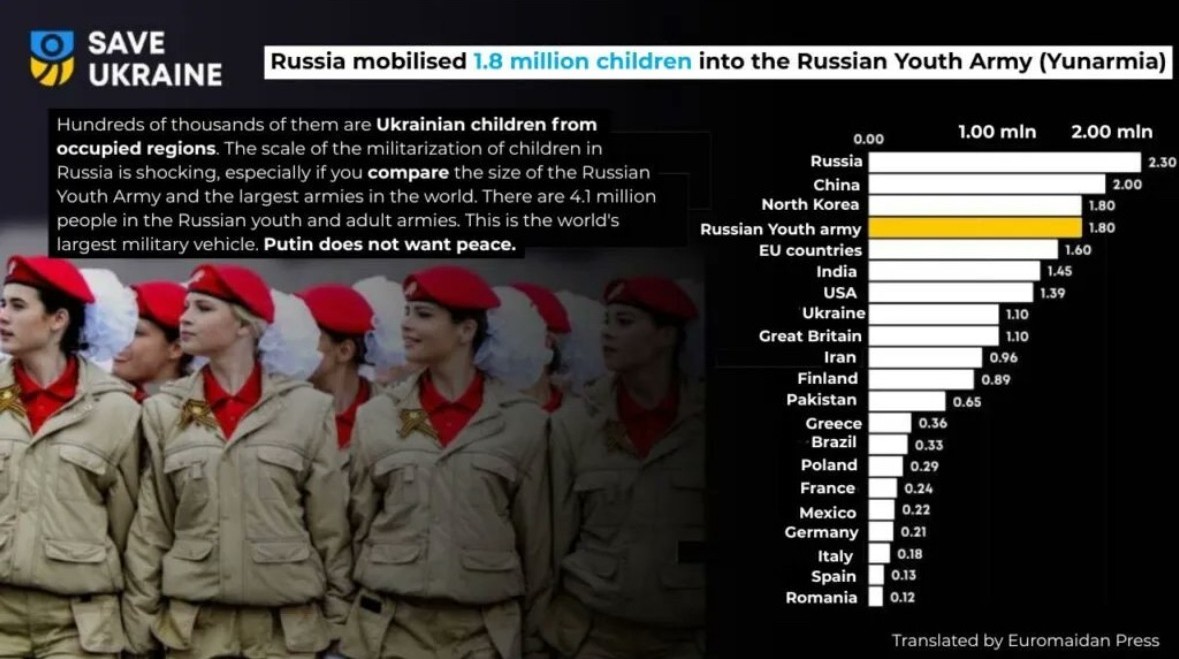
Conclusion:
russia’s arms expenditures in 2025 will amount to $120 billion, 6% of GDP.
With 1.5 million soldiers (300,000 enlisted in 2025)
The increasing militarisation of society and the economy affect any peace process, making it – de facto – impossible.
(*) Putin is rewriting history, in his own way, even denying the Katyn massacre. On militarisation in Russian schools read also this article.
Below: an Orthodox priest blesses child soldiers.