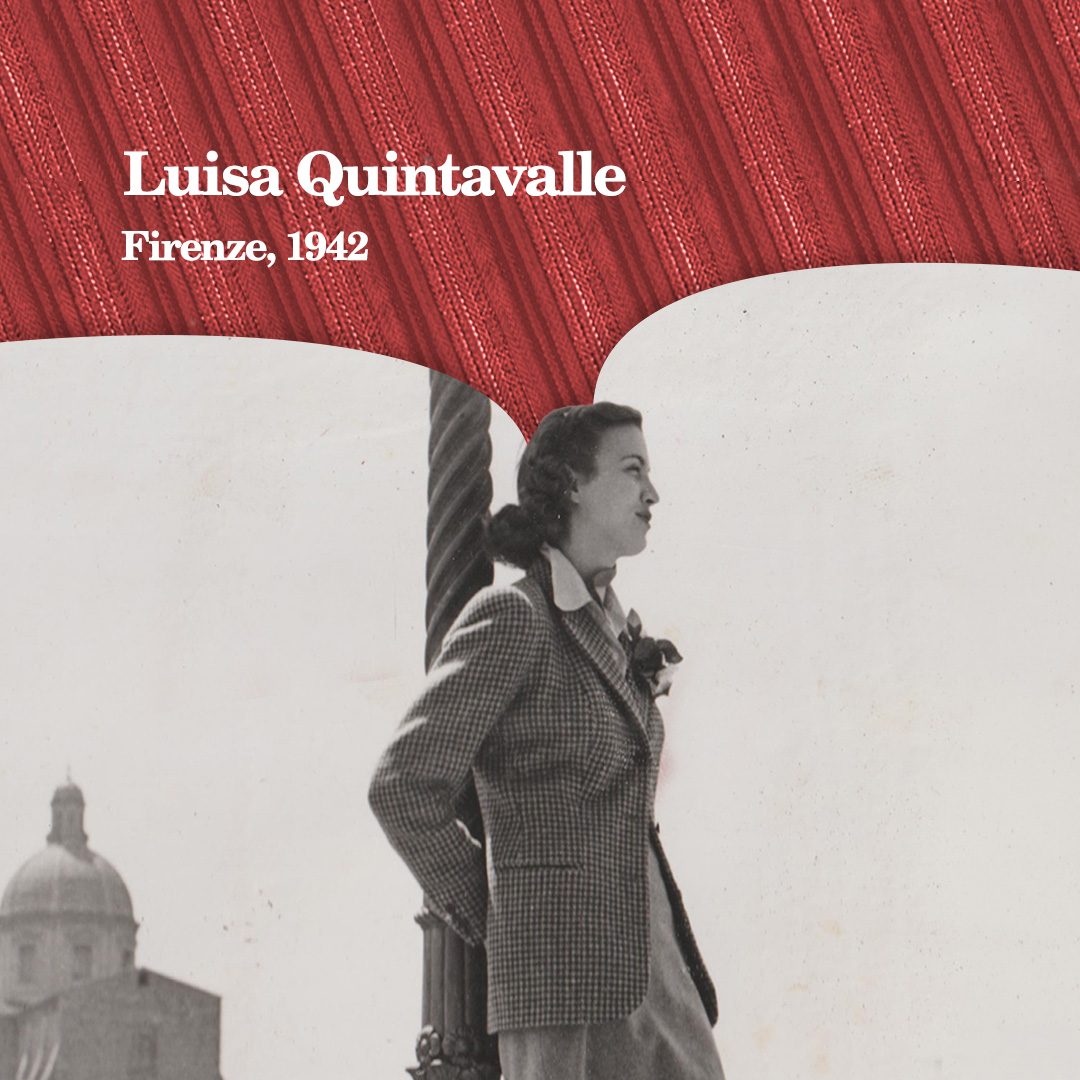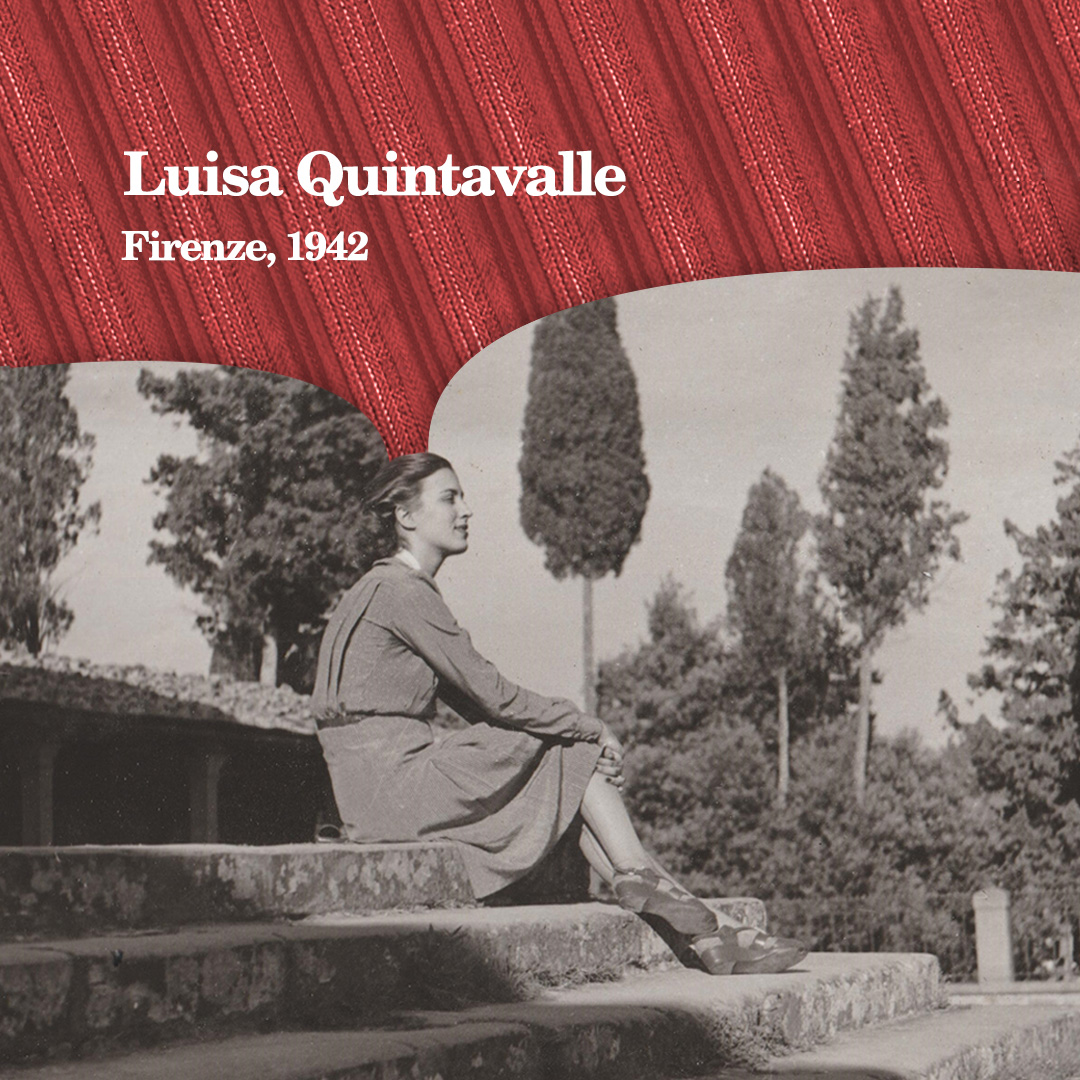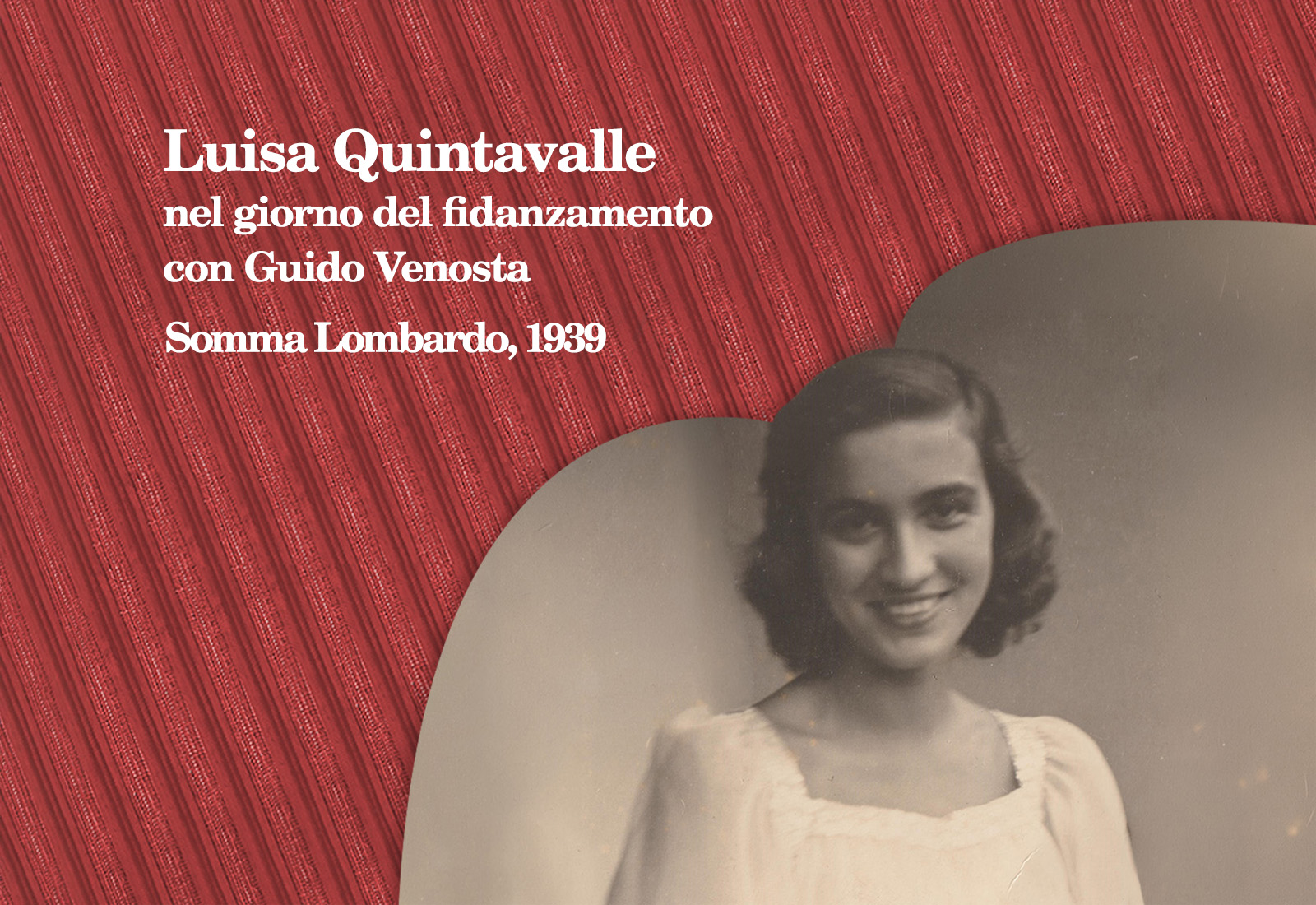
My maternal grandmother Luisa certainly deserves this title, which echoes the new woman of 1930s Italy created by Gino Boccasile for the magazine ‘Grandi Firme’. It is a definition that suits her not because of the design itself – Boccasile’s young lady is buxom and curvaceous, my grandmother was tall, slender and elegantly beautiful – but because it fits her personality as a woman of her time, intelligent, witty, daring and fun.
“Le Grandi Firme” was founded in the mid 1920s on the initiative of Dino Segre, aka Pitigrilli, and its theme was humour and irony, even a little licentious irony, publishing texts carefully selected from the literary products of high-profile authors, the ‘big names’ in fact, from Achille Campanile to Grazia Deledda, Matilde Serao, Luigi Pirandello and Vitaliano Brancati. The success of the magazine made it one of the fashionable readings of the Italian bourgeoisie in the early pre-war period. From mid-1937 many things change, Pitigrilli remains at the helm but it is Cesare Zavattini who takes care of everything, the texts become lighter and illustrations are introduced, namely the ‘Signorine Grandi Firme’ designed by Gino Boccasile, one of Italy’s great illustrators and advertisers. His women, a sort of Italian-style pin-up, are elegant according to the fashion of the time, mischievous and always on the move, they play sports, golf, go to the mountains and ski, lively protagonists of strips and stories, images of a woman far removed from the ideal proposed by Fascism of matron-housewife-mother. It was a hit: ‘Signorina Grandi Firme’ also became a pleasant musical refrain of the then very famous Trio Lescano with the orchestra of the eternal Maestro Pippo Barzizza, a guarantee of quality songwriting.
This mixture of intelligence, culture, elegance and lightness was my grandmother Luisa, translator from French and English for the major national publishing houses, author of a volume of poems and a recently published booklet on cooking that the title, ‘Why we cook for whom we cook’, already says it is not just any cookery or bon ton manual, but a very up-to-date text on education: “education on food and respect for raw materials and people, listening, welcoming (…)” (THEODOLI QUINTAVALLE, “Why we cook”).
Grandmother Luisa also had a side to her that today we would call ‘socialite’, with some reservations because she certainly loved to shine in society but did not make social life her lifestyle and the main reason for her existence; perhaps ‘persona del bel mondo’, as they used to say, suited her better. She never missed an event, a meeting, a premiere at La Scala, with an inveterate melomaniac like her first husband, her grandfather Guido Venosta, and she was always noticeable, beautiful among beauties, so much so that she was portrayed more than once in the cartoons of the famous journalist and illustrator Bruna Mateldi Moretti. Known simply as ‘Brunetta’, Mateldi Moretti was famous for her quick and ironic strokes and for her articles that combined lifestyle, fashion and illustration, an unmistakable style that marked fashion and costume between the 1930s and the 1950s, in collaboration with the most prestigious newspapers, including the ‘Corriere della Sera’, and numerous fashion and lifestyle magazines. Today she is now ‘recognised (…) as a key figure of our cultural twentieth century’ (see ‘Brunetta the inexhaustible’).
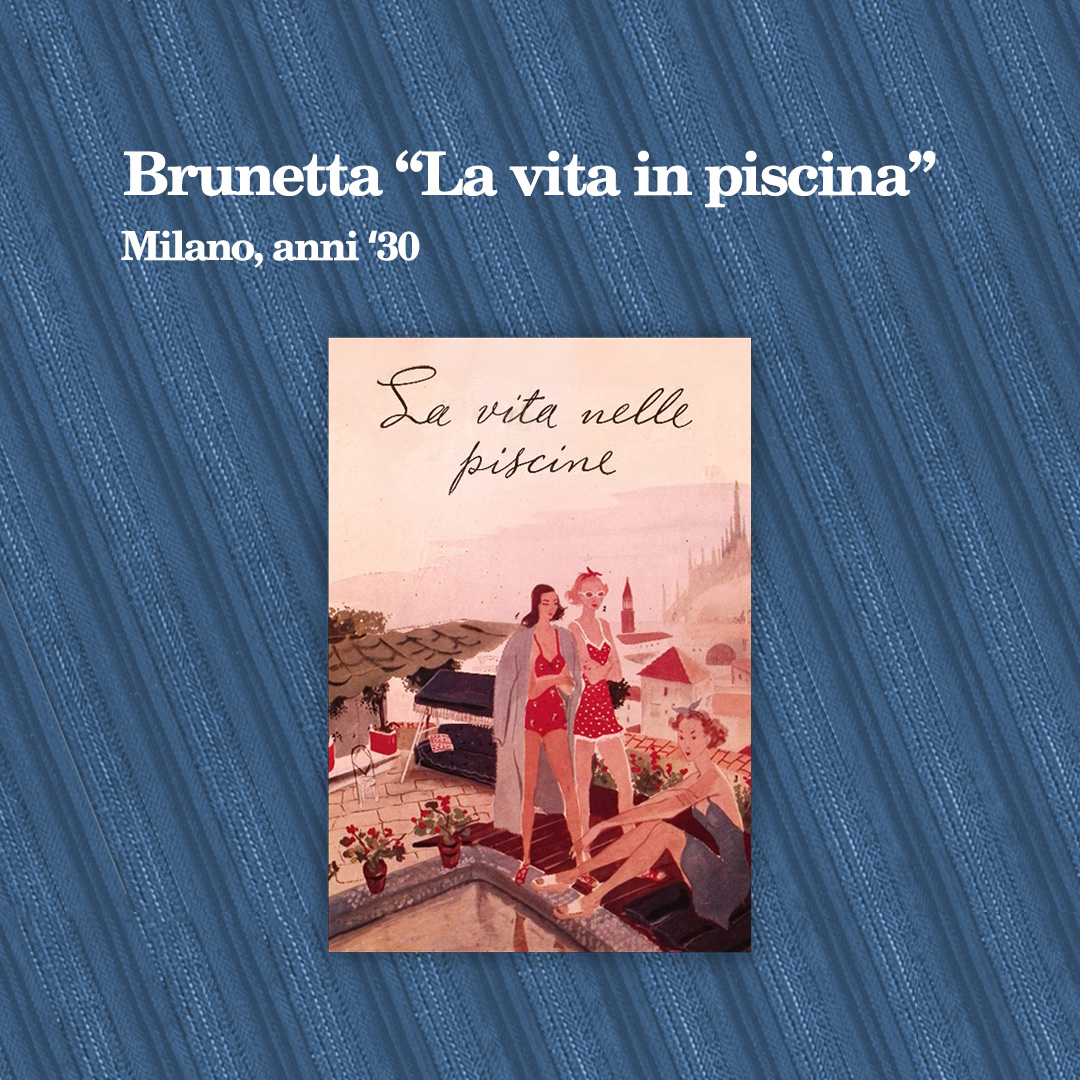
Two of her cartoons are preserved in her grandmother’s albums. First, Brunetta captures Luisa in a summery and even lush Milan:
‘Life in the swimming pools.
On the roofs of modern houses, among flowering roof gardens, the healthy life of people who love the air and the sun and who cannot move from the city takes place’. These are the impressions captured by our Brunetta above a terrace in the centre of Milan equipped as a swimming pool. The picturesque harmony of the blue basin, of the flowers blooming in every corner, of the green architecture, blends with the exquisite beauty of the Duomo looming boldly among the red tones of the roofs in the clear sky of the industrial metropolis of Lombardy.
Among the ladies present: Miss Massi wore a red cloth costume with white and blue flowers (1). Also in red cloth was Ms Venosta’s costume with white stamps and a small white ruffle around the neckline and hem (2). The kind hostess wore a costume of blue satin lastex (3). (…).”.
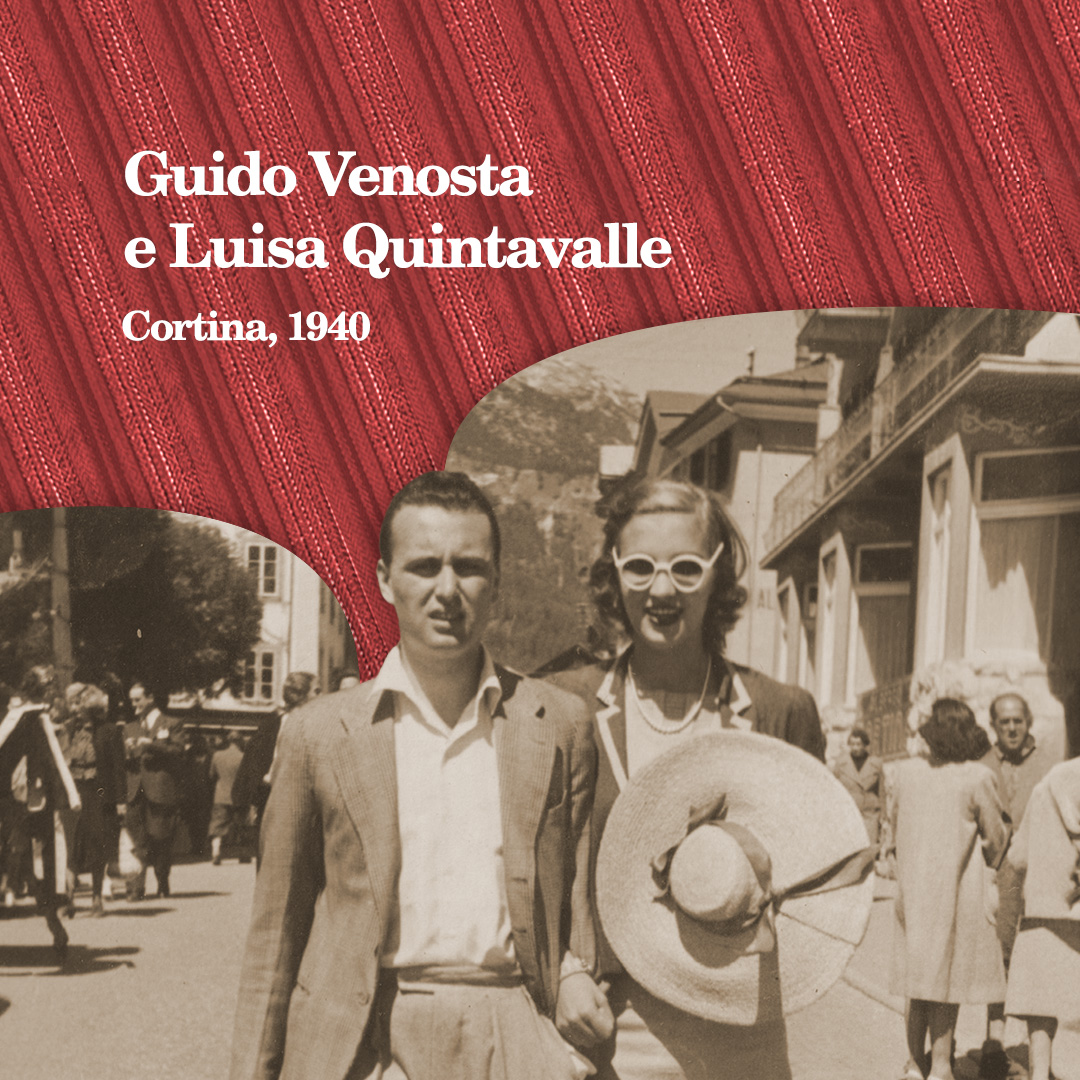
Recognisable are the white-framed glasses that Luisa is also wearing in a photograph with her husband Guido Venosta, as they walk arm in arm through Cortina in the summer of 1940.
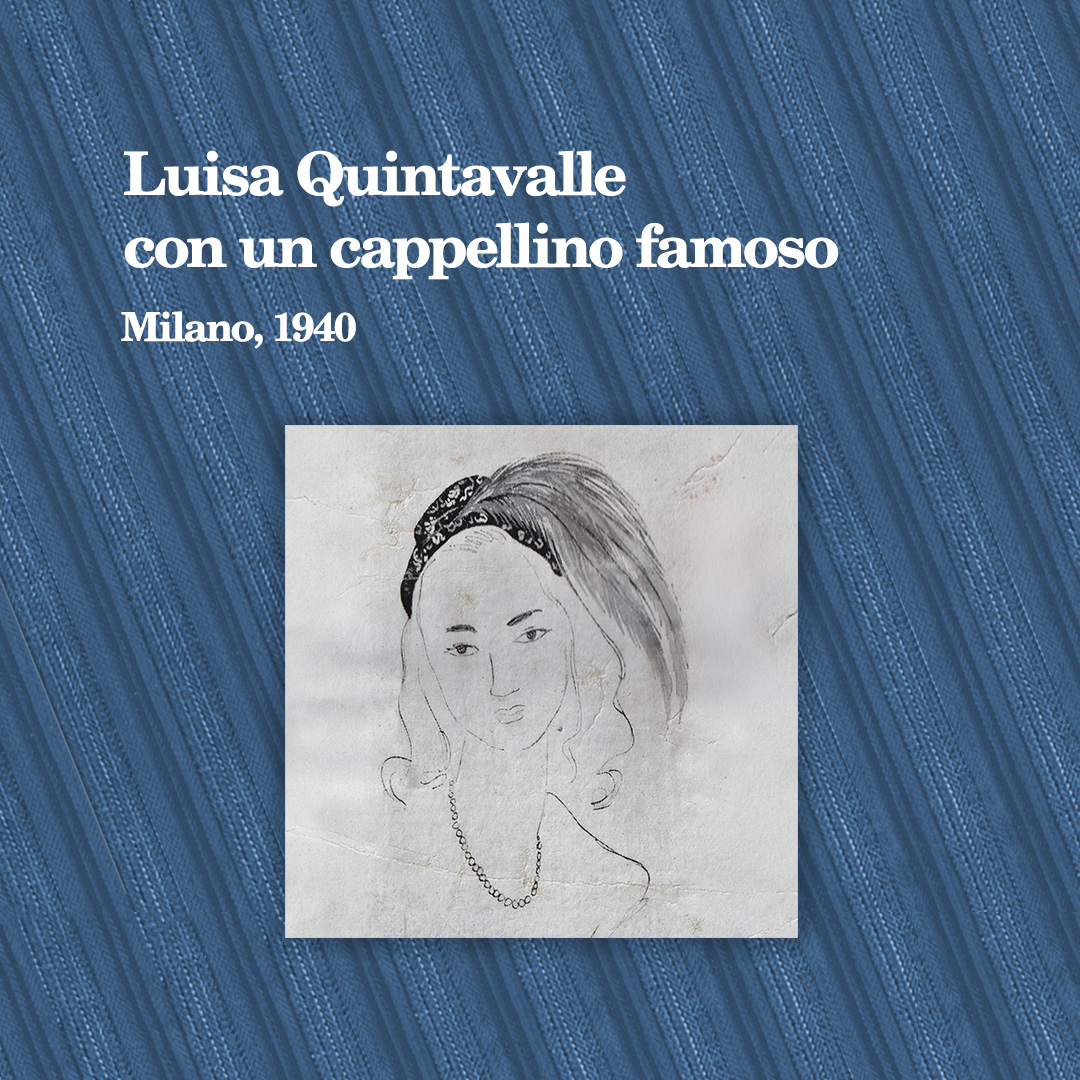
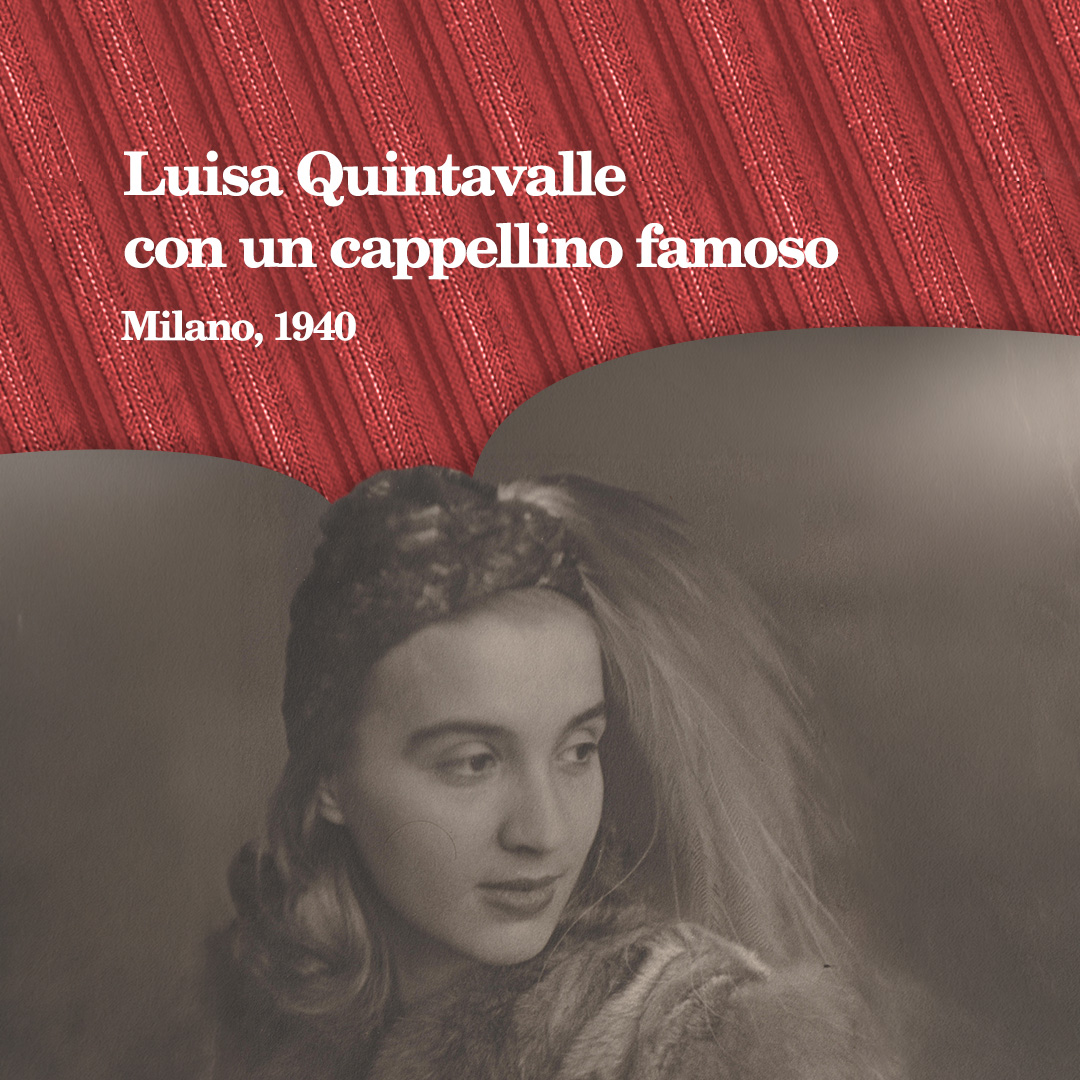
Brunetta then dedicates a quick sketch to her in November 1940: “At the premiere of ‘Polliuto’, Signora Venosta with a turban of damask velvet with a rich antique pink shaded paradise was very much noticed in a box”. Of that turban, fortunately, we have pictures.
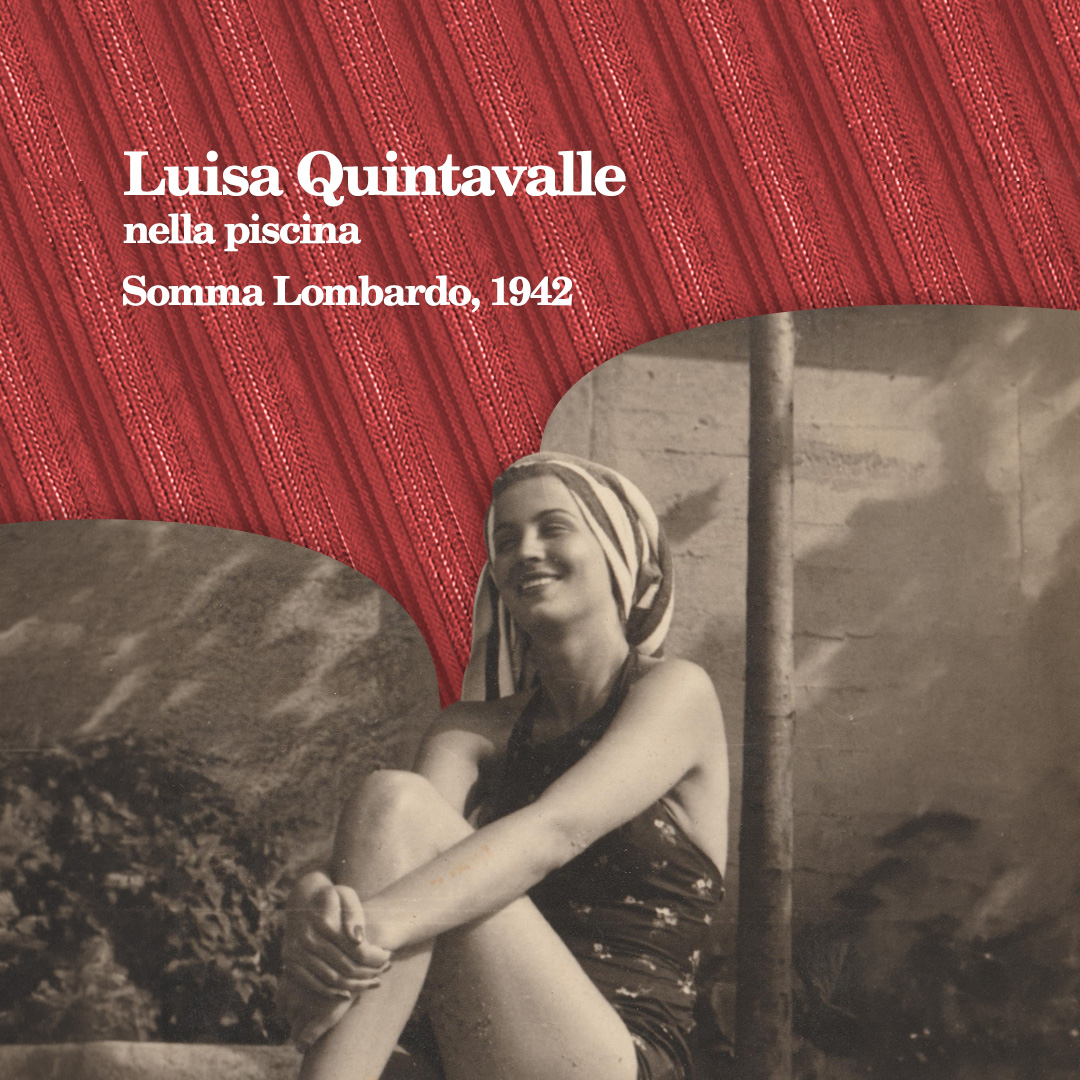
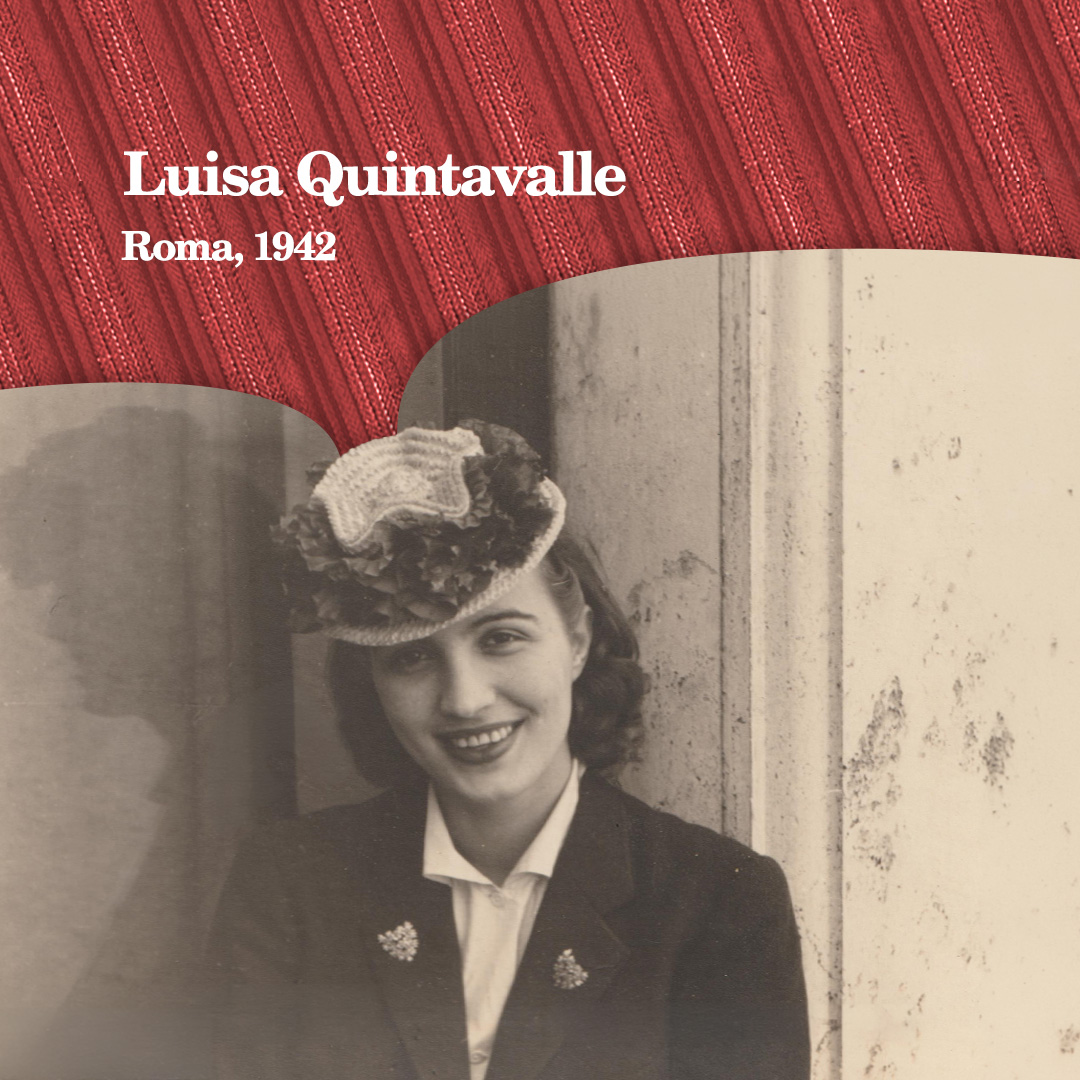
Grandmother Luisa loved fashion, although she did not let herself be imprisoned by it. One photograph shows her in Rome with a group of friends, including a very young Irene Galiztine, a Russian princess of great lineage who fled the October Revolution and became a fashion designer loved by many famous and powerful women, made famous by the ‘pajama palazzo’, an iconic garment of the 1970s; sporty as she is, the grandmother posed for a fashion shoot in the snow, and one of her most beautiful photographic portraits was taken in the snow; dozens of posed photographs were taken in suits and hats, swimwear and even ‘gran soirée’ dresses.
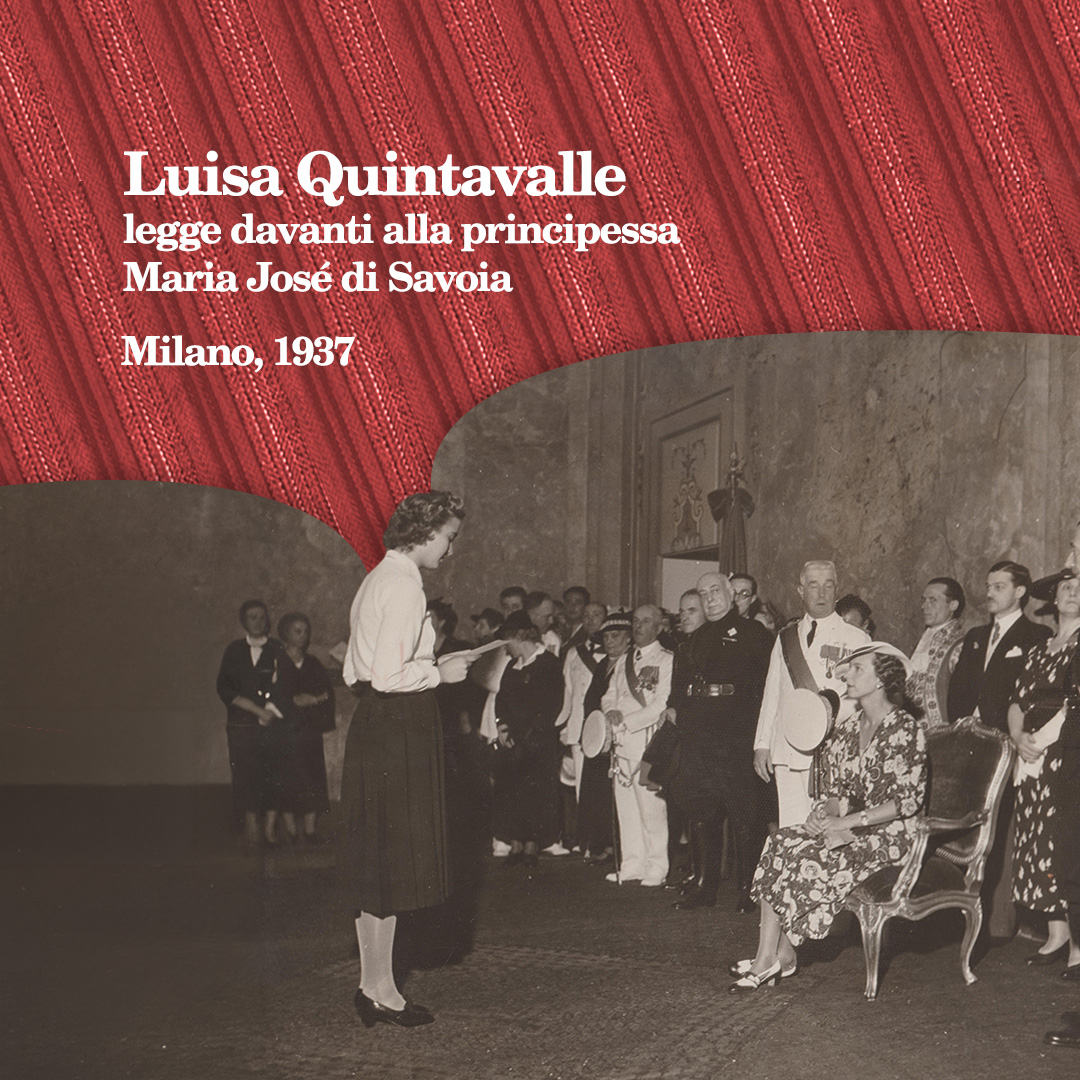
Perhaps, among them all, there is an image that unites her elegance of mind and figure, the image of a pupil at the ‘Manzoni’ classical high school, called upon to give a speech in front of Maria José, hereditary princess of Piedmont, Ada Negri and many institutional figures in 1937, a tall, beautiful and confident 17-year-old who already showed in nuce the woman she was to become.
Bibliography:
CAPROTTI, ‘Le Ossa dei Caprotti. Una storia italiana’, Milan, 2024/3
ID., “Giuseppe Caprotti. Characters: Luisa Quintavalle‘.
L. THEODOLI QUINTAVALLE, ‘Why we cook for whom we cook‘, Edizioni di Maieutica [Fondazione Tullio Castellani], 2012.
“Le Grandi Firme“, entry in “Wikipedia. 25 years of free encyclopaedia’.
Corriere della Sera Foundation, “L’ Archivio racconta. Brunetta the inexhaustible‘.
S. PACCASSONI, “Brunetta Mateldi Moretti, artist of the 20th century” for “Dorature. Storie di illustrazione“, 31 May 2019.
C. DI SAN MARZANO,“Dagli anni Cinquanta ad oggi (1951-2011) ” Brunetta (Bruna Mateldi Moretti)”, in “150°- 1860-2011. Le Italiane. Biographies‘.
IRENE GALITZINE, entry on ‘Wikipedia, 25 years of free encyclopaedia’.
E. MASCOLINO, ‘Who was Irene Galitzine, princess of fashion. From noble origins to consecration in the international jet-set, the story of a revolutionary fashion designer‘, in ‘Harper’s Bazaar’, 01/01/2025.