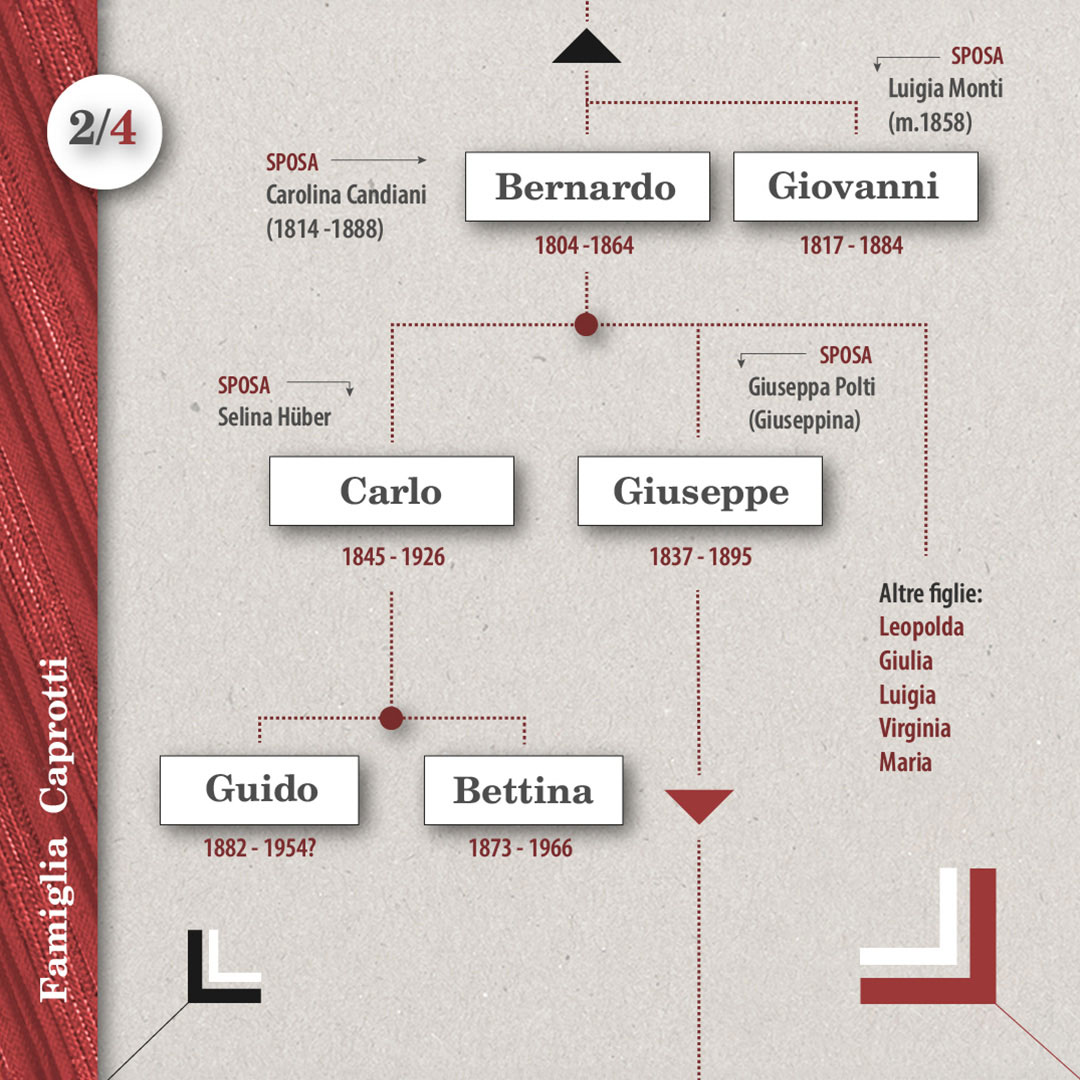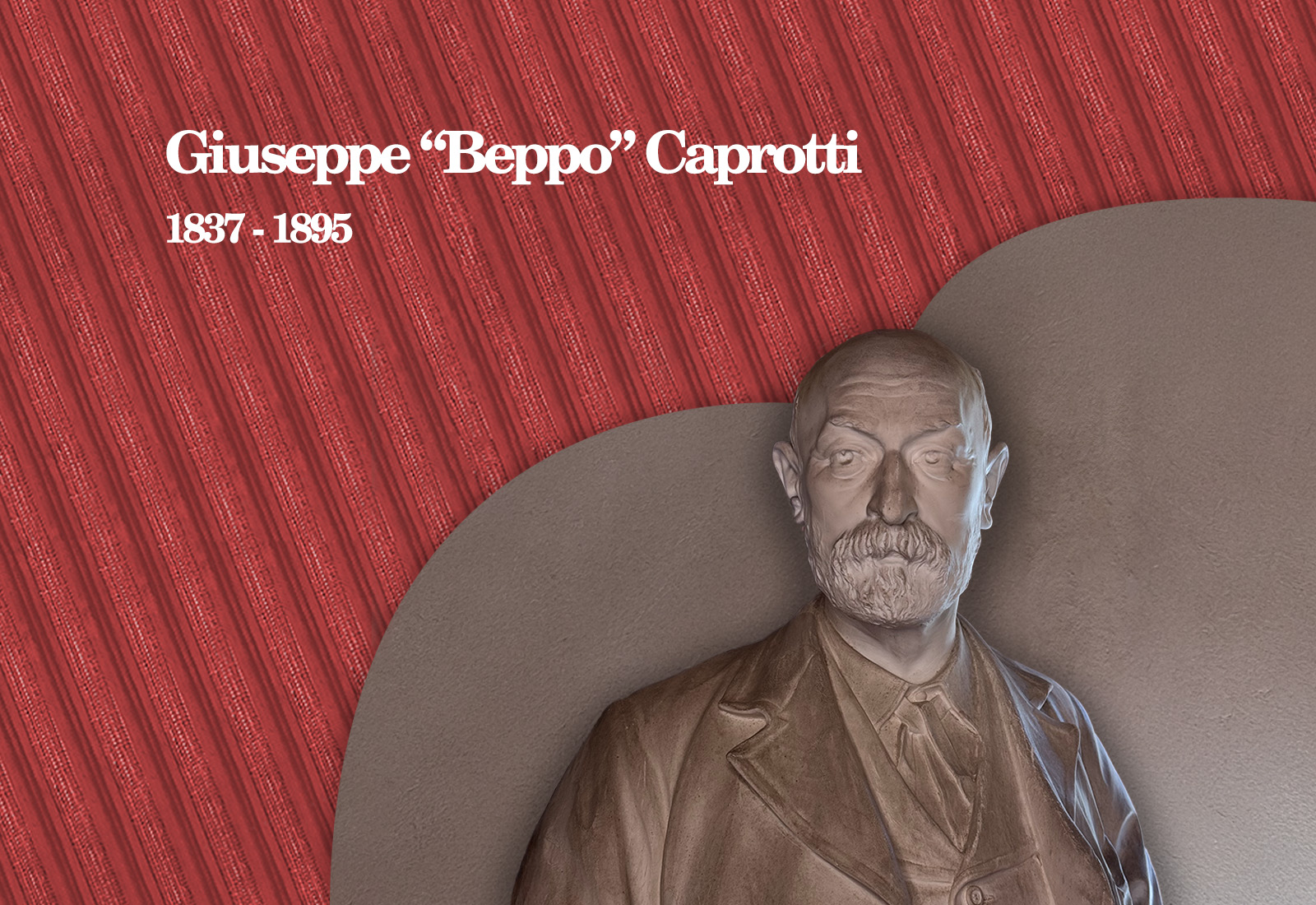
“The leap forward in industrial activity occurred in the second half of the 19th century and was largely due to Giuseppe and Carlo Caprotti, born in 1837 and 1845 respectively. The two brothers are both truly remarkable characters (…). In 1859, before the Expedition of the Thousand, they were among Giuseppe Garibaldi’s financial backers, with a donation of 100 lire, “for the purchase of rifles for the national cause” reads the text of the receipt. In that same year, Giuseppe, whom his brother Carlo called Beppo (and he is my great-great-grandfather), enlisted in the army and, appointed second lieutenant, was transferred to Imola together with the battalion of the National Guard in Monza (…)‘. (CAPROTTI, “The Bones”, p. 23).
Giuseppe, known as Beppo, is the son of Bernardo, who officially ‘founded’ the company ‘Bernardo Caprotti di Giuseppe’ in 1840, thus transforming an absolutely local business into a real company, however small. The mother was Carolina Candiani, a very religious woman and all devoted to embroidery and incense, so much so that of her five daughters, two will become nuns, one takes perpetual vows of virginity, one is a teacher in a religious institute and only one – the black sheep, probably – has the courage to marry. This rigidly pious atmosphere, not uncommon at the time, must have weighed heavily on the effervescent (and in Carlo exquisitely anticlerical) spirit of the sons.
Sources:
Albiate (MB), Villa San Valerio, Villa San Valerio Archives, Giuseppe Caprotti Archives, Giuseppe Caprotti Archives (1837-1895).
Bibliography:
G. CAPROTTI, “Le Ossa dei Caprotti. Una storia italiana’, Milan, 2024/3.
R. ROMANO, “I Caprotti. L’avventura economica e umana di una dinastia industriale della Brianza”, Milan, 1980.
E. SÀITA, “I Caprotti: aspetti privati, dal Risorgimento alla Seconda Guerra Mondiale“, 08/11/2022.