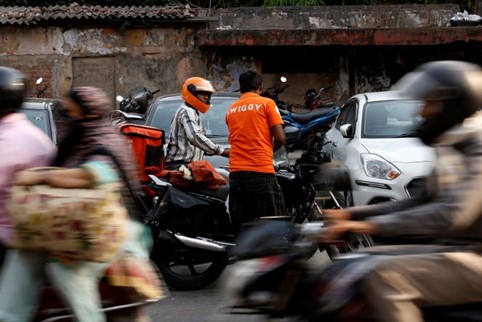
This has not slowed down the economic boom of these services for impatient customers, observes Isabelle Chaperon, columnist for the economics section of ‘Le Monde’: “In India, ‘fast trade’ is moving too fast.”
Fast commerce is one of the fastest growing sectors of the Indian gig economy. In November 2024, Datum Intelligence estimated that this market, negligible in 2020, would reach USD 6 billion (EUR 5.1 billion) in 2024 and USD 40 billion by 2030. Although local shops, called kitana, still account for 92% of food purchases, they are suffering from this competition. Meanwhile, the major online platforms, engaged in fierce competition, remain unprofitable, but their value is growing strongly. The share price of Eternal, owner of market leader Blinkit, has increased fivefold since 2023.
Quick commerce appeals for various reasons: poorly organised distribution and chaotic traffic. It is also favoured by the abundance of young workers, paid a few rupees. According to projections by the government think tank NITI Aayog for 2022, the approximately 7.7 million people doing ‘casual jobs’ for internet platforms in India, from taxi drivers to deliverymen, are expected to reach 30 million by 2030