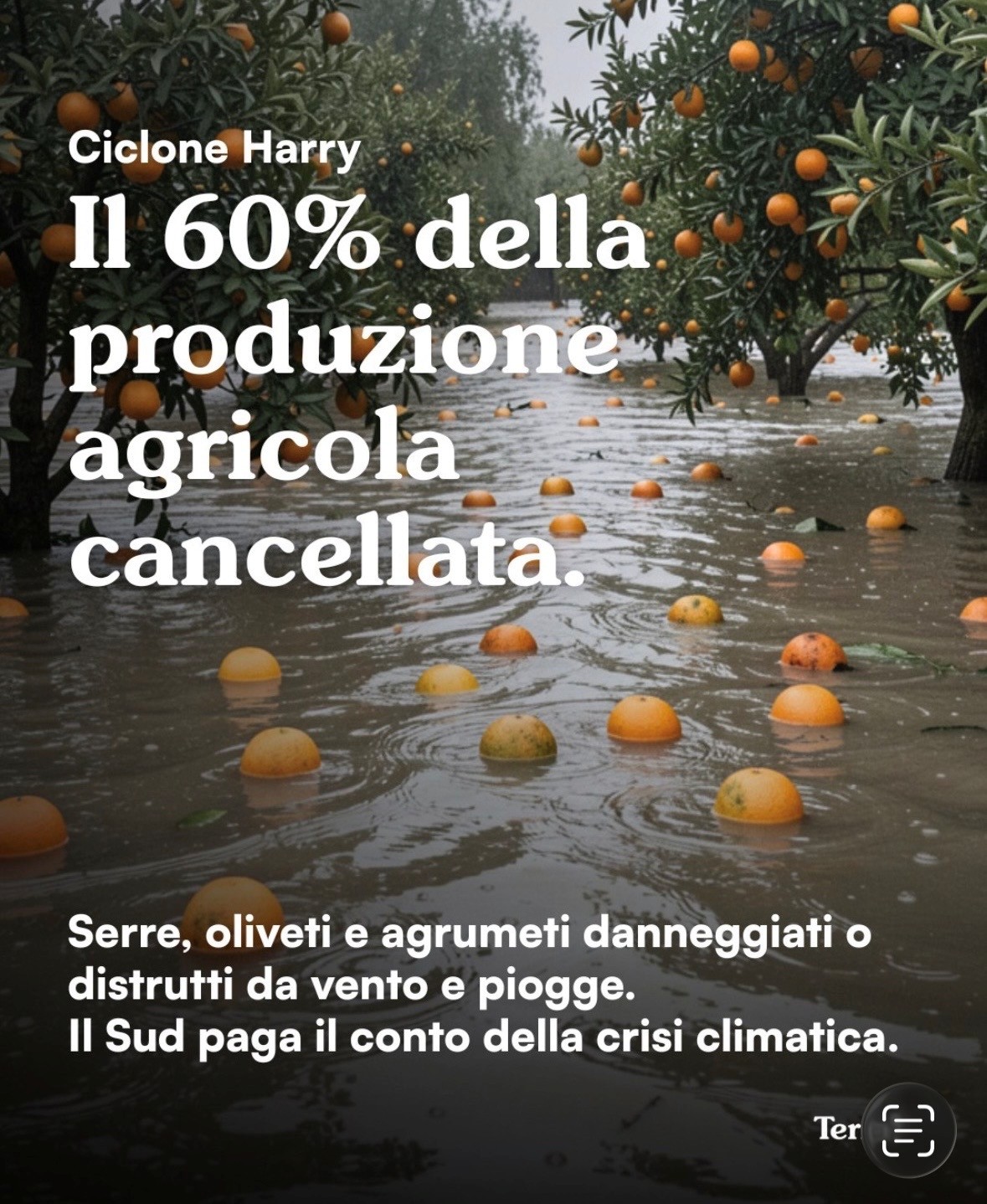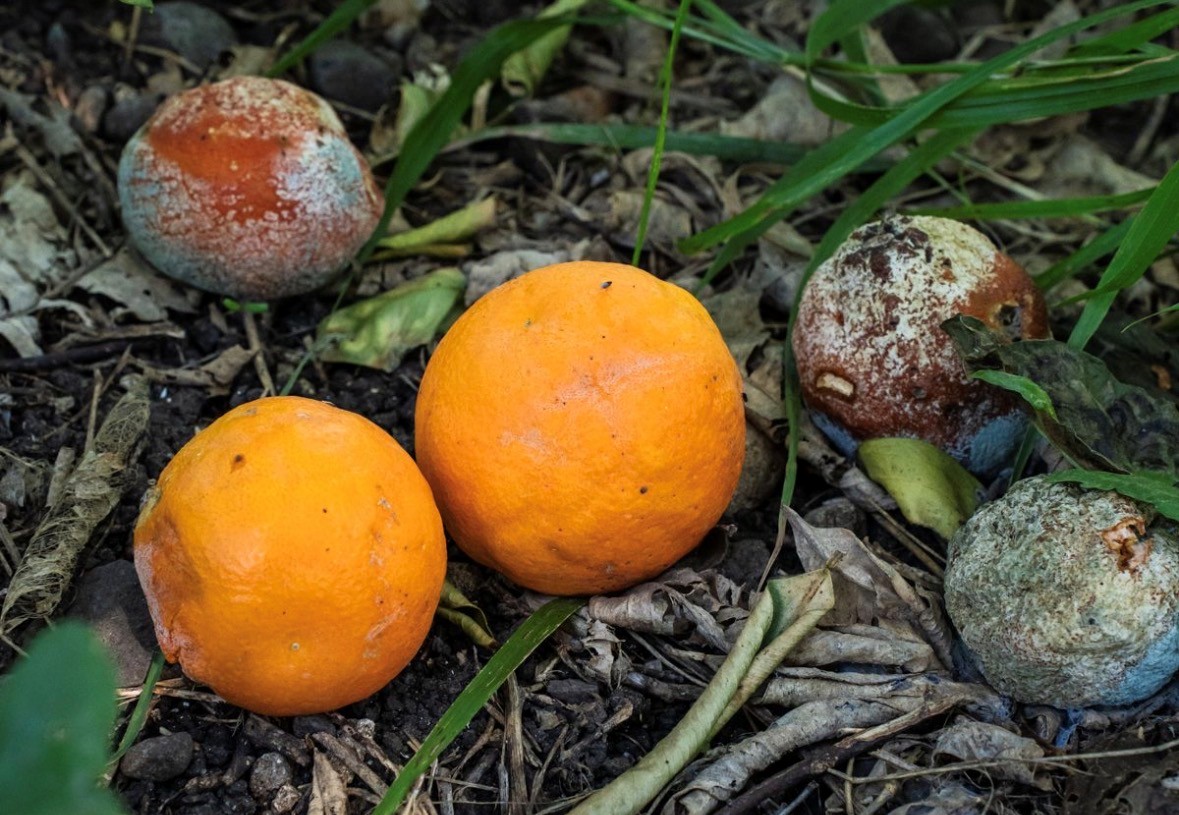
Compiled 9 February, updated 11 March 2026. Above: Sicilian oranges are falling from the trees and rotting.
We start here: Cyclone Harry, Sicilian citrus fruit alarm: over 50% of the harvest lost
The President of the Council has the same positions as Trump but shows more diplomacy: she admits climate change but does nothing concrete , instead demonising the ecological transition. Indeed, Trump has just suspended the operating permits for all major offshore projects under construction in the United Stateswith immediate effecton 22 December (Le Monde). The announcement concerns in particular five projects located on the east coast that represent a total investment of $25 billion (around €21 billion). These fields, which had received federal credits under Joe Biden’s tenure, were supposed to provide electricity to more than 2.5 million households and businesses and create nearly 10,000 jobs (Le Monde).
The political risk is great as the cost of electricity in the US has risen by 5% this year, the power grid is obsolete, and the ‘inflation theme’ is hot (Le Monde).
Confirmation comes from the Financial Times: The political cost of electricity bills rising in the US..
While in our country, industrial production is retreating, also under the blows of an Italian energy cost that is among the highest in Europe.
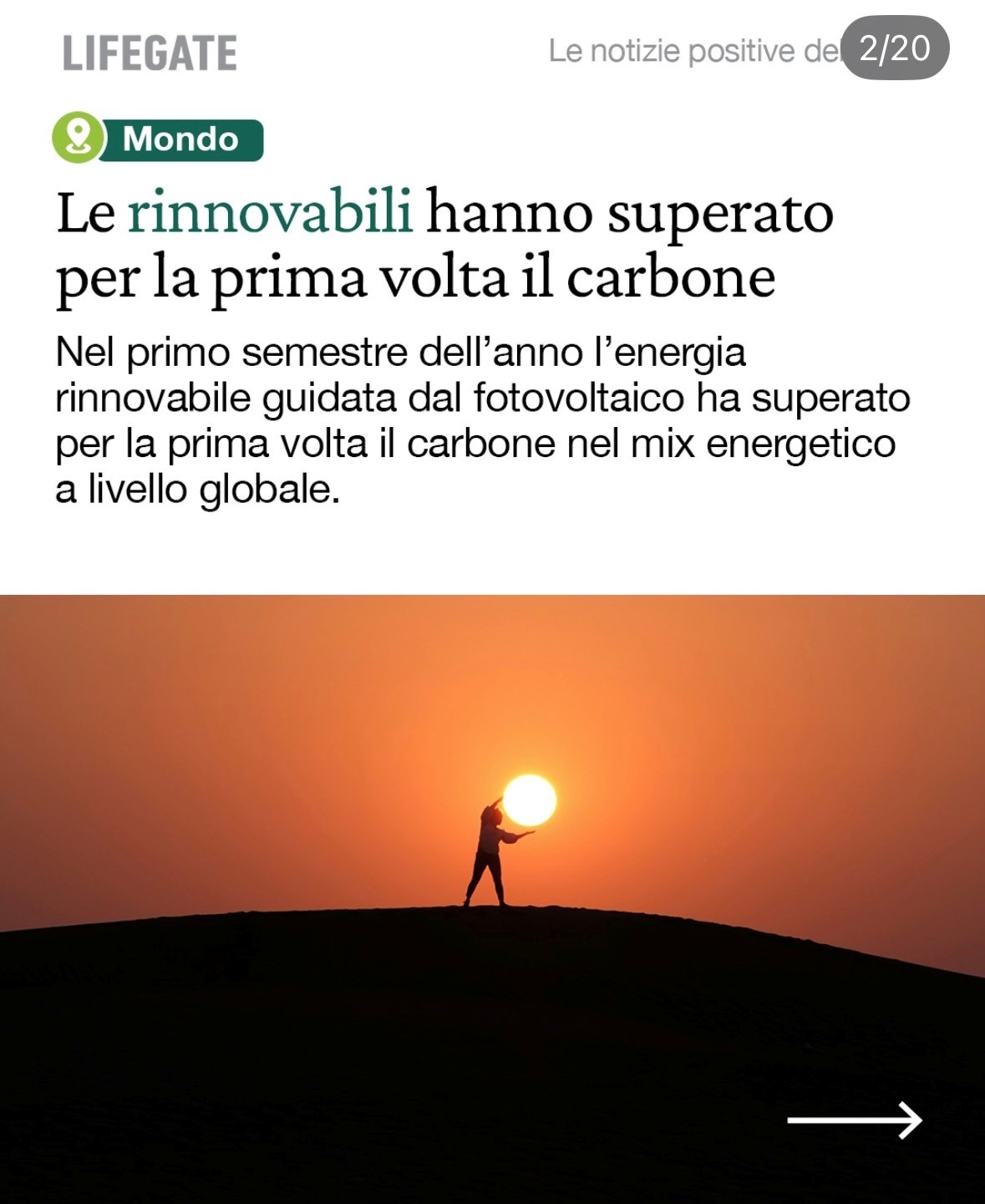
Below: the ecological transition does not stop (Lifegate December 2025), despite Trump and Meloni.
In February, on the other hand, it was reported that Trump is trying to “cancel” climate change with a secret working group :
a judge lashes out at Trump’s climate denialism
A federal judge on Friday ruled that the Department of Energy violated the law when Secretary Chris Wright selected five researchers who reject the scientific consensus on climate change to work in secret on a broad government report on global warming.
The Department of Energy released the report, which downplayed the dangers of warming, in late July without having held any public meetings or made the records available to the public. Lee Zeldin, the administrator of the Environmental Protection Agency, later cited the report to justify a plan to repeal the endangerment finding, a landmark scientific determination that serves as the legal basis for regulating climate pollution.
But the Federal Advisory Committee Act of 1972 does not allow agencies to recruit or rely on secret groups for decision-making purposes. Judge William Young of the U.S. District Court for the District of Massachusetts said the Department of Energy did not deny that it did not hold open meetings or assemble a balance of viewpoints, as the law requires, when it created the panel, known as the Climate Working Group… (Excerpt from the New York Times)
And then , unfortunately , he succeeded : Trump administration erases government’s power to fight climate change
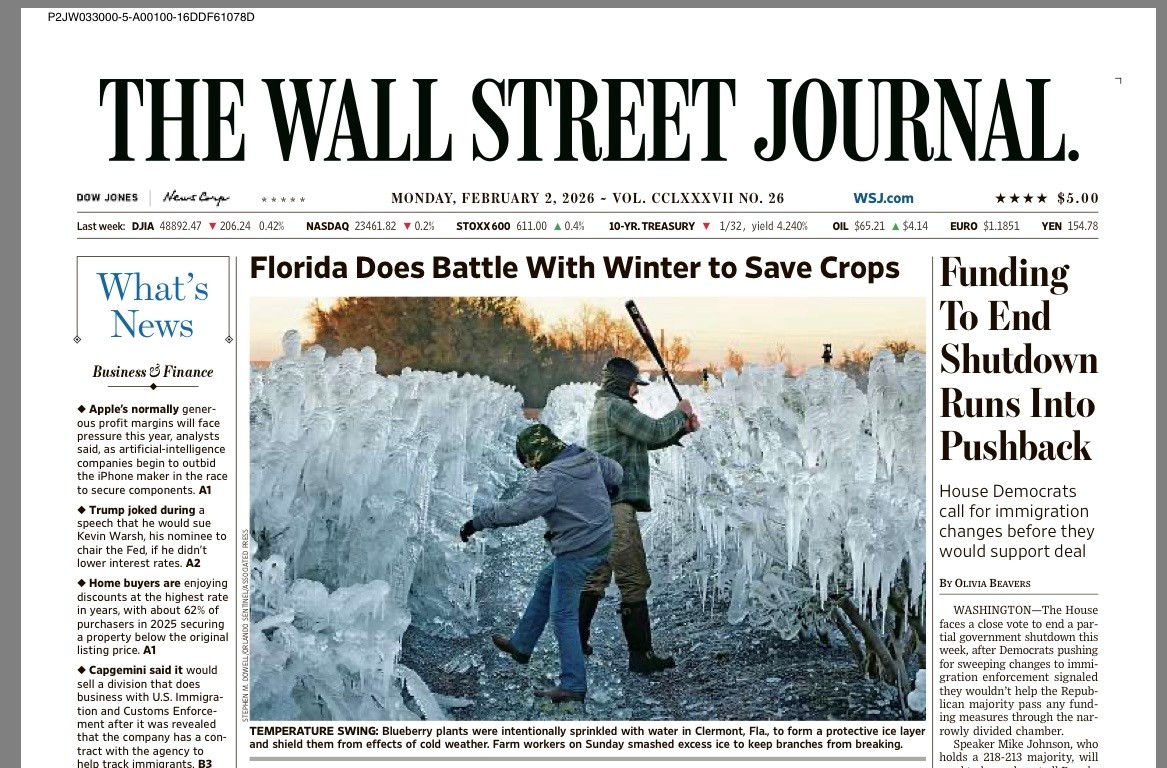
Below : Agricultural crops at risk, due to climate, in Florida
Also in February is the news of the Sicilian catastrophe that caused damage of over a billion euros with , the first attribution study on Cyclone Harry confirming the role of climate change
Mediterranean Cyclone Harry, which devastated large areas of Sicily, Sardinia and Calabria between 19 and 22 January 2026 – also hitting Malta and Tunisia hard – was made more intense by anthropogenic climate change. This is the finding of the first attribution study dedicated to this extreme event, carried out as part of the European project ClimaMeter…
The study compares the weather conditions associated with Cyclone Harry with those of similar weather events observed in the period 1950-1987 and the more recent 1988-2023, using Copernicus ERA5 data and a methodology based on climate analogues.
The results show that:
- wind speeds are now systematically higher than in the past;
- natural variability alone is not sufficient to explain the observed intensity;
- climate change caused by human activities has contributed significantly to the severity of the storm
According to several researchers involved, Cyclone Harry also signals a change in the seasonality of extreme Mediterranean events: winter storms that take on characteristics typical of the warmer months, combining intense winds, extreme rainfall and high sea levels. A dangerous mixture that increases the risk of concatenated impacts on already fragile territories.
The study points out that factors such as coastal urbanisation, infrastructure exposure and social vulnerability play a key role in determining damage. In a warming Mediterranean, this becomes urgent:
- update infrastructure design standards;
- strengthen early warning systems;
- integrate climate risk into spatial planning;
- rapidly reduce climate-changing emissions from the use of fossil fuels.
The message coming from Cyclone Harry is clear: climate change is not a future threat, but a reality already in place that is making extreme events in the heart of the Mediterranean more dangerous. Ignoring it means accepting ever greater damage, both economic and social, in the years to come.
But the fossil energy lobby, for now, ensures that all this is denied. And the price, also in energy terms, is being paid by citizens and businesses, in the USA and Italy. The paralysis on renewables imposed by Trump – imitated by Giorgia Meloni – “… will mean an increase in energy prices”.
In addition to the continuous and growing damage to people and property ( read: Extreme weather events: economic losses of 822 billion euros in Europe since 1980).
Read also Sicilian red oranges, mowed down by bad weather but in promo in large-scale distribution