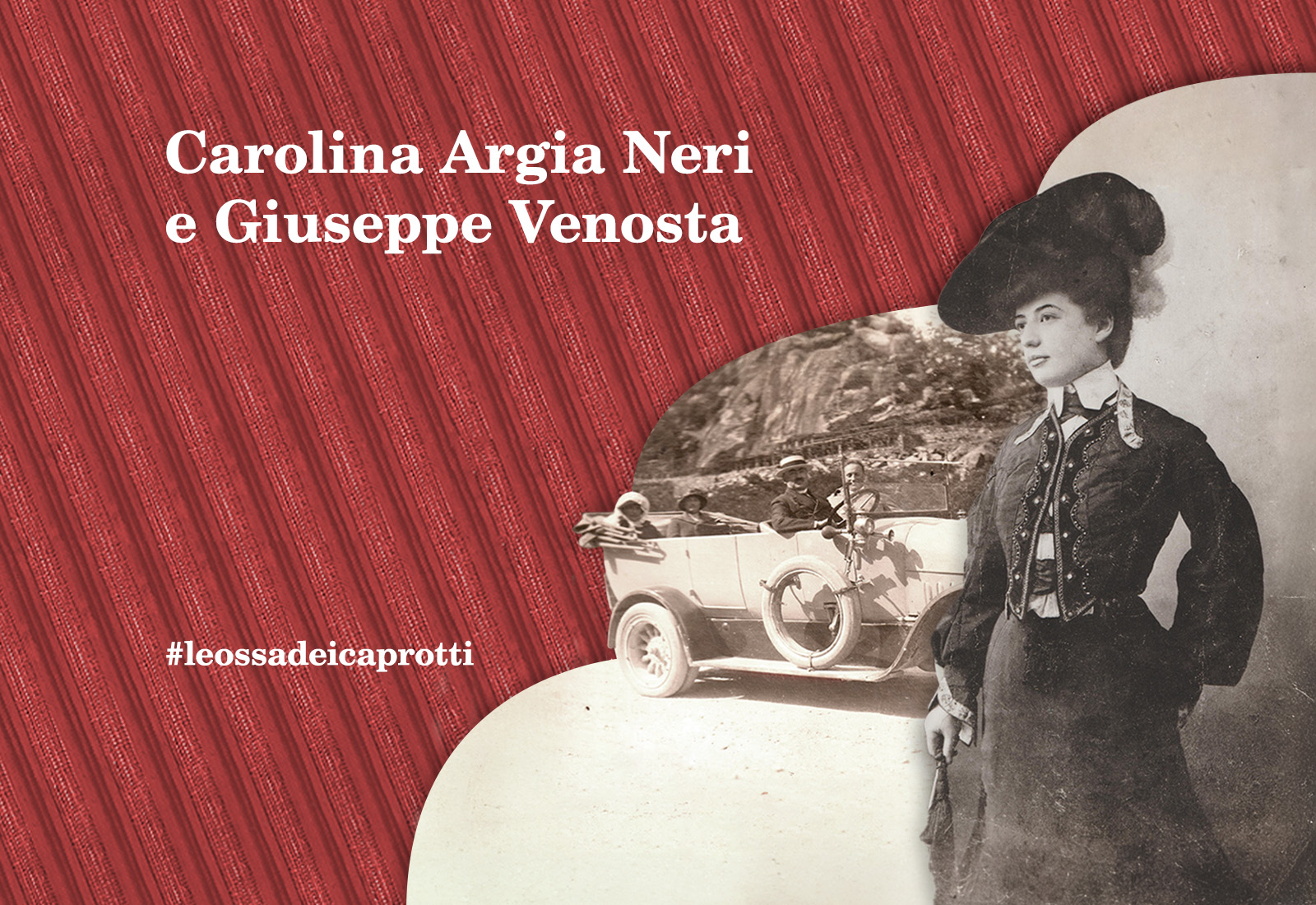
Great-grandfather Giuseppe is sitting next to the driver. Behind him sits his great-grandmother Argia. The car has white tyres because at the time they were not yet dyed, so they kept the natural colour of the rubber they were made of.
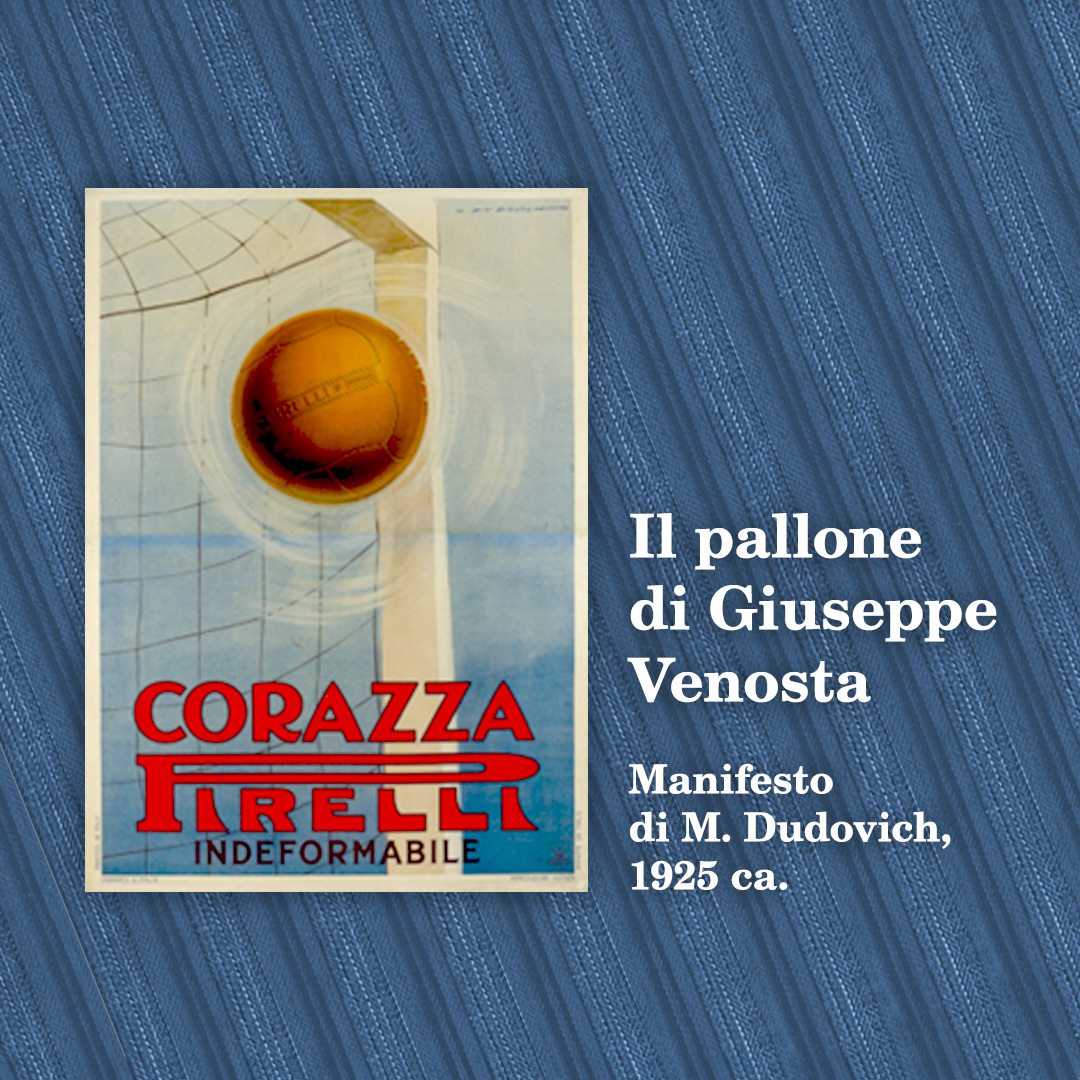
Giuseppe Venosta (1880 – 1939) “graduated with honours from the Milan Polytechnic from where he left to start the great tyre adventure in Italy at Pirelli”. Only a few months later, on 14 April 1939, a Company Service Order signed by Piero and Alberto Pirelli announced his death, which occurred that day after long months of suffering, recalling with grateful affection the strong and brilliant work of engineer Venosta in over 33 years of tireless work to bring the rubber branch of our company to its current importance and efficiency (…)’.
His great-grandfather died of liver cancer, which the family doctor had even diagnosed as ‘nervous breakdown’. His children, the eldest son Guido above all, were shocked by both the loss and the total ignorance about the disease: ‘My father was followed by two professors, who, in my opinion, knew as much about it as I did,’ he wrote in his unpublished Memoirs.
Giuseppe had married Carolina Argia Neri – for everyone simply Argia – a Versilia woman of whom photographs remain that testify to her beauty, but little more. She died ten years after her husband, also of cancer, also suffering excruciatingly and with no known cure.
For grandfather Guido, the death of his parents was a fundamental experience in his future commitment to the fight against cancer, which led him to become the ‘creator’ of the Italian Association for Cancer Research (AIRC), one of the largest national and international organisations still operating today.
Sources:
Albiate, Villa San Valerio, Giuseppe Caprotti family Archives: Guido Venosta Archives, Various documents, GUIDO VENOSTA, Memoirs, unpublished typescript, 1996, p. 2; pp. 38 – 40.
Fondazione Pirelli, Archivio storico Pirelli, fondo “Personale”, file “Giuseppe Venosta”, “Ordine di Servizio del 12 novembre 1938, n. 793”; Ibid., “Ordine di Servizio del 14 aprile 1939, n. 819”.