The new episode was also about the coffee we prepare at home. In particular, about the product:
- The best way to store it should take into account some cautions: store in the fridge if not in the freezer (coffee does not cone water), dark and airtight container.
- Labels towards product quality: most often not indicated, sometimes only if the jaw is 100% Arabica, for ‘Arabica – Robusta’ blends the percentages disappear. When it comes to the origin of coffee, most companies get away with indicating that, in order to keep the quality of the product constant, the origins of the coffee can change depending on the annual characteristics of the coffee harvest.
- An olfactory analysis was carried out on packages bought at the supermarket: normally industrial coffee with an average price has a good quality, while coffee from small producers who buy smaller quantities can better trace the origin and characteristics, the coffee is clearly of a higher quality, as is the price.
- The legislation in this regard is that of 1973, which should be updated.
On coffee bars:
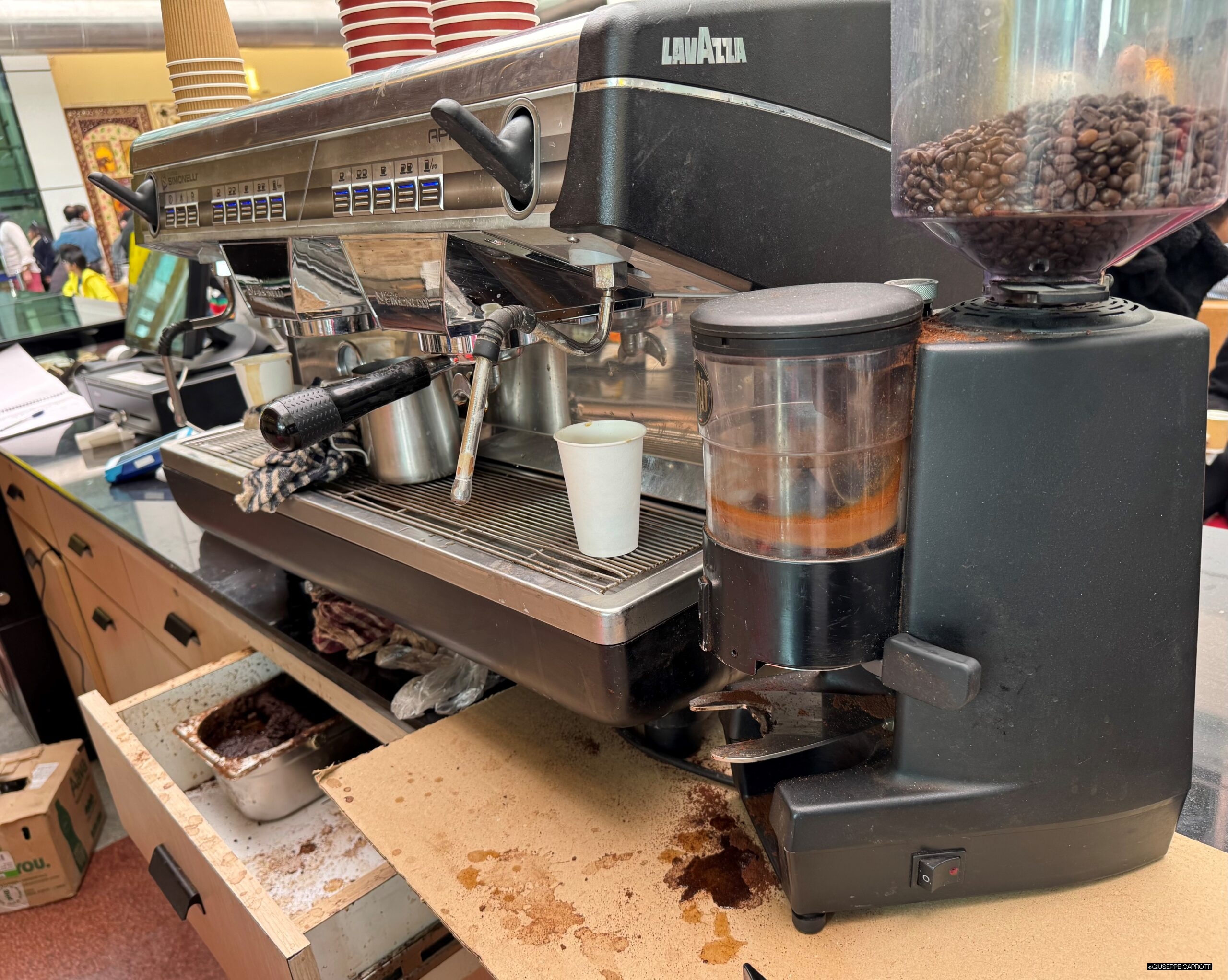
- the cleaning of the filter should be done after every coffee, which is often not the case, especially for baristas who do not use lever machines.
- the cleaning of the water with which the coffee is prepared is also a topic of discussion. The so-called ‘purge’, i.e. unhooking the filter holder and dispensing water to eliminate the residues of the previous coffee, is rarely done, sometimes on the grounds that that water contains the aroma of the previous coffee (‘seasoned water’), which is absolutely untrue and even potentially harmful to health, but most often on the grounds of time available and coffee to be prepared
- another argument and potentially harmful practice is the upstream preparation of coffee, which should never be ground first and then kept in an open container to be passed into a smaller one to end up in the final filter.
- a final topic that can be traced back to the lack of professional training is the open bells of the grinders that are not cleaned as they should be: the accumulated grease also contaminates the fresh coffee.
Finally, for the preparation of coffee at home, Report visited Bialetti who produce the MOKA, these are their recommendations:
- never water over the valve
- never make a mountain, never press
- tap water is not good
- keep the lid open
- switch off when you reach 3/4
- choose steel MOKA machine
Lavazza case:
- The weakness of the regulations becomes even more apparent when one considers what was found at a Lavazza plant in Vercelli. Here there is a production line that deals with the recovery of coffee from discarded pods. The operation would concern coffee of any blend including decaffeinated and test pods.
- the recovered coffee is sifted, mixed and taken to an unsealed container. Then this discarded and contaminated coffee that has lost its characteristics. perhaps even decaffeinated, ends up mixed with other coffees in small quantities in 250 gram packets. Until three years ago, this waste was sent to another company that used it to produce fertiliser.
- Is it possible that this is being done without the owners, the Lavazza family, knowing anything about it. Are the trade unions also nothing? Report went to the 3 trade unions dealing with the plant. The trade unions know nothing about it. Report informs Lavazza who, in fact, does not reply.