Compiled 10 August 2025, updated 26 March 2026
- The situation of Italian agriculture is dramatic. The causes are many and have long been known:
lack of enforcement of laws on unfair practices
dwarfism of companies
bureaucracy and the CAP
lack of vision of institutions
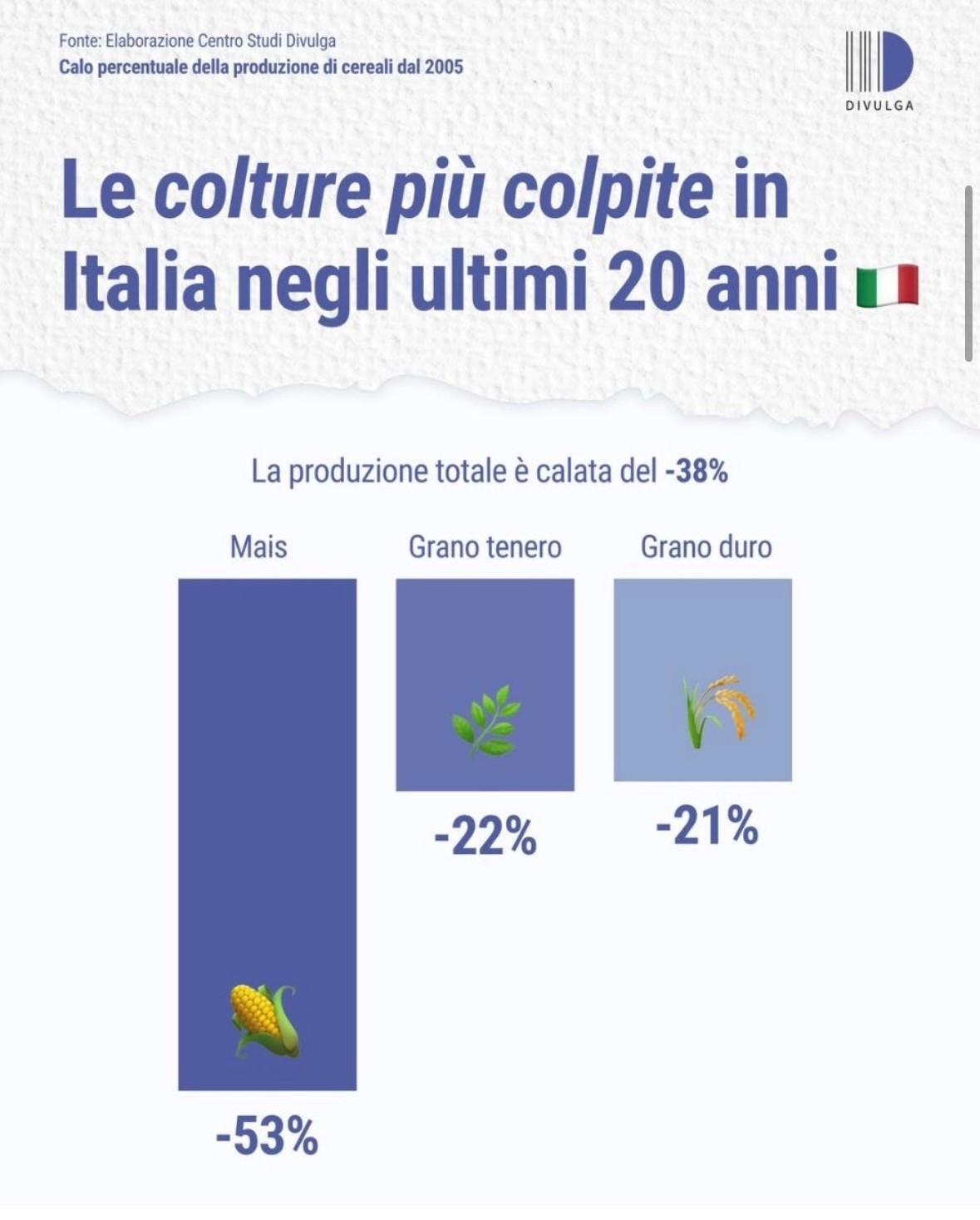
The results are obvious (below are just a few, but the whole sector has been in trouble for years. Here is the example of oil, for example)
- The Mattei plan is applied in Algeria, Ivory Coast, Senegal, Angola, Ghana, Egypt, Kenya, Tunisia, Ethiopia and other African countries. For a more complete picture read here.
Yesterday [in July 2025] an agreement was signed ratifying a new step towards Italy giving up its agricultural sector.
While yesterday the Sicilian parliament, or rather the franchi tiratori of the majority, rejected the fundamental reform (for agriculture) of the land reclamation consortia, and while Ursula von der Leyen announced cuts in European contributions in the order of 30 % for agriculture in favour of the war industry, the Italian government, by meeting with the leaders of the Algerian government, strengthened the axis with the North African country in the context of the so-called Mattei Plan.
Giorgia Meloni said: “I particularly want to remember the work carried out by Bonifiche Ferraresi to recover more than 36,000 hectares of desert land, to produce up to 405,000 extra tonnes of cereals and pulses per year, obviously ensuring benefits in terms of food security for more than 600,000 people and bringing jobs. But I am also thinking of the agreement to create a large centre for professional training in the agricultural sector, a centre that will still be dedicated to the memory of Enrico Mattei, which aims to become a reference point not only in Algeria but for the Sahel area and Africa as a whole.”
Let us remind ourselves that Bonifiche Ferraresi has not reclaimed desert areas because it is endowed with who knows what thaumaturgic powers, but thanks to government investments that make it possible to irrigate wheat in the middle of the desert.
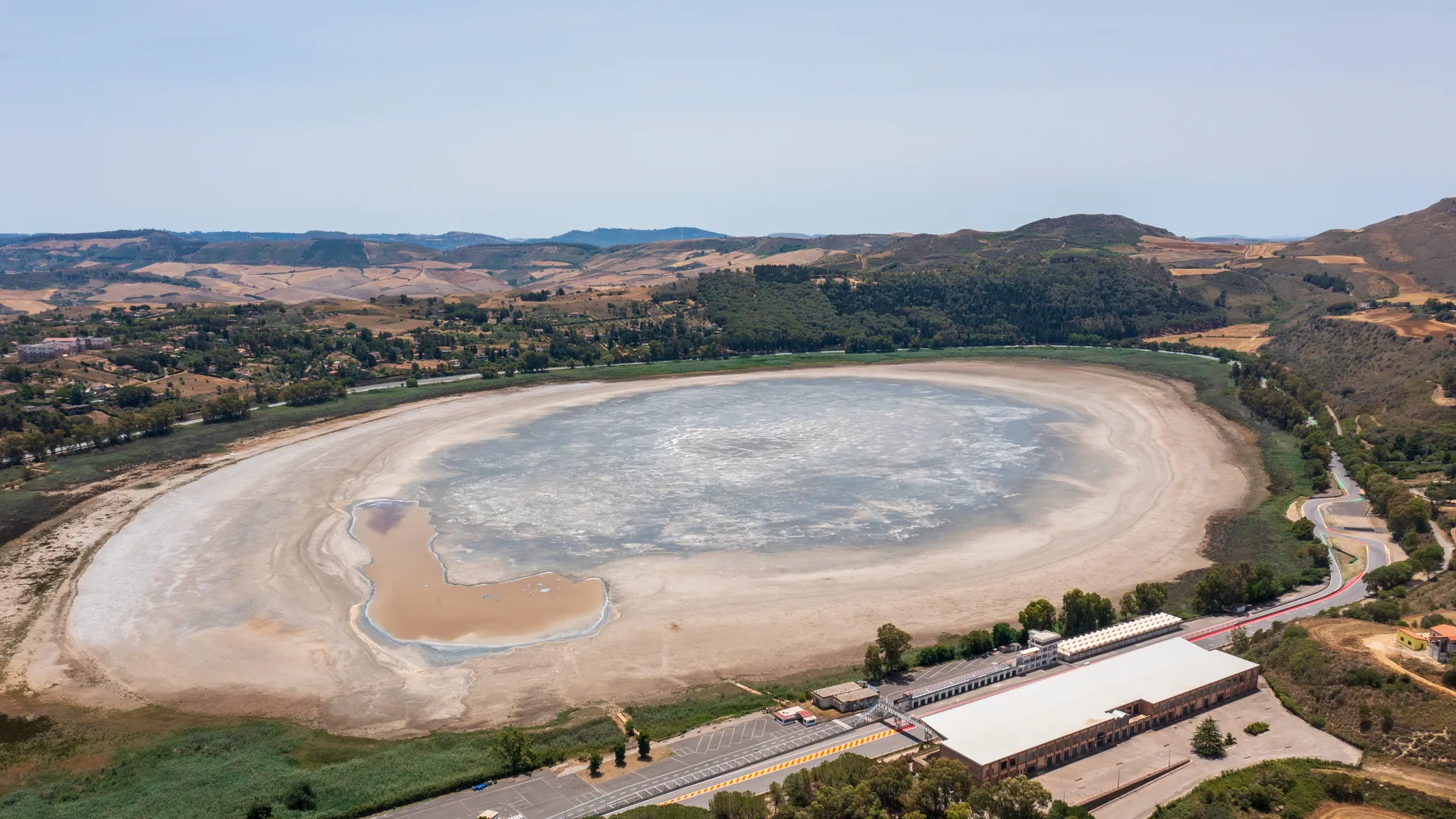
Below: the dried up Lake Rubino in Sicily
We should also remember that while a new class of farmers is being trained in Algeria, with our money, in Italy institutes and faculties of agriculture are experiencing a dramatic drop in enrolment.
The fate of the wheat that will be produced is still shrouded in mystery, in relation to the first draft of the agreement that envisaged a 30 % quota that could be exported, only to make a U-turn by saying that the wheat will be produced for the local population.
In essence, we have sold out agriculture for supplies of Algerian gas to replace Russian gas.
A matter of choices.
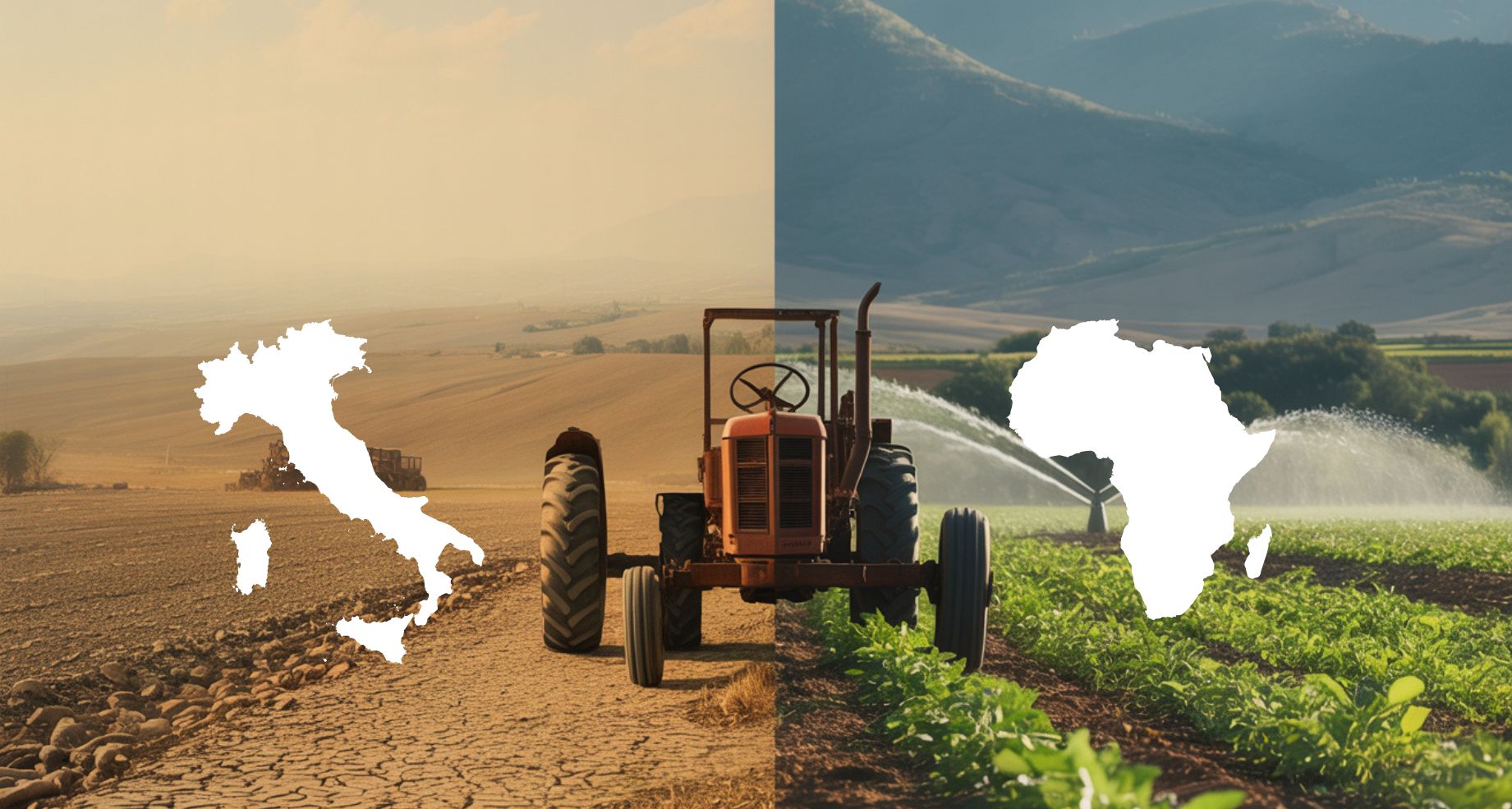
The only certainty is that Sicilian farmers cannot irrigate their orchards while Algerian farmers produce wheat thanks to the mega irrigation systems financed by our government.
This too is a choice that indicates our government’s commitment to the agricultural sector.
Paolo Caruso said in a later post, among many other things, that ‘36,000 hectares will never provide 405,000 tonnes more of cereals and legumes, unless average yields are more than double and triple those of Italy’.
In essence, despite all the claims of ‘sovereignism’ (e.g.: the Coltivaritalia plan), we are giving up on relaunching Italian agriculture by subsidising and pushing African agriculture.
In fact, on 25 March 2026, President Giorgia Meloni, on a visit to Algeria, confirmed: ‘We talked about the progress of the public-private initiative to recover over 36,000 hectares of desert land for the production of cereals and legumes. The project, despite the bureaucracy, is proceeding apace, with the sowing campaign that in 2026 will increase from 7,000 to 13,000 hectares of desert put into production’.
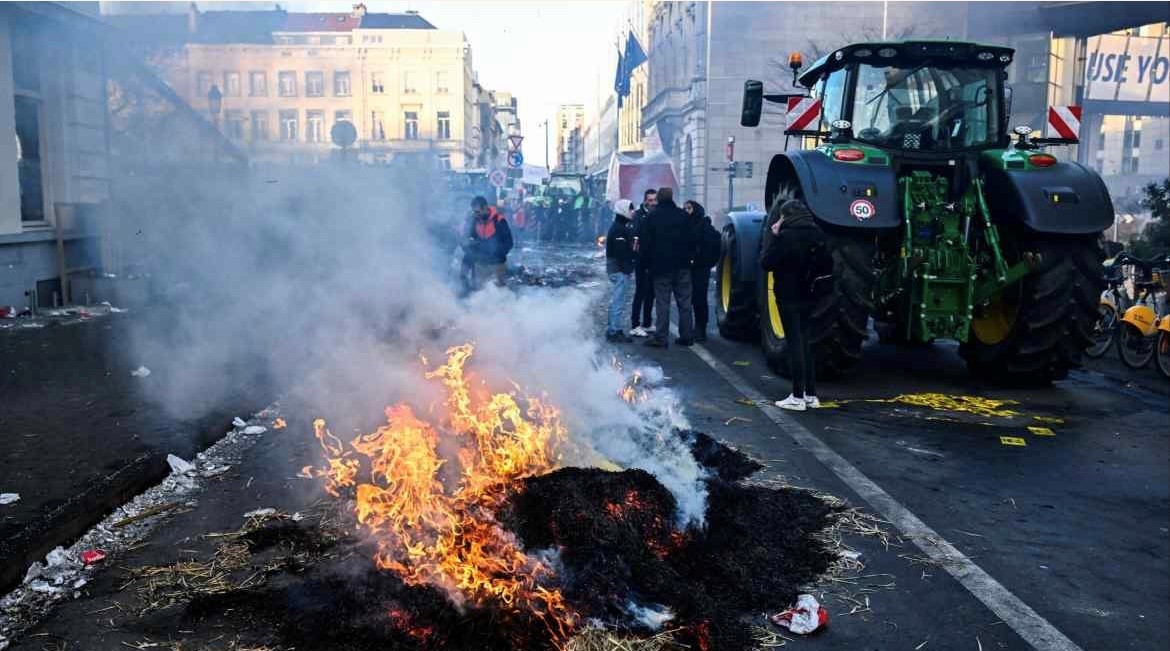
Let us remember this when the next violent protest by farmers breaks out.