New ham scandal: what are the consortia doing?
Rats, carcasses and cannibalism in a pig farm
And then what is the future of products that have never been relaunched after prosciuttopoli?
From Tomorrow, text edited by Stefano Iannaccone (Health in pieces, building at risk: without the NRP the government is in trouble)
.. The projects often have a small number of beneficiaries.
One case in point is the padel courts for the gymnasium in Vigo di Cadore, 1,500 inhabitants in the province of Belluno. Next Generation Eu, the European name of the plan, has made available an amount of EUR 300,000. The same sum was allocated to the municipality of Castelpagano (1,300 inhabitants), in the Sannio region, for the fitness trail in the municipal pine forest.
The ‘un giro di briscola’ (a round of trumps) project, developed in the Modena area, for the socialisation of the elderly has also been confirmed by a decree of 2025: the expenditure is EUR 222,000.
And if the Florence stadium was eliminated from the works that can be financed by the Pnrr, at the request of the then minister, Raffaele Fitto, it went better for the ‘Mimmo Garofalo’ stadium in Tursi, in the province of Matera: the Pnrr provided an amount of 700 thousand euro for the construction of the synthetic grass field and the covering of the bleachers. So, no to the Franchi, but yes to the Ciullo di Salve (4,500 inhabitants), in the province of Lecce: the completion of the structure cost one million euro.
On the cultural front, […] about 40 thousand euro were allocated to the Magna Carta foundation chaired by the former Berlusconian minister, Gaetano Quagliariello […]. While to the pro loco of Castel Viscardo (Terni), an amount of over 25 thousand euro was approved for the ‘creation of the first Umbrian village in the metaverse’. […]
In the midst of the myriad of micro-projects, many others are popping up, which have certainly not brought a surge in GDP. According to public databases, the Bora museum association in Trieste has been granted 75,000 euros (which have yet to be disbursed) for the ‘digitalisation of the analogue heritage of the Warehouse of the Winds through digital installations’.
While the diocese of Massa Carrara-Pontremoli has received the go-ahead for funding (for a maximum) of 75 thousand euro. The purpose? An app […] to promote the area’s religious heritage.
The Pnrr is also a photograph of cathedrals in the desert, not necessarily physical ones. The paradigm is the 3-i spa, a public company designed to promote the digitalisation of three giants, Inps, Inail and Istat, which in fact became partners to manage the spa that was supposed to absorb a series of services. It was one of the ‘milestones’ of the NRP. Three years after its foundation, 3-i remains a mysterious object.
One thing is peculiar: a company that deals with digitisation does not even update its website. In early September, Paolo Guidelli joined the board of directors in place of Ester Rotoli, while the chairman of the board of auditors became Stefano Moracci to replace Cosimo Giuseppe Tolone. Information not reported by the site after several months.
The problem is also the business plan, which is still under construction, while the accounts are shaky. Significant is the balance sheet for 2024. The difference between income and expenditure was more than EUR 600,000: to amortise, the management made investments of EUR 500,000.
Account-saving’ financial operations, which are not the company’s core business. In recent months there have been a few steps forward. “In 2025, service agreements were signed with the entities involved, marking the start of the company’s full operation,” government sources explain to Domani.
Closing the circle are the allocations from the Ministry of Tourism, back when Massimo Garavaglia was with the Draghi government: room rentals, agritourisms, hotels, bed & breakfasts and restaurants have benefited from 600 million euro in incentives, 150 million non-repayable. The NRP is an opportunity for many, in short. Especially for the most imaginative museums.
In Ficarra (Messina), over EUR 90,000 has been earmarked for the medieval toy museum, and EUR 600,000 for the ham museum in Langhirano (Parma). Finally, in Sala Consilina (Salerno), there is the Casa Surace project, with an amount of around 39 thousand euro, for “a digital portal to pass on Italian legends”. For a Pnrr to be left to posterity.
Conclusion :
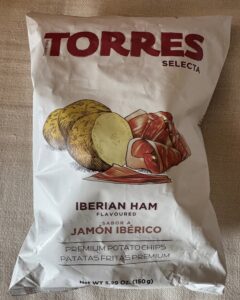
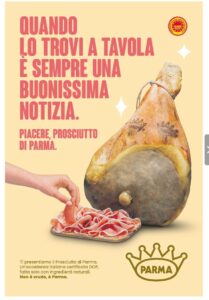
in the face of continuous scandals , the consortia, instead of trying to get the ham out of an image impasse and think about relaunching consumption of Parma ham, making it ‘cool’, as the Iberian jamon has done, prefer to self-celebrate by doubling the museum (with 600,000 euro from the Pnrr).
Remember that cured meats are not among the favourite foods of the press and dieticians: is cooked ham carcinogenic? What about other cold cuts? The expert explains the WHO classification (you can find a plain summary here ).