Drafted 1 June 2025, updated 4 June 2026
And I recall that this topic is practically never spoken about, except on blogs like this one or in ‘minor’ newspapers: these days (May 2026) the pope visited the Terra dei Fuochi and no national media reported the news.
As Luigi Montano (ISDE Italy scientific committee) recounts in La Discussione, the visit represented a strong moral and civil call for the protection of health, the environment and the dignity of local communities. Pope Leo XIV explained that he had come to Acerra ‘to gather the tears’ of those who had lost family members due to environmental pollution, reiterating the need for an ecological and social conversion.
The Pope also emphasised the link between the environmental crisis and the social crisis, recalling the legacy of Pope Francis’ encyclical Laudato si’, published eleven years ago. In his speech, he recalled how Campania felix has been transformed by criminal interests and indifference into a land scarred by disease, pain and loss of trust
European Court: The Terra dei Fuochi Case and Consequences
In a previous article, Climate Litigation: the rulings of the European Court of Human Rights, we saw how the European Court of Human Rights (ECHR) has ruled in some climate change cases.
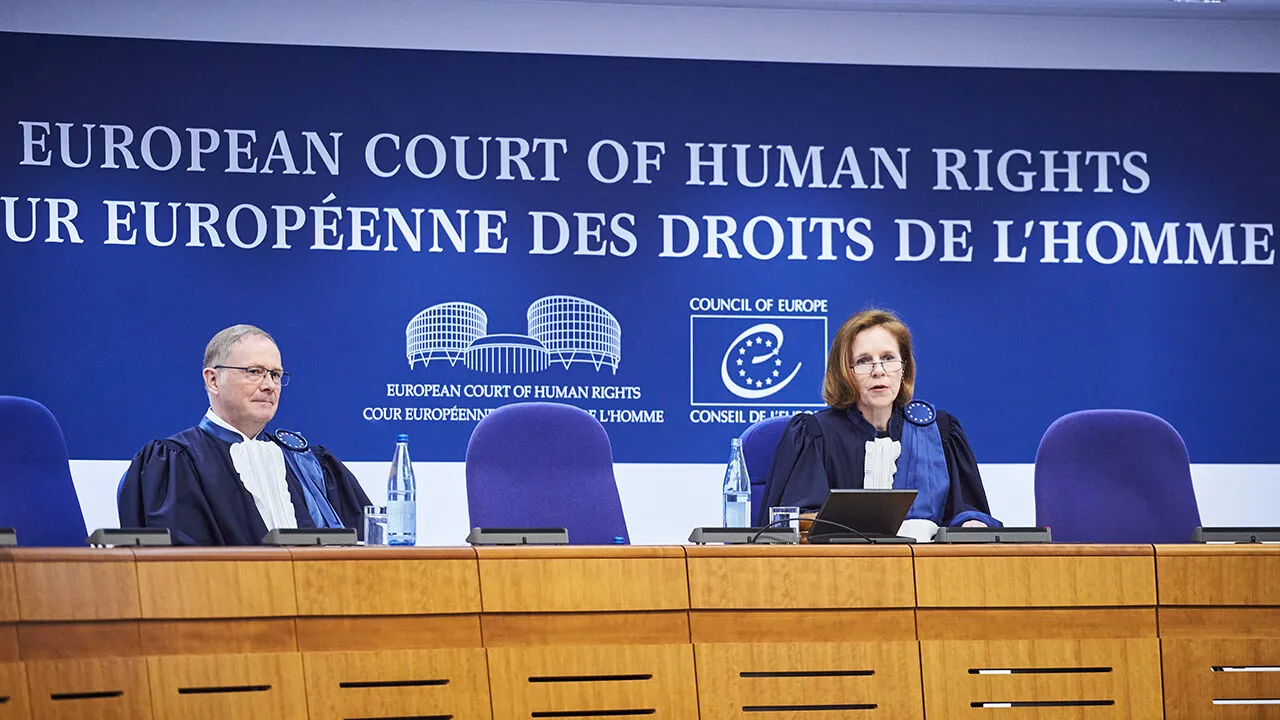
The European Court of Human Rights is an international court established in 1959. It settles individual or state claims relating to violations of the civil and political rights enshrined in the European Convention on Human Rights. Its rulings are binding on the countries concerned and have led governments to change their legislation and administrative practice in a wide range of areas. The Court is based in Strasbourg and has jurisdiction over the 46 member states of the Council of Europe that have ratified the Convention.(Rules of Court).
When the Court finds a violation of the Convention, the State has a legal obligation to select the general and/or, where appropriate, individual measures to be taken in its domestic legal system to put an end to the violation found by the Court and to remedy the situation.
The Terra dei Fuochi Judgment
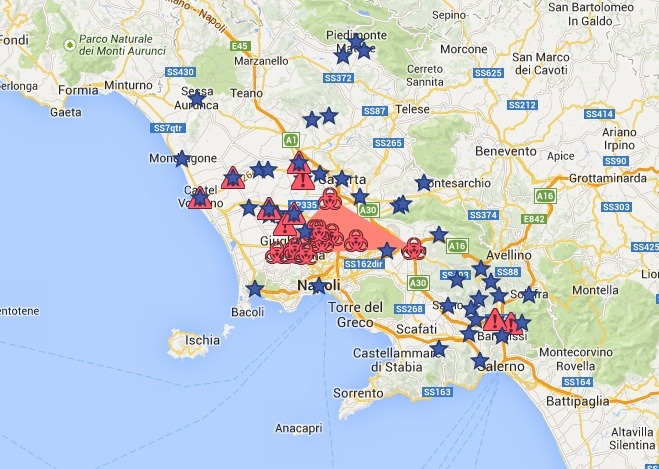
Recently, the ECHR ruled on another case of particular environmental interest, upholding most of the dozens of appeals lodged by residents and associations in the area regarding the real danger to health and the environment caused by the illegal dumping of waste and the public management of the same; by its inaction and without taking the necessary measures, the Italian authorities have put and are still putting the lives of the inhabitants of the so-called ‘Terra dei fuochi’, the area that includes part of the province of Naples and Caserta that has been the subject of toxic waste burial for decades, at risk.
“The European Court of Human Rights unanimously held that there had been: a violation of Article 2 (right to life) of the European Convention on Human Rights. The case concerned the dumping, burying or burning of waste on private land, often carried out by organised criminal groups, in the parts of the Campania region known as the Terra dei Fuochi, where some 2.9 million people live. Higher rates of cancer and groundwater pollution have been recorded in the area. The Court found in particular that the Italian State had failed to address such a serious situation with the required diligence and expedition – despite being aware of the problem for many years – in particular in assessing the problem, preventing its continuation and communicating to the public concerned. The Court unanimously ruled under Article 46 (binding force and enforcement of judgments) that Italy had to develop a comprehensive strategy to address the Terra dei Fuochi situation, establish an independent monitoring mechanism, and set up a public information platform. The time limit for this is two years, during which the 36 related applications pending from some 4,700 applicants will be updated.”
Judgment Cannavacciuolo and Others v. Italy – Prolonged state inaction on widespread dumping put Terra dei Fuochi residents’ lives atriskDownload
A legal comment on the Judgment
In order to understand the scope of this ruling, we highlight theintervention of two experts, Francesco Barone-Adesi (Associate Professor of Public Health, University of Eastern Piedmont) and Stefano Zirulia (Associate Professor of Criminal Law, State University of Milan), some passages of which we report.
“The significance of the Cannavacciuolo ruling (named after the first plaintiff), however, also has a significance that goes beyond the specific case from which it originated, and constitutes an important precedent for environmental and climate litigation. In fact, it is the first time that the Court has gone so far as to state clearly that the results of epidemiological studies carried out on a given territory are sufficient to prove the infringement of the right to life of the populations living there, even when, as in the present case, it is not possible or is extremely difficult to prove the individual causal link between exposure to the risk factor and the disease that has affected each individual victim.”
“This is an important turning point in the jurisprudence of the European Court. (…) The turning point brought about by the Cannavacciuolo judgment is full of practical consequences, since it is linked to precise obligations of incrimination: in particular, that for the State to initiate criminal investigations and to punish those responsible with penalties proportionate to the gravity of the acts committed. This means that damage to the environment that is capable of causing serious ascertainable health consequences can no longer be overlooked, but neither can it be downgraded to bagatelle offences, such as environmental contraventions. On the contrary, they will have to be treated as serious offences (felonies), so that effective investigative tools (e.g. wiretapping) and appropriate precautionary measures (e.g. seizures) can also be activated.”
“(…)the European Court also addresses itself to the national legislator, requiring him to introduce criminal rules proportionate to the seriousness of facts that cause damage both to the environment and to the lives of people living in a particular area. It is also crucial, according to the Court, that statutes of limitation are guaranteed to be compatible with the complexity of the proceedings and that the government refrains from adopting measures, such as criminal shields, that guarantee the impunity of polluters. In the past, the absence of an effective regulatory framework has been one of the causes of the failure of some well-known judicial initiatives, such as the one against the owners of Eternit for asbestos-related deaths.”
“Today, the regulatory framework is enriched by the introduction in the Criminal Code of a title specifically dedicated to ‘ecodelitti’, which include the crimes of ‘death or injury as a consequence of environmental pollution’ and ‘environmental disaster’. These rules, interpreted in the light of the indications provided by the European Court, could represent the legal basis for prosecuting the most serious attacks on the environment caused by industrial activities, or by the failure to control atmospheric pollution caused by vehicular traffic, whenever epidemiological investigations are available to measure the impact of pollution on public health. The ruling on the ‘Terra dei fuochi’ therefore provides both the judiciary and the legislature with a series of valuable indications. The challenge is now to transform them into tangible actions, capable of giving a new course to Italian environmental criminal law.”
The Committee decided to resume consideration of this case in March 2027.
P.S.: thank goodness for the Pope and Europe…