Drafted 27 November 2024, updated 21 May 2025
Interesting that the online title of this Le Monde report, compared to the original (above), has been ‘sweetened’.
Moreover, this report does not mention that two children died from Buitoni frozen pizzas and that Nestlé Waters‘ waters were contaminated with faeces and pesticides.
Nestlé to develop premium water and beverage segment
The Swiss giant, shaken by scandals and struggling with a slowdown in sales, presented its turnaround plan to investors on Tuesday 19 November.
In the wake of the Buitoni pizza contamination scandal, Nestlé has also been indicted for the illicit treatment of alleged natural or spring mineral water [a €3 billion fraud for which Nestlé has settled]. Two cases that shook the world’s number one agri-food company. And have forced it to make strategic decisions.
The Swiss giant dumped the Buitoni frozen pizza factory in Caudry in the North in 2023 . At the same time, it chose to divest itself of the frozen pizza business in Europe by creating a joint venture with the investment fund PAI, holding only a minority stake.
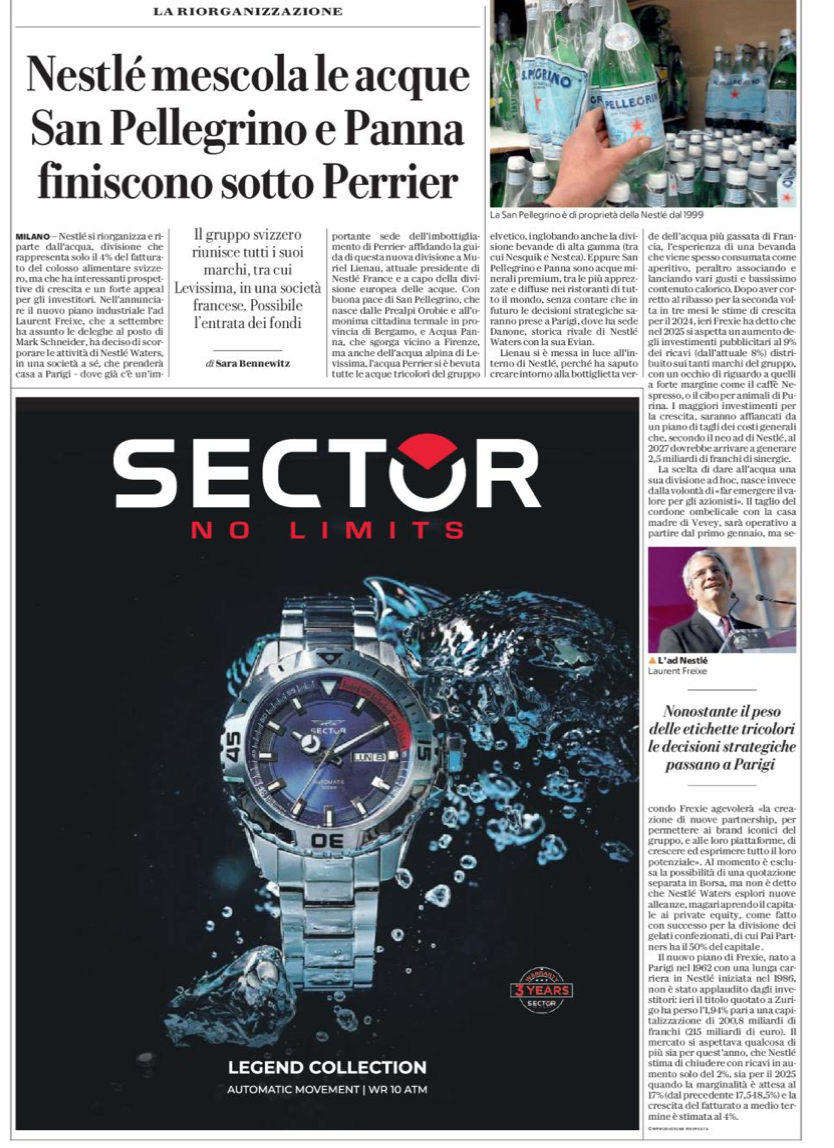
Now it is the turn of the bottled water business to be in the spotlight. Laurent Freixe, the new head of Nestlé, who took over the reins of the Vevey group on 1 September after the surprise departure of his predecessor, German Ulf Mark Schneider, is in charge. On Tuesday 19 November, during an investor seminar, he announced that Nestlé’s high-end water and beverage business will be spun off as of 1 January 2025 and placed under the leadership of Muriel Lienau, currently head of Nestlé Waters Europe .
Faced with a wave of inflation
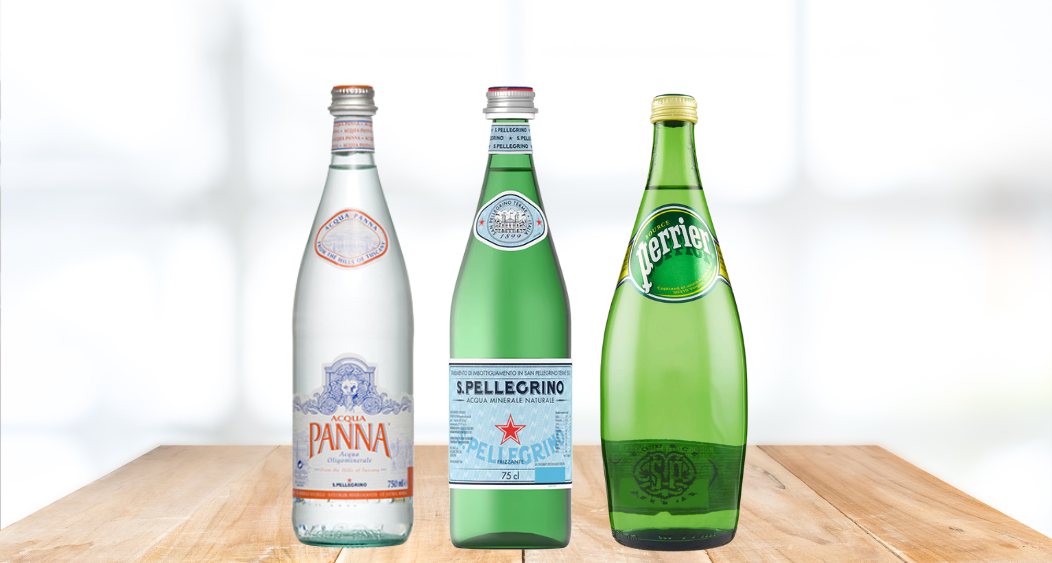
“The new management will evaluate the strategy for this business. This will include the exploration of partnership opportunities to enable Nestlé’s iconic brands and growth pillars to reach their full potential,’ the group said in a note. On the table is a possible divestment, or at least distancing. In 2021, Nestlé sold its regional spring water brands in North America to two investment funds for USD 4.3 billion (EUR 4 billion). However, the transaction did not involve international brands such as San Pellegrino, Perrier or Acqua Panna.
This decision is part of the action plan presented to investors and analysts on Tuesday during the Financial Markets Day focused on ‘Accelerating Nestlé’. Indeed, Freixe has a clear mandate: the agribusiness giant must return to marked organic growth (without acquisitions). The group is committed to increasing its business by 4% per year in the medium term, accompanied by an increase in margins of over 17%. However, in July, Mr Schneider was forced to lower his sales growth forecast for 2024, from 4% to 3%. The axe of his ouster fell soon afterwards. In October, this growth forecast was again revised downwards and remained at 2% today.
Constrained by their budgets, consumers made compromises and preferred private label products, which were more affordable than leading brand products. To restart the machine, Freixe wants to support the group’s flagship brands, such as Nescafé, KitKat, Maggi, Purina and Nespresso. By 2025, it plans to increase investment in advertising and marketing to 9 per cent of turnover.
Now is also the time to save money to create room for investment. Nestlé plans an additional effort of at least CHF 2.5 billion (EUR 2.8 billion) for further cost reductions.
Read also :
- Perrier risks losing the natural mineral water label that has made it famous for more than a century
- Bottled water or tap water?
- This nice article on San Benedetto, which passes off its water as having ‘unique organoleptic properties’
- The affair has become a national political case: In the case of the Nestlé mineral water fraud Emmanuel Macron claims there was no ‘cartel’ or ‘connivance’.
- Bottled water scandal, Nestlé top executives risk perjury.
- Nestlé : Perrier from mineral water to simply drinking water? Faced with so many problems Nestlé Waters would like to sell its water for 5 billion.
- Senatorial commission on Perrier : the Presidency of the Republic knew, at least since 2022, that Nestlé had been cheating for years.
And the water situation, in general, is very delicate given the presence of PFAS in the majority of drinking water samples in Italy and France.
But fortunately PFAS pollution of drinking water in Italy should soon be limited.
Below: the fate of the Italian division as seen by Repubblica, which does not mention the €3 billion water fraud perpetrated by Nestlé.
Le Monde does not say everything but at least mentions the scandals, unlike the Italian press. It should be noted that Italy ends up under the control of a subsidiary – the French one – that did nothing but damage in 2024.