

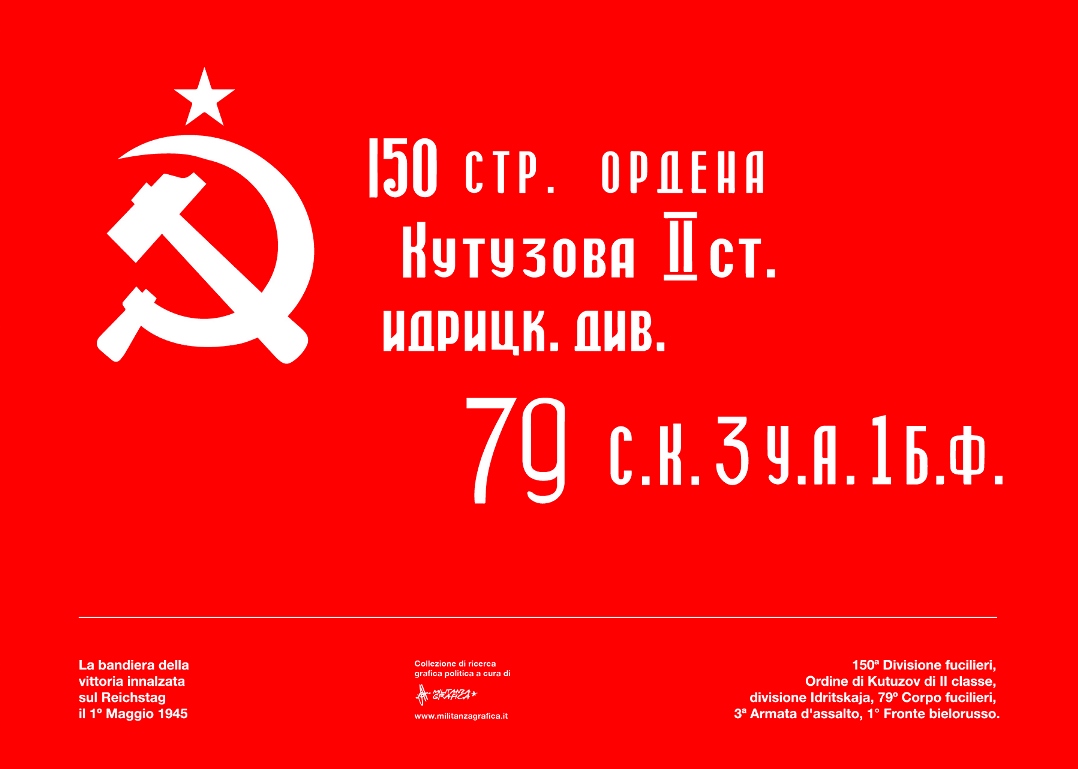
Compiled 25 May 2024, updated 7 May 2025
Above the flag of the ‘Great Patriotic War’ (World War II) that will be used for the parade on 9 May, the day of commemoration of the victory against Nazi Germany, to which some leaders of European countries, such as Slovak leader Robert Fico or Serbian leader Aleksander Vucic, have also been invited. Lula (Brazil) or Xi Jinping (China) will also participate.
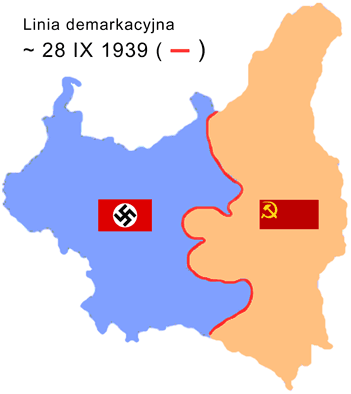
Few remember that the USSR, before fighting World War II, against the Germans, Italians and Japanese, was an ally of Hitler (1939). And it was in order to share Poland (the USSR attacked Poland 16 days after the Nazi attack, on 17 September 1939).
The USSR then also attacked Finland and the Baltic States.
Then Hitler decided to attack the USSR (with Operation Barbarossa, in 1941).
Below: Poland divided between the USSR and Nazi Germany.
Of the massacre carried out in Poland by the Russians – who thus beheaded the Polish intelligentsia and the Polish army – I did not read about it in history books, but my father , who was passionate about history, had told me about it.
“The discovery of the massacre, which took place while Katyn’ was occupied by the German armed forces afterOperation Barbarossa, was announced on 13 April 1943 by Radio Berlin, which attributed the responsibility to the Soviets, while later the Germans [with the Gestapo ] were accused of having carried out the massacre by the prosecutor Roman Rudenko during the Nuremberg trial, although the responsibility was in fact the Soviets.
Stalin, in retaliation, decided to break off diplomatic relations with the Polish government in exile in London.
Even after his death, theUSSR denied the accusations, on the strength of the German confessions made at Nuremberg, until 1990, when it recognised theNKVD [the political secret police: first Cheka, then NKVD, later KGB and – today – FSB] as responsible for the massacre and its cover-up.
On the other hand, Poland was in the Warsaw Pact and therefore the USSR had no interest in admitting these horrible crimes.
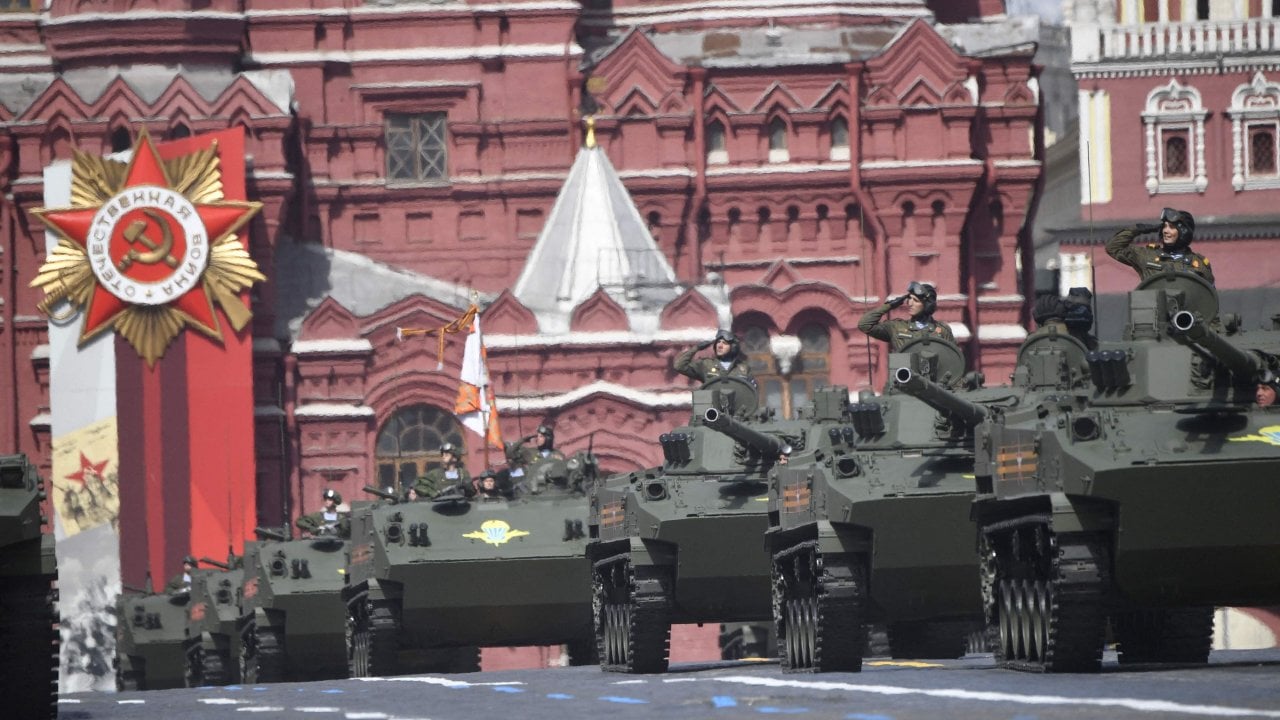
Below: the 9 May parade commemorating the USSR and celebrating the ‘Great Patriotic War’ (World War II).
Katyn, the suspended memory of a massacre ordered by Stalin
By Benoît Vitkine (Katyn (Russia), special correspondent) Published on 3 January 2024 in Le Monde
Report
A parliamentary commission has been charged with re-evaluating Russia’s official position, adopted in 2010, on the massacre of 4,404 Polish officers [but also politicians, journalists, professors and industrialists to reach a total of 22,000 people ] carried out on Stalin’s orders. The USSR tried to blame this tragedy on the army of the Third Reich.
Not a cloud or a bulldozer on the horizon. On this Saturday in December 2023, snow covers everything: the trees, the graves and the mass graves from which, between 1941 and 1943, the bodies of some 4,404 Polish officers were exhumed at the foot of the pine trees in the Katyn forest. The snow even lends additional dignity to the place located not far from the Russian city of Smolensk, very close to the border with Belarus. It drowns out the echo of threats from Moscow, the turmoil of a country engaged in a total revision of its history.
The guided tour of the memorial offers an impeccable account of the ‘tragedy’ of Katyn, as the guide, Irina Popovitch, describes it. Of the responsibility of the Soviet Union (USSR), of the partitioning of Poland between the Third Reich and the USSR, nothing is concealed, right down to the various manipulations of the Soviet side, at the end of the war, to place the responsibility for the massacre on Nazi Germany – one of which was to dress the corpses in winter clothes in an attempt to change the alleged date of the crime, committed inApril-May 1940.
This historical rigour is remarkable in a country where evoking the secret protocol of the Molotov-Ribbentrop pact of 1939 can lead to prosecution for ‘rehabilitation of Nazism‘. “More and more visitors are rebelling against our history,” notes Ms Popovitch, who has worked for the “Katyn memorial complex ” since 2013 . Some continue to blame the Germans; others ask: “And maybe they didn’t do anything to us Poles?“…”
The latter justifications remind me of the phrases to exonerate Russia’s attacks on Ukraine:
“Eh but Nato . “, “Eh but the dead in the Donbass…”.
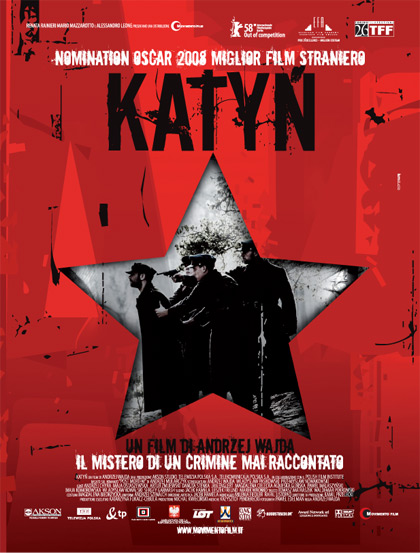
On Katyn there is a beautiful film by Andrzej Wajda that photographs very well a country, Poland, crushed between two bloody dictatorships.
Part of the Polish intelligentsia – university professors – were interned in German labour camps, while Polish officers were slaughtered with a gunshot to the back of the head by the Soviets.
This is a docu- fiction: a well-documented historical film, where there are various historical excerpts recalling the massacre, Stalin’s hammering propag anda and the counter propaganda of the Nazis, who – after 1941 – became enemies of theUSSR and wanted to attribute it to it.
The film shows the total similarity of the two regimes: lies, ambiguity, hypocrisy, violence of the two states, united by totalitarianism.
Germany had adhered to the 1929 Geneva Convention on prisoners of war but complied with it “when it wanted to”, theUSSR had not adhered to it, keeping its “hands free” and doing as it pleased.
There are also those famous bulldozers: two columns left on 10 April 2022 from the neighbouring city of Smolensk, to stop at the entrance of the complex, bulldozers with shovels raised in front of the memorial with barely veiled threats spewed from megaphones: ‘We could destroy everything but we are not Nazis’. “A private initiative” said the media, but that says a lot about the atmosphere. And on the rewriting of history on which President Vladimir Putin has committed himself, who does not tolerate in the national narrative that the glory of martyrdom should be compounded by the boiling over of the war in Ukraine.
This hostile turn of the tractors displaying Russian flags and stickers with the ‘Z’ of the Russian ‘military operation’ on them came a few days after the discovery of the bodies of civilians killed in Bucha, Ukraine, north of Kiev – another massacre for which Moscow, which has been put under indictment, denounces foreign manipulation, mainly by the ‘western secret services’.
A few days later, in June 2022, the Polish flag planted at the entrance of the complex was removed without notice. Decision of the Ministry of Culture, supported by the mayor of Smolensk: ‘there cannot be a Polish flag on a Russian monument (…) Katyn is a Russian story’.
These incidents are nothing compared to what is expected at the memorial. On 9 November 2023, the president of the Duma (the equivalent of the House of Parliament), Vjaceslav Volodin, instructed a parliamentary commission to re-evaluate the institution’s official position on the tragedy – and through this – Russia’s position.
Concretely, this would involve going back on the 2010 statement recognising that ‘the crime of Katyn was perpetuated on the direct orders of Stalin and other Soviet leaders’.
This is the most important official act issued by the Russian authorities to acknowledge the responsibility of the USSR, says historian Alexander Gurianov.
But it will certainly not be taken into account because Putin started to rewrite history many years ago by revaluing Stalin.
And the tragedy of Katyn has practically disappeared from the school textbooks in Russia, where, by now, one is more concerned with military training than studying.
The confirmation of this policy came with the war against Ukraine. Putin is the successor of Stalin who denies Katyn as he denies Holomodor.
Poles do not forget their past!
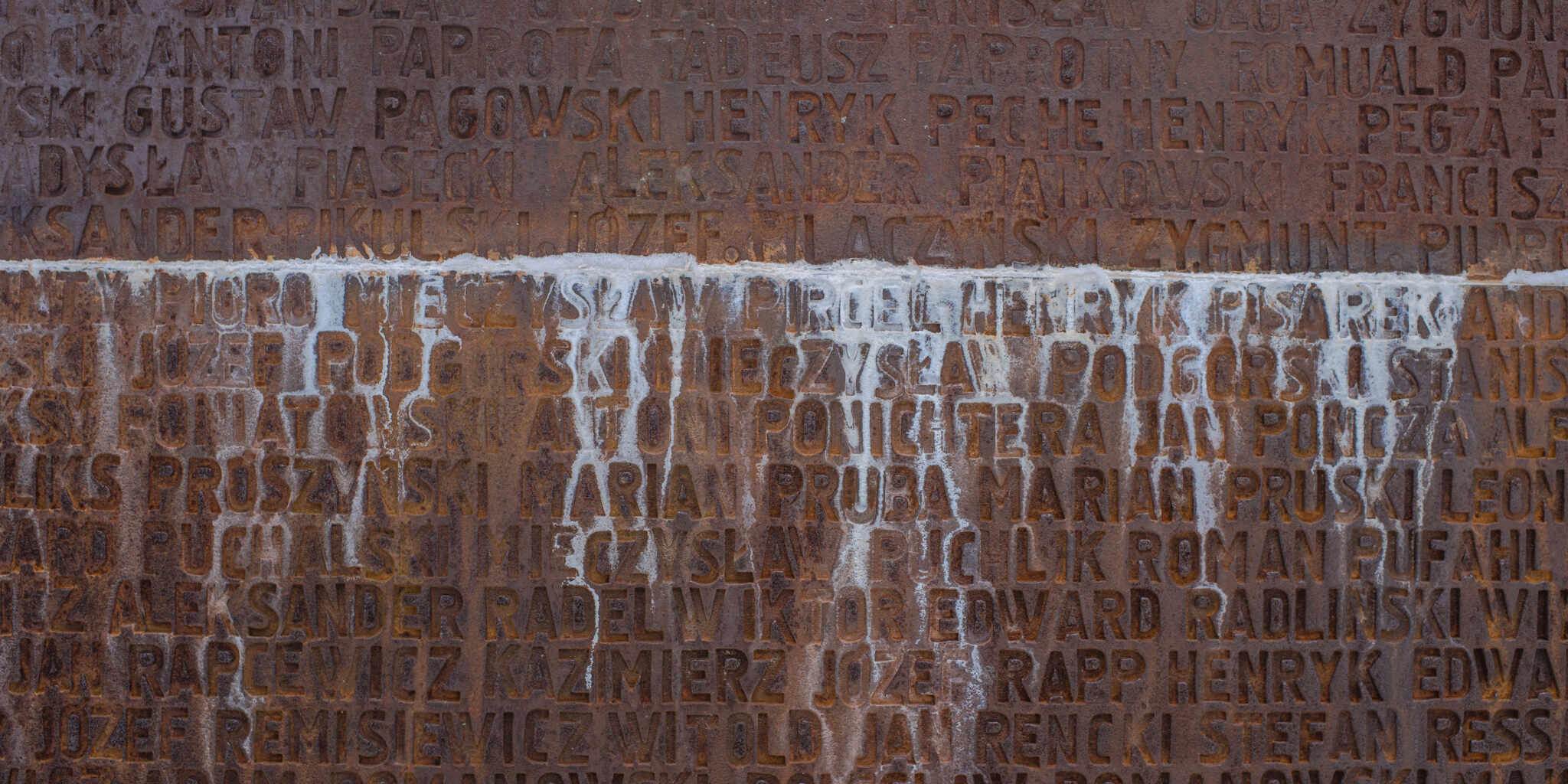
Below : the memorial unveiled in 2000
Attachment: AI Overview on the dead in Poland
The invasion of Poland by Germany and the Soviet Union in 1939, which marked the beginning of the Second World War, caused a high number of casualties among the civilian population and military troops. Estimates put the total number of deaths at around 5 million, including 3 million in the present Polish territory and 2.3 million in the areas annexed by the USSR.
Elaboration:
The invasion, led by Germany and the Soviet Union, was not a simple military conflict, but an event that triggered a long and devastating war that deeply affected Poland.
Military deaths:
- Poland: The Poles had about 65,000 dead and 130,000 wounded during the initial invasion.
- Germany: German troops had about 45,000 killed and wounded.
- USSR: The Soviets had about 737 killed and 1,862 wounded during the initial invasion.
Civilian deaths:
- Estimates indicate that more than 2 million people died in the Polish territories annexed by the Soviet Union.
- In the present Polish territory, the number of civilian victims reached 3 million.
- In addition, 150,000 Polish civilians were sent to labour camps in Germany, while between 50,000 and 60,000 were sent to death in concentration camps, as reported by Wikipedia.
Prisoners of war:
- About 400,000 Polish soldiers were taken prisoner by the Germans.
- Deaths among prisoners of war amounted to 250,000, with 120,000 in Germany and 130,000 in the USSR.
Other losses:
- The genocide of the Roma (porajmos) in Poland is estimated to have claimed 35,000 lives.
- The massacres of Poles in Volynia between 1943 and 1944 caused about 100,000 deaths, according to Wikipedia.
- In addition, 150,000 civilians were sent to labour camps in Germany, while another 60,000 were sent to concentration and extermination camps, according to Wikipedia.
In summary, the invasion of Poland and the subsequent occupation by Germany and the USSR were extremely devastating events, with millions of deaths and prisoners, marking the beginning of a long period of suffering and destruction for Poland and Europe.
Below : some stills from Andrzej Wajda’s film Katyn


