Sardinia loses vegetable gardens and orchards: over 13,000 hectares of abandoned fields
The last 15 years have seen a 52% collapse in cultivation
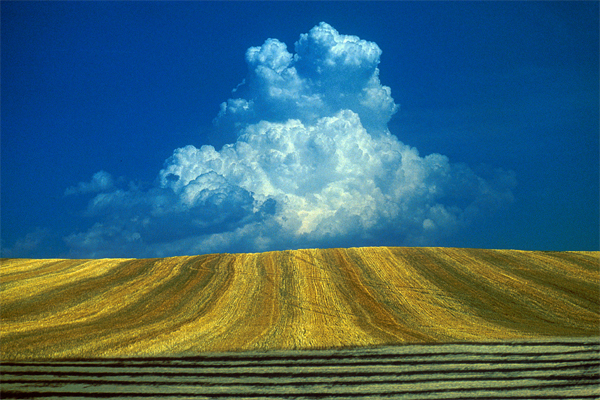
More than half of the fields left uncultivated, wiped off the map of the island’s gardens. From the peaches of San Sperate to the citrus fruits of Muravera, from the artichokes of Villasor to the cherry tomatoes of Pula. In the last fifteen years, the hectares of fruit and vegetable cultivation in Sardinia have literally halved: a collapse of 52% on a regional basis, almost 13 thousand hectares (ISTAT data) abandoned from 2010 to today (from 24,509 to 11,838).
Land overrun by weeds and empty greenhouses. A bleak picture that explains the consequent surge in imports (63%), given the demand that is not satisfied by domestic production, and the collapse of exports (-64%), while the local market is invaded by products arriving from Spain, North Africa and South America. In Sardinia, 3,021 hectares are cultivated with citrus fruits, just 5% of the agrarian woody crops (plants ranging from olives to vines and fruit in general) that cover 57 thousand hectares (of which 54% are olive groves, and just over 30% vineyards).
Fresh fruit (excluding citrus fruits) is cultivated on an area of just 1,767 hectares, a share that decreases year by year, as does horticultural production.
Then, in politics, the words unfairpractices and unfair competition from third countries finally crop up.
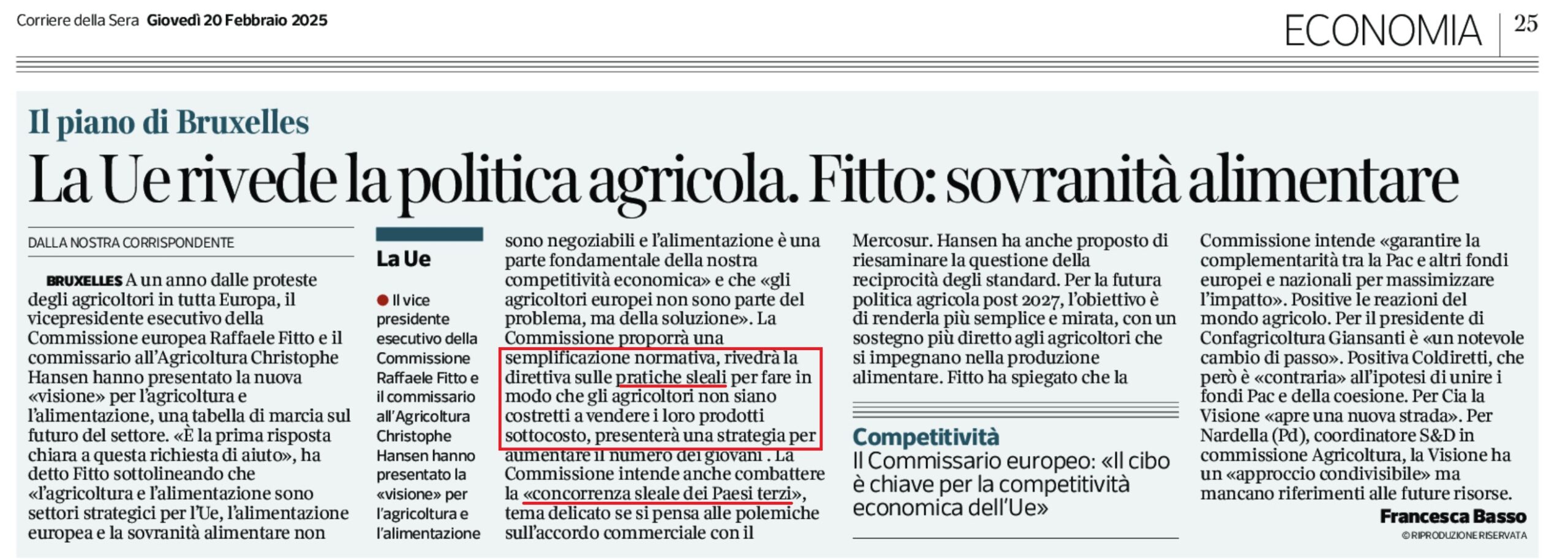
Italian farmers applaud EU Vision 2040 document
But there are those, like Enzo di Rosa, who say that ‘there is little to celebrate’:
‘An agro-industrial system that has imposed enormous environmental and health costs,which are rarely calculated in the sale price of food but are dumped as negative externalities entirely on communities and the environment is a bad system, because then these costs are covered by EU aid and contributions, and by a mechanism for distributing this aid that is obscene. There remains, in fact, the paradox of the 2023-2027 reform of the CAP to confirm support for intensive agriculture and animal husbandry through subsidies that promote the use of synthetic fertilisers and pesticides and that favour large farms at the expense of small ones, with over 80% of CAP funds still being distributed to 20% of European farms.
The solution: no more area-based subsidies and no more subsidies for practices that endanger the environment and animal welfare. Instead, funding for sustainable modernisation and for anyone who creates agriculture in harmony with soil quality and biodiversity. And on the other hand, the application of #fairprice for farmers and price traceability as well.
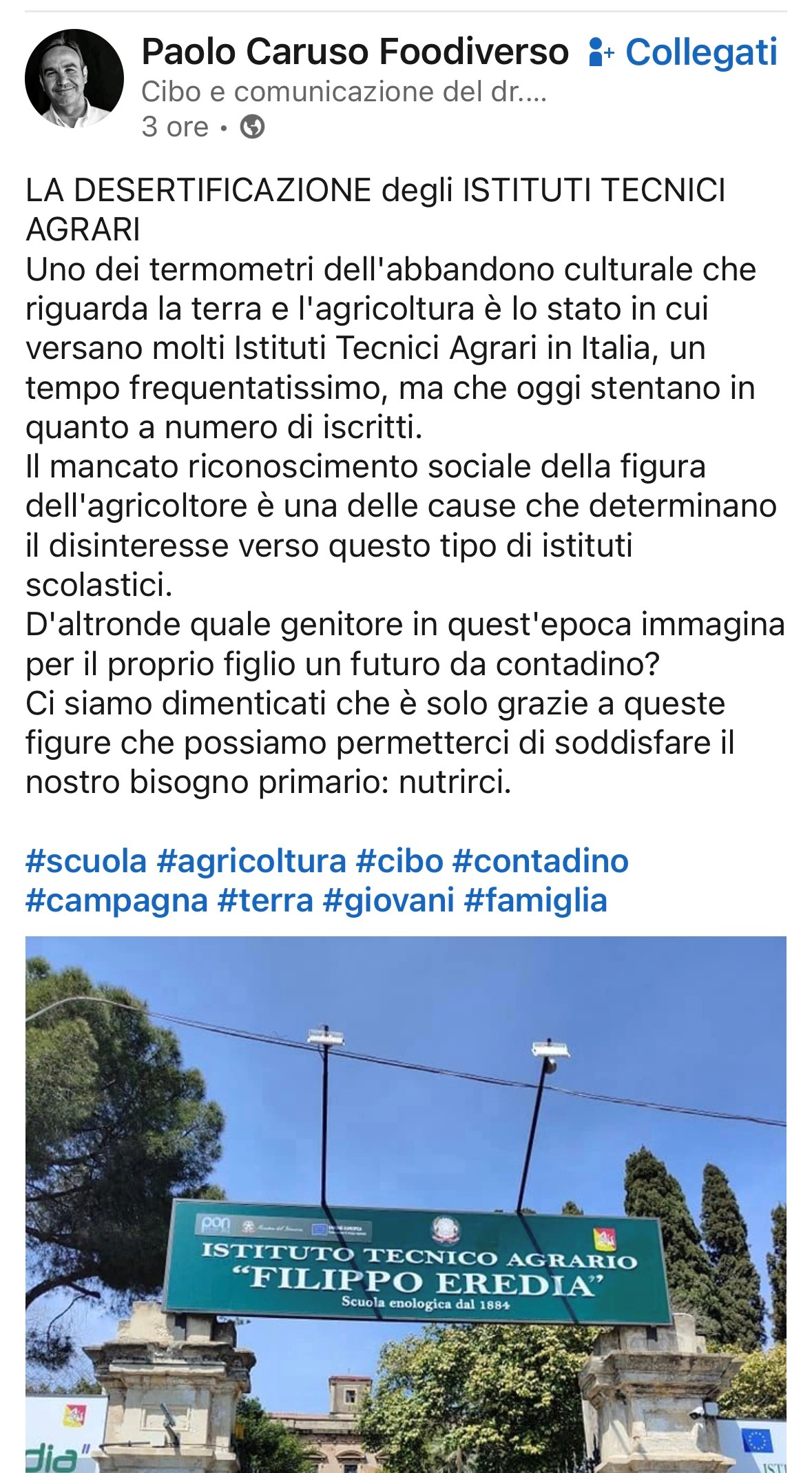
Indeed on unfair practices and exploitation of workers there is little to celebrate. And the desertification of the Agricultural Institutes confirms this.