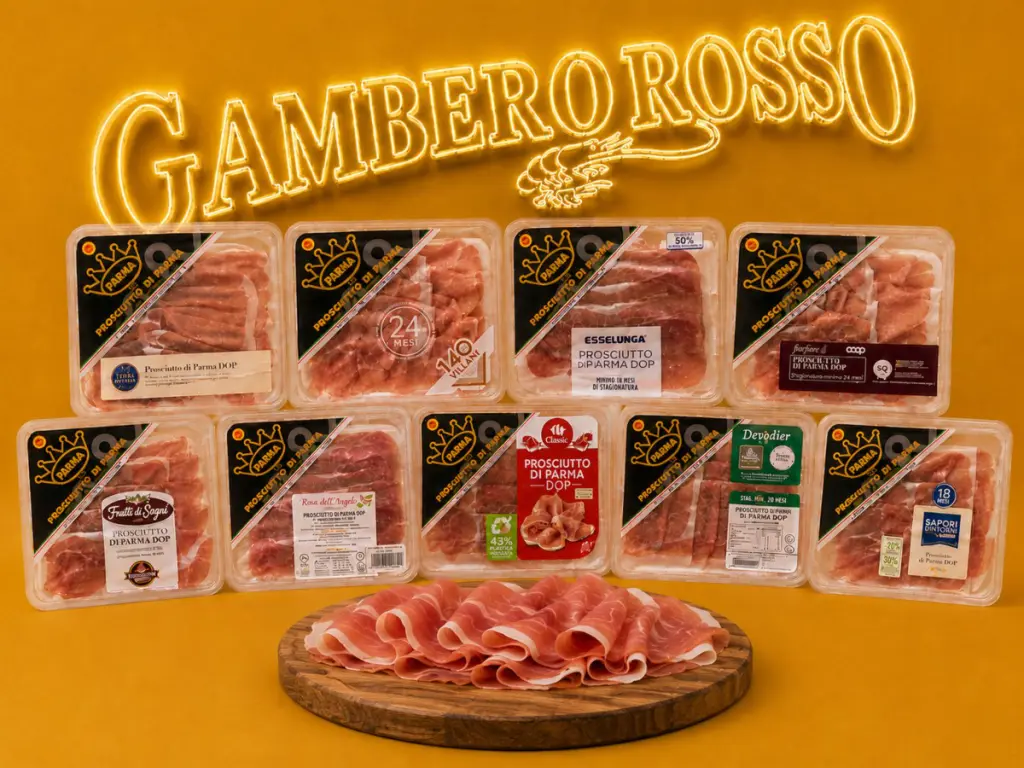
Yet, in the section of the website dedicated to blind tastings,it states:“We create groups that are homogeneous in terms of type, production philosophy and price range”. In this case, it seems to me that the selection is not particularly homogeneous: the only common feature is that they are Parma PDO; otherwise, the production philosophy and approach of a €15–20 billion chain will differ from those of a €30 million company. With such a wide range of maturation periods and prices (a 70 per cent difference between the cheapest and the most expensive), how can one claim that the range of products is homogeneous?
The author is right: Gambero Rosso would do well to explain the process leading up to its assessments in greater detail. I would add that, given the events surrounding the ‘prosciuttopoli’ scandal, the descriptive section of the article – which I have reproduced below – seems rather theoretical:
Where do the legs come from?
The legs come exclusively from pigs born, reared and slaughtered in the eleven regions permitted by the production specifications, whilst processing takes place entirely within the designated area. After at least fourteen months and quality checks, the ‘Corona Ducale’ is awarded – the mark certifying ‘Prosciutto di Parma DOP’…