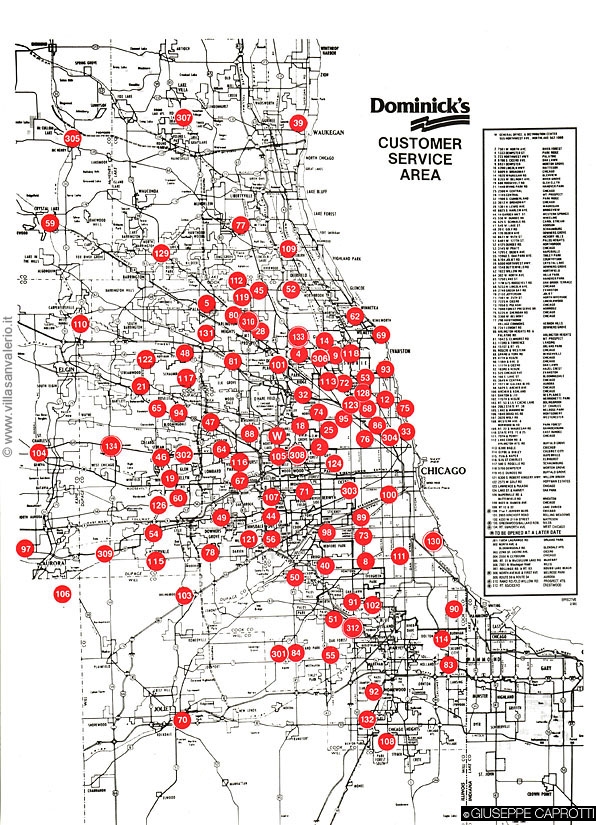
From supermarkets to superstores: how to generate additional turnover from non-food items in a food retail business First version drafted with Dr Gaetano Puglisi and published on 22 July 2010 The primary objective of a supermarket chain is to attract as many customers as possible, then to retain and increase their numbers, and subsequently to boost their average spend. Anyone familiar with the retail sector knows full well that a good location is the foundation of a business’s success, and Esselunga has, right from the start, built a reputation for never having chosen a location poorly. Building on these foundations, the primary objective, once the store had been built, was to increase the average spend per customer, bearing in mind that, at the time, our number one competitor was the hypermarket, which held great appeal thanks to a much wider range than Esselunga’s traditional supermarkets and its location within shopping centres (1). Against this backdrop, in the late 1980s, I spent two years in the US working for the Dominick’s chain, which boasted a 30 per cent market share in the Chicago area, where it generated a turnover of around $2 billion. With a population of over 15 million, the metropolitan area was prosperous and dynamic, and Dominick’s – spurred on by competition from American Stores (operating in the Chicago area under the Jewel brand, a national leader with $22 billion in revenue) and by the recent construction of an Auchan hypermarket (2), had developed some magnificent superstoresthere – a format thatwas, at the time, completely unknown in the European retail landscape. I had been introduced to Dominick’s by Charles Fitzmorris, an IT supplier to both Esselunga and Dominick’s itself, a company owned by a family of Sicilian origin headed by Dominick Di Matteo Jr. As soon as I arrived in the US, I worked as a shop floor assistant and cashier for a year in various superstores (numbers 76 and 304, for example), recognising the potential of non-food items and ‘one-stop shopping’ – that is, doing one’s shopping all under one roof. This experience laid the foundations for the project that led to the development of Esselunga’s superstores. In fact, at the time, whilst Bernardo Caprotti had had the brilliant insight to build ever-larger retail spaces over time – the first supermarket with over 2,000 square metres of retail space had been opened in Alessandria to designs by Ignazio Gardella in 1988– the company literally did not know ‘what to put’ in these new spaces, as the food range could not be expanded any further. Bernardo Caprotti had already ruled out, before I left for the US, Esselunga entering the world of hypermarkets, whilst he welcomed my proposal for the ‘American model’ of the superstore, which he saw for himself when he came to visit me in Chicago. In a food retail company, the non-food section of the superstores was much less intrusive and, above all, allowed for the maintenance of a single central management structure, whereas hypermarkets would probably have forced Esselunga to have two separate purchasing and sales structures: one for the supermarkets and the other for the hypermarkets. In the former, there was a high degree of centralisation, whilst in the latter, the managers and department heads of the various hypermarkets decided what to buy and how to sell it. The choice of the superstore model was not only more consistent with Esselunga’s operational philosophy but also made it possible to avoid significant cost increases. (1) Esselunga built its first shopping centre in Marlia (LU) at the instigation of Giovanni Maggioni as late as 1991. Prior to that, the group’s supermarkets were stand-alone outlets in the various towns where they operated. (2) This was an almost entirely new development for the American market, where Auchan will build just one other hypermarket in Texas. Building on my experience in the US, I developed – with the help of engineer Giancarlo Pelarin (the agenda below is his and marks the launch of the non-food project at Esselunga) and a number of buyers, amongst whom I am pleased to mention Alberto Bianchi – I developed the non-food sector project at Esselunga, basing it on the categories found in American supermarkets. The categories were therefore: personal care, vitamins (and dietary supplements), beauty products, hosiery, baby care, books, postcards and stationery, toys, photo development, household goods, pharmacy (complete with a pharmacist), cosmetics, videos and seasonal items. But there were also items for pets, for the car and for household cleaning (brooms etc., no detergents). The inclusion of spirits in the non-food section was quite natural in the US because the sector required a separate warehouse and special licences for sale. Naturally, at Esselunga, this sector remained within the grocers’ department, just as dietary supplements stayed within the food category. For further details on the categories included, see also ‘Non-food: a focus on categories. From supermarkets to superstores – part 6’. It should be noted that this project was accepted by Esselunga’s management only because there were no alternatives: the company was firmly focused on food, and the attention of the board and senior management had always been centred on the food sector. Quite a few managers, perhaps acting in good faith, worked against the non-food sector, which at the time seemed out of place within Esselunga’s business model. The non-food sector was so neglected that I was forced to include, following the American model, the entire perfumery sector (Health and Beauty Care or Health and Beauty Aids = HYGIENE, CARE AND BEAUTY). At the start, not only did we not sell cosmetics and perfumes, but supermarket shelves were barely stocked with toothpaste and shampoo because every manager had limited space – there were no superstores yet – and they did as they pleased, instinctively prioritising food (packaged groceries and fresh produce) The department also took its name from the US and was called GENERAL MERCHANDISE, which in Italian could be translated as ‘miscellaneous goods’, abbreviated within the company to GEM or GM. Faced with resistance from Esselunga’s staff, there were two tools I could try to use to the best of my ability to ensure the project’s success: figures and training. Let me explain: 1) With the ‘numbers’, I could demonstrate that ‘my’ non-food range, as well as selling well, was profitable and therefore deserved more shelf space. Let’s not forget that whilst the first superstores were opening or under construction, the majority of stores had a floor area of less than 1,500 square metres. 2) Once I’d obtained the ‘figures’, I had to explain to department heads, managers, supervisors, etc. how we could improve on the results we’d already achieved. To do this, we needed to engage and train staff already working in the older supermarkets or new recruits in the larger ones.
Esselunga chose its locations in areas with a high population density, often anticipating demographic growth, in easily accessible areas with a potential customer base that was certainly well-suited to the predominantly food-based product ranges on offer in the mid-1980s.