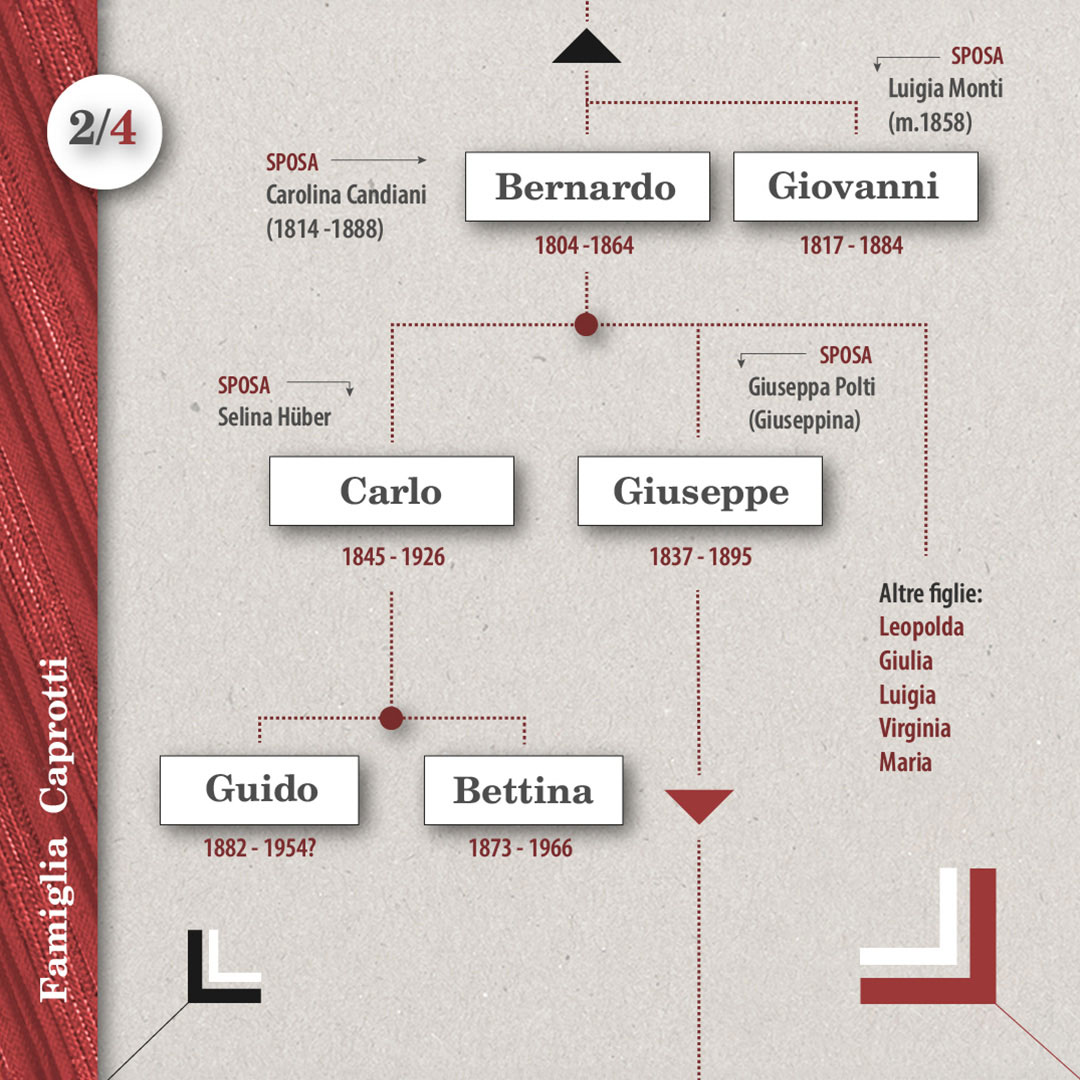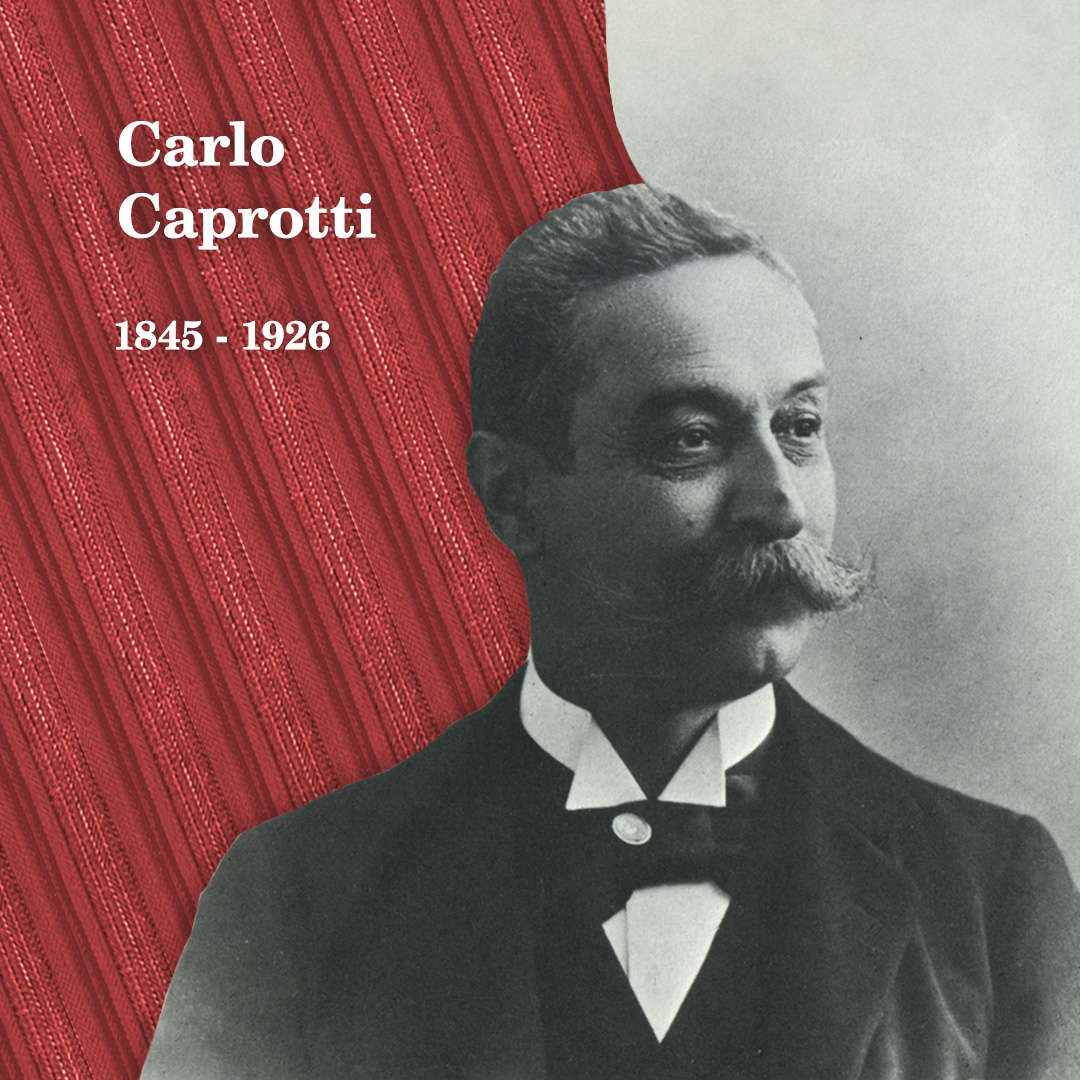
When their father Bernardo died in 1864, the company passed to his two sons, Giuseppe, my great-great-grandfather, and Carlo. The latter, however, is still a minor, so for the first few years it is only Giuseppe who runs it. In 1868, the two brothers decided to keep all the assets left to them by their father for nine years, including the company, undertaking an ambitious and far-reaching mechanisation project to bring it up to a competitive level on the market. (ROMANO, pp. 23 and 86).
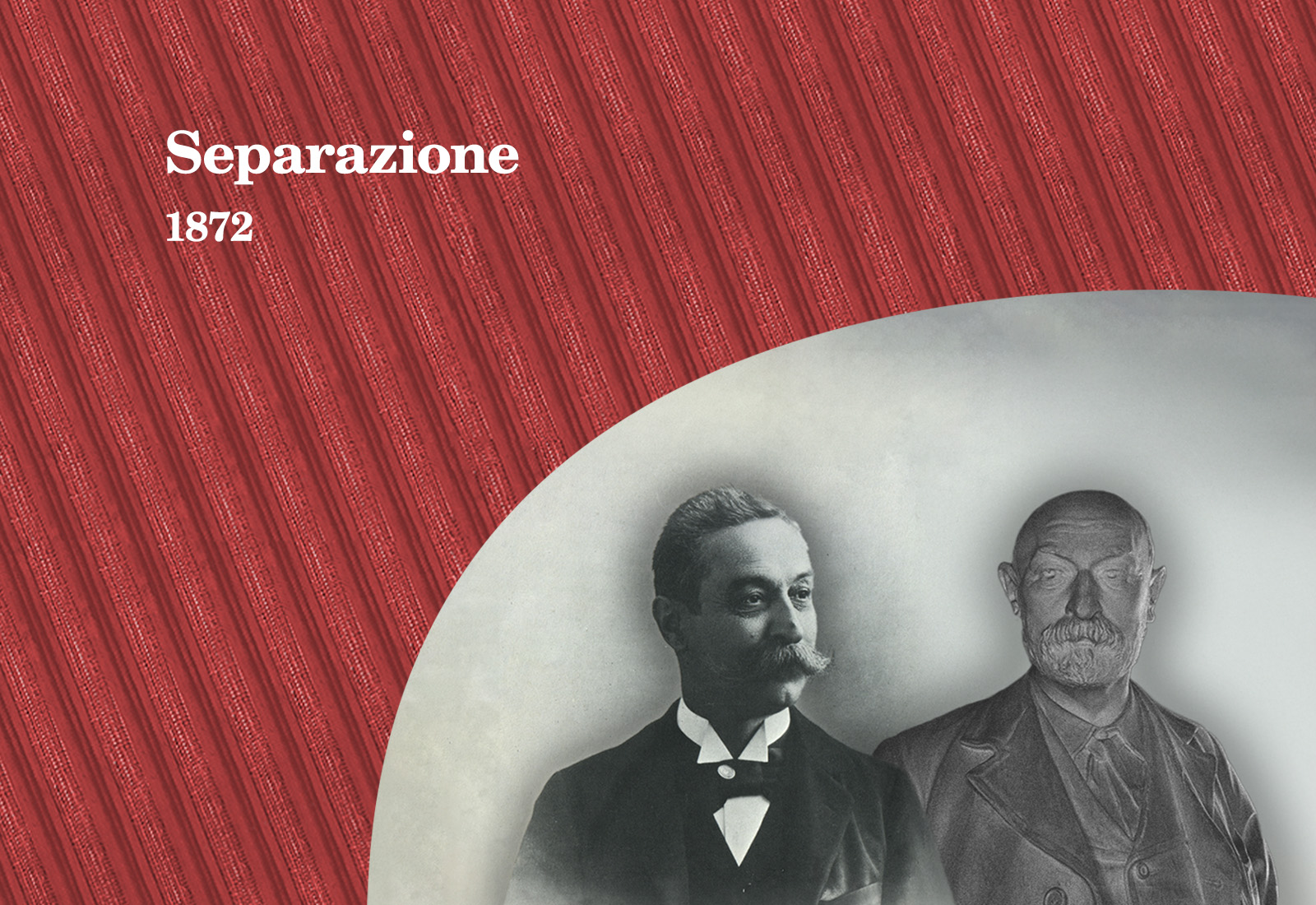
Carlo, however, chose to break away from the company very early in 1872 (only three years after the agreement) and consequently asked for his share to be liquidated. Giuseppe has to take on a debt of 150,000 lire, has to mortgage his agricultural property, and certainly does not take it well. Roberto Romano, who has studied the affair, explains it this way:
‘Relationships between family members oscillated (…) permanently between two opposing states of mind: on the one hand the natural, sincere, intense affection that bound the relatives together, on the other the awareness of having to submit to the cold demands of financial gain, which then also became a ‘value’ equal to that of family harmony, because material interest was identified with the ‘supreme’ interest (survival) of the family and the business. Thus quarrels between siblings were often based on economic motives, although differences in character and personality certainly had their importance. But perhaps the problem goes deeper, especially when we examine the joint management of the business by two brothers (Giuseppe and Carlo; Bernardo and Emilio) which (…) failed in both cases. Carlo’s separation from Giuseppe was also due to the hostility and dislike created within the family, which gave the separation a particularly bitter tinge and poisoned the relations between the two brothers for a long time, but the real reason for this event is to be sought much further back, in the entrepreneurial disagreements that had opposed the Caprotti brothers since the beginning of their joint activity. (…). If, in fact, the company was a family business in terms of capital and hereditary succession, it was structurally and essentially individual in terms of management: the great cohesive force possessed at an ideological level by the company-family binomial was not sufficient in reality to hold together two entrepreneurial capacities, one of which was inevitably inclined to overwhelm the other and to impose itself as a single and indivisible centre of power. (…).”. (ROMANO, I Caprotti, p. 27; pp. 235 ff.).
However, despite accusations and misunderstandings, relations between Giuseppe and Carlo remained cordial and even affectionate, never reaching a definitive break. Between Bernardo and Emilio instead, Giuseppe’s sons and heirs, who were to lead the company from the end of the 19th century and take it into the new century , where everything was different and the paternal and family businessman was on his waning path, things were quite different: “(…) if between Giuseppe and Carlo the disagreements exploded even violent and direct with emotional manifestations, the disagreement between Bernardo and Emilio took on more subtle and cold forms (different opinions in the board of directors, the creation of a competing company), a reflection of a new economic and social situation”, daughter of the times(Ibid., p. 244).
Fortunately, in both cases, the women of the family mediate; Giuseppe’s wife Giuseppina and Carla’s wife Selina maintain a close correspondence between brothers-in-law, and Virginia, one of Giuseppe and Carlo’s sisters and thus Bernardo and Emilio’s aunt, a woman of character to say the least, faces the two separations decades apart, entering into them with both feet and often imposing her own point of view, never allowing, especially to the nephews who are far more quarrelsome than their predecessors, to break off without any chance of repair.
Sources:
Albiate (MB), Villa San Valerio, Villa San Valerio Archives, Giuseppe Caprotti Archives, Giuseppe Caprotti Archives (1837-1895).
Bibliography:
G. CAPROTTI, “Le Ossa dei Caprotti. Una storia italiana’, Milan, 2024/3.
R. ROMANO, “I Caprotti. L’avventura economica e umana di una dinastia industriale della Brianza”, Milan, 1980 (especially pp. 28-31).
G. CAPROTTI, ‘The Caprottis and relatives: the formidable aunt Virginia, sister of great-great-grandfather Giuseppe‘, 26/10/2024.
E. SÀITA, ‘The Caprottis: private aspects, from the Risorgimento to the Second World War‘, 08/11/2022.