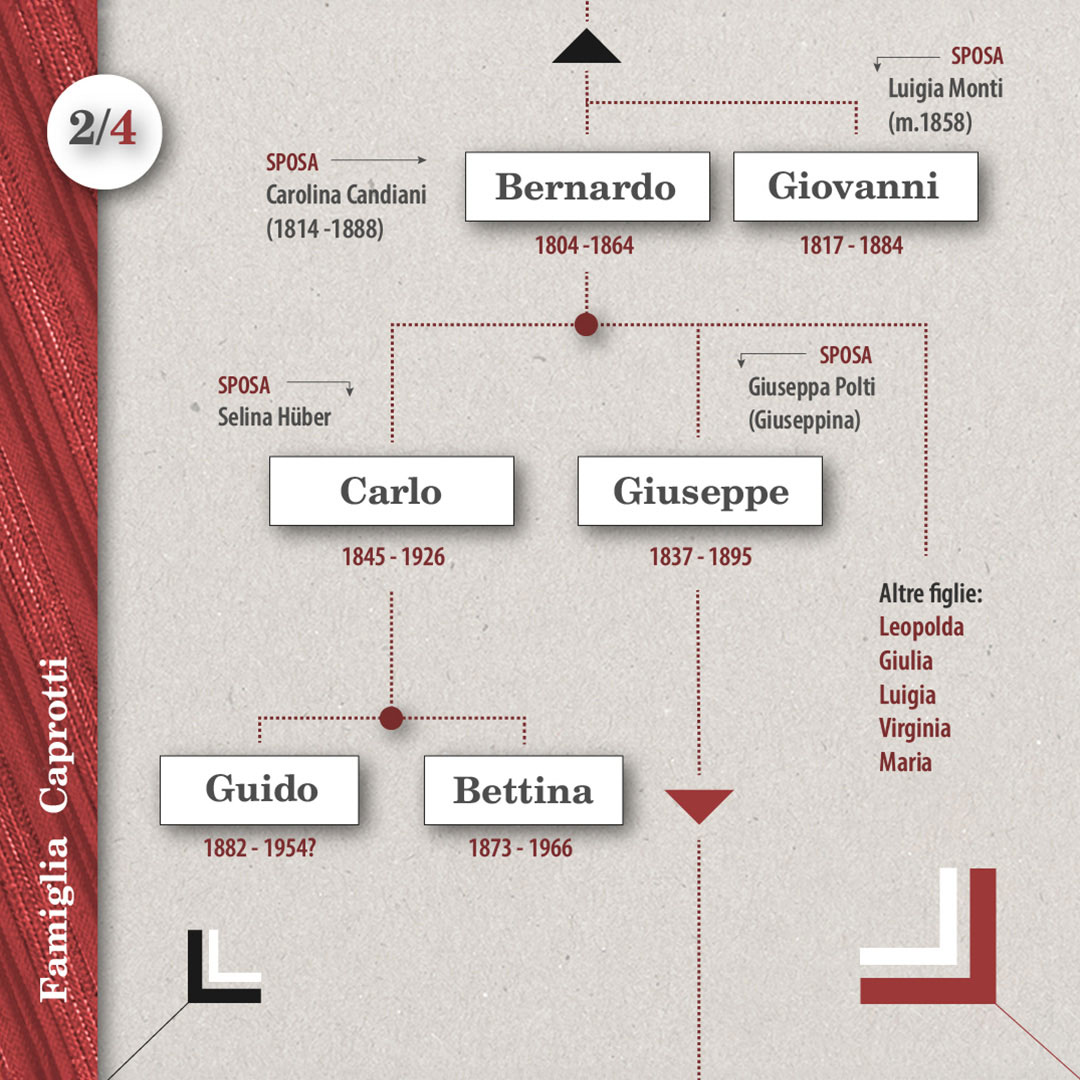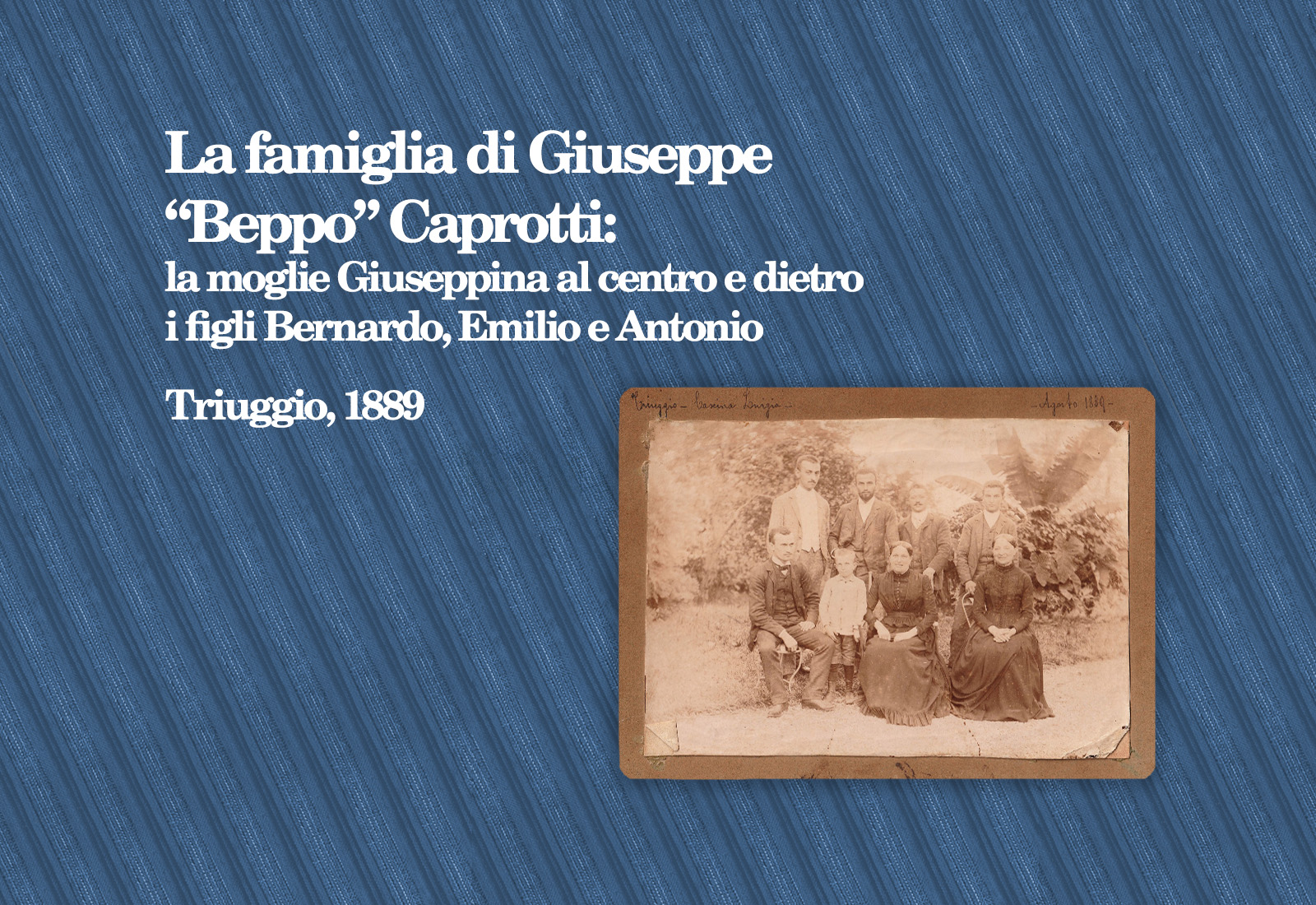
By now launched in business and having achieved a respectable social and economic position, the time came for Beppo to marry. On 21 September 1863, he married Giuseppina Polti di Antonio, a fabric merchant from Lecco and a loyal customer of the Manifattura even after the happy union.
Giuseppina’s pregnancies, which the letters tell us were sweet and anxious, could constitute a small demographic statistic typical of the time:
- Carolina (1864 -1866). The eldest child, she died on 26 March when she was not even two years old, three days before the birth of the couple’s second child on the 29th.
- Bernardo (1866 – 1867). He died on 6 March, a few days before turning one year old.
- Bernardo (1868 – 1928). His parents’ vow on the gravestone of his little brother who preceded him(In heaven you pray that to the disconsolate parents God may preserve those who took your place) must have worked, because he died at the age of sixty;
- Antonio (1869 – 1899), dies at the age of thirty from a brain disease.
- Emilio (1871 – 1963);
- Maria (1877). She was never well, and in the end yet another gastrointestinal crisis, so common among children, took her away at two months, to the mother’s grief;
- An abortion in June 1878, treated by her sister-in-law Virginia more or less like constipation;
- John (1879 – 1921);
- Guido (?).
Out of nine confirmed pregnancies, three children died in the cradle, one was not born; the third-born Antonio, who had a penchant more for poetry and horse-riding than for textiles and business, causing his father continual liver failure, died while still young. Few children become adults, only three (nothing is known of Guido as yet), and only two reach an age that was considered old age at the time, two out of nine; and the parents will hold the pain of the losses in their hearts for the rest of their lives.
Sources:
Albiate (MB), Villa San Valerio, Villa San Valerio Archives, Giuseppe Caprotti Factory Archives, Giuseppe Caprotti Archives (1837-1895).
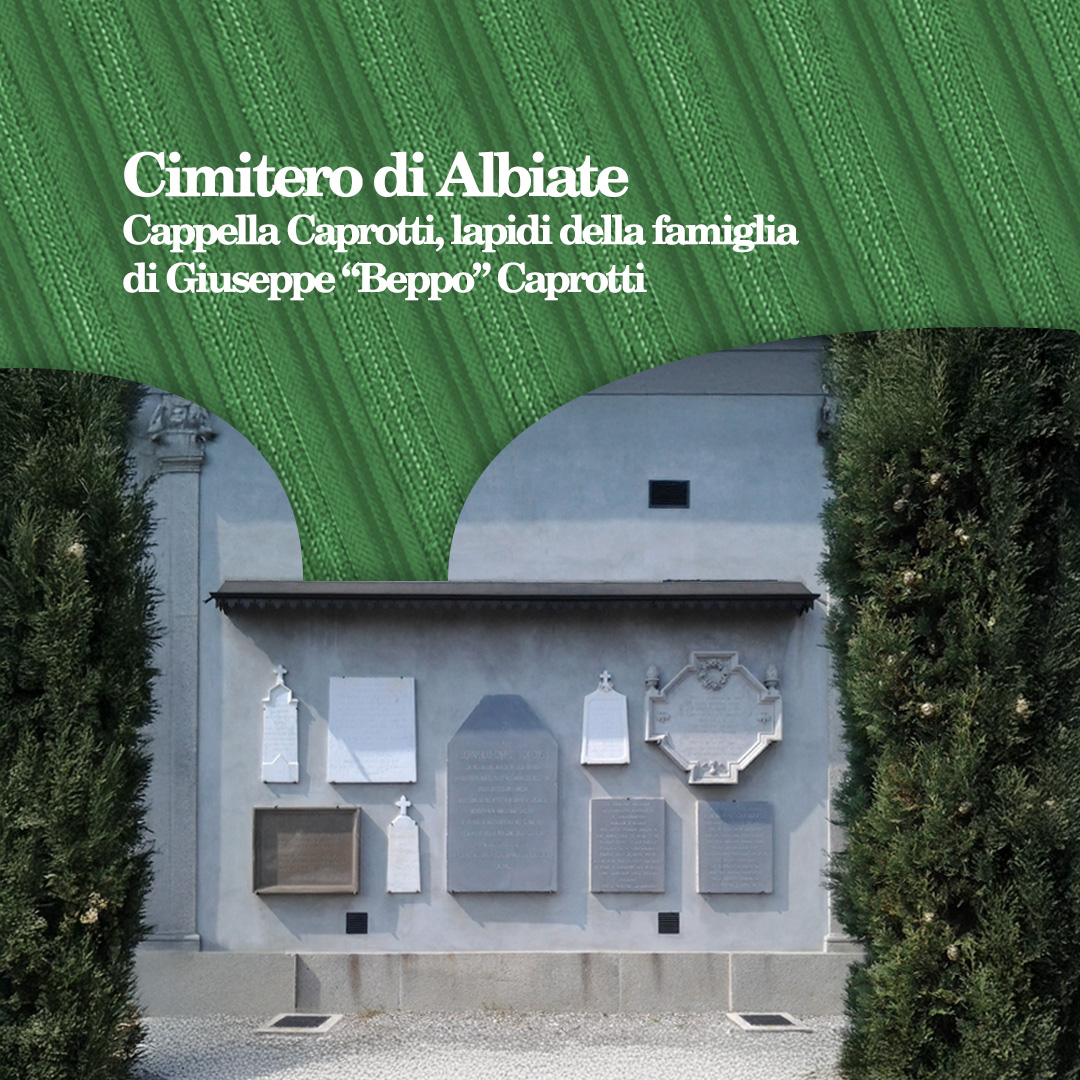
Albiate Cemetery, Caprotti Chapel, tombstones of the ancient graves on the outside back of the perimeter walls.
Bibliography:
G. CAPROTTI, “Le Ossa dei Caprotti. Una storia italiana’, Milan, 2024/3.
R. ROMANO, “I Caprotti. L’avventura economica e umana di una dinastia industriale della Brianza”, Milan, 1980.
E. SÀITA, “I Caprotti: aspetti privati, dal Risorgimento alla Seconda Guerra Mondiale“, 08/11/2022.
EAD., “La ‘Guardia Nazionale di Albiate’. Documents from the Caprotti Archive, in “Sagra di San Fermo”, review of the event, 2006, pp. 18-19.