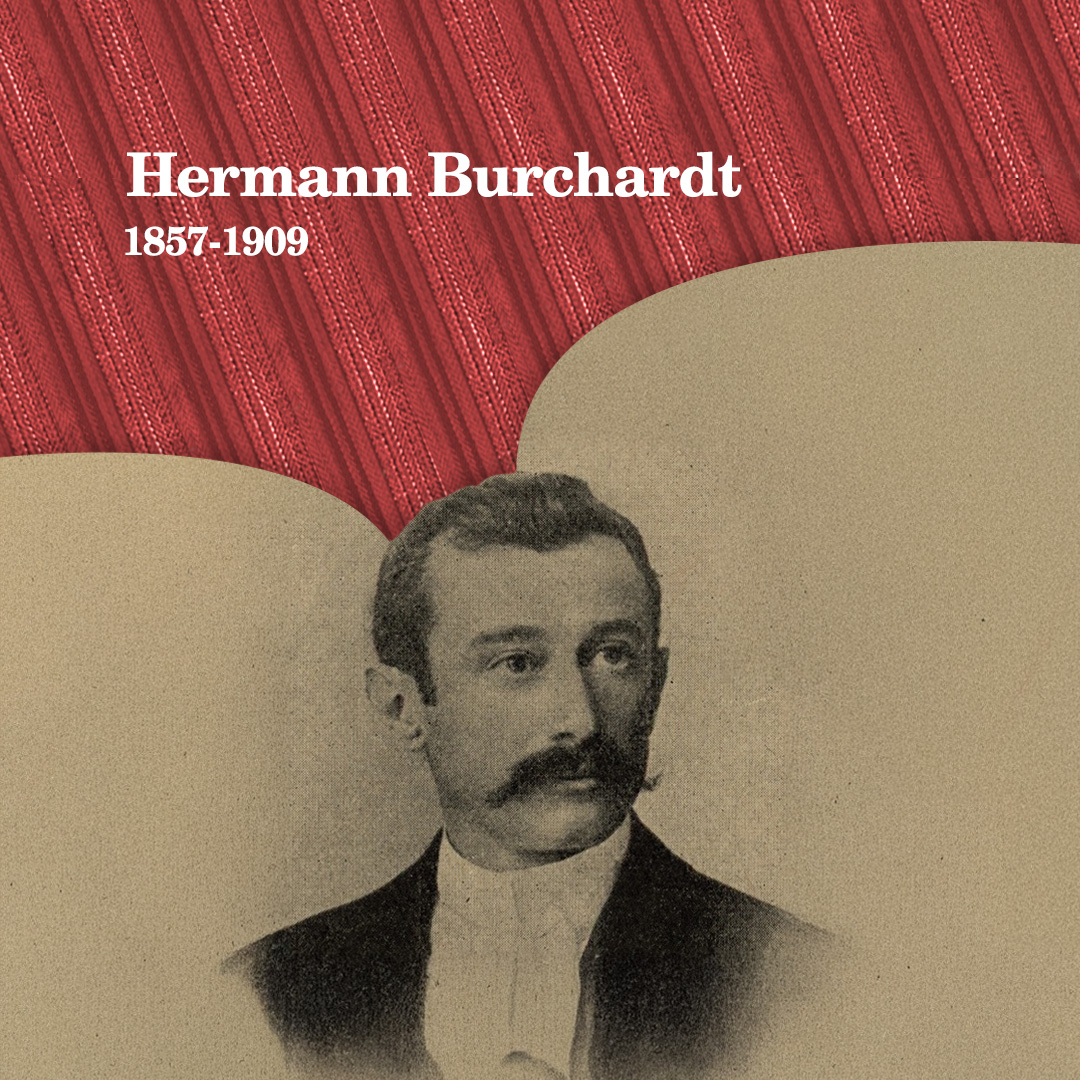
In Giuseppe Caprotti’s relationship with the Jews, a fundamental importance was played by Hermann Burchardt, a young German Jew who “decided to leave the family business and set off on a journey around the world that would incorporate two of his great passions: photography and the study of ancient and exotic peoples. (…) A short and intense article by Chen Malul, ‘content writer’ for the National Library of Israel, explains it well.
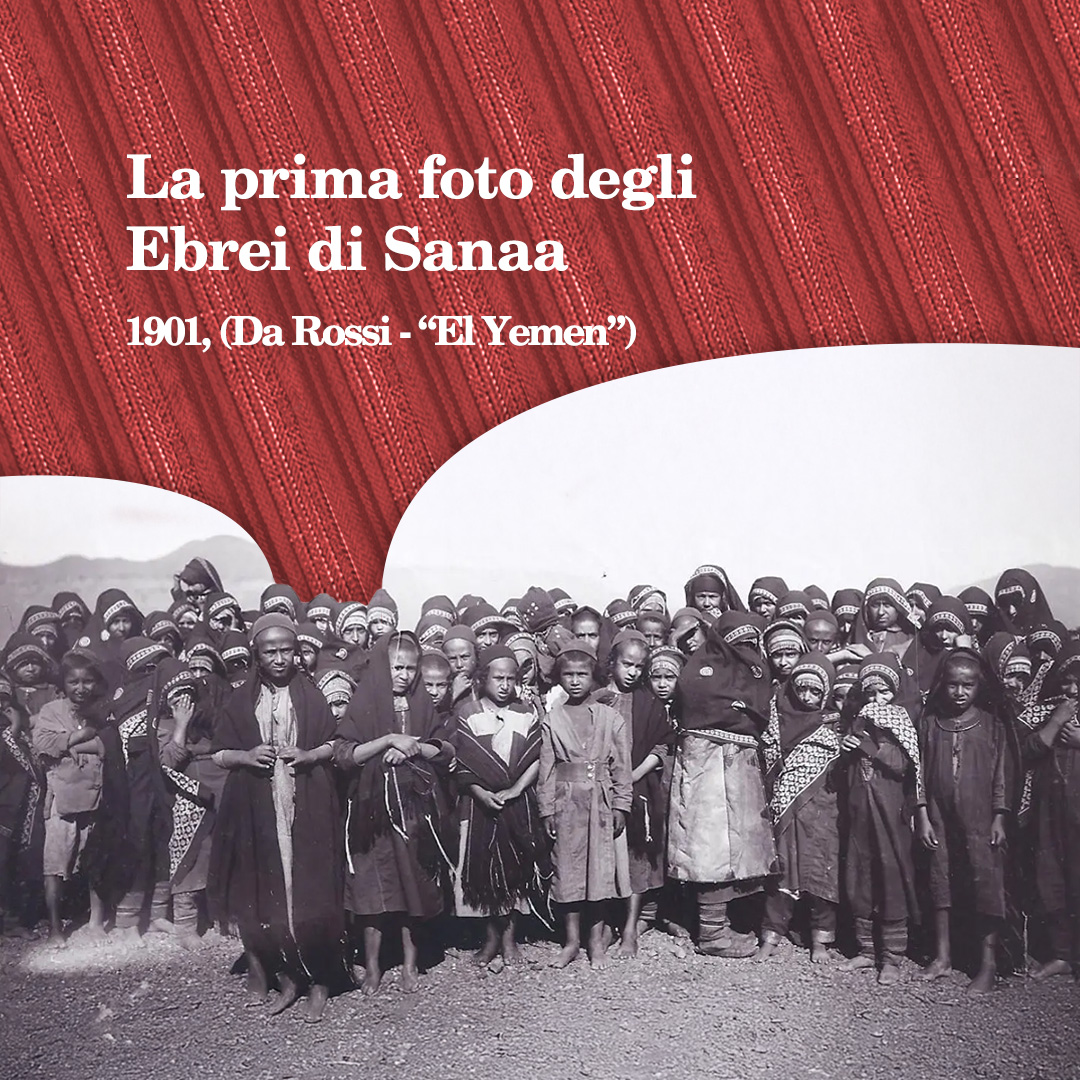
In 1901, Burchardt arrived in Sanaa, and ‘during his wanderings through the hilly capital, he was stunned by a group of people he encountered: members of the Jewish community of Sana’a, whose ties with other Jewish communities around the world had been almost completely severed for generations. (…) Burchardt spent almost a year with the community. He got to know them personally, to study and document their customs (…) and, for the first time in history, to photograph them. The article he published in the magazine ‘Ost und West‘ contained the spectacular and beautiful first ever photographs of the Yemenite Jewish community. The pictures were a true revelation for European Jewry. After a hiatus of thousands of years, there was finally a tangible sign of the existence of the Yemenite Jewish community. To some, it seemed that the most authentic Jews in the world, who had lived completely isolated from any foreign influence, had finally been found. The article so excited the magazine’s readers that the photographs were turned into postcards that were sold and circulated by the thousands. (…)”. In 1909, while Burchardt was accompanying the Italian consul on the journey from Sana’a, (…) he persuaded the consul to take a route never before travelled by a European. The large convoy was ambushed and the robbery ended with tragic consequences: Hermann Burchardt and the consul (…) were killed. At his funeral, Burchardt was eulogised by an Italian merchant with whom he had befriended during his last visit to Sana’a. He told how the Jews of Sana’a mourned the passing of the famous adventurer, who had taken them into his heart.’ (MALUL, ‘The First Contact’).
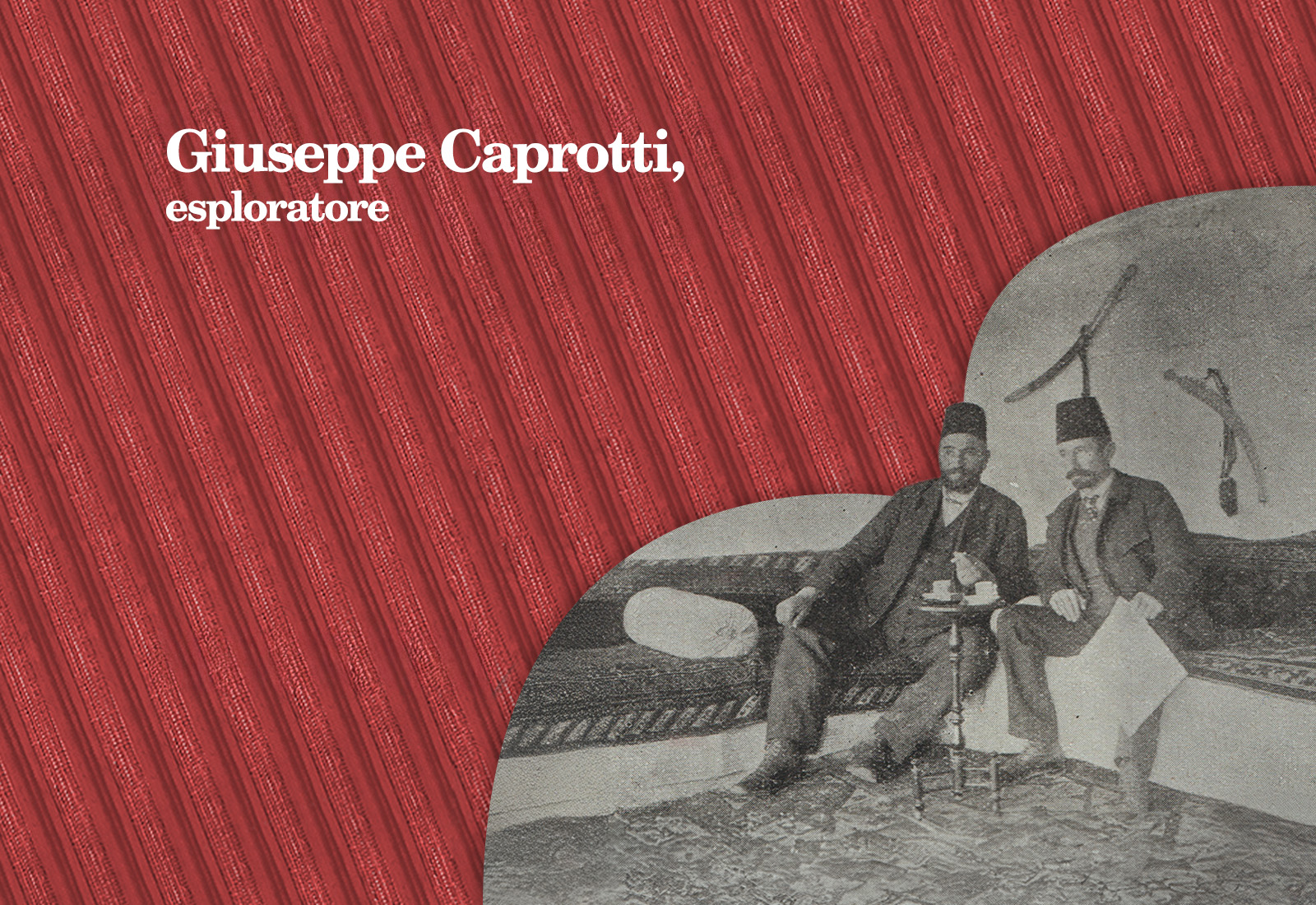
The ‘Italian merchant’ is Giuseppe Caprotti, who hosts Burchardt in his home for the first months of his stay in the Yemeni capital, and is certainly a valuable intermediary in introducing him to the heart of the country, where among other things he has been in close contact with the Jewish community for many years, especially because of the coffee crops, and his brother Luigi before him. Giuseppe did a lot for them: in 1994, in Jerusalem, with a solemn ceremony in which the Yemenite Chief Rabbi also took part, he was inscribed in the ‘Book of Honour of the Righteous’: a man who was ‘energetic and meek, an indefatigable worker, charitable to a fault, hospitable and cordial with everyone, poor and rich, personalities and ordinary men. He took care to make the stay there [in Yemen] pleasant for European visitors, and it was his care to facilitate the diplomatic relations of the Italian consulate with whom he collaborated in a valuable way. It was in this spirit that he lent his services in Sanaa helping, among others, Yemeni Jews,’ reads part of the motivation. And the writings that have remained of him seem to confirm these words.
In Burchardt’s archives, kept at the National Library of Israel, there is a series of some 20 letters that Caprotti wrote to him during the periods when the former was not in Yemen. With his youngest friend, Giuseppe the explorer opens up willingly, knowing that he shares a country’s ‘sickness’: ‘Come, come again to Sanaa, where you will be able to live a quiet life and spend the money that you foolishly throw away in the cities of Europe with a lot of intimate satisfaction‘, he writes him on 18 July 1908. Moreover, he acts as his conduit for the many exchanges that inevitably take place. The photographs taken by Burchardt, for example, really did go round the world, and not only with regard to the Jewish community. Despite the weight and bulk of his equipment, the slowness and difficulties of dealing with photographic material from the turn of the century, during his long journey through the Sultan’s empire he immortalised everything and everyone, and his photographs ended up everywhere, also thanks to the offices of Giuseppe the explorer who received and sorted the packages for the pashas and imperial beys he knew well, at the same time thanking Burchardt for the pictures he had the goodness to send to his family in Magenta (HBA, Letter from Sanaa 5 November 1901).
No explorer is then immune from trading in antiquities and rare or curious objects, either for his own or for third parties. Giuseppe the explorer often writes to Burchardt about ‘objects’ he has entrusted to him to sell in Europe, telling him how, since he trusts him, whatever price he gets for them will be fine.
In every letter, one might say, there is a reference to the Jewish community, but also to the poorer Muslim community: ‘I have distributed on your behalf clothes to Israelite boys on the occasion of the feast. I do the same for Arab[=even?]relatives , always on her behalf‘ (HBA, Letter from Sanaa, 15 October 1908). Also in Burchardt’s name, on each of the two communities’ feasts Giuseppe distributes clothes and money, of which he later sends a detailed list (see e.g. HBA, Letter from Sanaa, 27 October 1908). If the friend then had no intention of returning, the things he left behind in Sanaa could be sold, and the proceeds distributed to poor Israelites (HBA, Letter from Sanaa, 15 June 1908). When Burchardt was killed, the news shocked him, and not only him: westerners in Sanaa and Hodeida mourned, consulates lowered their flags to half-mast, Christmas celebrations were cancelled. And Giuseppe Caprotti not only delivered the eulogy, but also wrote to his family in Germany on 23 December: ‘”Our poor, unfortunate friend was truly loved by all who knew him. The poor of Sanaa will surely mourn his tragic death. God will remember his kindness and charity. I know well what he did to bring comfort to the poor of Sanaa’.
Giuseppe the explorer was righteous indeed.
Sources:
The National Library of Israel, Giuseppe Caprotti 1869-1919, Giuseppe Caprotti, 1900-1909, סימול ARC. Ms. Var. 525 02 01.1 Hermann Burchardt Archive, Hermann Burchardt Archive (abb. HBA),(https://www.nli.org.il/en/archives/NNL_ARCHIVE_AL997010326383605171/NLI#$FL188186404 ).
Bibliography:
CHEN MALUL, “The First Contact with the Jews of Sana’a”, in “The Librarians”, National Library of Israel blog, 29.07.2017 (https://blog.nli.org.il/en/yemen/ ).
M. FRIEDLÄNDER, “HERMANN BURCHARDT. Mitteilungen aus seinen lezten Briefen” [Hermann Burchardt. Extracts from his last letters], in “Ost und West : illustrierte Monatsschrift für das gesamte Judentum”, Vol. 10 (February 1910) Heft 2 (Februar 1910), page 105-110(https://sammlungen.ub.uni-frankfurt.de/cm/periodical/titleinfo/2594429 ).
PRO LOCO MAGENTA, “Giuseppe Caprotti, Un Magentino nel Libro dei Giusti di Israele/La donazione Caprotti”, s.d.(https://prolocomagenta.org/giuseppe-caprotti/ ).