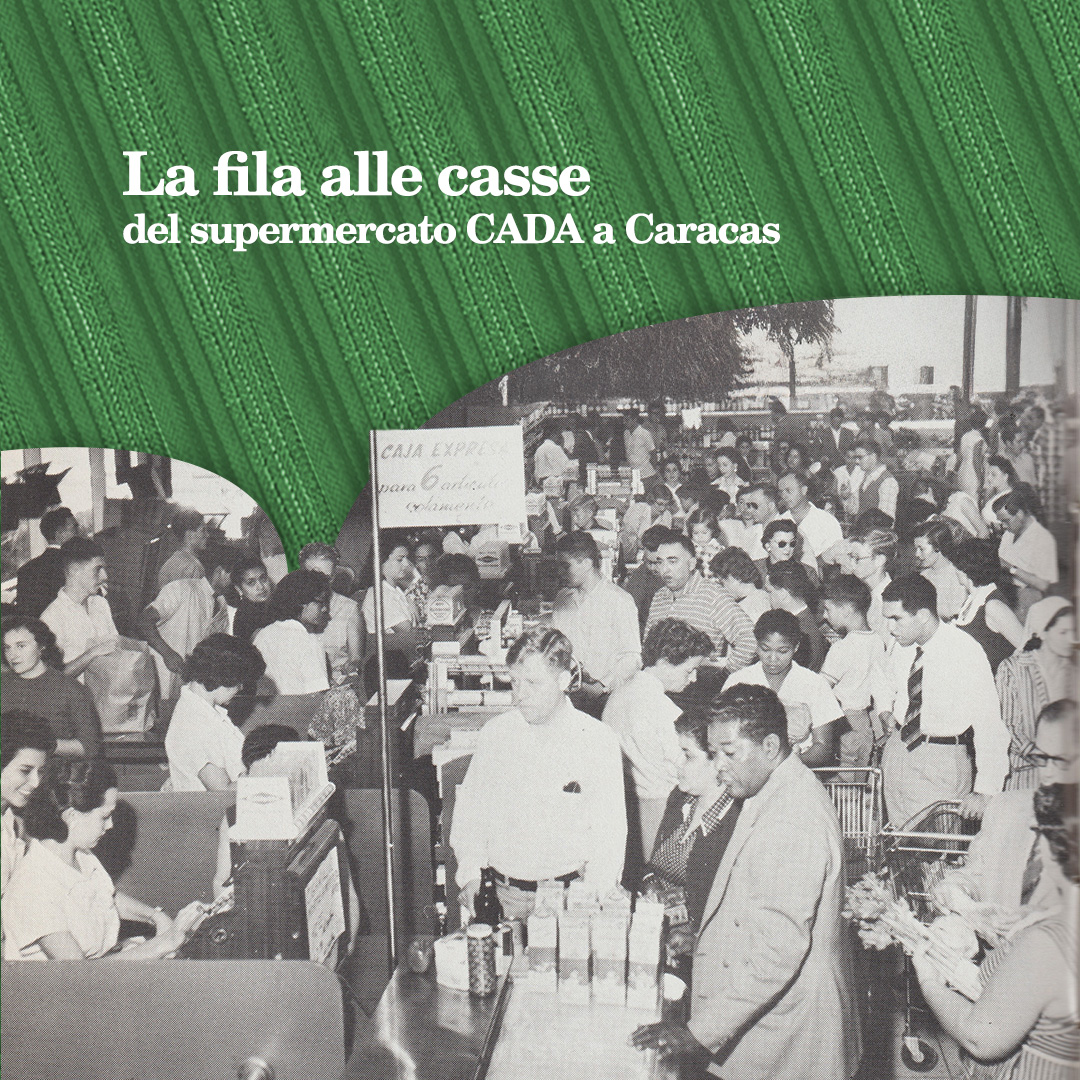
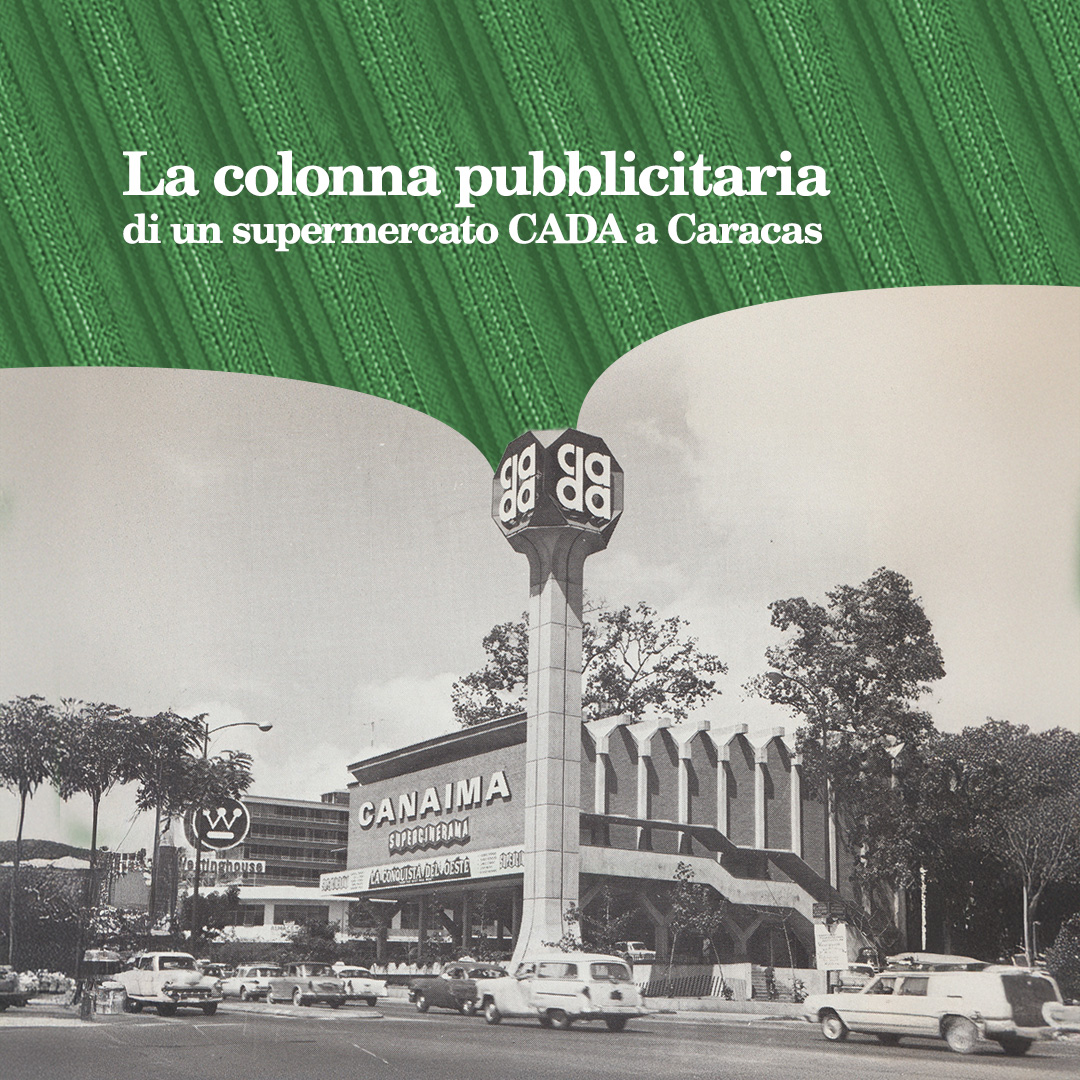
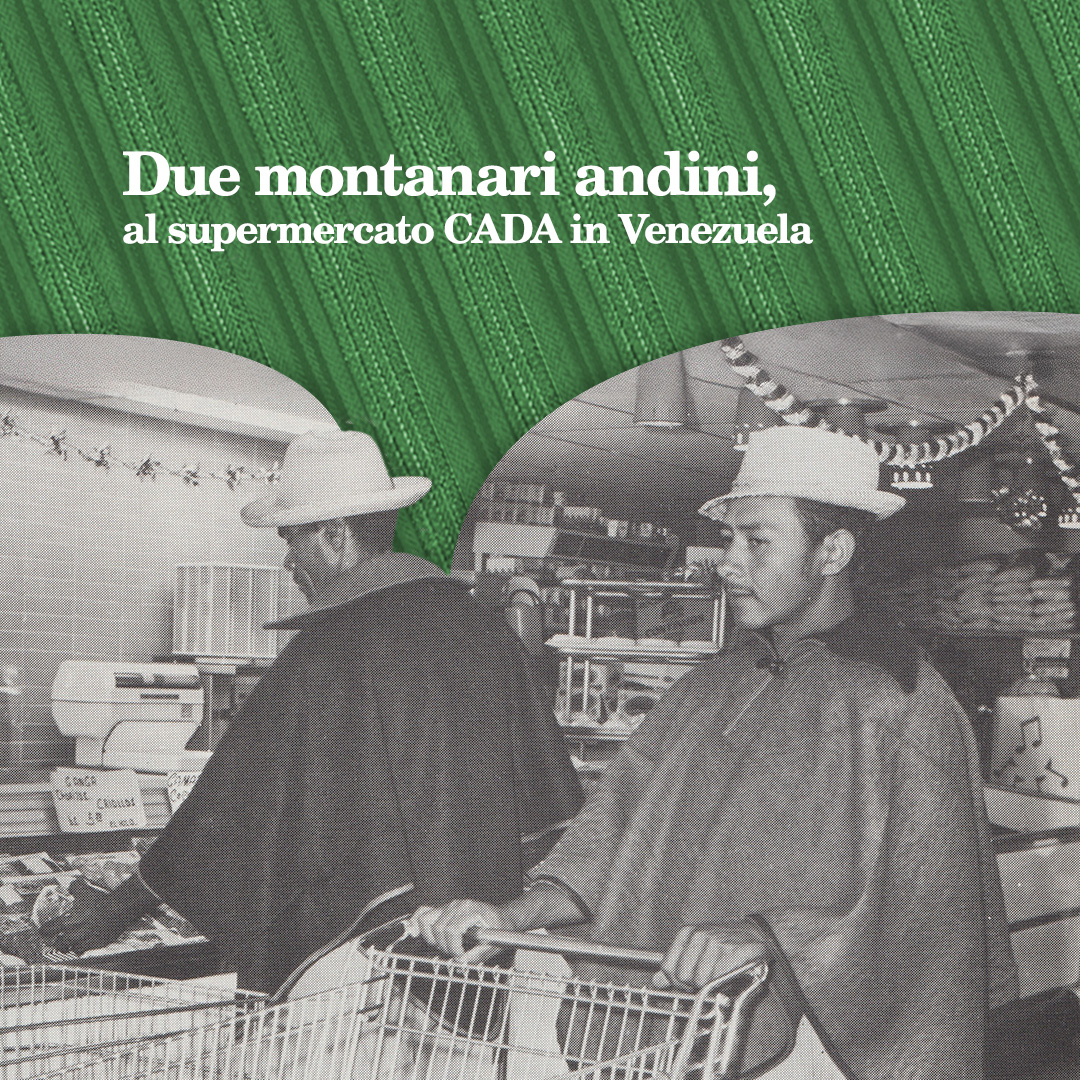
In May 1947, a subsidiary of the IBEC founded by Rockefeller, the VBEC (Venezuelan Basic Economy Corporation), was founded in Venezuela, Rockefeller’s ‘favourite’ South American state (here he bought his large agricultural estate ‘Monte Santo’). Like its parent company, VBEC is a for-profit company with a social mission. Its articles of incorporation state that it would ‘promote the economic development of Venezuela, and in particular its agricultural economy, in order to increase the production and availability of goods and services useful to the life or livelihood of the population, and thus to improve its standard of living’. The VBEC leadership quickly decided that supermarkets would play a crucial role in achieving these goals. A few months later, they began the construction of an American-style food distribution network, called Compañia Anónima Distribuidora de Alimentos (CADA), whose first shops would open initially in the capital, Caracas, then in the main oil cities, Maracaibo and Puerto la Cruz.
These supermarkets, in addition to being an economic reality that finally succeeded in changing the society that buys its goods from the neighbourhood‘bodega ‘ into one that gets everything it needs in a big shop with better prices and an almost infinite choice of products, were deeply politicised entities that, according to Rockefeller’s vision, would have contributed in no small measure to successfully combating and stemming the rising influence of the world’s second great post-war power, the Soviet Union. In his vision, the power of US capitalism, properly applied and supported, could have paved the way for the achievement of US geopolitical goals in the emerging Cold War. Underlying this was the reasoning that if widespread prosperity could be brought to the American-controlled part of the world, there would be no reason to sigh for the Soviet Union.
Nelson Rockefeller was the one who, in the late 1950s, imported the American ‘global’ shop, the supermarket, into Italy through IBEC, whose aim was profit linked to social and political goals, bringing basic welfare to all levels of the population starting, precisely, with that of basic necessities at affordable prices, something that could have demonstrated, in the midst of the Cold War between the United States and the Soviet Union, how Western capitalism was also able to generate benefits for all in the same way, and even more, than other economies. Among others, the Caprotti brothers, Guido, Bernardo Caprotti and, later, Claudio Caprotti, joined IBEC. With IBEC in 1957, they opened the first shop in Milan in Viale Regina Giovanna, the ‘Supermarket’; and when, in the mid-1960s, the Americans withdrew to take the supermarkets project to other countries around the world , the Caprotti brothers, who remained the sole owners, would turn the ‘Supermarket’ into the ‘Esselunga’, the oldest and at the same time most modern supermarket in the country. (G. CAPROTTI, The Bones, pp. 47 ff).
Sources:
ARCHIVIO LUCE CINECITTÀ, SI1419 Inaugurated at Eur the ‘supermarket’, 1956.
Bibliography:
W.G. BROEHL, Jr. The International Basic Economy Corporation. Thirteen Case Studies in an NPA Series on United States Business Performance Abroad, @1968, National Planning Ass., pp. 87-94.
K.D. DURR, A Company With a Mission: Rodman Rockefeller and the International Basic Economy Corporation 1947-1985, Montrose Press, 2006.
S. HAMILTON, From Bodega to Supermercado: Nelson A. Rockefeller’s Agro-Industrial Counterrevolution in Venezuela, 1947-1969, Yale Agrarian Studies Workshop, November 4, 2011.
G. CAPROTTI, Le Ossa dei Caprotti. The Caprottis and Esselunga: the first customers, 1957. Cues from the book.
ID., Giuseppe Caprotti, Luigi Guaitamacchi and Nelson Rockefeller’s directives in Esselunga, 10/11/2024.
ID., The Birth of Private Label Products in Italy, 08/02/2023.
ID., Le Ossa dei Caprotti. Caprotti and the Esselunga supermarkets: the Aprilia egg, 1950s. Cues from the book.
ID., Le Ossa dei Caprotti. I Caprotti e i supermarkets Esselunga: il pastificio degli americani, circa 1950s. Cues from the book.
ID., “Le Ossa dei Caprotti”. I Caprotti e gli amici: Guido Vergani, journalist, friend of Claudio Caprotti and Giorgina, c.1990s. Cues from the book.