

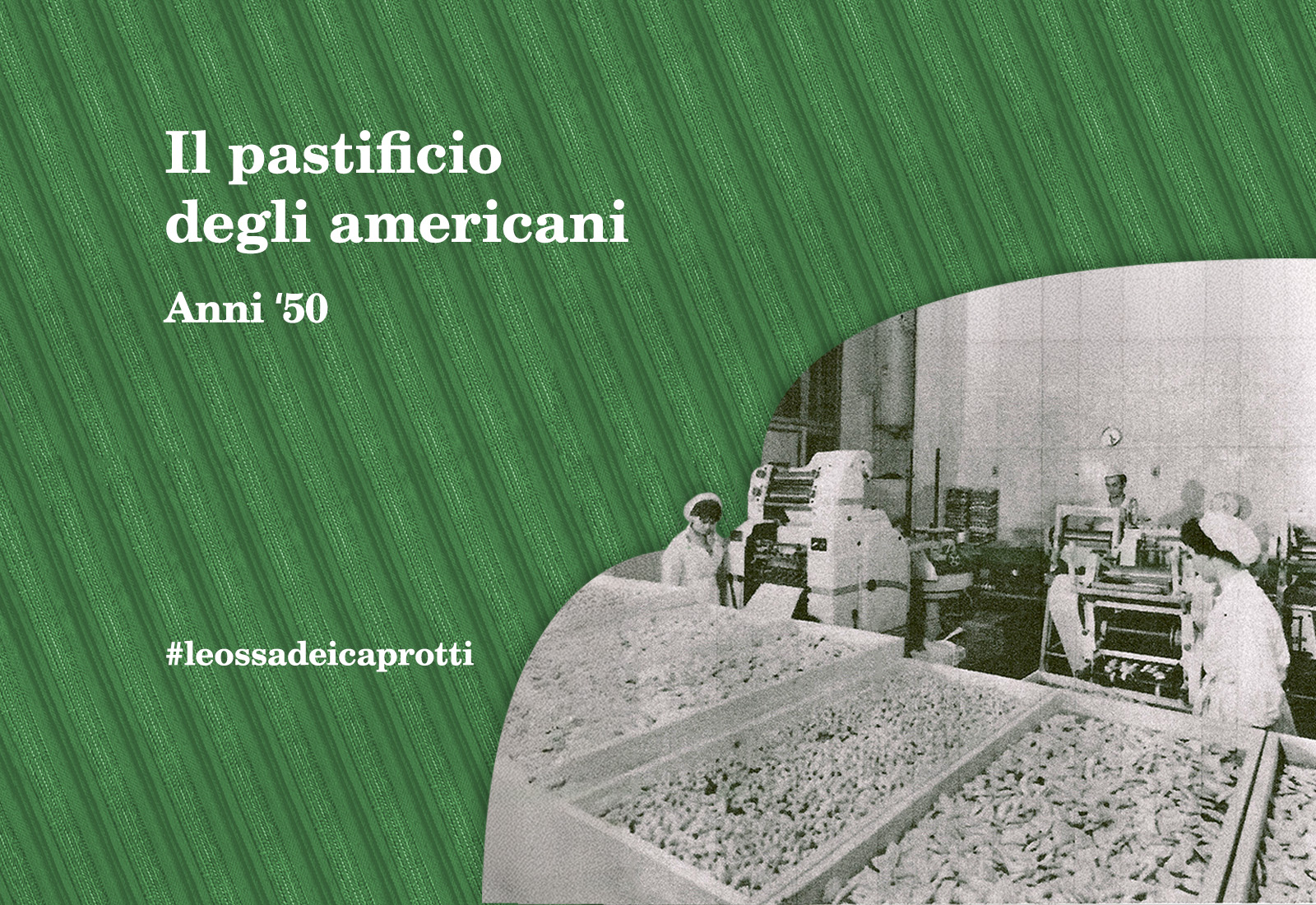
On the cover: ‘Processing pasta for Italian Supermarkets in Milan, Italy’.
Unpublished photograph taken from W.J. Broehl, The International Basic Economy Corporation (…), 1968.
‘With regard to (…) some fresh products, the problem was the lack of adequately prepared and controlled goods, attributable to the characteristics and sales policies of the food industries.
Esselunga therefore decided to start its own production as early as 1959, setting up a bakery, whose products were immediately appreciated by customers. (…)
the ice cream parlour managed to sell even during the winter, when the other producers stopped, and then came a large pasta factory for ravioli, tortellini and gnocchi. “In the shops, the reception was excellent. The products are of excellent quality and people save 50 per cent. It was a thrill for us to sell one of the Italians’ favourite foods at a price they had never seen before,’ wrote[Richard] Boogaart (* ) to Wallace Bradford in 1959. The following year they added a coffee roasting plant (…)
and a warehouse for processing and storing charcuterie and cheese (…).
In addition, for the production of eggs, which until then had been largely imported, they used another US company connected to IBEC, Arbor Acres, which had developed a particularly prolific and high-quality breed of poultry.’ (p. 66).
(*) first managing director of Esselunga.
In 1956 he had travelled to Italy to see if Rockefeller’s IBEC could establish a supermarket chain there.
He decided to focus the forces of American management on Milan, discarding Rome.


