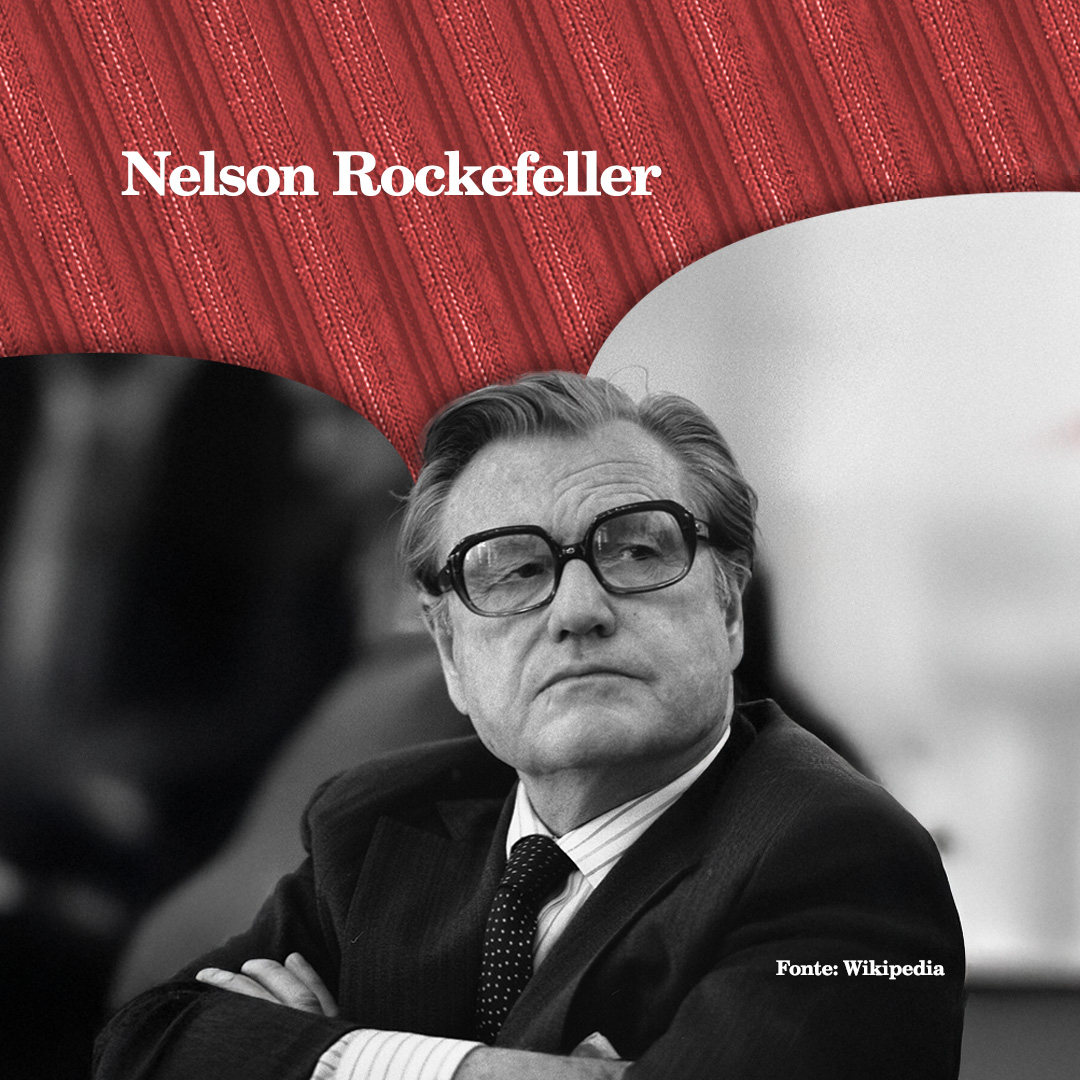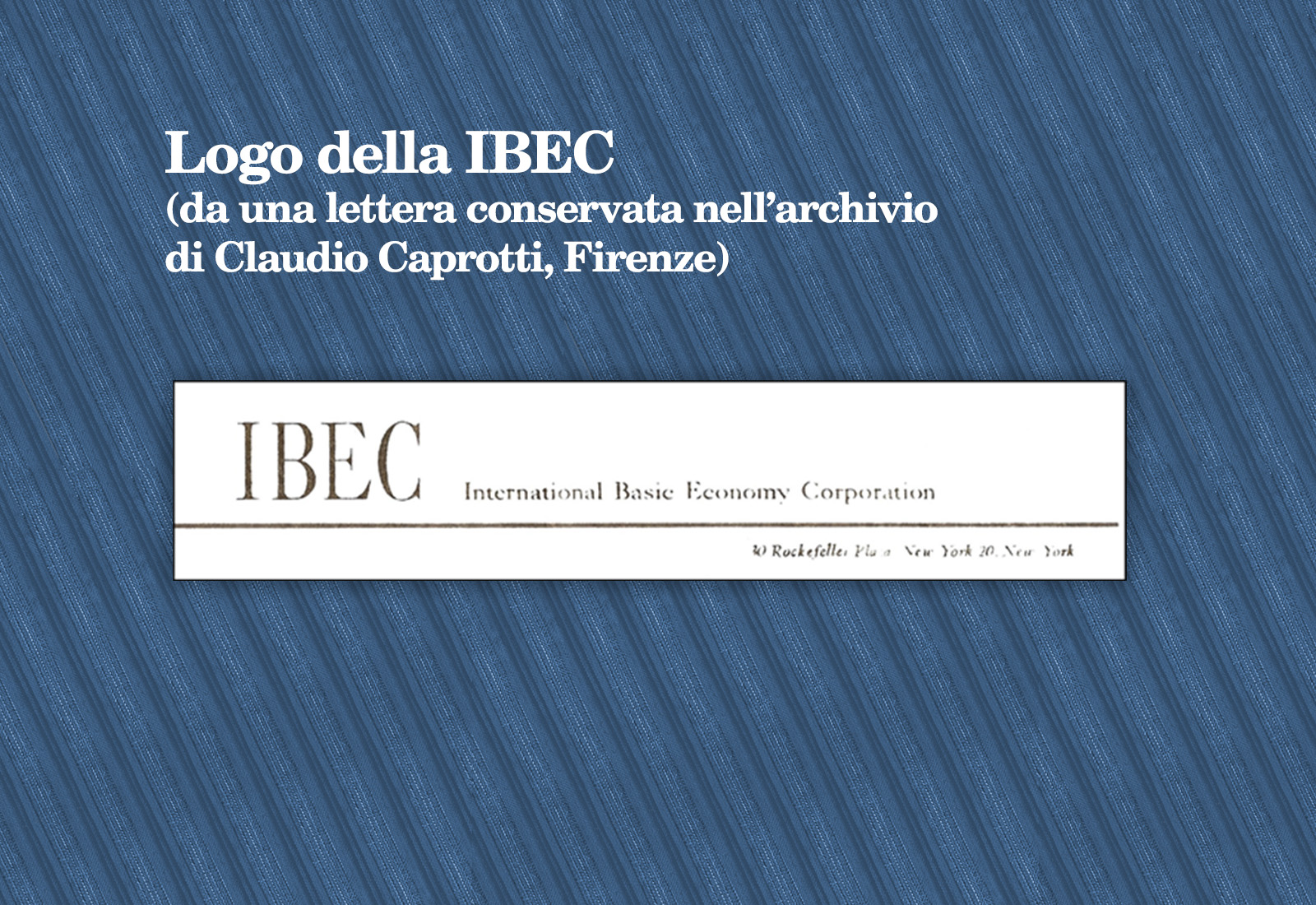
In 1947, Nelson Rockefeller founded IBEC, a private company focused on improving the basic economies of the least developed countries, particularly those in Latin America: a ‘company with a mission’, as K. D. Durr’s book was to be entitled. Rockefeller had a genuine passion for them ever since he spent five years in Venezuela in the 1930s as director of the Creole Petroleum Company, a subsidiary of Standard Oil founded by his grandfather John.
After the Second World War, plans to rebuild the world economy according to new perspectives also included institutions such as the FAO (Food and Agriculture Organization of the United Nations), populated by technicians and experts who wanted to improve the standard of living of the world’s populations without making a profit. IBEC is also animated by the best philanthropic intentions, but profit is its raison d’être. According to Rockefeller, development without profit is no development at all, it is necessary to unite philanthropy with capital, and to do so on a global scale: as he explained in a speech to the Chamber of Commerce in São Paulo, Brazil, in 1948, if for a century capital simply went wherever there was the greatest profit, today this is no longer enough: “today capital must go where it can produce the most goods, provide the best services, satisfy the most urgent needs of the people” (HAMILTON, From Bodega, p. 3).
IBEC’s activity to achieve this goal is multifaceted, focusing on three fundamental directions:
Food production and distribution: this includes operations in sectors such as coffee processing, milk distribution and supermarket chains, e.g. CADA (Compañia Anónima Distribuidora de Alimentos) in Venezuela, which also changes the traditional consumption habits of the population there.
Construction: IBEC also plays a considerable role in the design of housing contexts, e.g. in Peru.
Financial services: IBEC sets up mutual funds to promote local investments.
There is no lack of interest in other sectors: IBEC also ventures into poultry farming, seed cultivation and other agricultural and industrial sectors.
However, this was not the only purpose of Rockefeller and IBEC. “It is worth remembering the context in which Rockefeller’s managers operated, the Cold War that split the world into the blocs of the then two superpowers, the United States and the Soviet Union. In 1957, Americans were experiencing the psychosis of McCarthyism, the witch hunt against suspected communist sympathisers. It was in these circumstances that IBEC’s project (…)’, according to which bringing widespread prosperity to the lower and suffering strata of the population living in the US-controlled ‘western bloc’ would make it more difficult to sympathise with the regime across the Atlantic.
Nelson Rockefeller is the one who, at the end of the 1950s, imported the US ‘global’ shop, the supermarket, to Italy through IBEC, with the aim of profit linked to social and political goals, bringing basic welfare to all levels of the population, starting with basic necessities at affordable prices, something that could have demonstrated, in the midst of the Cold War between the United States and the Soviet Union, how Western capitalism was also able to generate benefits for all in the same way, and even more, than other economies. Among others, the Caprotti brothers, Guido, Bernardo Caprotti and, later, Claudio Caprotti, joined IBEC. With IBEC in 1957, they opened the first shop in Milan in Viale Regina Giovanna, the ‘Supermarket’; and when, in the mid-1960s, the Americans withdrew to take the supermarkets project to other countries around the world , the Caprotti brothers, who remained the sole owners, would turn the ‘Supermarket’ into the ‘Esselunga’, the oldest and at the same time most modern supermarket in the country. (G. CAPROTTI, The Bones, pp. 47 ff).
Bibliography:
W.G. BROEHL, Jr. The International Basic Economy Corporation. Thirteen Case Studies in an NPA Series on United States Business Performance Abroad, @1968, National Planning Ass., pp. 87-94.
K.D. DURR, A Company With a Mission: Rodman Rockefeller and the International Basic Economy Corporation 1947-1985, Montrose Press, 2006.
S. HAMILTON, From Bodega to Supermercado: Nelson A. Rockefeller’s Agro-Industrial Counterrevolution in Venezuela, 1947-1969, Yale Agrarian Studies Workshop, November 4, 2011.
G. CAPROTTI, Le Ossa dei Caprotti. The Caprottis and Esselunga: the first customers, 1957. Cues from the book.
ID., Giuseppe Caprotti, Luigi Guaitamacchi and Nelson Rockefeller’s directives in Esselunga, 10/11/2024.
ID., The Birth of Private Label Products in Italy, 08/02/2023.
ID., Le Ossa dei Caprotti. Caprotti and the Esselunga supermarkets: the Aprilia egg, 1950s. Cues from the book.
ID., Le Ossa dei Caprotti. I Caprotti e i supermarkets Esselunga: il pastificio degli americani, circa 1950s. Cues from the book.
ID., “Le Ossa dei Caprotti”. I Caprotti e gli amici: Guido Vergani, journalist, friend of Claudio Caprotti and Giorgina, c.1990s. Cues from the book.