

“Carlo (…) would combine his ambitions as a cotton entrepreneur with a strong political passion. (…) with the Third War of Independence of 1866 against Austria, he did not hesitate (…) to leave as a volunteer. However, the war lasted too short (…). Giuseppe and Carlo found consolation by developing the business they inherited from their father, which they expanded more and more, starting a widespread mechanisation project. The first machines were purchased in Winterthur, not far from Zurich, where Carlo settled. It was there, in Switzerland, that (…) he fell in love with a young Protestant woman, Selina Hübert, and married her in 1871. (…) Within a couple of years the two brothers split up their business and Carlo left his father’s company. (…) Giuseppe and Carlo carried on with their respective activities, alternating successes with ventures that ended less well.’. (pp. 21-23).
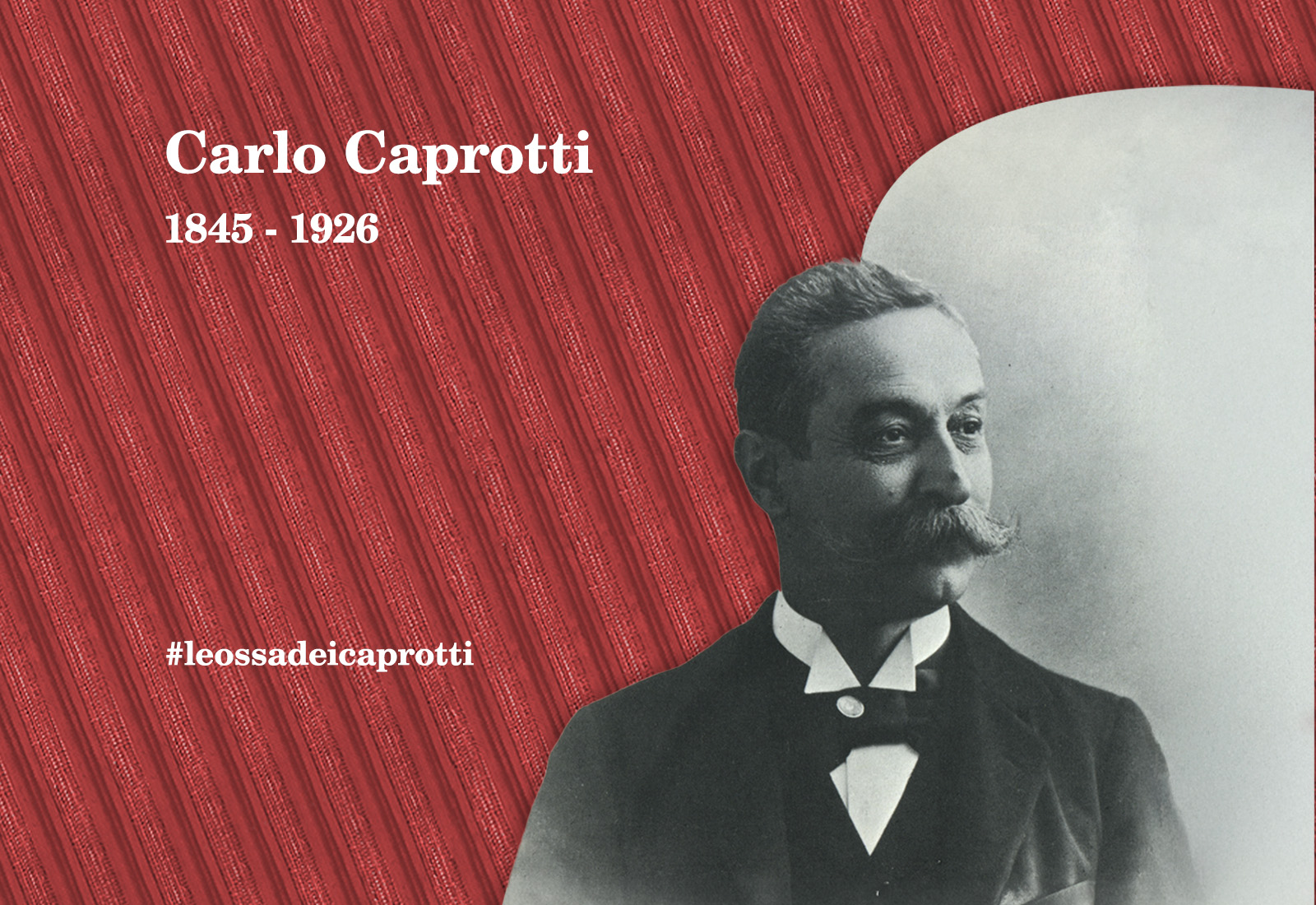
“In the family [Carlo] is certainly the most political spirit. The portrait that has come down to us shows a handsome man (…). The handlebar moustache, with the tips curled upwards, would be a source of great pride for a modern hipster. Throughout his life Carlo developed inclinations such as a love of freedom and progress, anticlericalism, and contempt for the most fossilised traditions. It was these impulses that led him, in 1897, to join the Republican Party: a choice that, in the Kingdom of Italy and the Savoy, could cause considerable trouble. (…) In 1898 (…) the cannon shots of General Bava Beccaris bloodily suppressed the popular riots that had broken out in Milan. Carlo joined the Central Committee of the Republican Party (…) To avoid being affected by the police measures that followed the riots (…) he was forced to take refuge in Germany. Together with him escapes his nephew Bernardo, my great-grandfather, who in the meantime has married his first cousin Bettina, Carlo’s own daughter’. (pp. 26-27).


