[vc_column_textDrafted 12 November, updated 20 December 2024
The war between Russia and Ukraine has important effects on the political and economic evolution of Europe. These two articles – which I have combined into one – capture some little-known aspects of propaganda and trade with Russia.
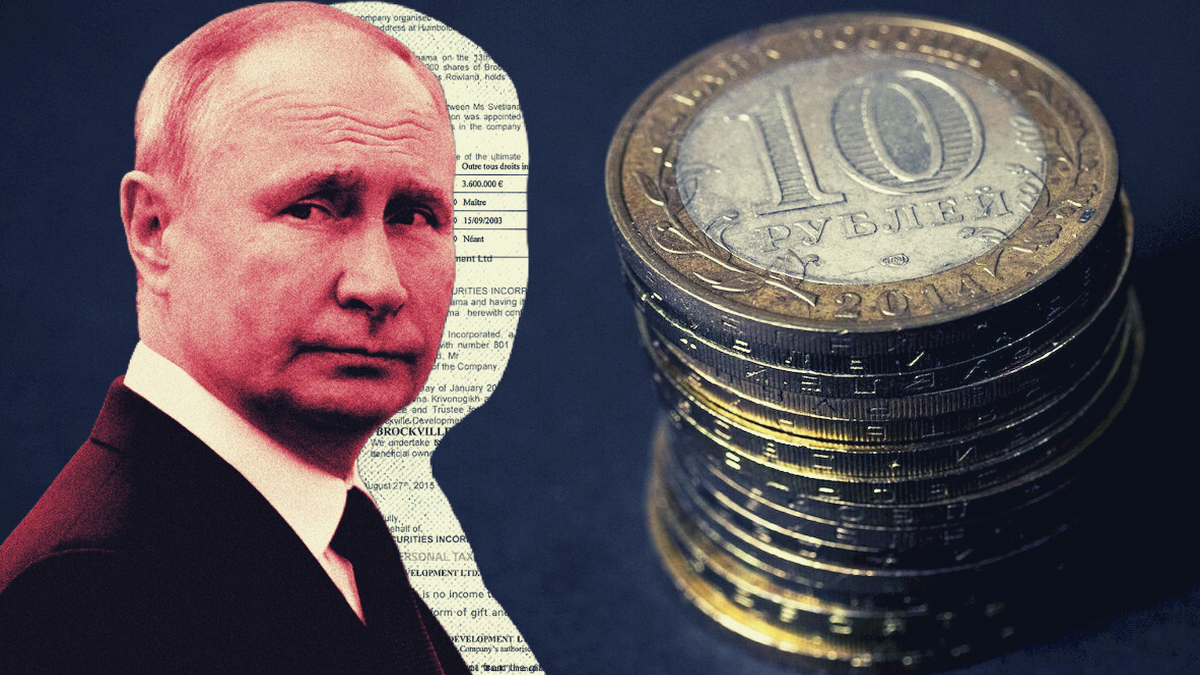
On the propaganda war Le Monde revealed that thousands of influencers, including French citizens, were approached by people close to the Kremlin to spread pro-Russian propaganda
The economic movements around newspapers, influencers, simplified LLCs and all the other entities spreading putinish fake news always take place through a third company, in a triangulation that cleans up the transactions. Fortunately in Brussels, and also in Rome, something is moving thanks to an instrument announced at the end of the last European Council
There is a lie within the lie that accompanies the activities of Italian propagandists spreading the Kremlin’s word in the Italian digital sphere, and it is the way in which they are financed. As we had already recounted a few weeks ago, cryptocurrencies and bitcoins are used to circumvent the economic blockades deriving from sanctions, swelling the ranks of companies with platforms in third countries untouched by the restrictions – such as Turkey, Azerbaijan and China – which then pour into European companies, billing for services and consultancy that never take place.
For some time now, this dossier has been under the magnifying glass of the Financial Intelligence Unit for Italy (FIU) and the Guardia di Finanza, which have been trying to trace the financial movements around journalistic entities, influencers and communication companies that have been spreading Kremlin propaganda for years.
Illegal financing – according to leaks from investigators as a practice – never takes place by directly involving the disseminator or journalist concerned, but through a third company to which the propagandists issue regular invoices.
The newspapers, cultural associations, and simplified limited liability companies that receive funding from foreign entities retain it for the operation of their own structures, and then pass on sums to those who produce content. Obviously, the main requirement that unites these newspapers is the narrative of ‘we support ourselves thanks to readers’ donations’.
A frame that mixes an area of truth with one of lies. There are individuals, associations or third-party entities that finance the network with their own money, but these account for about thirty per cent of the income; the remainder is collected through funding dinners “which often – as an intelligence officer reveals to our newspaper – are the ideal tool for pouring a good amount of illegal liquidity into the clean circuit“, or through donation platforms that allow the proliferation of fake users generated by bots that pour in small sums (from five euro upwards) that pass, precisely, as liberal donations, but which are nothing more than handouts from foreign entities that forage propaganda.
To verify this mode of operation at first hand, thanks to the help of some experts in cryptocurrencies and digital networks, we carried out a similar operation on Sunday, creating some fake accounts that moved money to some platforms such as Telegram and Buymeacoffee, and we managed to deposit small amounts by creating different accounts and associating ad hoc created digital accounts. Within an hour, over thirty profiles financed content creators and reporters close to the Kremlin.
These tactics no longer go unnoticed and, as our source reveals, “many structures are working together and soon we will also have operational tools to freeze assets, issue travel warrants and prohibit propagandists and media from entering European countries”.
The new operational tool has actually been there for a few weeks, and was announced without making too much headlines last 8 October at the end of the European Council. As stated on the European Commission’s website, ‘the EU has adopted a framework of sanctions against those responsible for destabilising activities against the EU and its member states. The framework allows the EU to target individuals and entities involved in actions and policies of the Government of the Russian Federation that undermine the core values of the EU and its Member States, their security, independence and integrity, as well as those of international organisations and third countries. Thanks to the new sanctions regime, the EU can address a number of hybrid threats, such as: the undermining of electoral processes and the functioning of democratic institutions; threats and sabotage of economic activities, services of public interest or critical infrastructure; the use of coordinated disinformation, foreign information manipulation and interference (Fimi); malicious cyber activities; and the instrumentalisation of migrants. Restrictive measures related to hybrid attacks from Russia include a travel ban on individuals, freezing the assets of individuals and entities, and a ban on making funds or economic resources available to listed entities’.
Europe seems to be moving, and our own propagandists are getting restless.
Read also : The butter thefts highlight the cost of Russia’s war economy
Russian exporters have begun resorting to barter agreements in an attempt to resolve payment delays caused by Western sanctions over Moscow’s war in Ukraine. Foreign banks have begun eliminating Russian counterparts after US President Joe Biden in December threatened to impose secondary sanctions on lenders assisting Russia in its war efforts. The move dented Moscow’s efforts to sell raw materials abroad and import foreign goods, prompting the Russian government to promote the barter system as a way to settle international payments..
The return to a barter system is reminiscent of the inventive ways in which Soviet importers, who also had limited access to the US dollar, bought foreign goods, paying for Pepsi imports with cases of Stolichnaya vodka in the 1980s and, on one occasion, warships and submarines resold as scrap metal.
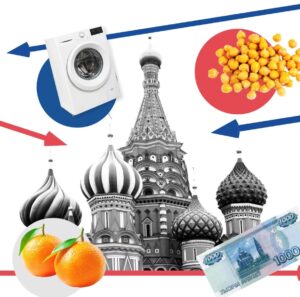
Last month, Russian agricultural trader Astarta Agrotrading struck a barter deal with two companies in Pakistan to exchange chickpeas for tangerines..
Total imports into Russia fell by around eight per cent in the first half of 2024, compared to the same period last year, according to data from the country’s Federal Customs Service. This is in line with documents from other countries, compiled by Trade Data Monitor, which estimate that there was a 9% drop in exports to Russia from countries that regularly publish trade statistics.
China is the largest exporter to Russia and in January, the Russian Ministry of Economic Development prepared a 15-page guide on how companies wishing to pursue barter agreements should calculate costs and draft contracts..
VAT on bartered imports is calculated based on the estimated cost of the traded goods. But “this parameter can be manipulated,” Prokopenko said, “because in the customs database the contract will look as if two kilograms of oranges cost three chairs.”
Although the practice may weaken the Kremlin’s tax revenues, the government is willing to turn a blind eye to ensure that supermarket shelves remain full..
But analysts doubt that barter schemes will become the panacea for Russia’s trade problems. “Barter has many disadvantages for the companies involved, it is much more inconvenient to initiate,” said Janis Kluge, an expert on Russian economics at the German Institute for International and Security Affairs.
N.B. : While the majority of Western companies have remained in Russia, there are those such as Auchan who are leaving the country after two years.