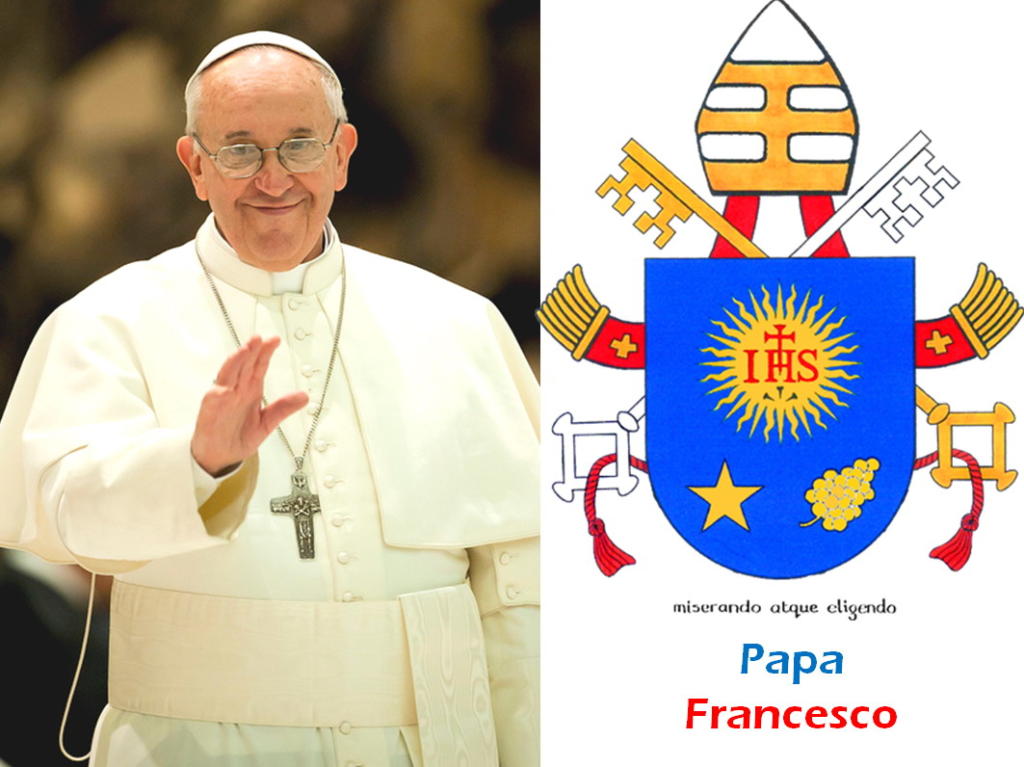
[vc_column_textCompiled 18 June 2015, updated 27 April 2025
“Climate is a common good, of all and for all. Globally, it is a complex system in relation to many conditions essential for human life. There is a very consistent scientific consensus that we are facing a worrying warming of the climate system… Humanity is called upon to become aware of the need for changes in lifestyles, production and consumption, to combat this warming or, at least, the human causes that produce or accentuate it… If current trends continue, this century could witness unprecedented climate change and unprecedented destruction of ecosystems, with serious consequences for us all.”
Pope Francis
On GMOs, the Pope notes that their introduction often leads to the “concentration of productive land in the hands of a few” to the detriment of small producers.
The temperature of the globe has risen by 0.85° since the end of the last century, according to the Intergovernmental Panel on Climate Change (IPCC). The 21st climate change conference, under the auspices of the United Nations, will be held in Paris-Le Bourget from 30 November to 11 December. It will be attended by 195 countries in an attempt to reach a universal climate agreement, the goal of which should be to contain the rise in temperatures to below 2°. To do this, global greenhouse gas emissions must be reduced by 40% to 70%. Forty countries have pledged to reduce their greenhouse gas emissions.
Sources: Corriere della Sera of 16 June and Le Monde of 17 June 2015
And for the French, global warming is now ‘a reality’ and climate a ‘national concern’ (2015).

While the climate risk looms over agricultural prices and consequently the price of food: wheat, soya and maize could rise fourfold (Il Sole 24 Ore, 2015, below).

Pope Francis: ‘the world that welcomes us is crumbling and perhaps approaching a breaking point’
On 4 October 2023, eight years after the publication of the Encyclical Laudato sì, Pope Francis – who has never been silent about his concerns about the climate crisis Hear the voice of creation, hear its bitter cry. Pope Francis: ‘It is necessary to act, all of us, decisively. We are reaching a breaking point ‘ – produced the Apostolic Exhortation ‘Laudate Deum‘ addressed to all people of good will on the climate crisis.
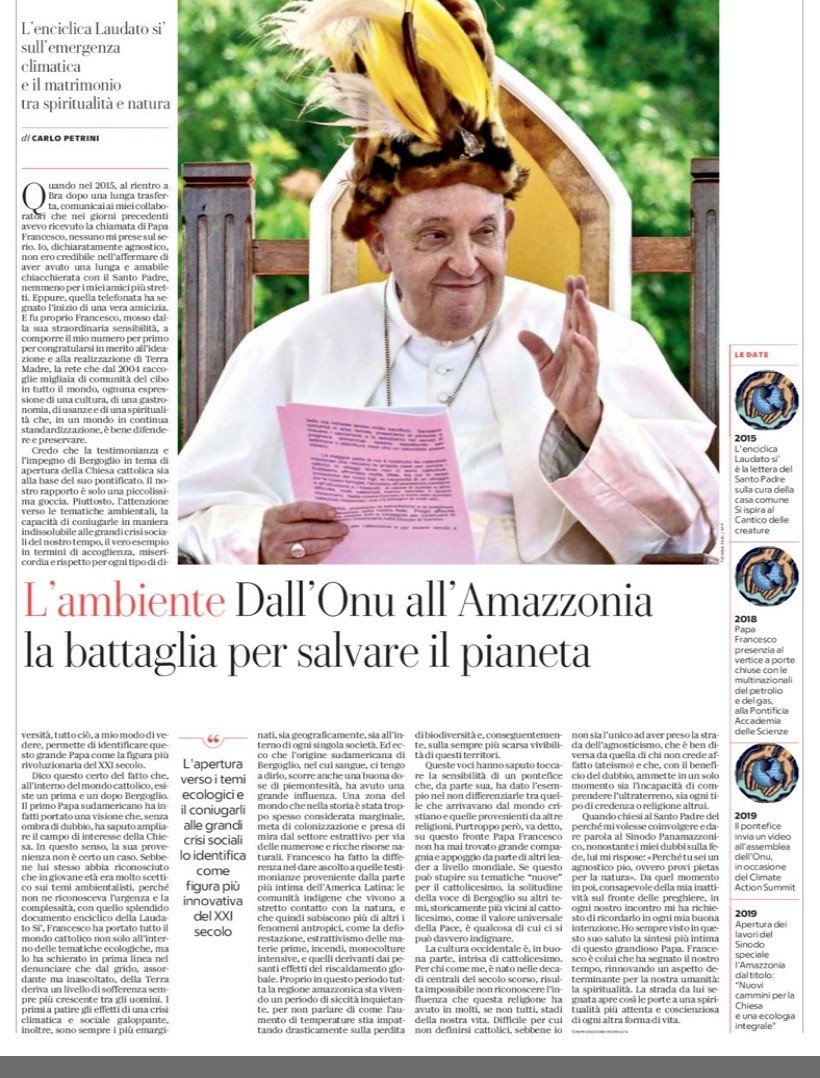
Below: an article on the spiritual and environmental legacy of Pope Francis (22 April 2025)
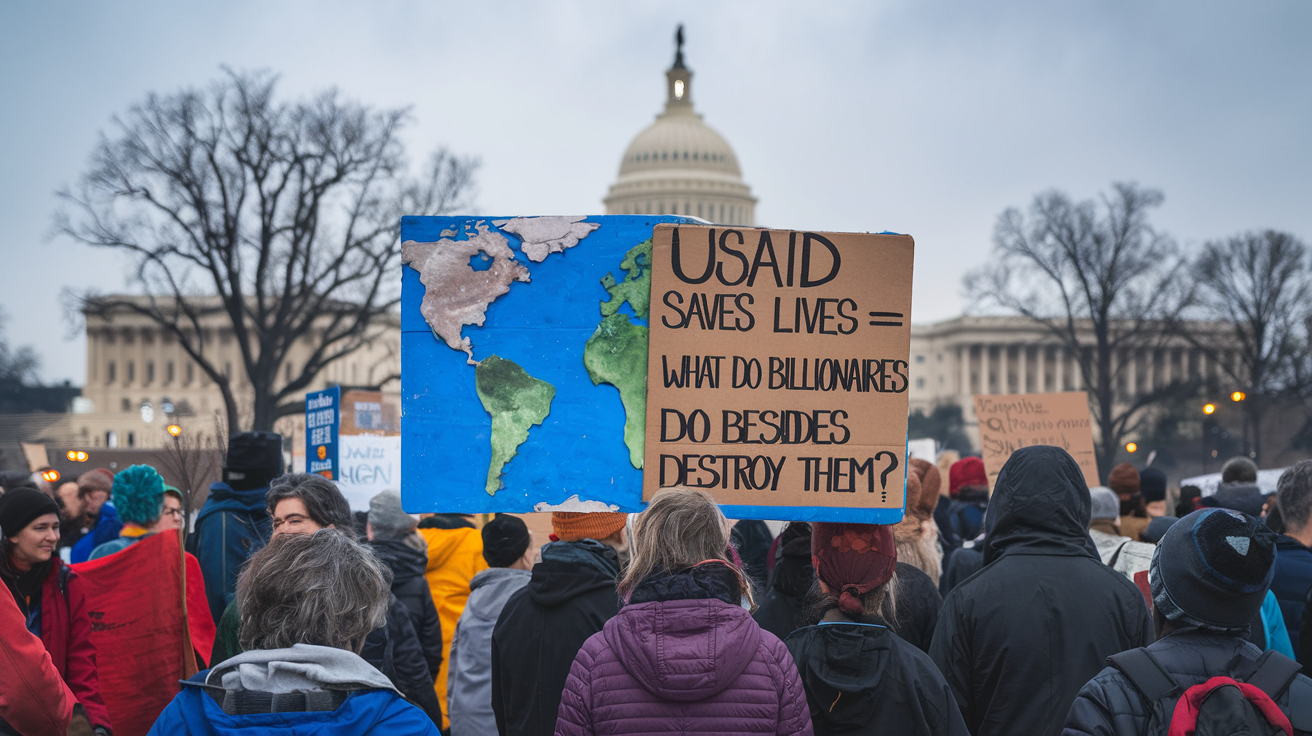
Pope Francis, with Trump’s United States, on climate change could not get along .
Another key issue on which they could not get along is helping the poor. On this subject read : Ukraine, Gaza and Africa linked by the same fate with Donald Trump’s cutting of Usaid funds.
The legacy of Pope Francis underestimates his vision of the economy, a strong, non-ideological vision, certainly less zigzagging than that of President Trump. A consistently ‘Franciscan’ vision (in the Saint’s sense) that places at the centre not the individual ‘maximising’ his or her wealth but the ‘common good’; not generic ‘economic growth’ but the inclusion of all and, consequently, the fight against poverty, marginalisation and growing inequality. In other words, his ‘economics’ is ‘other’ than that prevailing among liberalist economists, convinced of the superiority of the market and capitalism with little or no regulation.
Pope Francis did not like to refer to abstract categories (except those of the Holy Scriptures); instead, he preferred to immerse himself in the plight of the poor, the sick, the fragile, and migrants. He did not detest the market, and less so economic development, but considered them instruments for inclusion, not means for individual enrichment, for making extra profits, albeit reinvested. “I do not condemn capitalism, nor am I against the market economy,” argues Pope Francis in ‘El Pastor’, a 2023 interview book by Francesca Ambrogetti and Sergio Rubin. “It is not at all bad to produce wealth for the good of all; indeed, producing it is an act of justice. But for this justice to be complete, it must be distributive’. This is why he declared himself, in the wake of John Paul II, in favour of a ‘social market economy’, where the social comes before the market and where labour is not subjugated to capital thanks to the presence of regulatory authorities, national or supranational, capable of mediating between opposing interests, in search of a balance that, without neglecting anyone, seeks to favour the most disadvantaged. A principle not too dissimilar from that of John Rawls, the American ‘liberal-socialist’ philosopher, according to whom between two policies one should always choose the one that favours those who are worse off.
Two others are closely linked to this principle. Firstly, resources, which are always scarce, should not be squandered either in the private or public sector; good management and good policy are therefore needed, as opposed to the culture of waste. Secondly, the costs of producing collective goods and services (education, health, environment) must be borne by everyone in increasing proportion as each person’s wealth and income increases; hence the progressivity of the tax system and the moral duty, even more than the civil duty, not to evade taxes and not to pass on, through public debt, improper burdens to future generations in order to preserve the well-being of the present ones.
Pope Francis was well aware that without rules and without moral values to underpin individual behaviour and collective choices, the market, no more and no less than any other social organisation, can easily become a place of predators and prey, the privileged and the excluded. Praising the market without reference to how to concretely implement distributive justice, closing one’s eyes to the inequalities already present at birth in abilities, opportunities and rights cannot have legitimacy for a Christian. Children born in an environment of war, young people forced to go to the front, those who pay and will pay for short-sighted environmental choices, heedless of the costs inflicted on future generations, women deprived of the chance to educate themselves and excluded from many economic and social spheres: why should these ‘victims’ compete in a marketplace with people who have had privileges, chances of success, support and life circumstances that are decidedly more favourable? Yet, who does not remember the frequent sayings in rampant capitalism from before the 2008 crisis: ‘it’s the market, beautiful’ or even: ‘it’s the economy, stupid’? As if the constraints of economics could come before everything.
From this vision was born “Francis’s Economy” (with the double reference to the Saint and to the recently deceased Pope), an international foundation launched in 2019 at the urging of the Pope as a global community of young researchers, entrepreneurs and innovators from over 100 countries, working to “give a soul” to the economy (“re-animate it”, wrote the Pope to the young people, defined as a “living path” in the letter of invitation); to bring in the values and strength of the common good, giving priority to situations of suffering; “to give the world the good news that, inspired by the Gospel, even the economy can change for the better”. I applaud the young people who, already struggling with strong generational imbalances to their detriment, have accepted the challenge. Are there today the conditions to change the economy in the sign of Francis? There are many doubts, fuelled by scenarios that, already gloomy, seem to have become more leaden in recent months. How to become an economy of peace in a time of bloody wars and growing arms spending (considered by cynics as a great opportunity for economic growth)? An economy at the service of the fragile and defenceless, in spite of selfishness and nationalism aimed at establishing ‘who must come first’ and the increasing recourse to repatriations and deportations even of those seeking asylum; an economy that knows how to look to the future, to return an intact creation to the generations to come ‘from whom we have borrowed it’; an economy that recognises and safeguards dignified work for all, men and women, and that shuns unjustifiable pay gaps between those who manage and those who execute; an economy where paying taxes is felt as belonging and sharing in spite of the many winks to the cunning and evaders.
On closer inspection, however, we have the model at home. It is the model of society desired by the fathers and mothers of our constitution, but so far largely unimplemented. We do not need to look to abstract and distant models. It is that in designing his economy, Pope Francis has also drawn on our Constitution, to which we should therefore return.
Elsa Fornero
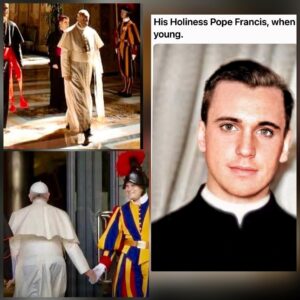
Below is a sel collage showing, among other photos of the pope, an image of Jorge Bergoglio as a young man.