Written on 19 June, updated on 24 June 2026
Introduction: Is the European economy growing faster than the US economy?
We’ve asked ourselves this before, and in reality, if you look closely at the data, you wouldn’t think so.
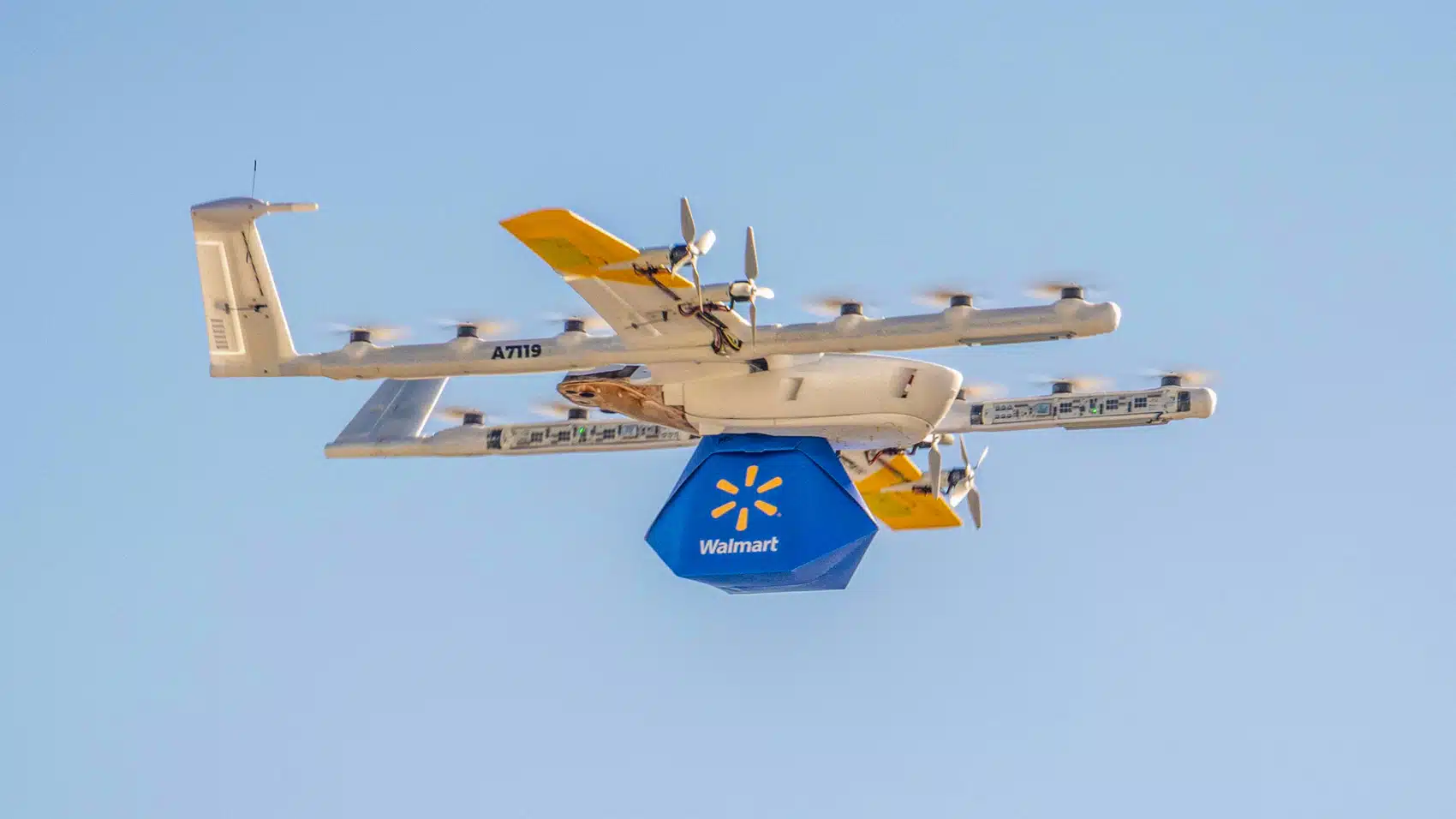
What stands out is that distribution is ahead: Walmart, which was founded after Esselunga – without drones – also delivers in under an hour in 33 US metropolitan areas via its “Walmart Express Delivery” service and, through its inHome service, delivers groceries directly into the fridges of 45 million Americans.
It is ahead of the curve and making bold moves: on 29 May 2026, Walmart announced that it had surpassed one million drone deliveries through its US operations.
Forty per cent of that million took place in a single quarter.
The average delivery time is 23 minutes from receipt of the order. The fastest delivery they have recorded is 4 minutes and 44 seconds.
Walmart does not operate its own fleet of drones but has entrusted deliveries to Wing and Zipline, two specialist companies.
When a company says that “40 per cent of our one million took place in the last 90 days”, they are telling you that the growth curve has become vertical. It took Walmart a few years to accumulate its first 600,000 deliveries. Then they managed a further 400,000 in a single financial quarter.
Walmart now operates drone deliveriesfrom 66 stores across 4 states and 5 metropolitan areas, with Texas accounting for over 200,000 of these million deliveries.
Wing intends to roll out the service to more than 270 stores by 2027, serving 40 million Americans.
Zip-Line, meanwhile, has just secured $600 million in funding.
It is easy to see how this service could have a major social impact: for example, by quickly delivering medicines to people in need.

To date, the network has completed more than 1 million commercial deliveries in Dallas-Fort Worth, Greater Houston and the Atlanta metropolitan area, thanks to Wing’s technology and advanced FAA authorisations, combined with Walmart’s retail footprint.
At present, all this seems a long way off from what might happen in Europe, but in the future this will probably no longer be the case: the agri-food sector and trade will play an increasingly significant geopolitical role, in which technology will be central.
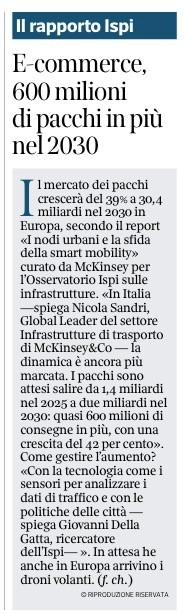
Below is an article from *Corriere della Sera* dated 13 June 2026