Walmart shows Trump’s duties fall on Americans
Giuseppe Caprotti Il Foglio 26 Aug 2025 – Re-updated with a final addition on 28 August 2025
The American retail giant is reporting weekly increases in its costs and now the difficulties also involve wholesalers and farmers. The biggest impact will probably be seen on non-food and Christmas assortment, dominated by ‘made in China’ items
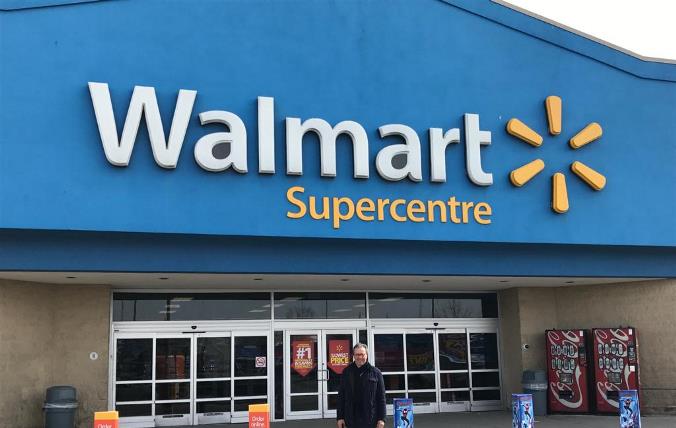
The first to raise the alarm was Walmart, a retail giant with 270 million weekly customers, more than 10,750 shops (physical and digital) in 19 countries and a turnover of USD 681 billion in fiscal year 2025. With 2.1 million employees (1.6 million in the US alone), Walmart reaches 93 per cent of American households, also delivering fresh produce directly into the refrigerators of 45 million homes. Not only lower and middle income households, but also the wealthier classes, traditionally close to the Republican electorate.
Already in February 2025, Walmart had revised its sales growth estimates downwards (from 5 per cent to a range of 3 to 4 per cent) due to Trump’s tariff policy. The following month, Walmart, which buys $100 billion worth of non-food goods in China, had tried to get Chinese suppliers to absorb the price increase from the duties. In May, despite a direct meeting with Trump in April (which was also attended by the CEOs of Home Depot and Target, two other US retail giants), Walmart declared that it would be forced to raise prices because of the trade war triggered by Trump. And this ‘despite the agreement reached in those days between the US and China to reduce some punitive tariffs…’.
“We will try to contain price increases on food, which has already been hit by years of inflation,” explained CEO Doug McMillon, but he also pointed to new tariff pressures on imported products such as bananas from Costa Rica and coffee from Colombia. In particular, the 50 per cent tariffs on imports from Brazil threaten to further drive up the price of coffee, which has already risen sharply in the US.
In August, the Food Marketing Institute (Fmi), which represents major US retailers, also intervened. According to its survey, 80 per cent of producers believe that tariffs will have an impact on prices and supply chains, while 55 per cent of consumers cited tariffs as their main concern. While 80 per cent of food sold in the US is locally sourced, the remaining 20 per cent are expected to see average price increases of at least 10 per cent. A concrete example? The raisin bagel, beloved by Americans, which will become significantly more expensive.
Meanwhile, Walmart continues to report weekly increases in its costs, while wholesalers report 3.3 per cent price increases from producers. The difficulties do not spare farmers: in 2024, the US exported $506 million worth of fresh cherries worldwide, up 10 per cent in value and 3 per cent in volume from the previous year. In the first half of 2025, fresh fruit exports fell by 17 per cent in volume and 15 per cent in value. Mexican tomatoes will also experience price increases: duties at 17 per cent are expected to result in an 11 per cent price increase.
Walmart, which together with Amazon is gaining additional market share at the expense of weaker competitors, has already announced a 10 per cent increase on imported food products. The greatest impact of the duties is likely to be seen on non-food and Christmas assortment, which is dominated by ‘made in China’ items. Suffice it to say that 99 per cent of the toasters in American homes come from China, as do most items for the home, garden, sports and toys. Not surprisingly, major companies such as Mattel and Nintendo have already announced future price increases.
The medium-term scenario looks a lot like the one already seen with the Brexit: since 2016, the pound has lost 12 per cent against the euro and inflation in Britain has been 9 per cent higher than the Eurozone average. Trump has convinced his constituents that tariffs will be paid by foreign exporters, not American consumers. But soon even the most ardent Maga supporter, once at a supermarket checkout, will get the suspicion that the opposite is happening.
p.s.: the world will pay the duties, because when you adjust prices upwards you do it for everyone, not just for ‘one customer’. This is how manufacturers’ price lists work.
Thanks to Luciano Capone and Roberta Liberale