Compiled 5 April 2018, updated 25 May 2026
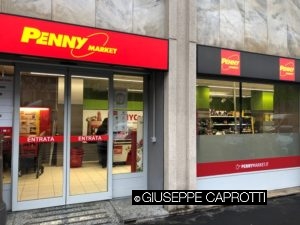
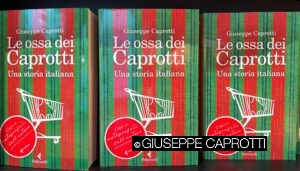
This is mentioned on pages 169- 170 of my book Le Ossa dei Caprotti: “…What a year, by the way, 1994. It is also at that time that we take a step that could prove to be extraordinary. We decide to enter into an agreement with the German giant Rewe to create a chain of discount stores to be called Penny Market, controlled with equal shares of 50 per cent. A decision by the board of directors is required to start the venture. I vote for our father’s proposal, while his long-time lawyer Alfonso Pellegatta is against it.
It is one of the few boards of the group’s various companies, in so many years, where there will actually be a vote: usually nothing important is ever decided in the meetings, all the choices take place outside. Bernardo, moreover, never leaves the minutes with those present, who thus have no way of actually documenting their decisions. At Penny I’m not involved that much, because the effort I have to put into the commercial and marketing side of Esselunga [with the superstores, Fidaty, non-food, supplier contributions, etc.] takes up every single moment I have.
However, I try to get busy and take German lessons. The adventure doesn’t end well and five years later the joint venture is dissolved, due to differences of opinion on commercial management between the Germans and Bernardo, who nevertheless comes out with a substantial capital gain’.
The Germans came to Italy and told us they would do it anyway, with us or without us.
After a visit to Cologne and various contacts in Milan, we then accepted the proposal of the Rewe group (a giant aggregation of German cooperatives, with headquarters in Cologne) and a contract was drawn up and negotiated by Dr. Otto-Heinz Luehr and Bernardo Caprotti.
I went to Cologne – as Luehr recalls below – to make business arrangements.
Rewe’s CEO was Hans Reischl (photo below).
The joint venture was 50% Esselunga and 50% Rewe: the Germans managed the commercial side and the Italians, with Luciano Maranzana, the development of the network.
In fact, the commercial management (e.g. changing prices, inserting new articles) was done directly from Cologne, the headquarters of Rewe
This made my father very angry: the local partner, who knew the tastes of the Italians, was hardly listened to.
So, in 1999, the Germans bought back our 50 per cent.
And the moral I drew from this was that 50/50 partnerships cannot work.
Dr Heinz- Otto Luehr wrote to me at Christmas 2017 and I was delighted, stimulating me to recall some of the moments I experienced so many years ago. You will find it below.
He places a lot of blame for the break-up of the joint venture (JV) on their CEO at the time ( Hans Reischl ” made subjective decisions that ruined the trust and culture of our company”.
And he praises my site: ‘so very interesting’ … “congratulations, it is a remarkable site, the likes of which I have not seen in a long time.”
By: Dr.Heinz-Otto Luehr
Subject: Our aquaintance during my time at the REWE Group in the 90ies
Body of the message:
Dear Giuseppe,
I suppose you are quite surprised to find my message after so long a time when we met in Milan and Cologne.
I found your website, which I discovered accidentally, so very interesting that I didn’t hesitate to write you a few lines from memory-lane. Congratulations, this is a remarkable website and I believe the best I have seen for a very long time.
I looked through it in part and found of course memorable events with Esselunga which I had the good fortune to share from the distance. The Penny Joint venture at the time didn’t work out for very good reasons which are not operational at all, but our CEO at the time made some very bad judgment calls to spoil the trust and culture of our JV, which I was very proud of having been one of the founding fathers. You will certainly have made similar experiences as I have come to the conclusion that the biggest strategic asset of any company or organisation for that matter, is the culture. My personal value system with the four basic pillars of decency, manners, formation and respect are concluded in integrity. Character is therefore the quintessential characteristic for a successful partnership, at least in my book. But of course you can’t read it in a book or study it in a class room, people are very mistaken to assume it. During my studies at the Harvard Business School we learnt a very important lesson for life. In comparing success factors and winning cultures of social entities from a family, a community, a city, a region and a country the conclusion is, that they are very similar and follow the same characteristics. We students were very surprised and learned a lesson for life.
I wish you all the very best with your endeavours and be very happy with the decisions you have made and even with the ones’ which have been made for you!
To you and your family a very joyful pre-Christmas time, a merry Christmas and a ‘good Rutsch’ in a healthy and happy New Year 2018.
Heinz-Otto Luehr
Read also :
Rewe Group exceeds 100 billion for the first time. Penny is worth almost 70