The following article is very technical, in my opinion it lacks an introduction explaining the potential damage caused by the microplastics we ingest every day. You can find it here : The rise in cancer rates in young people is disturbing. Main suspects: food, pollution and microplastics.
EU microplastics crackdown: products banned
The EU’s green strategy against pollutants continues: with the new European directive, the sale of products that contain and release microplastics into the environment is banned. The products involved cover various sectors, from personal care, home and garden to materials used to fill artificial sports surfaces. Let’s take a detailed look at which products are affected and which ones are subject to an exemption.
What are microplastics
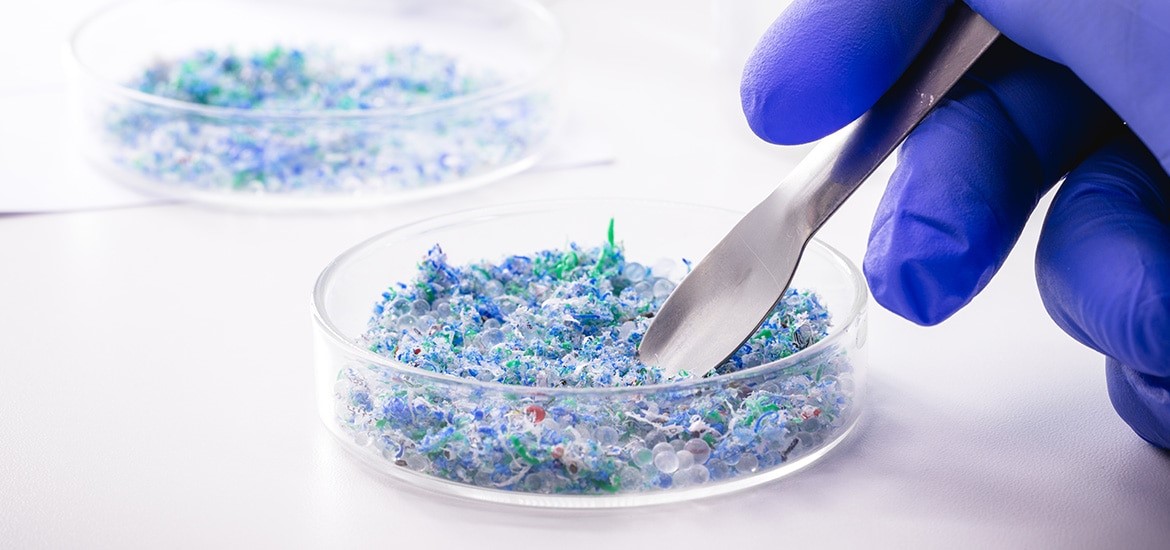
Microplastics are solid plastic particles, on average less than 5 millimetres in size, which are insoluble and resistant to degradation. They can be intentionally manufactured (primary microplastics) as they are needed to make certain products, or they are formed as a result of the wear and tear of plastic materials (secondary microplastics).
The use of these materials can be found in a variety of sectors, including
- Textile industry: in synthetic fabrics, such as polyester, nylon and acrylics
- Cosmetics and personal care: in exfoliating products and as pigments in coloured products
- Cleaning products: in detergents or as abrasive agents in washing powders.
Pros and cons of using microplastics
Manufacturers exploit their characteristics for many reasons:
- they improve the strength, durability and appearance of products
- they have excellent abrasive properties
- they reduce production costs, as they are often cheaper.
Although microplastics undoubtedly offer a number of advantages, it is important to note their high environmental impact. If dispersed in nature, these microscopic particles can be ingested by animals, move up the food chain and reach humans.
What the EU directive consists of
According to data from the European Chemical Agency, 145,000 tonnes are produced each year, of which 42,000 are dispersed into the environment. After consulting the ECHA, the European Commission has decided to ban, as of 15 October, the sale of products containing intentionally added microplastics.
This new clampdown aims to limit dispersion by at least 30% by 2030, with benefits for the ecosystem and people’s health.
Which products are affected by the immediate ban
Many everyday products containing microplastics are affected by the EU directive. From the entry into force of the new rules, they are banned, for example:
- artificial turfgranules
- scrubs and cosmetics containing microgranules
- glitter for make-up or detergents
- glitter used in stationery and toys.
For which products there are transitional periods
For most products containing microplastics, the sales ban will come into effect after a more or less long transitional period, necessary to adapt to the directive and develop alternative products. To give some examples:
- those who run sports facilities have 8 years to decommission or adapt their synthetic turf fields, as the material used is the main cause of microplastics released into the environment.
- for some cosmetics, a period of 4-12 years is allowed, depending on the complexity of the product, to find a formula that complies with the new standards.
For which products there is a derogation
Products are not affected by the new rules if they contain microplastics but do not release a large amount of them into nature. In this case, manufacturers will have to report annually on the estimated emissions of microplastics from such products and provide adequate information on their proper disposal.
With little or no release we have:
- sludge and compost
- construction materials and products used on industrial sites
- medicines, food and animal feed (as they are already covered by other European regulations).