

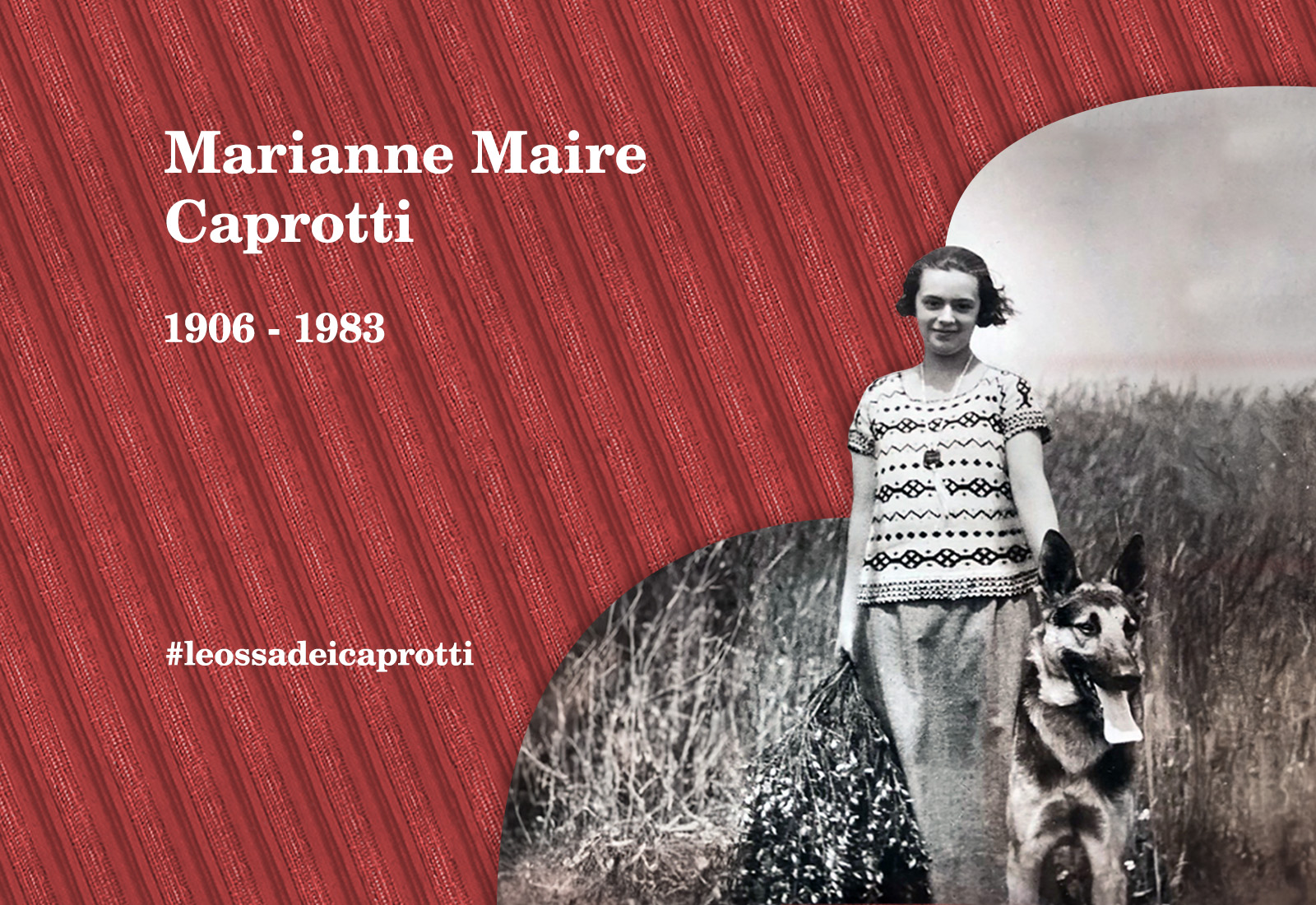
Grandfather (…) was a man incapable of living too long without being devoured by a new flame (…) he was (…) in love (…) with a young French girl, whom he quickly decided to marry. So it was that Marianne Maire, our grandmother, entered the Caprotti family’s life and moved from the Vosges to Albiate. (p. 39).
Grandma was certainly a woman of character. Memories about her in the family are contradictory. My mother Giorgina described her as an intrusive and suffocating person, who wanted to manage my sister Violetta and myself in her place. These aspects were also perceived outside the walls of the house. There are friends who remember Marianne trying in the summer to keep the children in line at Bagno Piemonte, the bathing establishment in Forte dei Marmi where we had a tent. (…).
Yet this hardness, this determination, did not exhaust Marianne’s personality. My cousin Benedetta, who like us had grown up with her, remembers above all her sweetness. (…)’ (pp. 79-80).
“ IBEC sold its 51 per cent to Supermarket Holding S.A. (*), a Swiss company specially established in Geneva by my father and uncles, who owned it in three equal parts. (…). The three brothers did not have the entire amount needed. My grandmother Marianne came to their rescue by providing 300 million lire and renouncing most of her usufruct rights on the shares in Manifattura Caprotti and on the family assets that she had inherited from her grandfather Peppino (…).
That 300 million (…), would never be returned to her (…). It was only in 1975, almost fifteen years after the children had won the majority of Esselunga, that Grandma Marianne managed to get an annuity from them ‘as partial compensation’. The grandmother also lent the three sons another 300 million lire for purposes other than the purchase of the company shares. According to the documents of the uncles, these were also not returned to her.” (p. 72).
(*) who controlled Esselunga


