Compiled 1 May 2014, updated 24 December 2025
Foreword: Grandma contributed her own money (several hundred million) to theCaprotti brothers’ purchase of Supermarkets Italiani (Esselunga) from the Americans in the 1960s.
Today, 1 May, Labour Day, I have decided to tell a story in which the theme of work is central. Work ennobles man, whatever his class.
Back in 1981, when I was studying in Paris , I went to visit my grandmother Marianne, who lived there, on rue Maspero, in the 16th arrondissement of the Ville Lumière.
It was spring.
We had lunch together, and then, I don’t remember why, we ended up talking about the family history that, at the time, pitted Claudio and Guido Caprotti against their older brother Bernardo Caprotti .
The three brothers had been arguing since 1972 and an arbitration had to settle a dispute over shares and assets that, in part, were still undivided since the death of their grandfather Giuseppe, known as Peppino, back in 1952.
The grandmother had taken the side of the two younger brothers.
In Milan, as can be seen from the following letters, the grandmother had left the house in Via del Lauro and was living, for rent, in Piazza Belgioioso .
Lunch had gone well but when we arrived at the café, Grandma verbally attacked Bernardo and other members of the family. I took my father’s side and once I left his house, I never came back.
In fact, on 10 September 1981 I received the first letter that follows, in French, of which you will find a translation below…
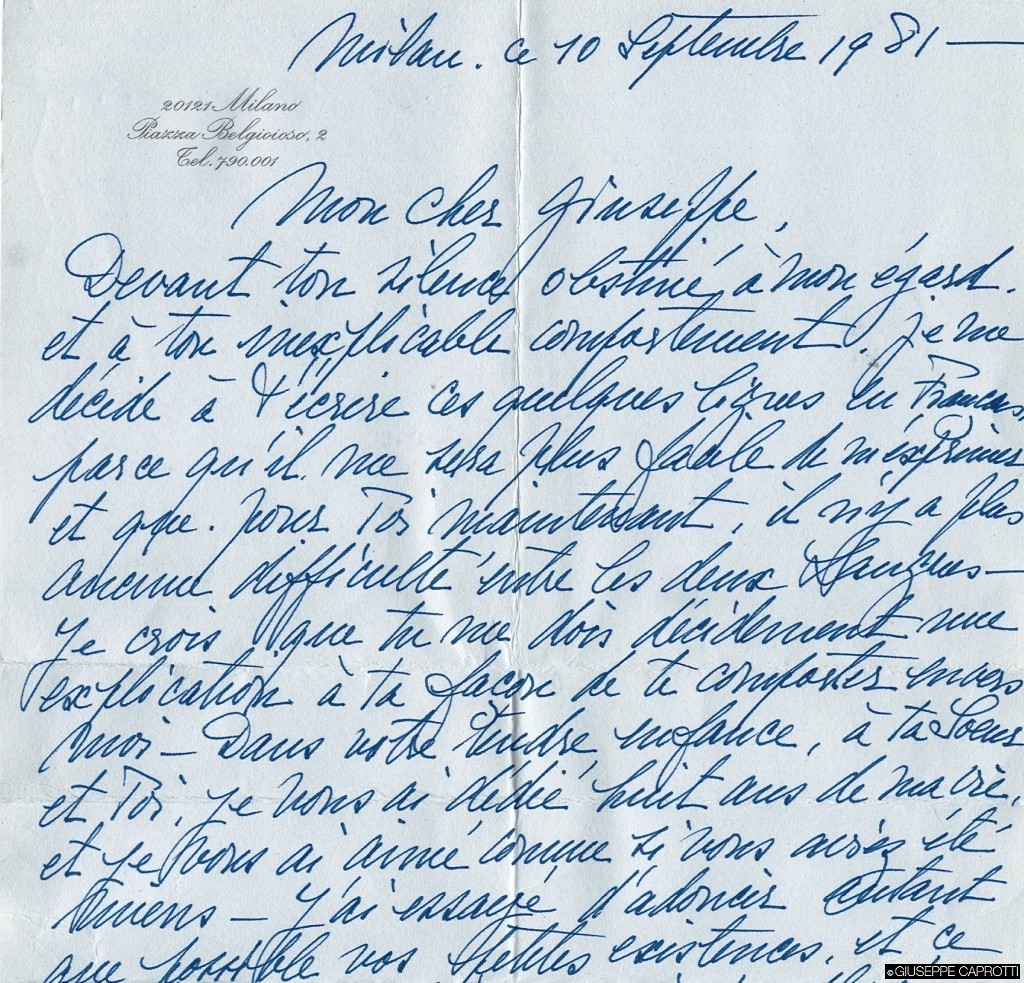
My dear Giuseppe, in front of your obstinate silence towards me and your incomprehensible behaviour, I have decided to write these few lines to you in French because it is easier for me… …I think you definitely owe me an explanation about your behaviour towards me. In your childhood, I devoted eight years of my life to you and your sister and loved you as if you were my own children. I tried to sweeten your little existences as much as possible..
There followed some criticism of certain people in the family that I avoided including…
And since I answered her with a postcard, of which I am not in possession, she answered me, this time in Italian, on 28 January 1982.
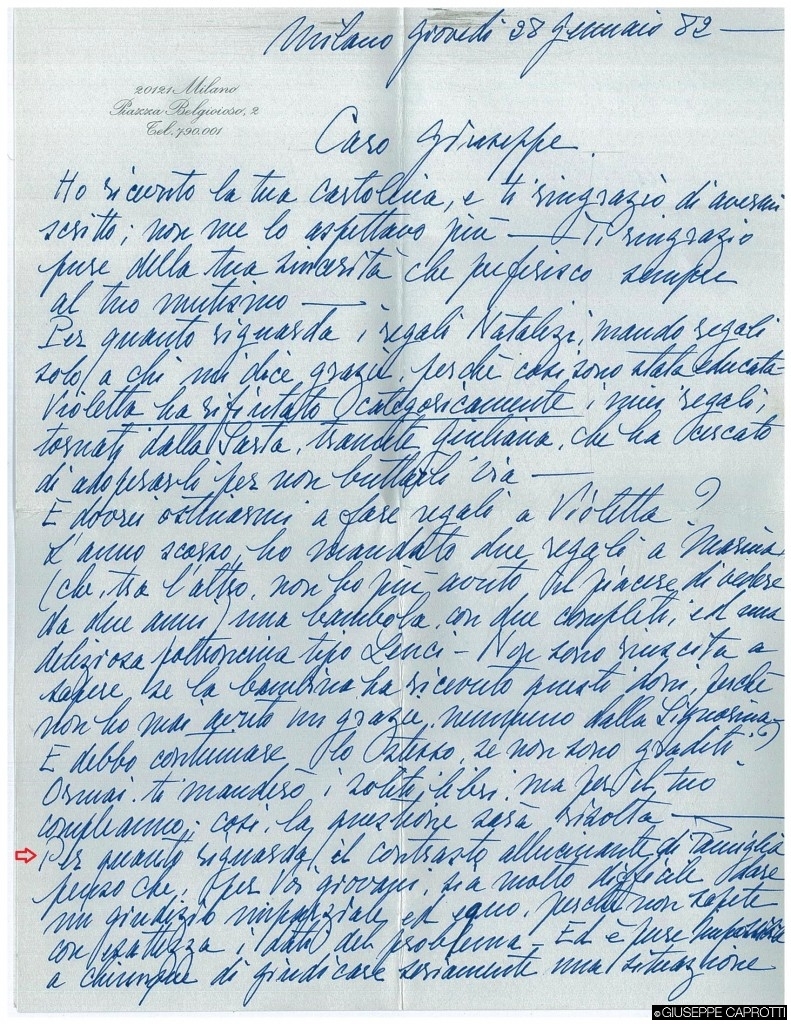
Below I have transcribed only the last piece, highlighted above
Dear Giuseppe… … Regarding the horrifying family contrast, I think it is very difficult for you young people to make an impartial and fair judgement, because you do not know the exact data (=lesdonnèes, that’s a French word) of the problem. and it is also impossible for anyone to judge a situation seriously..
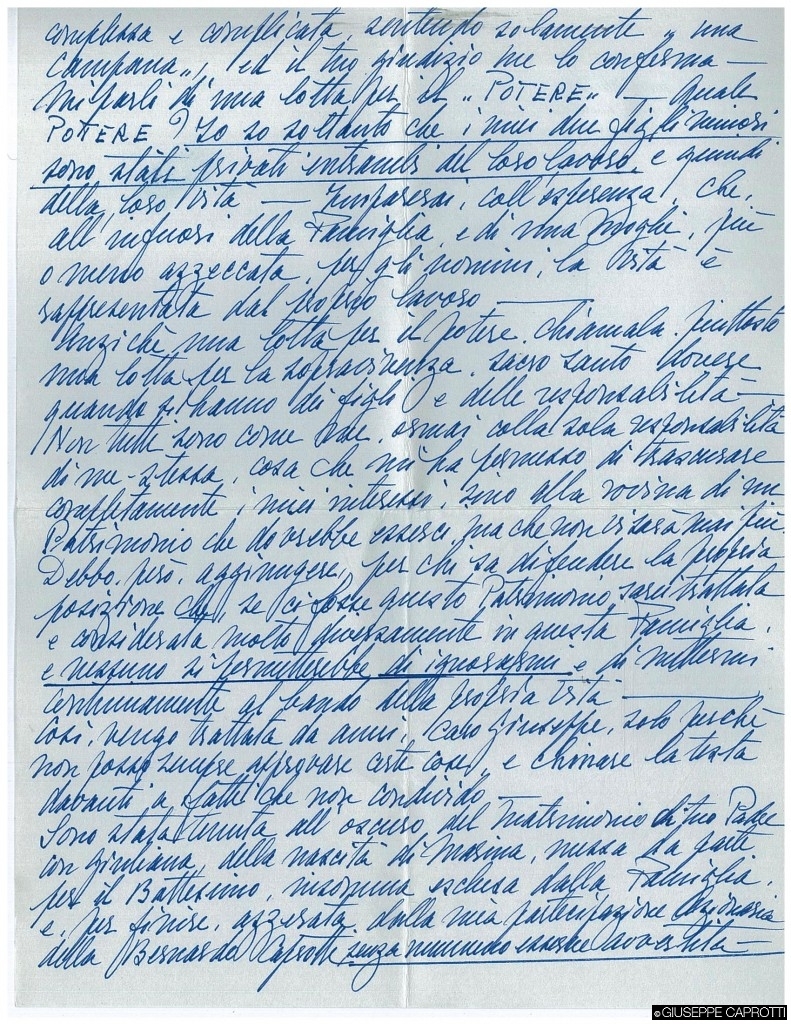
… complex and complicated, hearing only ‘one side’, and your judgement confirms this. you speak to me of a struggle for ‘POWER’-what POWER? All I know is that my two youngest sons were both deprived of their jobs and thus their lives. You will learn with experience, that apart from the family, and a wife, more or less, for men, life is represented by their work. Instead of a struggle for power, call it rather a struggle for survival, a sacred duty when you have children and responsibilities. Not everyone is like me, now with sole responsibility for myself, which has allowed me to completely neglect my interests, to the point of ruining a Heritage that should be there but never will be. However, I must add, for those who know how to defend their position, that if there were this Patrimony I would be treated and considered very differently in this family and no one would allow themselves to ignore me and constantly banish me from their lives. This is how I have been treated for years, dear Giuseppe, just because I cannot always approve of certain things and bow my head before facts that I do not agree with. I’ve been kept in the dark about your father’s marriage to Giuliana, the birth of Marina, put aside for the baptism, in short, excluded from the family, and, to top it all off, wiped out of my shareholding in Bernardo di Caprotti ( = the Manifattura Caprotti factory ), without even being told.
As far as I know Bernardo Caprotti’s marriage, with Giuliana Albera, took place in 1971 while Marina Caprotti was born in January 1978.
Between 1975 and 1977, the Manifattura, located in Albiate, collapsed, but while Claudio and Guido had the shares in Supermarkets Italiani (Claudio 33% and Guido 10.3%) that Esselunga held, which they had themselves liquidated following arbitration, their grandmother had only 10% of the shares in Manifattura that her grandfather Giuseppe had left her.
These passed to Supermarkets Italiani, controlled by Bernardo, with a capital increase but without any disbursement of money to the grandmother in April 1977: ‘wiped out of my shareholding… without even being told’.
And this happened even though, I understand, the grandmother had contributed her own money (several hundred million) to the Caprotti brothers’ purchase of Supermarkets Italiani from the Americans in the 1960s.
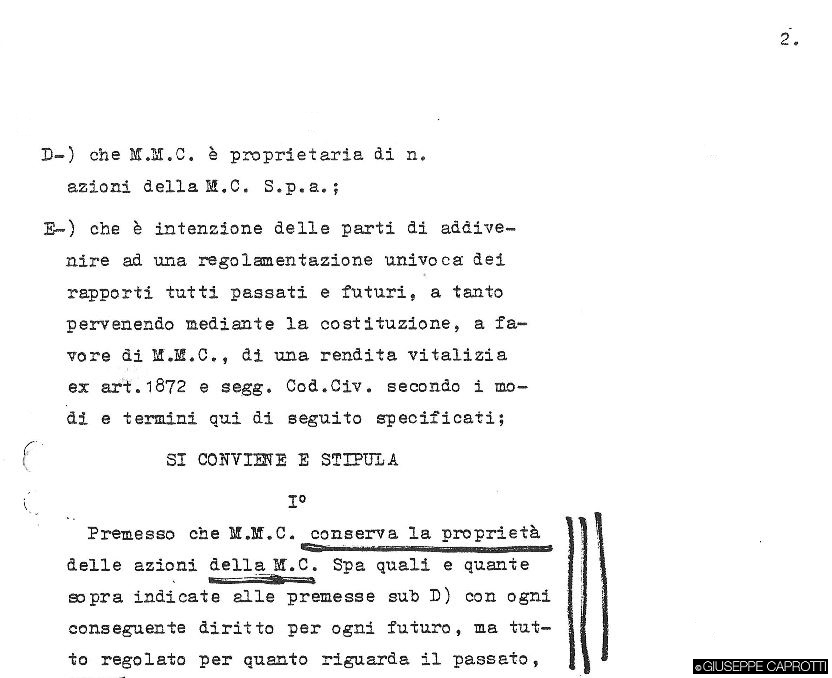
In 1975, she had received a ‘life annuity’ from the three brothers (see, below, a piece of the agreement between mother and sons), on the assumption, however, that she still had a stake in Manifattura Caprotti.
But at the time of this correspondence with me, in 1981 and 1982, his estate (*) was no longer there.
(*) corresponding to the value of the shares in Manifattura and the money lent for the purchase of the Italian Supermarkets, only partly recovered through the payment of interest.
The grandmother, in the agreement concluded with her children, had renounced the family’s real estate assets.
M.M.C.= Marianne Maire in Caprotti
M.C. S.p.a. = Manifattura Caprotti
The same happened to Uncle Claudio. What more do you want to tell me that I behaved badly? My poor boy! You have had your head so pitifully stuffed, always letting jealousyrule !
Let’s be clear, jealousy from everyone and from everyone also for the affection you bore me as a child and which was systematically destroyed.
All this is very sad, especially for you, because life is cruel enough not to allow us to refuse true and sincere affection I embrace you
Your grandmother Marianne
I don’t think I can or should go into such complex and distant matters as the disputes concerning the Caprotti brothers and their grandmother Marianne.
All I can say is:
1) the key word, already used by Dominique Bennett, also reappears in this letter: the engine of all conflicts in our family was jealousy!
The expression ‘banned’ was also particularly apt: conflicts in our family were never managed, people were always ‘eliminated’.
2) In 2004, a few days after I left Esselunga, a close relative told me: “Oh no, history is repeating itself!”
And these words, with those about work and life in Grandma’s letter, which I can now call prophetic, I will remember them as long as I live.
Ilost my job like my uncles and like them I ended up in a lawsuit against Bernardo Caprotti.
Like my uncle Claudio, I was an ‘excused absentee’ for seven years on the board of directors of the group’s companies, and then lost my position as director.
But as Jodorowsky says (below), perhaps a curse can become a blessing.
For future generations.

Alejandro Jodorowsky, about his and his brothers’ relationship with their father:
What they suffered, they are doing to you. Unless you rebel, you will do the same to the children you have. Family suffering, like links in a chain, is repeated from generation to generation until a descendant, in this case perhaps you, becomes aware and turns his curse into a blessing. At the age of ten, I had already realised that for me the family was a trap from which I had to free myself, or die.
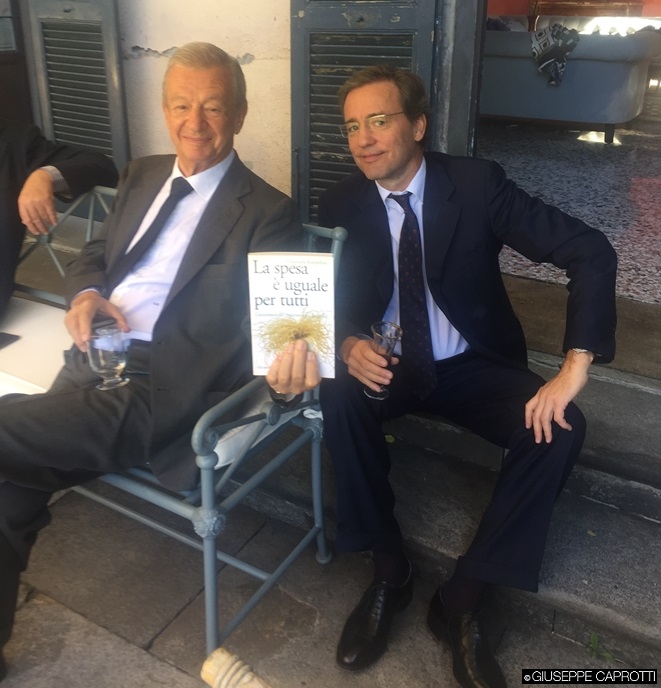
Below: with Uncle Claudio showing the book ‘La spesa è uguale per tutti’ (Groceries are the same for everyone) by Emanuela Scarpellini, in Albiate, in 2016.