Thanks to Federica Bossi and Roberta Liberale
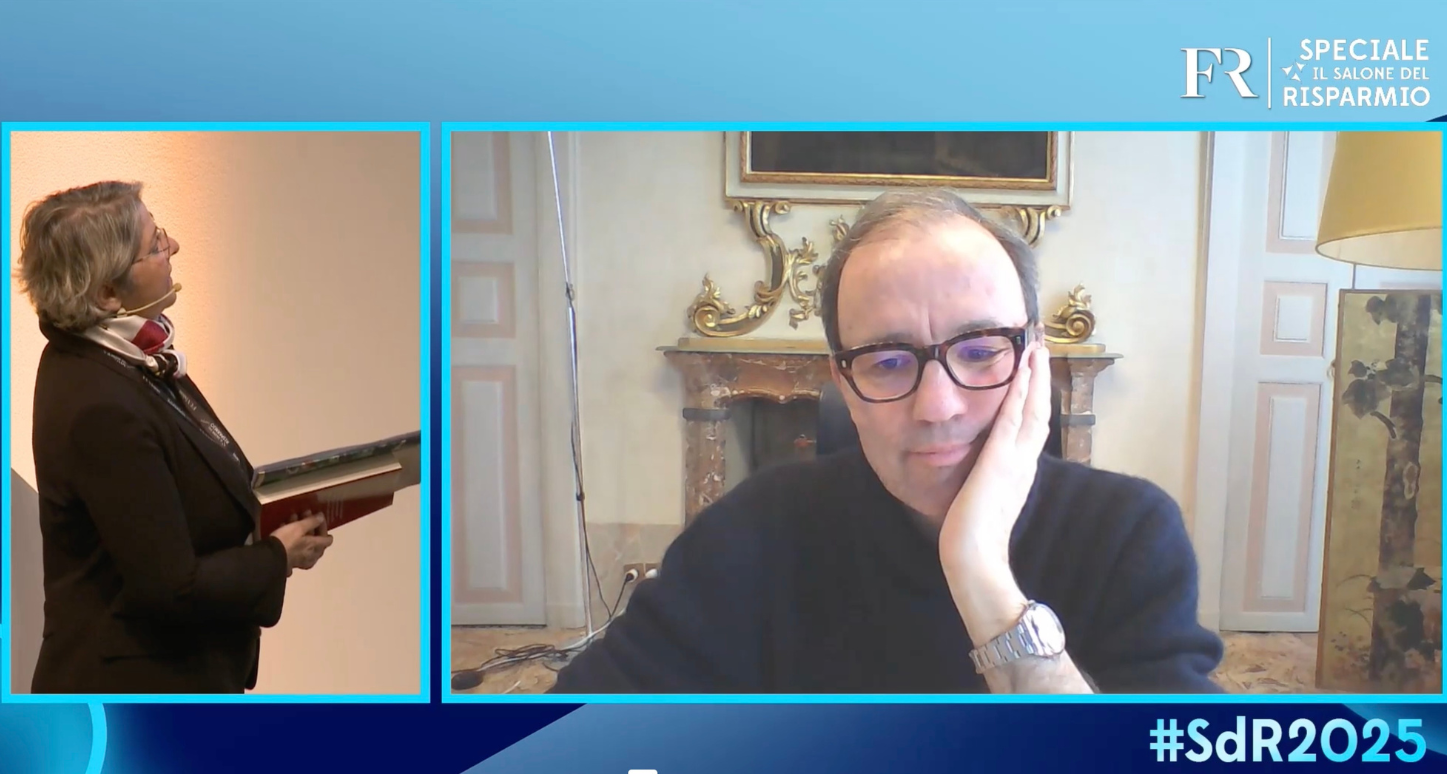
Dr Caprotti, good morning. Thank you for connecting despite your indisposition, thank you very much.
We showed your book, which tells the story of your family, a very complex planning with some sometimes embarrassing features, but which explains how succession planning in general has great difficulties, and yours in particular has lacked perhaps the most important aspect, which is that of family and interpersonal relations. I echo what Dr Renne said.
Do you agree with this aspect on the fundamental aspects of relationships?
Certainly relationships are absolutely fundamental, but before relationships in my opinion there is a very important point that has already been mentioned a little bit by the previous speakers, but which perhaps deserves a quick elaboration: It is not enough, as in the case of the story of the family before me, to get successors into the business at a young age and then assign them more important roles over time. It is essential that the entrepreneur-parent, who occupies a dominant position, begins to accept a concept that is often unwelcome: managerialism.
Fathers, in fact, tend to simply want to be entrepreneurs. In my father’s case, for example, his approach was ‘I do everything and the rest is bureaucracy’. I’m simplifying and paraphrasing, of course, because in the end it wasn’t really like that, but often, when something annoyed him, it simply became a matter of bureaucracy.”
I have been an entrepreneur and manager, I have tried to move the company from ‘I’ to ‘we’, a fundamental point because you can take care of all the relationships you want within the family, but if there is not a shared goal of transformation, everything becomes very difficult. Vincenzo spoke of a family council, we had neither an organisational chart nor a family council.
The empire was divided in two in an unclear way, in the sense that I took care of the operational and commercial part, he, my father, took care of construction and development, and then there was a kind of no man’s land inside. I give one example, but there would be many. I’m talking about administration, finance and control, where I was in charge of management control because I managed operations, while he took care of the rest. It was not a very functional division, nor was it a very intelligent one. Furthermore, there was a lack of clarity, because, in essence, administration should have been the responsibility of the CEO. These are the real problems, in my opinion. Beyond the gavetta, which is right to do – as the gentlemen pointed out earlier – and which must be done with specific roles, clarity must immediately be established on roles, rules, methods and, in my opinion, also on the shareholding structure. If there is no clarity, it triggers irrational dynamics of jealousy and annoyance, which become grains of sand in the company’s machinery. One starts to stop talking to each other, or to do so through other people, or to write to each other. And at that point, the disaster begins.
So since I have experienced the disaster myself, it is only right that I convey it in a positive way by trying to build something for companies that possibly have this problem.
I’ll ask you another question, we are in a historical moment in which in the next ten years, whether we want to or not, because due to the passage of time anyway companies that were formed in the post-war years will reach a crucial point, what would you do to sensitise entrepreneurs towards planning this transition?
We are still a bit behind on this point. You mentioned a consultant, and that is a very good point, fundamental I would say. Having someone who is accepted by both father and sons is an incredible asset for the company. For example, I met the McCain family, famous for making French fries, a real powerhouse in the United States. There were seven members of the family, and the CEO acted as a mediator, a figure accepted by all seven. He had managed to get them to work together, avoiding the typical family quarrels and steering the company towards managerial management.
An external consultant or a wise relative can also be very helpful. We come from the textile sector and, before our experience with Esselunga, we had an uncle and some aunts who, with great wisdom, put order in the family, forcing the nephews to talk to each other. This is no small thing, because conflicts are frequent in companies.
In the end, however, it is always the dominus who has to understand when it is time to get help. Quite rightly, Federica, you were talking earlier about [Bernard] Arnault: if Arnault doesn’t realise he needs help [continuing to move forward the date of his retirement], it will be very difficult to change his mind
Last question, you are now in charge of the Guido Venosta Foundation. How will you make the generational transition of your business in the Foundation?
Thank you for the question. The Guido Venosta Foundation was founded 25 years ago, but has had a difficult time. The founder, my aunt Carla Fossati Bellani, was a bit older and, at a certain point, could no longer manage it as before. Then, during the Covid period, I took her back in hand and she played a fundamental role, doing really great things.
Today we are preparing very interesting projects, especially related to youth, and I don’t exclude collaborating with start-ups as well. There might be a connection with the economy, but we will see as we go along, as they say. The Foundation has taken on a new life and relaunched in 2020.
My sons are currently abroad and are on the board, but they have no intention of returning to Italy, at least not to manage it directly. So, if in the future someone is interested, we will talk about it calmly, avoiding the mistakes that are described in the book ‘Le Ossa dei Caprotti’, which is a real manual on what not to do.
The book is a piece of history for Italy, Milan and our family. But, above all, for family businesses like yours, it is, in my opinion, very interesting because it acts as a manual on what to avoid. That’s exactly what it is. If my experience can be useful, since I suffered from it, I hope it can be useful to the new business generations.
It is definitely a must-read. Dr Caprotti, thank you again for intervening.