Compiled 10 February, updated 16 April 2026
When I come to Milan from Albiate, I always pass by the Hoepli bookshop. I was there last night too, to see the new titles, either in the window or on the various counters.
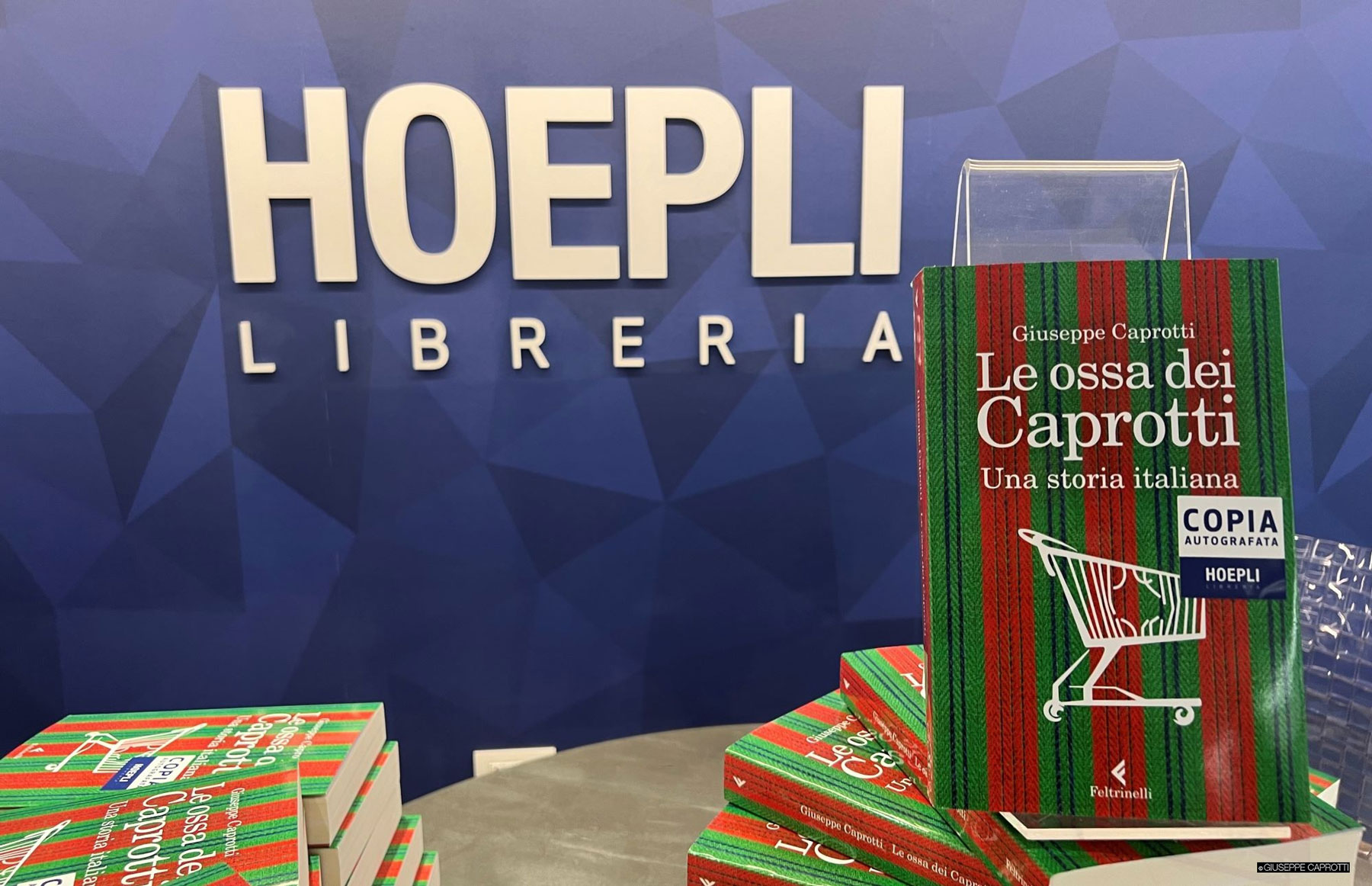
But even before that, Matteo Hoepli, when I was working at Esselunga , had graduated with a text on the sale of books in the large-scale retail trade, asking me for data and advice.
Going there often a few weeks ago, I passed Walter Veltroni doing a signacopie, as I had done at the time of the publication of Le Ossa dei Caprotti.
For me the Hoepli bookshop was unique, a real institution.
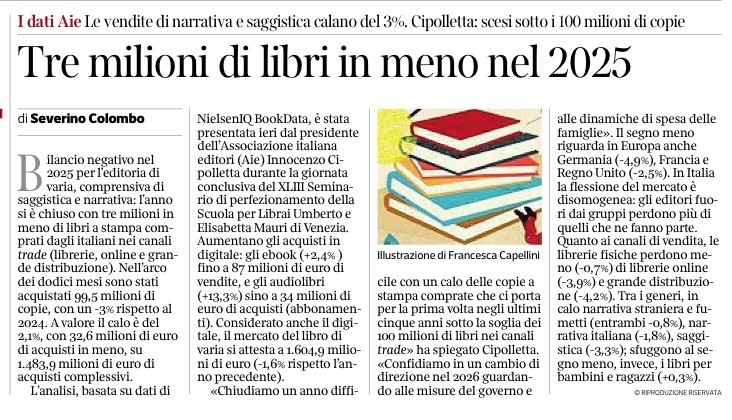
So I feel authorised to say that I am sorry to hear that the publishing house and the bookshop will be liquidated, especially for the employees.
But I would add that as in the Caprotti case, the disagreements in the Hoepli family had been known for years. When I read the following article in Il Fatto Quotidiano – by Nicola Borzi – I was not surprised.
And I believe that while the market has certainly had an influence – decline in reading, e-commerce, Amazon etc. – the “family factor” has been deleterious and probably preponderant in the choices that will lead to the closure of the group.
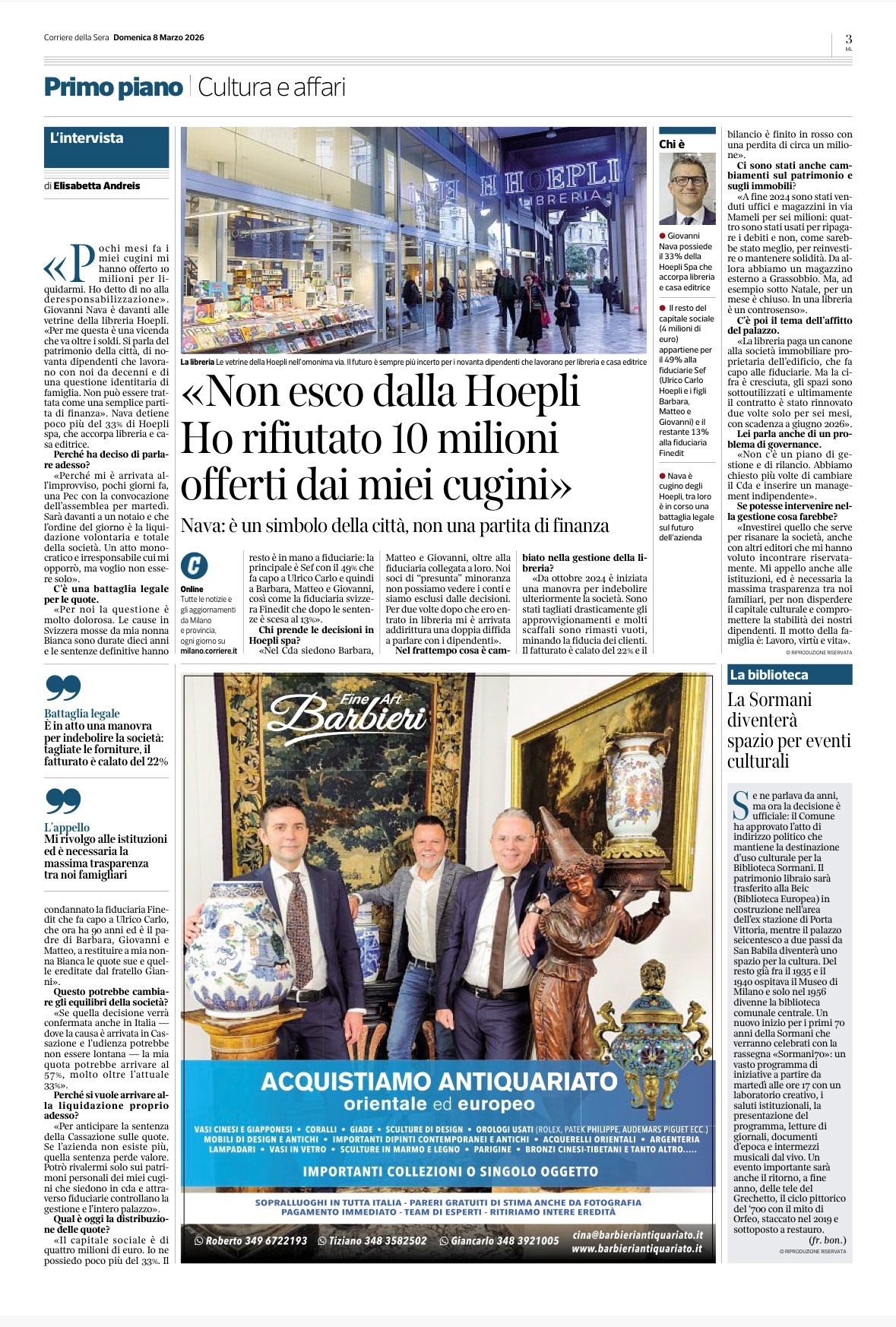
The myth of the Hoepli publishing house is crumbling: liquidation hypothesis, the 100 employees laid off. At risk also the archive
An extraordinary shareholders’ meeting could be held by the end of the month. The tensions between the different souls of the corporate structure, all linked to the founder’s family, risk compromising the future of the publishing house. Only the school catalogue could be saved
Black clouds over the future of the historic Milanese publishing house Hoepli , founded in 1870, one of the few independent publishers to have survived the process of aggregation of the entire Italian market that has taken place in recent decades. A few hours ago in the Milan offices the news spread, already preliminarily communicated to the trade unions, that the request for a zero-hours redundancy fund (or in any case with a substantial reduction in working hours) for the entire staff, about one hundred employees, had begun, which initially could cover a period of 13 weeks. But the news that most alarms the workers is that by the end of the month, an extraordinary shareholders’ meeting could also be held to decide on the possible request for voluntary liquidation of the company. The risk is that the tensions between the different souls of the corporate structure, all linked to the founder’s family, will bring the internal clash – already underway for some time – to such levels as to compromise even the ordinary course of the bankruptcy measure that could result in a new ownership.
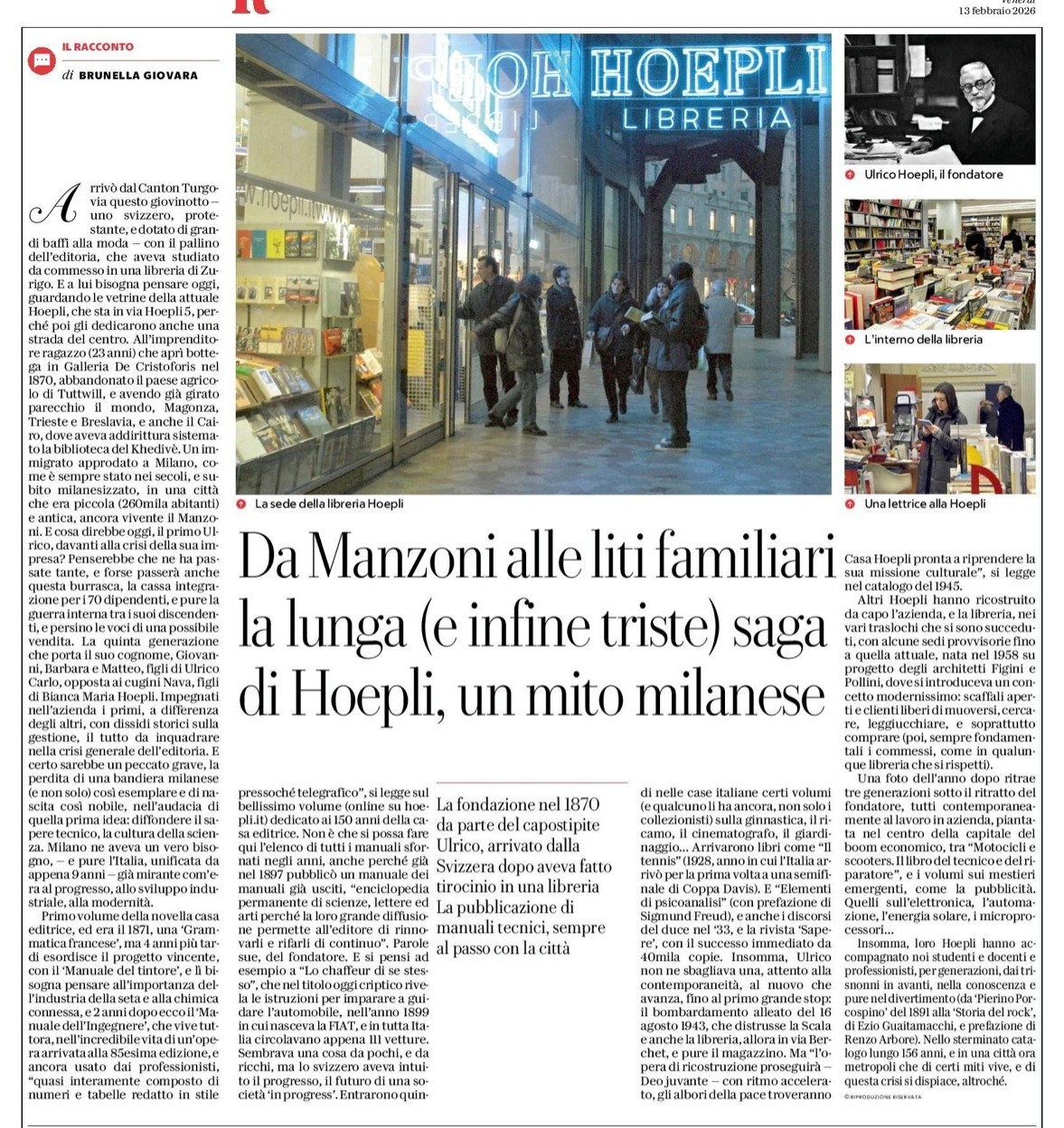
Hoepli is a publisher that in the past made its fortune with an essentially technical-scientific catalogue (its Manuali series is legendary), but in recent years – due to the contraction of the publishing market – has begun to enter a crisis. In the street of the same name in the centre of Milan is its historic shop, one of the most beautiful and largest bookshops in Italy, which has recently reduced the number of floors open to the public due to the crisis in the sector. Despite this situation, the publishing house, or at least part of it, is still attractive, especially because it has a fair share of the market in the school textbook sector, around 5%, an area in which there is still some competition between the various competitors. Precisely for this reason, according to internal company sources, at the beginning of 2025 Hoepli was contacted by Mondadori, which was interested in buying both the publishing house and the bookstore. However, the operation was not successful as strong tensions emerged within the owner family.
The issue, according to the same sources, is that in addition to the market crisis, the internal dynamics within the corporate structure weigh heavily, with a clash now at white heat between the two branches of the owner family, with no holds barred and with various civil and criminal lawsuits still pending. The two Nava brothers (Bianca Hoepli’s children) hold 25%, while the remaining 75% of the capital is in the hands of Ulrico Carlo Hoepli and divided between his three children Giovanni, Matteo and Barbara. Months ago, the Nava’s opposed the sale of their shareholding to the publishing house in Segrate, thus preventing the sale from taking place, as Mondadori wanted to buy 100% of the shares in order not to have to deal with any minority shareholders, also given the reputation for litigiousness that this affair has long spread in the publishing world.
All this to the detriment of the publishing house, which, by dint of suffering from the absence of a shared industrial design and adequate investment, is now navigating in very bad waters. It is precisely this situation that at the end of last year had also led the Feltrinelli publishing house to break off negotiations underway to buy the bookstore and perhaps also the publishing house.
In recent weeks, Mondadori has returned to the negotiating table, but now it is reportedly only interested in the catalogue and in particular the school textbooks. The possible acquisition of the Hoepli lines would bring the Segrate-based house, quoted and controlled by the Berlusconi family, to a share of the national scholastic market (a real gold mine for Italian publishers) close to that of the first operator, Zanichelli.
However, it must also be remembered that Ulrico Carlo Hoepli and his three sons Giovanni, Matteo and Barbara, who hold the remaining 75% of the capital, also own the entire building in which the offices and bookshop are located, i.e. the building in the centre of Milan designed by the famous architects’ studio Figini and Pollini, built in the second half of the 1950s. Some analysts point out that the use of this building would save and relaunch the publishing house. But this operation is apparently not in the hearts of the owners. On the contrary, perhaps at the root of the disagreements is precisely the possibility of realising an enormous capital gain on the building.
In the end, therefore, on 25 February there will be a board of directors’ meeting called to convene shortly, perhaps already by the end of the month (if the technical times allowed by the civil code permit) an extraordinary shareholders’ meeting on the agenda of which the board could include the question of the request to deliberate the voluntary liquidation of Hoepli, with the appointment of a liquidator who could proceed with the sale of the school part, probably still to Mondadori.
The risk that falls not only on the employees but on the entire world of Italian culture is that the rest of thecompany’s catalogue andarchive, which for over 150 years has represented a point of reference for Italian publishing, particularly technical and scientific publishing, will be irretrievably lost.
…
When there is so much animosity, stepping aside is difficult. Also because in the company there is history and identity, family but also individual.
Easy to say with hindsight, but a compromise, to the detriment of individuals, to save the company, is always desirable.
Read also:
Hoepli: red balance sheets and family divisions lead to liquidation
Hoepli closes on 30 April 2026