[vc_column_textDrafted 24 April, updated 30 April 2025
Foreword:
a month ago I wondered Trump’s tariffs could cause a shortage of toilet paper in the US. Is this going back to the days of Covid- 19?
the market is morbidly affected by the US administration’s words on tariffs given the impact that the decisions that are made may have on the global economy.
In the US, if the duties are not removed, there will be a shortage of goods, especially non-food, and a very strong inflationary spiral will be triggered.
There are many fronts open:
1) some large distributors met with President Trump. It is worth adding that the three distributors ‘weigh’ approximately 3 million employees, which explains – at least in part – their political weight.
The other element of strength and influence is that consumption weighs almost 70% of the US GDP.
2) And then there is what is happening in the supply chain. We anticipated that the big chains were trying to renegotiate prices with Chinese suppliers, with modest success. Now they are doing more, betting on a Trump retreat on tariffs.
Senior contributor
Pam Danziger works in retail, focusing on the luxury consumer goods market.
23 April 2025
Some of the nation’s top retail leaders – Walmart’s Doug McMillon, Target’s Brian Cornell and Home Depot’s Ted Decker – met with President Trump at the White House to present their case against the administration’s proposed tariff policies, advising that the tariffs will increase consumer prices and could potentially disrupt retail supply chains and lead to product shortages, according to Bloomberg.
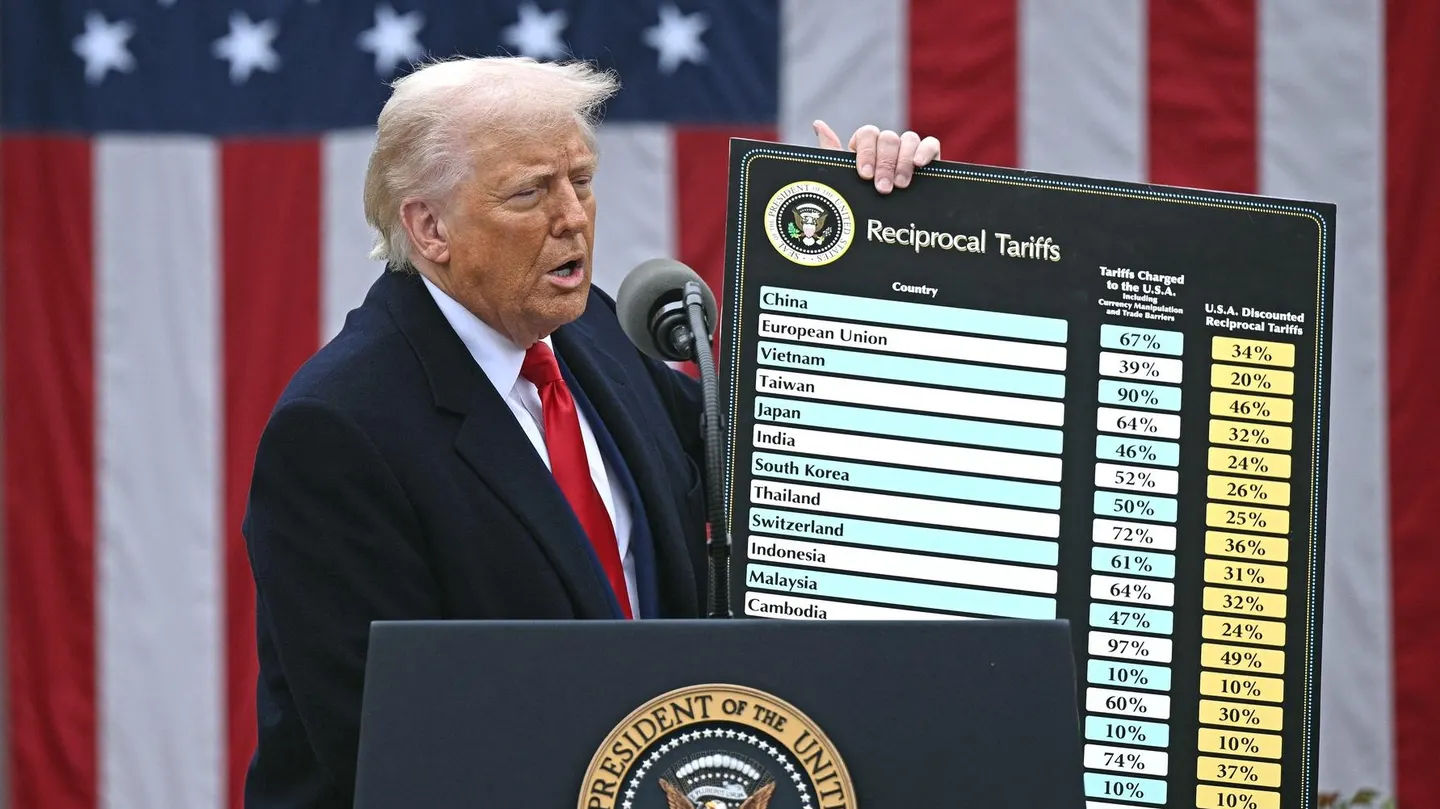
Under tariffs according to Donald Trump’s “loose interpretation”
After Monday’s meeting, a Walmart spokesperson said, “We had a productive meeting with President Trump and his team and appreciated the opportunity to share our insights,” according to Reuters.
A Home Depot representative said much the same, adding that the meeting was ‘informative and constructive’.
A Target spokesperson confirmed that it was a ‘productive meeting’ where they had the opportunity to ‘discuss the way forward on trade’.
Using the break of 90 on reciprocal tariffs as leverage, President Trump said his administration is open to listening to business leaders, telling reporters earlier this month: ‘We’re also going to talk to companies. You know, you have to show some flexibility. Nobody should be so rigid.”
The $8.5 trillion retail industry and the 132 million American households it serves are facing rapid price increases across the board if the proposed reciprocal tariffs are imposed. The National Retail Federation has estimated that the tariffs could cost Americans up to $78 billion in annual spending power across six categories of goods, including clothing, toys, furniture, appliances, footwear and travel items. This estimate does not include food and beverages, which accounted for $1.5 trillion in personal consumption expenditures away from home last year, according to the Bureau of Economic Analysis.
Vulnerabilities vary
Walmart’s customers have less at stake if tariffs are imposed. Only about 33% of the products it carries come from international sources, although China and Mexico are its most significant trading partners. On the other hand, Target imports about 50% of its merchandise, including 30% of its private label brands, from China. And Home Depot reports that 50% of its products come from North America, although it is not specified how much comes from Canada.
Crucial quote
“Retailers rely heavily on imported products and manufacturing components so that they can offer their customers a variety of products at affordable prices. A tariff is a tax paid by the US importer, not by a foreign country or exporter. This tax ultimately comes out of consumers’ pockets through higher prices,’ said Jonathan Gold, NRF vice-president for supply chain and customs policy, in a statement.
Consumers vote against tariffs
American voters want government policy officials to focus on reducing inflation and the cost of food as top priorities rather than implementing tariffs to restore global trade, according to an NRF/Morning Consult poll of 2,000 voters conducted in late March, before Trump’s ‘Liberation Day’ tariffs announcement. Some 76 per cent of respondents expect prices to rise if the tariffs are implemented. The price increase will be a blow to all American families, but especially those in vulnerable communities, such as low-income families, working-class families, the elderly, families with young children, rural communities, farmers and small businesses.
Tangent
Adding to the concerns for retail supply chains is a report that import levels of products will fall sharply in May and continue to decline for the rest of the year. The NRF predicts a total net volume decline of 15% or more by the end of the year, which is likely to mean a selective shortage of products on retailers’ shelves.
Paying the price of tariffs
American Apparel and Footwear Association CEO Steve Lamar told CNBC: ‘Higher prices, job losses, product shortages and bankruptcies will be just some of the hardships the US economy will face as the president pursues this reckless tariff policy.
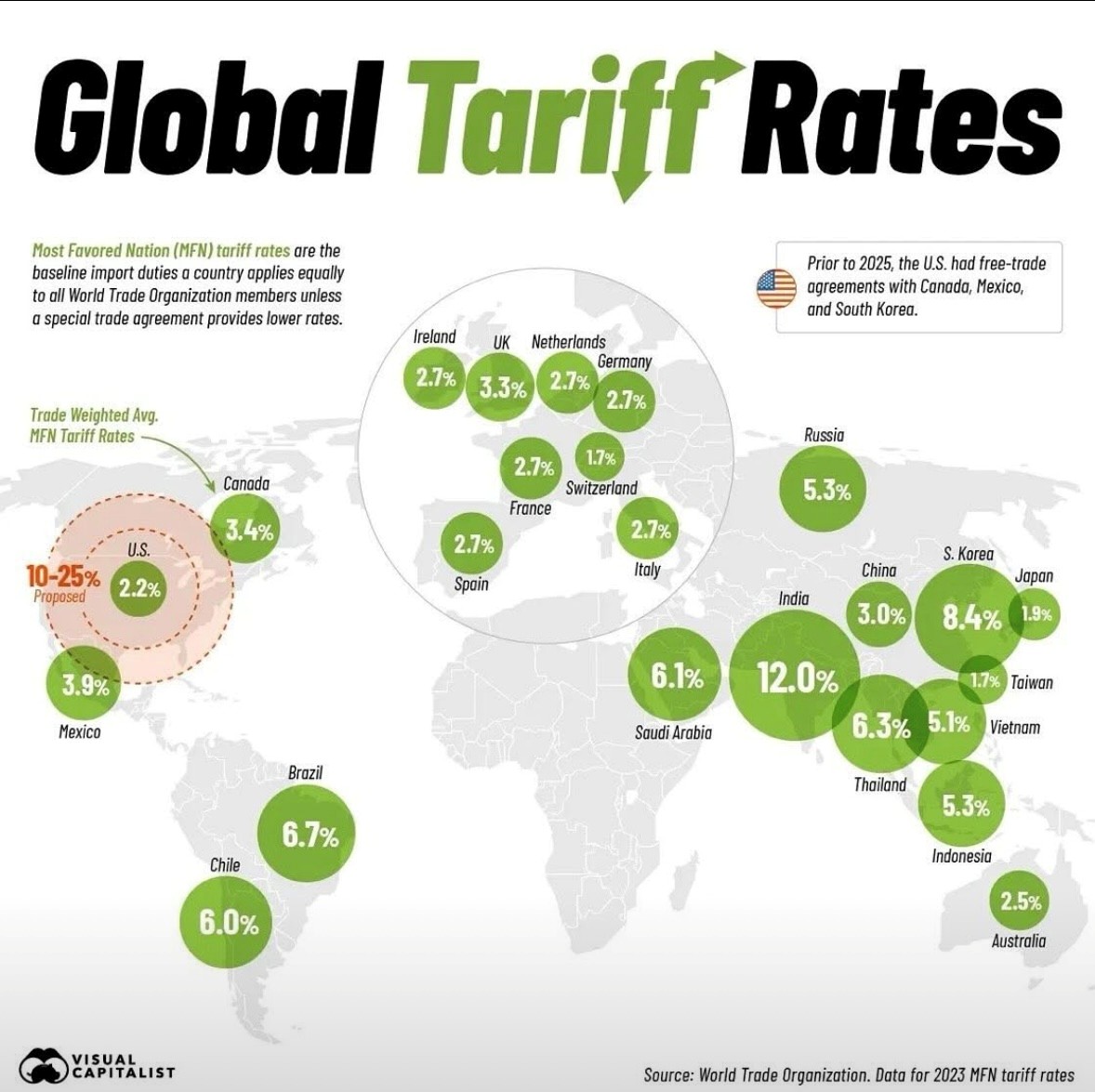
Under tariffs, the real ones. Thanks to Luciano Capone, il Foglio.
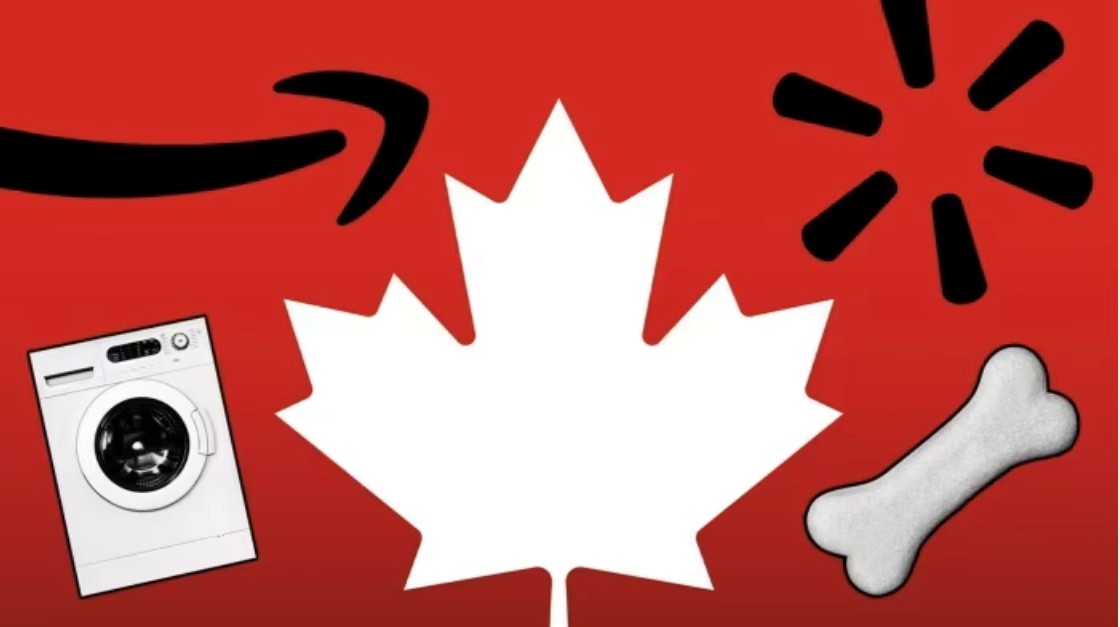
2) Third-party sellers from Amazon and Walmart [marketplace suppliers: independent companies that use Amazon as a middleman, selling to Amazon customers, paying the Seattle-based retailer a commission ] are stockpiling goods in Canada while they wait for the end of President Donald Trump’s trade war with China.
Independent suppliers selling products – from cheap dog toys to household appliances – through the companies’ US e-commerce platforms are moving goods from China to Canadian warehouses, according to half a dozen sellers, logistics providers and consultants.
Several manufacturers and distributors of products from Amazon and Walmart, as well as suppliers from companies like Disney, are using the tactic, some people said. The moves have been spurred by the Trump administration’s blanket tariffs imposed on China, whose trade with the US faces tariffs of up to 145%. The Canadian stalling tactic – which takes advantage of duty-free warehouses, tax breaks and rebates – will add between $500 and $600 per container to costs for sellers, and is a bet on whether the White House will backtrack on the steep tariffs on China…
Both Amazon and Walmart sell goods directly and host third-party retailers. More than 60 per cent of the Seattle-based group’s sales are through third parties. The proportion is much lower for Walmart. Retailers are looking for avenues to mitigate tariffs as they continue to work with suppliers and brands to shift production of popular items to countries where the tariff burden is lower, including India and Vietnam.
Manufacturers have warned that this process, which was already underway as a result of pressure from successive US administrations, will take several more years.
In the meantime, vendors and suppliers are grappling with what to do with orders that are already on their way and how to prepare for the critical sales period leading up to Christmas. One option is to use bonded warehouses in the US, where inventory can be stored duty-free for up to five years.
But they are in short supply…
Conclusion:
Says Theo Wayt (
” Amazon CEO Andy Jassy needs to send a thank you note to Walmart CEO Doug McMillon because it looks like Walmart just helped save Amazon.
President Donald Trump’s signal on Tuesday that he might reduce tariffs on Chinese imports from the current 145% level followed a meeting the president held Monday with McMillon and the CEOs of Target and Home Depot. They warned Trump that his tariffs would likely lead to higher prices and empty shelves in US shops, Axios reported.
Although Jassy was not at the White House, I have no doubt he is relieved that someone else delivered the message.
The irony is that Trump’s tariffs on China would likely hit Amazon [much] harder than Walmart. Since Amazon relies much more heavily than Walmart on outside sellers setting their own prices, it’s likely that shoppers will start to notice price increases on Amazon before they see them on Walmart.
In fact, many Amazon sellers had already started raising prices in the weeks following ‘Liberation Day’. In addition, Amazon’s advertising business, which grossed $56 billion last year, consists mainly of merchants paying to boost their products in search results, the first type of expense many sellers will cut when they go into survival mode. Although Walmart also has a similar online advertising business, it is a much smaller percentage of overall revenue.
Also, Walmart gets more revenue from grocery sales than Amazon, and groceries are much less exposed to tariffs, particularly tariffs on Chinese goods..”
How much will all this work cost US companies, in terms of dollars but also in terms of sterile time lost? Amazon risks losing competitiveness: Amazon sellers are raising prices on hundreds of products due to tariffs
And how much will this cost American consumers? At the end of May inflation will start to be felt. And in a fortnight, merchandise arrivals will drop by 35% as nothing leaves China since Trump declared this trade war on China (Gene Seroka, Port of Los Angeles director, via Le Monde).
Walmart had already realised there would be uncertainty and cut its estimates for 2025 (and UPS will cut 20,000 jobs in anticipation of weak volumes from its main customer, Amazon).
Of course, no one knows ‘how it will turn out’, as there is no visibility of any ongoing talks on tariffs. The only thing that is certain is that Trump is now also ‘going to war’ against Bezos:
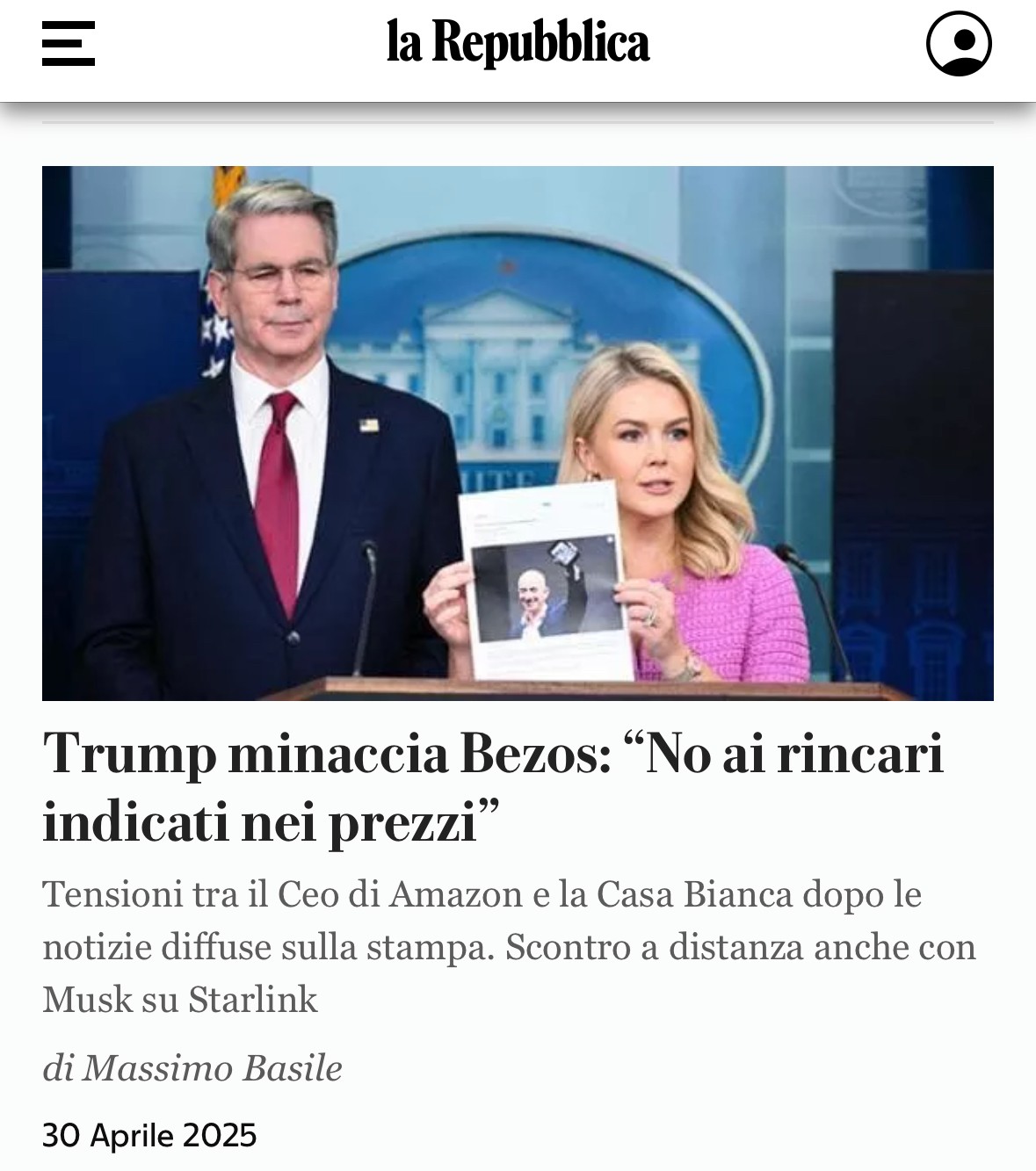
white House attacks Amazon over tariff cost report: ‘Hostile and political act’
On Tuesday, the White House criticised Amazon for planning to display the cost of President Donald Trump’s tariffs next to the total price of products on its site.
Amazon said it “won’t happen”. But in the meantime, the controversy has gone around the world.
P.S.: in Italy, consumption accounts for 58% of GDP, compared to 69% in the US. Not insignificant, but the Italian representative organisations are divided and do not affect the action of the Italian government (which instead would be in great need of acquiring some trade ‘culture’).