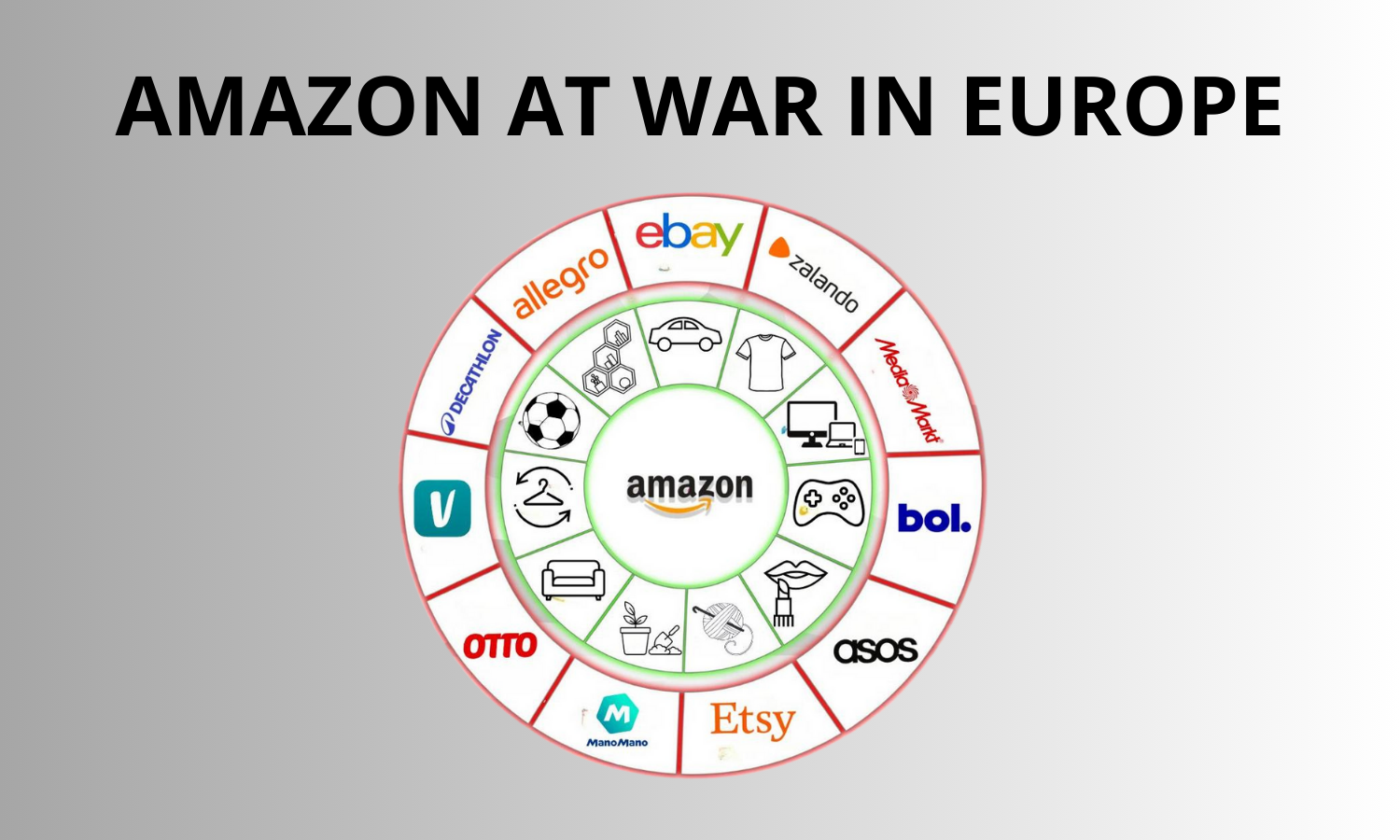
[*] in the meantime acquired by Zalando, which has strengthened its position on the European market.
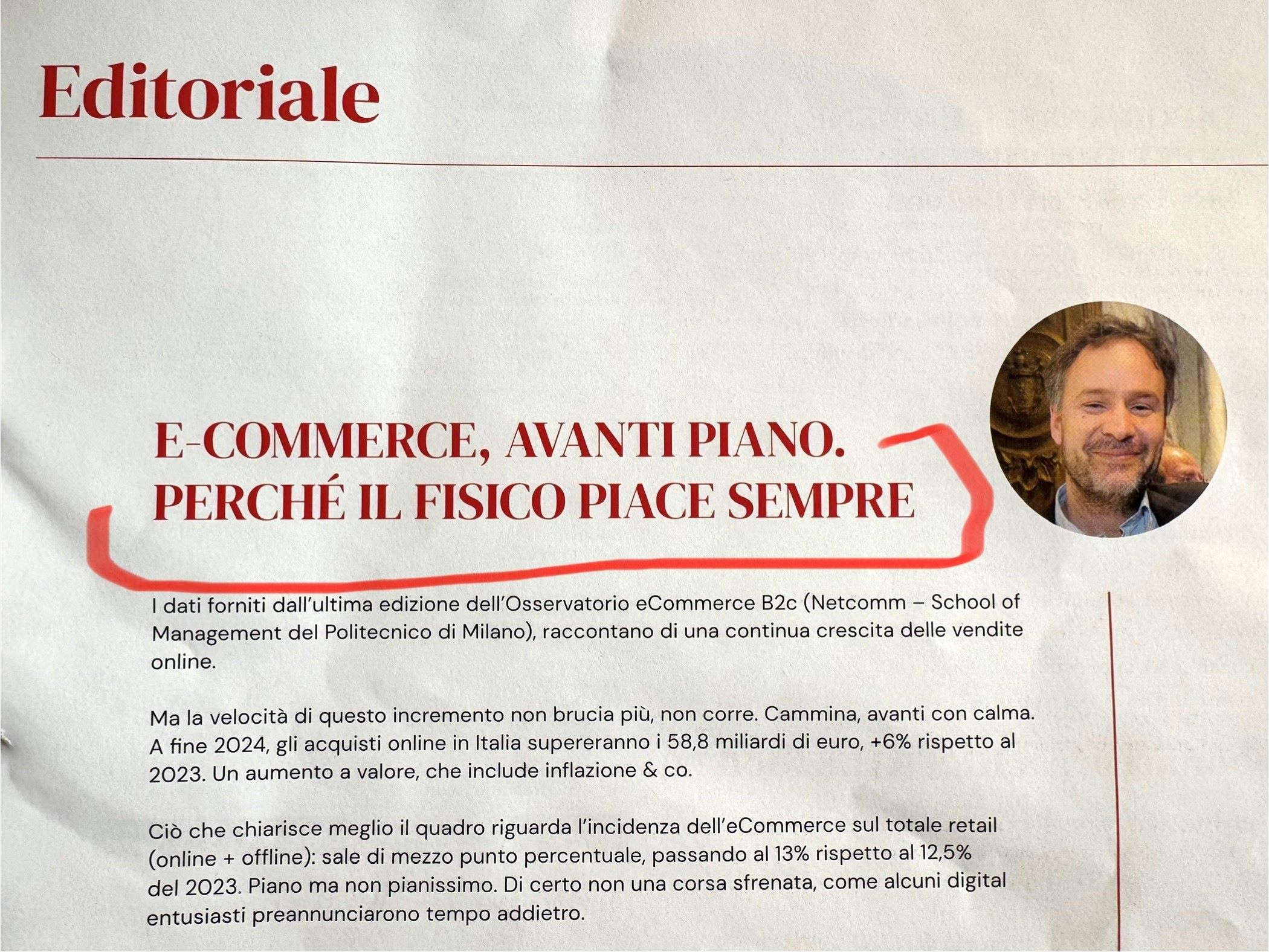
Italy Amazon stronghold. Our country continues to grow, with a 6% increase over 2023, reaching a value of online purchases of 58.8 billion euros, with 47.1% of users between 16 and 64 years of age buying online every week. On the podium of 2023 spending is fashion, with 15.02 billion (25.7%), followed by electronics (10.71 billion, 11.4%) and food (2.92 billion, -0.7%). In 2024, Amazon maintains the leadership among marketplaces in Italy, with almost 188 million monthly visits and a growth of 18.24%. A singular growth, because in many of the central European countries, the platform is down on the previous year. ” One of the reasons lies in the fact that almost all other countries have a local marketplace that ‘steals’ market share from Amazon, while Italy does not have this peculiarity,’ explains Vito Perrone, CEO of Yocabè.
Analysing other European countries, we find El Corte Inglés in Spain, Otto and AboutYou in Germany, Leroy Merlin and Decathlon in France, Argos in the UK, Bol in the Netherlands and Blocket in Scandinavia. In second place in Italy is eBay, with 39 million visits, down on 2023, while Temu, which has been on the rise thanks to heavy investment, is gaining ground on last year, taking Aliexpress (of Alibaba) to fifth place. Zalando, which specialises in clothing and accessories, took fourth place with 12.5 million visits, moving up one place from the previous year. Decathlon and Leroy Merlin also recorded increases, with growth of 15% and 21% respectively over 2023.
Ecommerce in the world: an overview.
Ecommerce is set to grow worldwide. At the European level, B2C ecommerce sales grew to EUR 887 billion in 2023, with uneven growth across regions: Western Europe is the most consolidated market, while Southern and Eastern Europe register double-digit growth rates, reflecting the post-pandemic evolution of consumer behaviour. The US, Russia and Australia are growing evenly, with the US being the third largest online market in the world, after China and India (source: Statista). Also in the US, third on the podium of the highest spending in 2023, after fashion and electronics, are beverages (90.31 billion, 29.8%). The Middle East and North Africa (MENA) are making considerable progress in developing their digital economy: around two-thirds of the population in North Africa used the internet in 2023, slightly above the global average internet penetration rate of 64.5%, with all marketplaces registering growth over the previous year. The highest percentage of users between 16 and 64 years of age who purchased online every week is in the United Arab Emirates. The Asia Pacific (APAC) region has the most internet users in the world, being also the most populated region globally, but is surpassed by Europe and the Americas in terms of internet penetration rate. The Latin America (LATAM) region, on the other hand, still struggles to create an inclusive digital environment for the entire population.
The UK case: marketplace down due to Brexit.
Among the northern and central European countries, the case of the United Kingdom is emblematic, where there is a generalised and massive drop in visits to marketplaces. Amazon, at the top of the list, still loses almost 50% compared to 2023(-43.38%), Ebay even loses more than half (-55.45%). The other marketplaces in the top 5, i.e. Argos, Etsy and Temu, are also down compared to 2023. “This phenomenon is probably due, at least in part, to Brexit,” explains Perrone, “which has accentuated the difficulties in managing customs operations and led to an increase in shipping costs both to the UK and from the UK to Europe. As a result, it is very likely that the number of products available on marketplaces has been reduced, as many international operators have preferred not to operate in this market. Even marketplace initiatives, such as those of Amazon to simplify these aspects, do not seem to have been sufficiently effective in counteracting the problem’. As with Italy and Spain, the highest spending in 2023 in the UK was on fashion, ( 13.8%), followed by electronics ( 7.7%) and food ( 10.1%).
The Russia case: Farfetch boom. Ozon became the number one marketplace in Russia this year, overtaking Wildberries, which dropped to second place. The generalist Market Yandex follows with more than 145 million monthly visits. In fourth position is Aliexpress, which this year overtakes DNS, a platform focused on technology. In this panorama, the marketplace dedicated to fashion and design Farfetch stands out, showing a growth of 30.69% in terms of monthly visits compared to the previous year.
The case of India: purchases on marketplaces are exploding. It is India that completely revolutionises the ranking of the best-selling products online. In first place in the country are food products, followed by fashion and electronics. The Indian marketplace landscape is characterised by the presence of Amazon, which shows a growth of 42% this year. “Amazon has shown strong growth in monthly web visits in India, highlighting the potential of this emerging market and the effectiveness of its strategies to attract a large customer base in a highly competitive and rapidly expanding environment,” explains Perrone. Flipkart, a generalist platform, follows in second position while in third is Myntra, which offers products for the home, clothing, accessories, and jewellery. Then there is Ajio, dedicated to women’s fashion. Finally, fifth place is occupied by Snapdeal. We should also highlight the presence of a large B2B marketplace, Indiamart, which generates an average of 51 million visits and connects manufacturers, suppliers and exporters.
The LATAM case: digital environment not very inclusive. Latin America ‘s ecommerce revenues are still lower than those of Asia, the United States and Europe, and although there is a solid pool that is expected to grow within a few years, to date the region struggles to create an inclusive digital environment for the entire population. With an average internet penetration rate of 74.63%, there are considerable discrepancies between and within nations, due to the vastness of the territories and social contrasts: Brazil and Mexico vie for the lead, each accounting for around 30% of the Latin American ecommerce market, although in 2024 the internet penetration rate will be higher in Chile (91%). In general, in 2023 the category that grew the most was electronics, ( 14%), followed by food ( 18.2%) and fashion ( 13%). In 2024, the Mercado Libre platform was the most visited in Latin America, despite a drop in visits of 31% compared to 2023. In second place is Amazon and then Temu, which enters the ranking this year causing the exit of Americanas. Aliexpress drops to fourth position in 2024, but shows growth of almost 10%. This is followed by Casas Bahia, a marketplace for electronic products, for which there is a decline of 45.81%.
Marketplaces, the game is open. “Once again this year, marketplaces are confirmed as the preferred place for online consumer shopping,” explains Vito Perrone. “Global leaders such as Amazon, the generalist par excellence, and Zalando, the fashion specialist, continue to be present in the minds of consumers, even though they are no longer alone in the Olympus of marketplaces today. He continues: ‘New market trends such as fast fashion on the one hand and sustainability on the other have in fact brought new players – such as Temu and Vinted – who, in just a few years, are proving that the game of online trade and marketplaces is still wide open. Even local marketplaces are slowly gaining market shares, aiming at vertical specialisations’.
The watchword: differentiate. “Looking ahead,” Perrone concludes, “all marketplaces have major challenges to face: from the use of AI to improve efficiency and customer targeting, to increasing taxation and regulation in Europe, from the complexities of the platforms that third-party sellers have to manage, to the problem of returns in the fashion world that is putting many sellers’ margins in crisis. These drivers will continue to change the landscape of global marketplaces in the coming years. As Yocabé, we expect the industry to grow while at the same time distributing sales among multiple players, with local or vertical specialist marketplaces competing for consumers from global generalists through specialisation of the user experience. As in the world of finance, in marketplace sales the watchword for retailers and brands will be: differentiate. Differentiate to take advantage of new opportunities, differentiate to reduce the risk due to the challenges that the leaders are facing and will have to face”.
And in fact in E-commerce, in Italy, there is no “big retailer” in the top ranking.
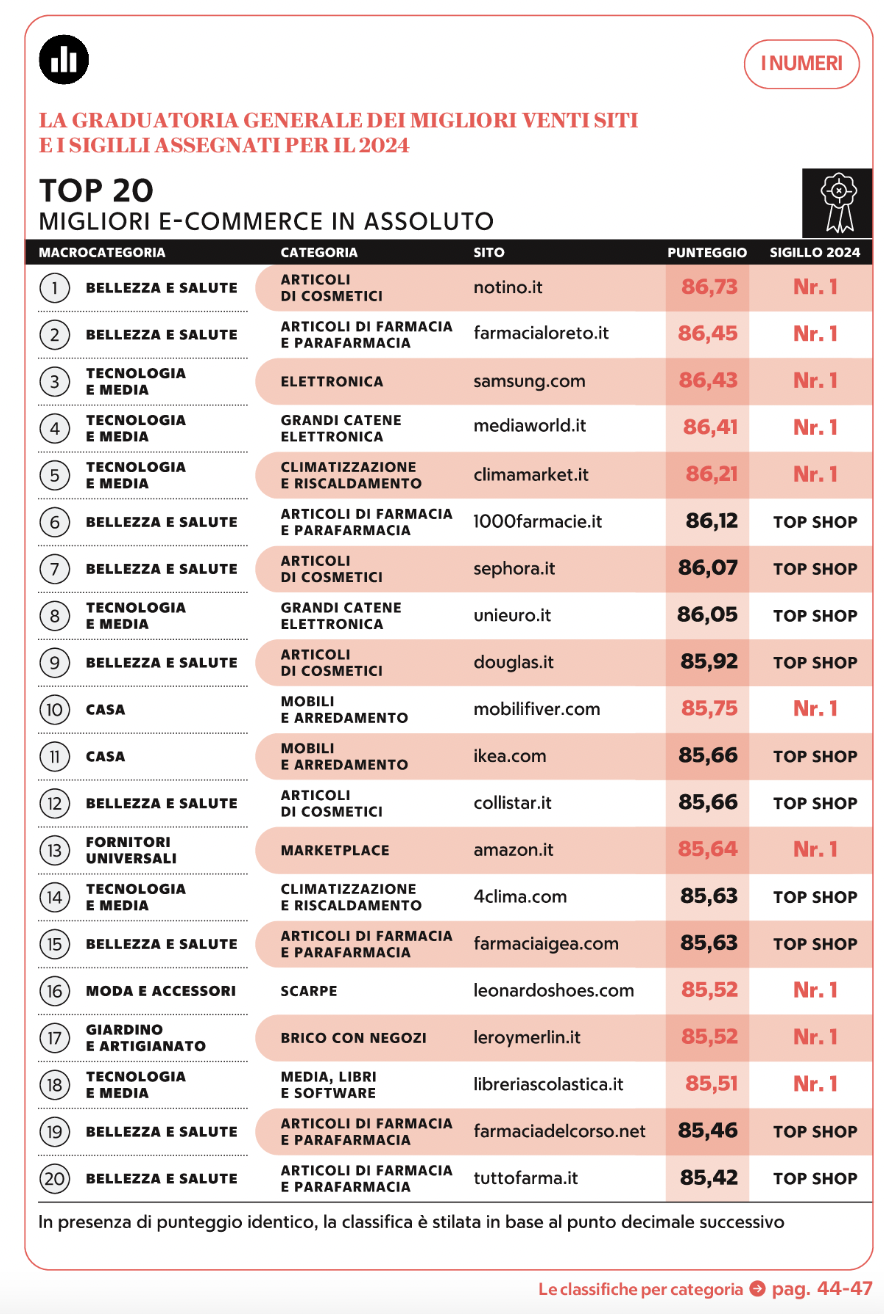
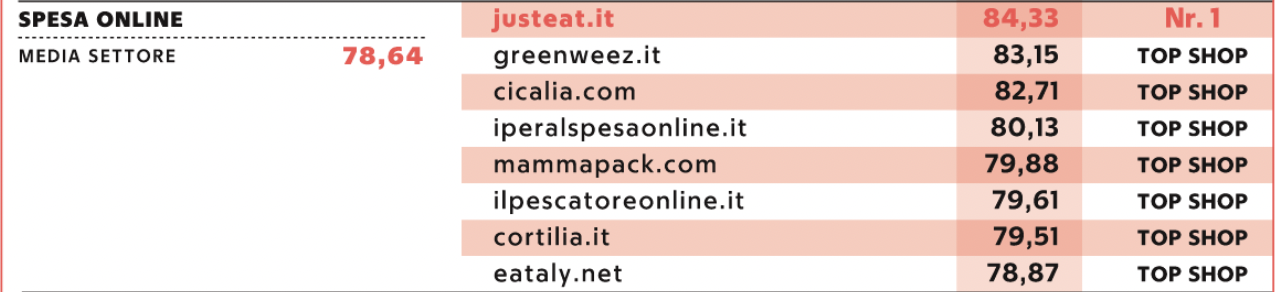
Among the grocers there is only Eataly (no Esselunga a Casa, Coop, Conad but not Carrefour either). AF 27 May 2024
In the US Amazon is very aggressive because it has competitors: Walmart captures a huge share of groceries but Amazon remains the online retailer with the lowest price.
Butin Italy, where Amazon has no competitors, how do we fare?
Amazon hasinvested a lot in our country but probably did so also because it is a de facto monopolist in the non-food sector.
Distribution – of which e-commerce is a part – could have a social role, as a price and inflation moderator, even if few, at a political level, seem to have realised this.
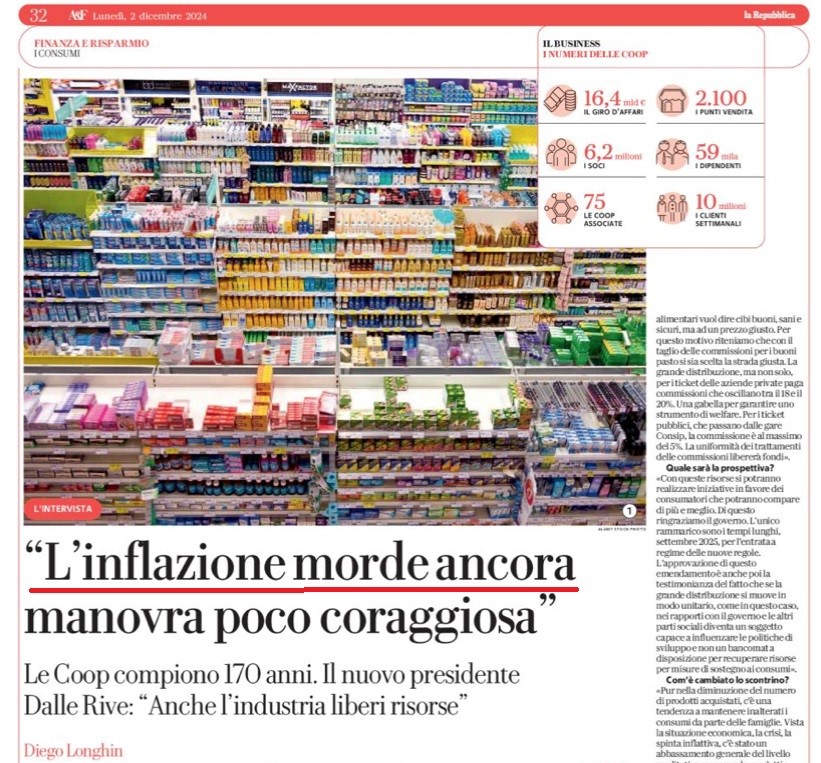
Isn’t it that, instead, perhaps there is a lack of supply and competition that you find in other countries?
But does Amazon really ‘need’ and/or want to?
Or is it not that it perhaps ‘has better things to do’ by exploiting its dominant position in the world of various (non-food) goods, whose reference market is equivalent – in euros – at least to that of foodstuffs?
Looking at the picture outlined above, on the marketplace, I would tend towards the second option, and the picture on the cover – which I found on Amazon’s LinkedIN profile – in my opinion says a lot about Amazon’s core business in Europe.
I believe that Amazon will continue to approach the food distribution sector as a kind of leisure, a field in which to experiment, also because Amazon’s turnover in Italy, mainly in non-food, would be €20 billion (estimate elaborated using posts from Amazon Europe on LinkedIN).
There are three levels of partnership between sellers and Amazon.
A first party seller (1P) is a branded manufacturer that sells its products directly to Amazon, which then sells them to the buyer. Such products are labelled ‘Shipped and sold by Amazon.com’.
A second-party (2P) seller is the type of seller that relies on a distributor’s partnership to ship its products. This occurs when a brand sells to a distribution partner and the retailer buys from that partner. Such products are labelled ‘Sold by the brand, shipped by Amazon’.
A third-party seller (3P) uses Amazon as a marketplace to sell directly to buyers.
This is the case, for instance, with many small specialised retailers.
Fees vary depending on the sector. Perhaps, with more supply, they could go down.
In Italy, however, it retains the crown of marketplaces, with 188 million monthly visits and a growth of 18.24%… Temu, with its hyper-aggressive strategy, registers an incredible 34.43% and Aliexpress continues to grind out impressive numbers. And then there is the Vinted phenomenon: the circular economy is conquering more and more Italians, with a growth of 29.25% certifying a change in mentality…
In France, Amazon lost a resounding -33.52%, leaving room for Aliexpress ( 13.15%), Temu ( 53.91%) and Decathlon ( 24.65%). In Spain, the scenario is similar: Amazon drops -17.32%, while Aliexpress and El Corte Inglés gain ground. And in the UK? Post-Brexit is being felt, with logistical difficulties prompting many marketplaces to downsize; here Amazon loses 43.38% and eBay also drops a hefty -55.45%.
Until Amazon equips itself with groceries, Chinese platforms will continue to grow.
In summary, in Italy Amazon is still king, but abroad its reign is no longer so firm. How long will it be before Italian consumers also open up to new platforms? Maybe Tik Tok will take care of that.